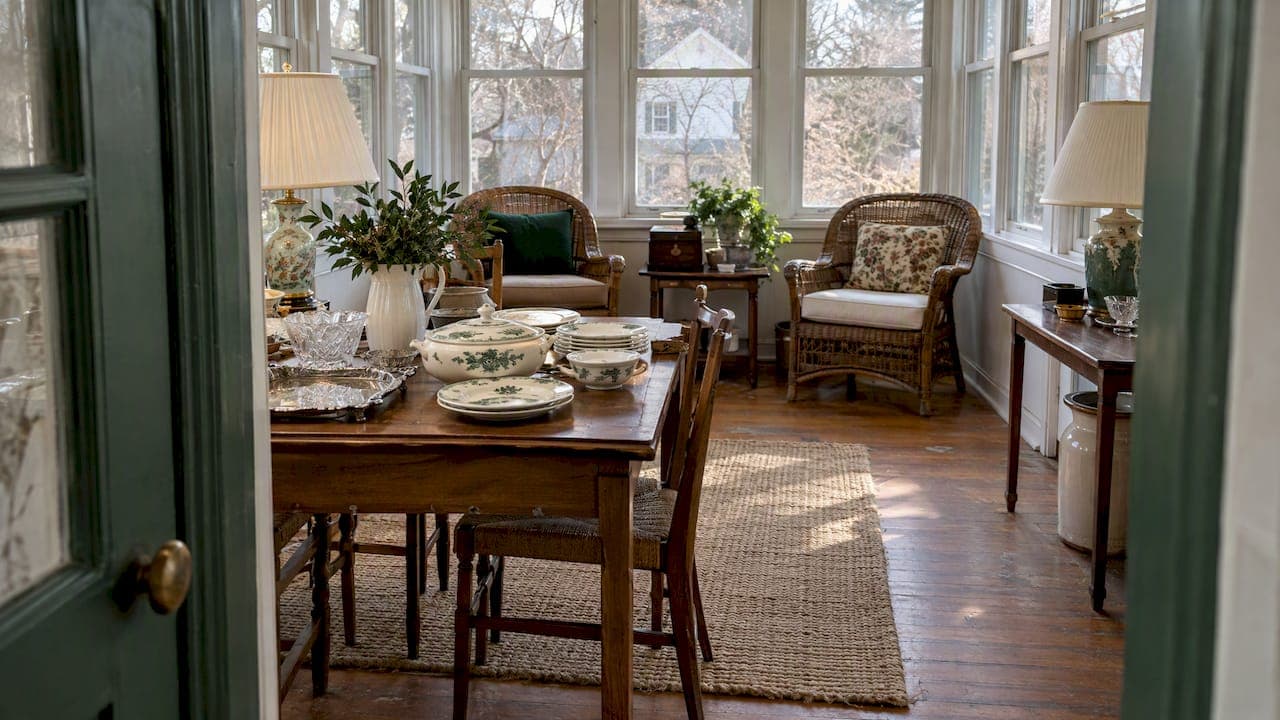
Estate sale day goes well when the hard decisions were made days earlier. By the morning the doors open, the paperwork and keepsakes should be out of the house, every room should be sorted and priced, and someone should be assigned to checkout. This guide walks you through that final stretch, from the last walkthrough to the plan for whatever is left on Sunday evening.
We are Bereavement Cleanout Services, and we work with New Jersey families who are emptying a home after a death or before a move. What follows is how we would want a family to prepare, whether you run the sale yourselves or hire help.
TL;DR
- Allow roughly two to four weeks for the full process of sorting, cleaning, pricing and advertising. The last week is for staging, security and checkout, not for deciding what to keep.
- Remove keys, codes, safe combinations, private papers and family photos before any item gets a price tag.
- Price with sold data, group like items, keep walkways clear and keep small valuables near the cashier.
- Plan for leftovers before the sale starts: donation, consignment or a hauler, booked for the day after.
- If you hire a company, get a written contract and check insurance. Typical commission is about 30% of gross, and higher for difficult homes.
Table of Contents
- What to do before you price a single item
- How much time to allow
- Sort and inventory room by room
- Price items to sell
- Set up the house for shoppers
- Security and checkout on sale day
- What to do with leftovers
- Should you hire an estate sale company?
- A cleaner handoff: where our service fits
- Our perspective
- FAQ
- Sources
What to do before you price a single item
The most common mistake is starting to tag items while the family has not yet agreed on what stays. Once strangers are walking through, it is too late to rescue a quilt or a tool chest.
Hold one conversation, with everyone who has a stake in the estate. If someone lives far away, a video call works. AARP's guidance on estate sale mistakes suggests meeting as a group early to decide what each person wants to keep, and says a video call can help everyone feel the process was fair.
Then pull these things out of the house entirely, not just into a closet:
- House keys, vehicle keys, gate remotes, alarm codes and safe combinations
- Wills, deeds, bank and insurance papers, tax records and anything with account numbers
- Family photographs, letters and albums
- Medications and prescription bottles
- Firearms, if any, handled according to New Jersey law and the executor's or attorney's direction
- Anything the will or an attorney says must wait for probate
If you are the executor, check with the estate's attorney before selling or donating anything of significant value. Our guide to finding the will and donating first explains what we typically ask families to confirm, and our donation-first checklist covers when to wait for probate.
Keep a record of what leaves the house
Photograph every room before you begin, and keep a list of what is sold, donated and kept. Executors often need to account for assets, and a clean record protects you if a relative asks questions later. Our page on estate cleanout documentation for executors explains what to capture and why.
How much time to allow
Plan on about two to four weeks to cover sorting, research, cleaning, organizing, pricing and advertising. That is a general planning range, not a promise. A one-bedroom apartment can move faster, and a house with decades of belongings in the garage and basement will take longer.
Here is a sensible way to spend that time.
| Timing | What gets done |
|---|---|
| 3 to 4 weeks out | Family meeting, keepsakes removed, papers secured, first walkthrough |
| 2 to 3 weeks out | Room-by-room sorting, inventory started, valuables flagged for research |
| 1 to 2 weeks out | Pricing, cleaning, photos taken, sale advertised |
| Final 3 days | Staging, signage, cash box, security plan, helpers confirmed |
| Day before | Last walkthrough, rooms closed off, leftovers pickup booked |
One more piece of timing advice: set the move-out or closing date for after the sale. Trying to coordinate movers while shoppers browse creates stress nobody needs. If a closing is close, see our notes on estate cleanouts before closing.
Sort and inventory room by room
Work through the house one room at a time and put every item into one of four groups:
- Keep: items family members have claimed
- Sell: things with resale value
- Donate: usable items that will not sell for much but help someone
- Dispose: broken, soiled or unsafe items
A simple inventory keeps this honest. TagLot's free checklist suggests tracking the room, item description, quantity, condition, a research flag, list price, sold price and notes. A spreadsheet with those columns is enough. The research flag matters most: it marks the items that deserve a second look before you put a sticker on them.
Items worth researching first
Jewelry, silver, art, coins, watches, military items, vintage toys, musical instruments, tools and anything old with a maker's mark can be worth far more than it looks. For these, don't guess. Check completed sale prices on auction sites rather than asking prices, and consider an appraiser for anything that seems significant.
What tends not to sell
We see the same slow movers again and again. Bulky older furniture styles that are out of fashion, large upholstered pieces, heavily worn mattresses, incomplete sets, old textbooks and encyclopedias, and used exercise equipment are often hard to sell. Items that charities will not accept are a separate problem, and we list them in our guide to items charities won't take. For a fuller look at what moves, see what sells at estate sales and how to price it.
This is experience, not a rule. A good-condition piece in a style that is popular right now can still sell quickly.
Price items to sell
Estate sale shoppers expect fair prices, not garage sale prices and not retail. General household goods typically price at about 25% to 35% of original retail, while antiques and collectibles should be priced from sold data.
A few practical rules:
- Use color-coded stickers or tags so a cashier can read a price at a glance.
- Bundle small things such as cookbooks, kitchen utensils or hand tools into lots.
- Mark items clearly "not for sale" if they must stay in a room that is open.
- Price a little high on day one on items you have researched, and plan to come down later.
A progressive schedule is common practice. AARP recommends reducing prices on the second or third day so the remaining inventory clears by the end. Decide the schedule in advance, for example 25% off on the second morning and 50% off on the last afternoon, and post it at checkout so nobody has to haggle on day one.
Set up the house for shoppers
Staging is mostly about making the house easy to walk through and easy to understand.
Clean first, then arrange
Wipe surfaces, sweep floors and clear out trash before you set up tables. A clean, well-lit, organized house tends to sell more and bring in more. If you are also preparing the property to list, the same tidy-up helps there too. A realtor's guide to preparing a home for sale is a useful companion for the repairs and presentation that come after the sale.
Arrange by category
- Group similar items: kitchenware in the kitchen, tools in the garage, linens in the bedroom.
- Put smaller goods on tables or shelves so shoppers do not have to bend to the floor.
- Keep walkways clear. AARP's advice is to avoid overcrowding items and to keep fine jewelry and sterling silver at checkout or in glass cases.
- Turn on every light and replace dead bulbs.
- Put large furniture where it can be seen from the doorway, with the tag on the piece.
Close off what is not for sale
Close and block rooms that are not part of the sale, such as a bedroom with keepsakes or an office. A "no entry" sign works for honest shoppers, but a closed door or a simple barrier works for everyone. Take down anything on the walls that is personal and does not need to be on view.

Security and checkout on sale day
An estate sale invites strangers into a home, so plan for that.
- Staff each floor. At least one family member or helper should be in the house at all times, ideally one per level when the sale is busy.
- Control the entrance. Limit how many people are inside at once if the house is small.
- Centralize payment. Use one checkout table near the exit. Keep valuables there.
- Prepare cash and card options. Bring a cash box with small bills and coins for change, a card reader if you will accept cards, and bags, newspaper and tape for wrapping.
- Decide on numbers. If you expect a line before opening, hand out numbers in order of arrival and tell people where to park. Shoppers sometimes arrive well before the start.
- Think about neighbors. Post parking instructions, and use signs that are legible from a car.
Be prepared for emotion, too. Watching strangers carry away a parent's belongings is hard, even for families who planned carefully. Many families choose not to be in the house on the first morning and assign the job to someone calmer. That is a perfectly good decision.
What to do with leftovers
Something will not sell. Book the answer before the sale, not after. Unsold goods can be donated to charities or cleared by a junk removal service, and your best option is usually a mix.
Our donation-first approach sorts leftovers into five buckets, which we describe in our guide to leftover estate sale items. In short:
- Usable goods go to local charities, with a donation receipt if the charity gives one.
- Higher-value pieces go to online consignment.
- Recyclables and electronics go to proper drop-off.
- Hazardous or restricted items get handled separately.
- What remains is hauled away.
If the house must be empty and clean for a closing or a landlord, schedule the haul-away for the day after the sale ends, with the house left broom-clean.
Should you hire an estate sale company?
You can run a sale yourself, and many families do. It takes a lot of time, though: sorting, pricing, advertising, staffing and cleanup. Consider help when the home is large, when family members live out of state, when the contents include significant antiques, or when you are on a deadline.
What it costs
AARP reports that estate sale services typically take 30% of gross proceeds, or 40% if the items or home are in poor condition. For our own estate sales, the on-site commission is 15% to 35%, and online listings and consignment run 20% to 40%. Where a rate falls in the range depends on the home and the contents. We explain how it works in Estate Sale Fees Explained.

What to check before you sign
AARP's advice is to verify insurance, interview more than two companies and get a written contract covering commission, payment terms, timelines, services and potential fees. The same source notes that 95% of companies require a contract. Ask each company:
- Is the company insured, and can you see proof?
- What percentage do you charge, and on what base: gross or net?
- When will you pay the estate, and how will sales be reported?
- Who clears what is left, and at what cost?
- Who is responsible for items that go missing?
A cleaner handoff: where our service fits
A sale rarely empties a house. Most families still face the leftovers, the garage, the basement and a deadline. That is where we come in.
We handle estate cleanouts across New Jersey, including sorting keepsakes, donation runs, responsible disposal and a broom-clean finish, with documentation that helps with probate. Published starting prices include a single room, garage or basement from $295, an apartment or condo from $650, a full house from $1,200 and a large estate from $2,200. Estate photography and an online inventory are $75 per hour, and packing is $55 per hour per packer. We give a firm quote after a walkthrough. See where we work on our New Jersey service areas page.
Our perspective
We have walked into many houses a few days before a sale, and the pattern is consistent. The families who feel best afterward are not the ones who earned the most. They are the ones who decided early what they wanted to keep, took the papers and photographs out of the house first, and knew where everything else was going.
We encourage a donation-first mindset. A sale is a good home for items with real resale value, but a lot of what fills a house has more value to a charity or a neighbor than to a shopper, and giving it a use is easier to live with than watching it sell for a dollar. We also encourage families to document everything. A short list and a set of photographs take an hour and can save weeks of questions during probate.
Finally, be gentle with the schedule. If the sale date forces decisions your family is not ready to make, move the date. A week of delay is almost always cheaper than regret.
— Derek
FAQ
How early should I start preparing for an estate sale?
Begin two to four weeks ahead for most homes. Larger houses or those with heavy clutter may need longer. Use the final week for staging, security and checkout, not for first-time sorting.
What should I take out of the house before an estate sale?
Remove keys, remotes, alarm codes, safe combinations, legal and financial papers, medications, family photos and any item a relative has claimed. Do this before pricing begins so nothing important gets a sticker by accident.
What is the average fee for an estate sale company?
AARP reports about 30% of gross proceeds, rising to 40% when the home or its contents are in poor condition. Our on-site estate sale commission is 15% to 35%, depending on the home and contents. Always get the rate and payment terms in writing.
What happens to items that do not sell?
You can donate usable goods, consign better pieces online, and haul away what is left. Plan this before the sale and schedule pickup for the day after it ends, so the house is empty on your timeline.
Is it worth hiring an estate sale company?
It can be, if the home is large, the family is far away or the timeline is tight. Compare more than two companies, confirm insurance and read the contract before you sign.
Sources
- AARP: 8 Estate Sale Mistakes That Could Cost You
- AARP: What to Know Before Hiring an Estate Sale Company
- TagLot: Estate sale inventory checklist and template
- EstateSaleFinder: How to Price Estate Sale Items
- EstateSaleConnect: The Complete Estate Sale Checklist
- DIYAuctions: How to Organize an Estate Sale
- Beams Realty Group: Selling My Home