Before you throw anything away, pause: confirm who has legal authority to act, and lock up the will, certified death certificates, titles, and IDs. Then photograph, inventory, and receipt everything that leaves the house. Good estate cleanout documentation answers questions about authorization and disposition before probate, tax preparers, or relatives ever ask them.
TL;DR:
- Secure the will, titles, IDs, tax records, cash, and jewelry in a locked box; log access and retain originals after scanning.
- Before sales or removals, confirm executor authority, set a family review window, and seek legal advice for real estate, vehicles, or disputed valuables.
- Photograph every room before moving items, link images to inventory entries, and keep three copies across two storage types, with one offsite.
- For donations, obtain written charity acknowledgments and log each item with dates, descriptions, and photos; noncash gifts worth $250 or more require acknowledgment.
- Separate batteries, paint, solvents, pesticides, electronics, and appliances, verify local disposal rules, and never place refrigerators, freezers, or air conditioners in general loads.
Table of Contents
- How do you confirm authority and set the timing?
- Which documents and small valuables should you secure first?
- How do you build a room-by-room inventory and photo record?
- How do you sort belongings with a seven-bucket system?
- What should you collect when you donate or sell?
- How do you handle hazardous items, electronics, and appliances?
- What belongs in a defensible cleanout file for probate?
- What is the step-by-step checklist from walkthrough to final delivery?
- Why donation-first documentation matters to us
- Our cleanouts come with probate-ready records
- FAQ
- Sources
How do you confirm authority and set the timing?
Authority comes first because every removal, sale, or donation is easier to defend when the right person approved it in writing. Our probate house cleanout guide goes deeper on this, but the core checks are simple.
- Look for a will naming an executor or personal representative, and ask probate counsel who may sign for the estate if you cannot find one.
- Order certified death certificates early, since many agencies require certified copies to close accounts and claim benefits. Ordering methods and costs vary by state vital-records office.
- Set a family review window, such as a weekend, before anything leaves the property.
- Add a pause-for-attorney checkpoint before selling real property, vehicles, or anything of unclear value.
You will also need certified copies and Social Security numbers for certain transactions, as USAGov explains. Pausing for a few days costs little. Undoing a hasty removal can cost a great deal.
Which documents and small valuables should you secure first?
Start with the papers that prove ownership and identity, because they are the hardest to replace and the easiest to lose in a pile of mail. IRS Publication 559 points executors to a hold on discarding or distributing items just because they look ordinary.
- The will and any trust papers
- Deeds, property titles, and vehicle titles
- Insurance policies
- Tax and financial records
- Passports, Social Security cards, and other IDs
- Cash, jewelry, and keys
- Account information and passwords, where lawfully available
Put everything in one locked box and keep an access log noting who opened it and when. Limit who handles originals to one or two people. Scan or photograph the papers as a backup, and label each file with basic details: what it is, where it was found, and the date.
Pro Tip: Keep Social Security cards, tax records, and account statements in controlled access, and shred sensitive papers only after the executor authorizes it, to lower identity-theft risk.
How do you build a room-by-room inventory and photo record?
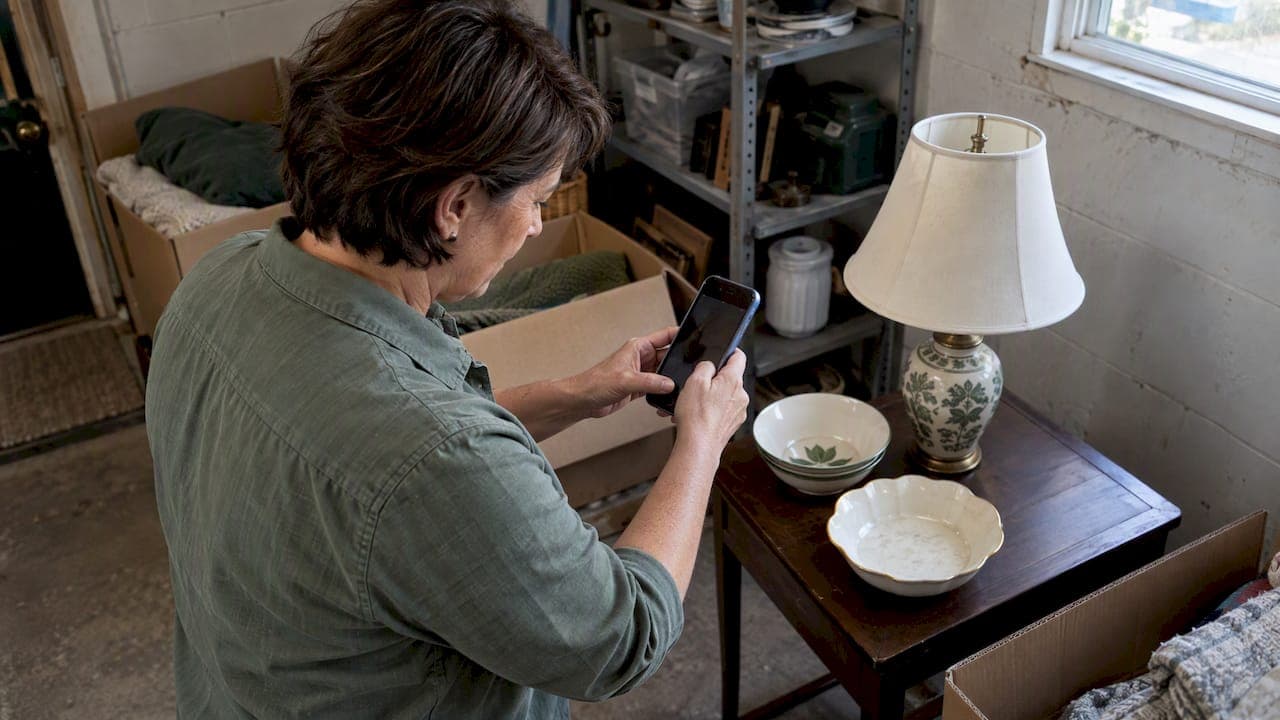
Photograph every room and storage area before anyone moves contents. That includes closets, garages, attics, and the insides of safes and boxes. NAR's estate cleanout guide describes this as a core step of a defensible process.
- Take wide shots first, then close-ups of anything notable.
- Name files by who, what, where, and when, for example "date_kitchen_cabinet-left.jpg".
- Keep a photo index that links each picture to a line in the inventory.
- Back up digital copies using the 3-2-1 rule: three copies, on two kinds of storage, with one off-site.
- Keep originals after scanning, because scans do not replace provenance.
The National Archives recommends that digital inventories supplement, not replace, originals, since originals may be needed to establish context or authenticity.
That one point shapes the whole workflow: the photo index shows what existed, and the physical items remain the proof.

How do you sort belongings with a seven-bucket system?
Sorting into fixed categories keeps family discussions short and records clean. NAR's guidance lists categories for sorting belongings, and our donation-first estate cleanout checklist shows how they work in practice.
- Keep: Items heirs claim. Record who took what and have them initial it.
- Family review: Items in dispute or undecided. Set a deadline and note the outcome in writing.
- Appraise: Jewelry, art, collectibles, and antiques. Log the referral and the appraiser's name.
- Sell: Obtain written sale authorization from the executor.
- Donate: Record the charity, date, and photos, and get a receipt at pickup.
- Recycle: Metals, paper, and clean textiles, noted by category and date.
- Hazardous or dispose: Photograph, label, and route by local rules.
Hold anything that could affect probate until counsel says it can go. Publication 559 is the IRS's reference for executors on what the estate must account for.
What should you collect when you donate or sell?
A donation without paperwork is just a pickup. IRS Publication 1771 explains that charities should provide a contemporaneous written acknowledgment, and without one the donor cannot claim the federal income-tax deduction. Insist on it at pickup. Our donation receipt rules and guide to donating estate items walk through templates.
- The acknowledgment should name the organization, describe the noncash property, and state whether any goods or services were provided in return.
- Keep an itemized donation log with date, organization, description, and photographs.
- File provider pickup acknowledgments and written estimates separately from any tax appraisal.
- For noncash contributions valued at $250 or more, a written acknowledgment is required, and higher-value gifts may need qualified appraisals and Form 8283. Ask the estate's tax preparer before the truck arrives.
For sales, keep the buyer's name, the amount, the date, and the executor's authorization.
How do you handle hazardous items, electronics, and appliances?
Hazardous items need their own track because the right disposal route is set locally. EPA says household hazardous waste is regulated at the state and local level, and electronics may contain substances that require special handling.
- Isolate batteries, paint, solvents, pesticides, cleaners, oils, and electronics early.
- Photograph and label each group before scheduling disposal, as the EPA quick start guide recommends.
- Verify local acceptance rules or the recycler's credentials before transport.
- Record who took the items, on what date, and keep any written confirmation.
Refrigerators, freezers, and air conditioners contain refrigerant and should never ride in a general load. This plain-language explainer on appliance recycling covers how that process works.
Pro Tip: Ask every recycler for a written confirmation of receipt and file it with the hazardous-item photos.
What belongs in a defensible cleanout file for probate?
The file should answer five questions: what entered the job, what left, where it went, who authorized it, and what condition the property reached. NAR's guide says a defensible file contains:
- The approved scope and exclusions
- A room-by-room inventory or photo index
- Family decisions in writing
- Appraisal referrals
- Donation receipts
- Disposal or weight records when available
- Before-and-after photographs
- The written quote, final invoice, and proof of payment
No universal legal form exists, so the goal is completeness, not a particular template. Keep the full file for as long as your attorney advises, and hand a copy to the estate attorney and accountant when the cleanout ends. If a house must be sold quickly, a tidy file also makes that conversation easier, and this seller checklist explains how quick-closing buyers handle belongings left behind.
What is the step-by-step checklist from walkthrough to final delivery?
Use this order, and have the right person sign or initial each step with the date and time.
- Intake walkthrough: define rooms, access, deadlines, and retained items (executor signs the scope).
- Secure documents and valuables in the locked box (executor initials the access log).
- Photograph every room and storage area before moving anything.
- Sort items into the agreed categories (family representative initials decisions).
- Collect receipts and acknowledgments for donations, sales, and recycling.
- Isolate and verify hazardous items.
- Clean to the agreed finish.
- Do a final walkthrough against the scope, with after photos.
- Deliver the complete file to the executor.
To save time, schedule charity pickups in advance, photograph in batches, and do documents first. Call professionals for hoarding conditions, hazardous materials, or tight deadlines.
Why donation-first documentation matters to us
We believe a cleanout should honor the person who lived there. Usable items belong with people who can use them, and every donation we route is recorded so the family has proof of where things went. Careful paperwork is also a kindness. It spares grieving relatives from arguing over what happened and gives the executor a package an attorney can use.
— Derek
Our cleanouts come with probate-ready records
Our estate cleanout services pair donation-first sorting with the documentation described above, so you do not have to build the file alone.
- Documented cleanouts, donation-first sorting, and broom-clean handoffs, all fully insured
- A records package with documentation for the cleanout
- A simple next step: request an on-site walkthrough or a firm quote through our New Jersey service areas page
FAQ
What is the best way to clean out an estate?
Confirm who has authority, secure the will and key documents, photograph every room, then sort items into clear categories. Collect receipts for every donation, sale, and disposal, and keep it all in one file for the estate attorney.
How do estate cleanouts work?
They typically begin with a walkthrough that defines rooms, access, deadlines, and the finish you want. The family or executor approves the scope, items are routed to keep, sale, donation, recycling, hazardous handling, or disposal, and the property is cleaned. The provider then returns documentation for review.
What is the best way to clean out my deceased parents' house?
Start with documents and valuables, then photograph before moving anything. Give family members a set review window, and write down who takes what. Donate usable items with a signed acknowledgment.
How much does it cost to clean out an estate?
Cost depends on volume, labor, access, special handling, disposal, cleaning, packing, and deadlines, so no single average is reliable. Our published starting prices begin at $295 for a single room, garage, or basement, and we confirm a firm quote after a walkthrough.
Sources
- Managing an Estate or Probate Cleanout: A Practical Guide for REALTORS®
- Epa
- Publication 559 (2025), Survivors, Executors, and Administrators | Internal Revenue Service