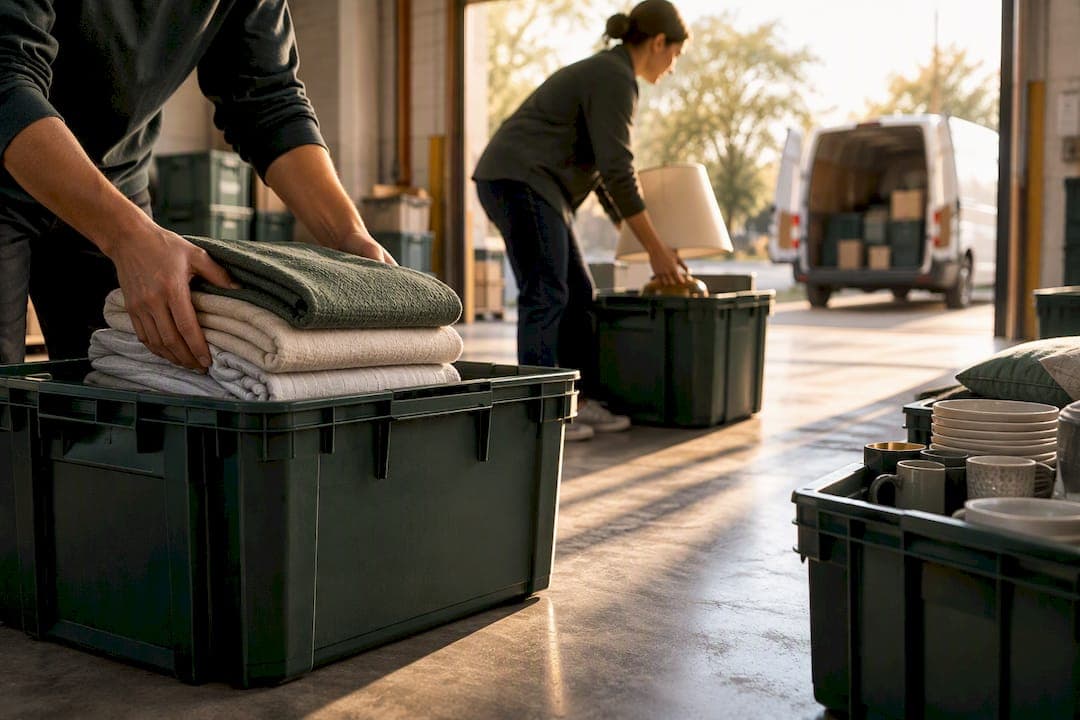
Sort keepsakes from donateables first, then photograph and list everything before you move a single box. From there, either contact your local Goodwill, Habitat ReStore, or Salvation Army to schedule pickups, or hire a donation-first estate cleanout service to handle sorting and delivery for you. If any single item or group of similar items is worth more than $5,000, flag it now: you will need a qualified appraisal and Form 8283 before you claim a deduction.
TL;DR:
- Charities typically reject damaged electronics, recalled furniture, and items with mold or pests due to liability and resale risks.
- For high-value items over $5,000, a qualified appraisal and Form 8283 are mandatory to claim a tax deduction.
- Matching estate items to the appropriate charity, such as Habitat ReStore for building materials or Goodwill for clothing, speeds up donations.
- Photographic inventory and detailed receipts are crucial for documentation, especially for items exceeding the $5,000 threshold, to support IRS and probate requirements.
- A donation-first estate cleanout service streamlines sorting, protects keepsakes, and provides probate-ready documentation, saving time and reducing disputes.
Table of Contents
- What Items Are Charities Most Likely to Accept?
- Where Should You Take Estate Items to Donate Them?
- How Do You Document Estate Donations for Tax Purposes?
- How Do You Arrange Pickup for Bulky Estate Items?
- What Should You Do With Batteries, Electronics, and Mattresses?
- When Should Executors Wait Before Donating Estate Property?
- Why a Donation-First Cleanout Actually Protects Families
- Get a Donation-First Estate Cleanout Quote
- Sources
- FAQ
What Items Are Charities Most Likely to Accept?
Donating estate items goes faster when you know the condition bar before you start sorting. Most charities accept furniture, small and large appliances that power on, clothing, linens, housewares, and building materials, but only when they arrive clean and functional. The IRS's own valuation guidance sets the baseline: clothing and household items generally need to be in "good used condition or better" to count toward a deduction at all, let alone pass a warehouse inspection.

Some items get turned away at the door almost every time. Mattresses, box springs, cracked or non-functioning electronics, recalled furniture, and anything with visible mold or pest damage rarely make it past a charity's receiving dock. These aren't arbitrary rules. Liability and resale risk drive most of them.
Before you box something up, run it through a quick test:
- Does it work, turn on, or function as intended?
- Is it clean enough that you'd be comfortable handing it to a stranger?
- Would a thrift store likely resell it within a season?
- Is it worth more sold than donated (think antiques, fine art, or estate jewelry)?
If the answer to that last question is yes, pause. High-value antiques and artwork often deserve a specialist appraisal or a spot in an estate sale rather than a donation box. You can sell estate items online when the piece is worth more on the open market than as a tax deduction.
Where Should You Take Estate Items to Donate Them?
Different recipients specialize in different categories, and matching the item to the right destination saves you a wasted trip. Building materials, cabinets, and appliances tend to move fastest through Habitat for Humanity ReStore, which often provides free pickup on large loads depending on the location. Clothing, housewares, electronics, and general furniture are the bread and butter of Goodwill and Salvation Army, both of which run truck pickup programs in most metro areas.
Here's the practical breakdown:
- National thrift chains (Goodwill, Salvation Army): best for clothing, housewares, electronics, and furniture in working condition.
- Habitat ReStore: best for building materials, cabinetry, appliances, and home-improvement leftovers.
- Local shelters and community charities: often take smaller, specific donations like linens, kitchenware, or children's items.
- Certified recyclers: the right call for anything electronic or battery-powered that doesn't pass a working-condition test.
Acceptance policies and pickup availability vary by local chapter, so always confirm with the specific branch handling your area before you load a truck. Call ahead, fill out their pickup form online, and ask directly about volume minimums.
For a full house of mixed items spread across multiple rooms, piecemeal drop-offs eat up days you may not have. That's when a donation-first estate cleanout service, which sorts, stages, and routes items to the right recipients in one pass, tends to save both time and aggravation.
How Do You Document Estate Donations for Tax Purposes?
Good documentation protects you two ways: it satisfies the IRS if you ever claim a deduction, and it gives the probate court a clear record of what happened to estate property. Professional cleanout teams often use a version of what's known as the donation-first five buckets method: keepsakes, marketable donations, sellable/consignment items, recyclables, and trash. Sorting into five clear piles from the start keeps decisions fast and defensible later.
Follow this sequence as you work through each room:
- Pull keepsakes first. Photos, jewelry, letters, and anything with family significance get set aside before anything else moves.
- Sort the rest into donate, sell, recycle, or trash. Use the five-bucket method to avoid second-guessing every item twice.
- Photograph everything before it leaves the house. A dated photo inventory is your best evidence for both probate records and donor value.
- Collect a written receipt or acknowledgment for every drop-off or pickup. Ask for an itemized list, not just a generic "bag of clothing" note.
- Flag anything approaching or exceeding $5,000 in value, whether it's one item or a group of similar pieces like a coin collection.
That $5,000 threshold matters more than most people realize. The IRS requires a qualified, signed appraisal from a qualified appraiser for any single item or group of similar items claimed above that amount, and the appraisal must be dated within 60 days of the donation. An insurance or replacement-cost estimate will not satisfy this requirement. Fair market value, what a willing buyer would pay a willing seller, is the standard the IRS actually wants, and it's frequently lower than replacement cost.
Pro Tip: Keep a single folder, physical or digital, with every donation receipt, appraisal, and photo timestamp. Probate attorneys and tax preparers both ask for this exact packet, and reconstructing it after the fact from memory is nearly impossible.
For appreciated property like art or collectibles, donating the item directly to a qualified charity can sometimes create a stronger tax outcome than selling it first and donating cash, since the donor may avoid capital gains exposure. This gets complicated fast, so loop in a tax professional before finalizing anything above a few thousand dollars.
How Do You Arrange Pickup for Bulky Estate Items?
Large furniture, appliances, and multi-room loads need more coordination than a single donation box. Most charities require you to complete an online pickup form specifying item type, quantity, and access, and they commonly ask whether items are staged on the first floor or in a garage. Second-floor bedroom sets and basement storage often trigger a denied pickup if the crew can't move them safely alone.
A donation-first cleanout service handles this differently. The crew sorts on-site, protects keepsakes separately from the outset, and leaves a broom-clean space once everything is routed to its destination, whether that's a charity truck, a recycler, or an estate sale table. Documentation happens as the work happens, not as an afterthought.
To keep pickups moving instead of getting rejected:
- Stage everything in one accessible area before the truck arrives.
- Separate anything broken or non-functional so it doesn't get lumped in with donateable items.
- Ask about minimum volume requirements. Some charities won't send a truck for a single sofa.
- Confirm whether the charity charges anything for pickup. Most don't, but a few do for out-of-area stops.
Furniture-specific guidance and pickup scheduling for New Jersey estates can save a few phone calls if bulky pieces are your main concern.
What Should You Do With Batteries, Electronics, and Mattresses?
Some items simply cannot go in the trash, and a few can barely be donated at all. The EPA is explicit that lithium-ion batteries and most electronics need special handling. Tossing them in a household bin risks fire from damaged cells. Tape the terminals on loose batteries, and route both batteries and electronics to a certified recycler or a retailer takeback program instead.
Mattresses and certain large appliances often fall outside standard charity acceptance entirely, or face tighter rules depending on the local chapter. Reuse tends to beat recycling for working electronics when a charity can actually resell them, but once an item fails that test, a certified electronics recycler is the safer route than letting it sit curbside.
- Tape battery terminals before transport to prevent short circuits.
- Call your municipality's household hazardous waste program for paint, chemicals, and anything flammable.
- Check with the specific mattress recycler or charity chapter before hauling one across town, since acceptance varies widely.
When Should Executors Wait Before Donating Estate Property?
Timing mistakes cause more estate disputes than almost anything else in a cleanout. Before donating anything beyond obviously personal, low-value items, confirm you have clear executor authority, either through a will naming you or formal appointment by the probate court.
- Confirm your authority in writing before authorizing any donation of estate-owned property.
- Document every decision and permission, keeping a clear chain of custody from estate to charity.
- Route high-value or contested items to an estate sale or auction instead of a donation box, since sale proceeds are easier to divide fairly among heirs.
- Check with the estate attorney whenever family members disagree about an item's disposition.
A written donation-first checklist built specifically for probate timing helps prevent exactly this kind of dispute before it starts.
Why a Donation-First Cleanout Actually Protects Families
Grieving families rarely have the bandwidth to research charity acceptance rules, appraisal thresholds, and pickup logistics on top of everything else probate demands. A donation-first workflow solves that by building the sorting decisions in from the start, protecting sentimental items before anyone touches a donation box.
The five-bucket sorting method and documentation-first keepsake handling exist because families kept losing track of what went where, and probate attorneys kept asking for paper trails nobody had. A professional service earns its cost when a house needs clearing in days, not weeks, and when documentation quality actually matters to the court.
— Derek
Get a Donation-First Estate Cleanout Quote
Sorting an entire household under deadline, while grieving, is a different job than a weekend garage cleanout. A donation-first estate cleanout service built its process around that reality, offering full house cleanouts, apartment and condo cleanouts, and hoarding cleanup, all handled with donation-first sorting, keepsake protection, and probate-ready documentation built in.
Every job includes photographed inventory, itemized donation receipts, and a broom-clean handoff when the crew leaves. That documentation is exactly what a probate attorney or tax preparer will ask for later, so you're not reconstructing it from memory. Bereavementcleanoutservices is fully insured and operates with discretion, which matters when you're managing a difficult transition alongside family members who may not agree on every decision.
If you're facing a full estate, a hoarding situation, or a foreclosure deadline, request a walkthrough and quote before you commit to handling it room by room on your own.
Sources
- Instructions for Form 8283 (12/2025) | Internal Revenue Service
- Donate clothes, household goods & electronics | Goodwill®
- Donate goods to Habitat ReStore | Habitat for Humanity
- Used lithium-ion batteries | EPA
FAQ
Which Items Are Usually Rejected for Donation?
Mattresses, damaged or non-functioning electronics, recalled furniture, and anything with mold, pests, or structural damage get rejected most often. Charities reject these primarily over liability and resale risk, so check condition standards with your local Goodwill chapter before loading a truck.
What Is the Best Charity to Donate Household Items To?
There's no single best charity since acceptance varies by item type and local chapter policy. Building materials and appliances tend to move fastest through Habitat ReStore, while clothing, housewares, and general furniture are better matches for Goodwill or Salvation Army pickup programs.
Can I Deduct Taxes on Items Donated to an Auction?
Yes, items donated to a qualified charity auction can qualify for a deduction based on fair market value, not what the item ultimately sells for at auction. Any single item or group of similar items valued over $5,000 requires a qualified written appraisal filed with Form 8283.
How Do I Value a Unique or High-Value Estate Item?
Fair market value, what a willing buyer would pay a willing seller, is the standard the IRS applies, and it's often lower than replacement or insurance cost. For antiques, art, or collections, a qualified appraiser's signed report dated within 60 days of the donation is required once the claimed value exceeds $5,000.
Who Is the Most Generous Billionaire?
Billionaire philanthropy rankings shift year to year and can't be verified with a specific figure by this article's estate-donation guidance. What matters more for most families is that charitable donation strategies, including gifts of appreciated property, can reduce capital gains exposure regardless of the donor's scale, so the same principles apply whether you're donating a sofa or a stock portfolio.