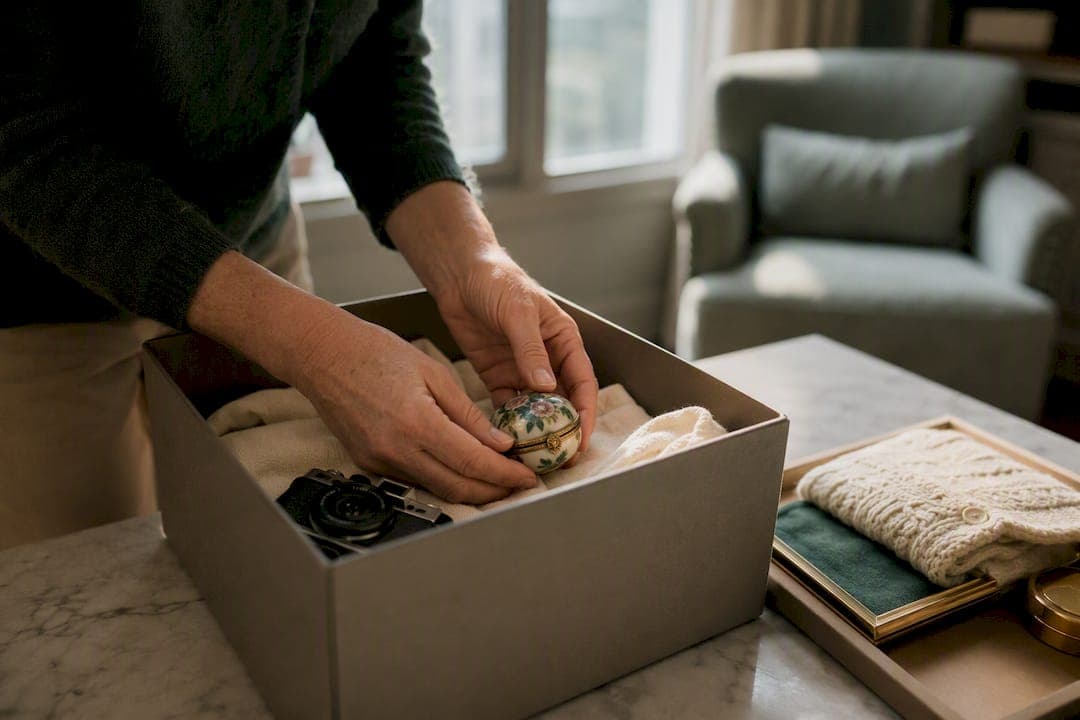
When you deal with sentimental clutter after a death or downsizing, the first move is simple: secure photos, documents, and small keepsakes in one labeled area before anything else moves. Photograph and briefly describe each item, then delay permanent disposal until you have time to think clearly. If distance, deadlines, or family friction make careful sorting impossible, bring in a donation-first, documented cleanout service instead of rushing the job yourself.
TL;DR:
- Label and photograph each sentimental item immediately to prevent loss or misplacement during the cleanout process.
- Use a four-box sorting system to separate items for keep, family claim, donation, or temporary hold, and set a strict time limit for each visit.
- Digitize photos and documents before disposal, storing digital copies in multiple locations to preserve memories and facilitate estate management.
- Document every item with a photo, description, condition, destination, claimant, and storage location to ensure clear estate records.
- Hire professional estate cleanout services when facing large volumes, safety hazards, or emotional challenges to secure thorough documentation and respectful handling.
Table of Contents
- Priority Checklist for the First 30 to 90 Minutes on Site
- How Do You Sort Sentimental Items Room by Room?
- Building an Inventory Executors Can Actually Use
- What Are Your Options for Donating, Reselling, or Disposing of Items?
- When Should You Pause Before Letting Go?
- When Should You Bring in a Professional Cleanout Team?
- What Actually Matters When You're Sorting Through a Life
- Ready to Get Started With a Documented, Donation-First Cleanout?
- Sources
Priority Checklist for the First 30 to 90 Minutes on Site
Before you touch a single box, treat the property like an active estate, not a house that needs emptying. The first hour sets the tone for everything after it.
Start by locating and physically removing the fragile stuff. Practitioners who manage cleanouts regularly point to labeling as the single most effective defense against losing something irreplaceable, and it costs you nothing but a marker and a roll of tape.
- Secure originals first. Wills, deeds, insurance papers, and small keepsakes go into a locked box or a designated room that no one enters without you.
- Label everything individually. Use color-coded stickers plus a brief written note, and photograph each item with a date stamp before you move it so there's a record even if the item later gets misplaced.
- Sort with a four-box adaptation. Set up Keep, Family Claim, Donate/Consign, and Hold 90 Days, and mark a name on anything with a known recipient.
- Set a hard stop. Cap the session at a few hours, note who attended, and put the next visit on the calendar before anyone leaves.
Pro Tip: Assume any item without a label or note might get swept into general cleanup by a crew that doesn't know its story. If it matters, mark it. If you can't mark it in time, photograph it and set it aside physically.
How Do You Sort Sentimental Items Room by Room?
A room-by-room method keeps a whole-house cleanout from turning into an emotional free-for-all. It also protects the items you'd most regret losing.
Prepare before you start. Gather supplies (boxes, trays, envelopes, labels, a camera or phone), confirm what the executor has authorized you to move, and assign roles so two people aren't duplicating work. If the home involves biohazard conditions or heavy clutter, protective gear isn't optional.
Sweep, then sort. Do a fast walk-through of each room to pull anything obviously sentimental, photos, letters, jewelry, keepsake boxes, into a central holding spot. Only after that sweep should you do the slower, detailed sort. This two-pass approach keeps you from getting stuck agonizing over one drawer while an entire room waits.
Follow a small-items protocol. Loose jewelry, coins, and photographs are the items most likely to disappear or get damaged during a cleanout. Practitioners recommend using trays, sealed envelopes, and labeled bags for anything smaller than a shoebox, with a catalog entry and photo for each one.
- Use one tray per drawer or shelf so context isn't lost.
- Bag jewelry by owner claim, not by type.
- Photograph letters and cards before boxing them, in case ink fades or paper gets brittle in storage.
Digitize before you decide. Scanning photos and documents before disposal lets you keep the memory even when the physical object goes. Aim for at least 300 DPI on scanned photos, a consistent file naming pattern (date, subject, box number), and two storage locations, one cloud account and one external drive, so a single hard drive failure doesn't erase a family archive.
Building an Inventory Executors Can Actually Use
An inventory that only makes sense to the person who wrote it is useless in probate. Executors, realtors, and caseworkers need something a stranger, an attorney, or a judge could follow without asking questions.
Every entry should carry six pieces of information: a photo, a brief description, the item's condition, its suggested destination (keep, donate, sell, dispose), the assigned claimant if there is one, and its current storage location. That's the baseline Empathy for treating household items as estate property rather than casual leftovers.
- Log a dated signature every time an item changes hands, along with who moved it.
- Attach photo evidence to any transfer, not just a written note.
- Keep original wills, deeds, and insurance documents physically separate from the general sorting flow. These should never be donated, sold, or discarded, even by accident.
- Store donation receipts, consignment slips, and sale logs together in one folder for the estate's accounting records.
What Are Your Options for Donating, Reselling, or Disposing of Items?
Not every sentimental item needs to become a permanent keepsake, and not every leftover object belongs in a landfill. The right disposition path depends on the item's condition, its resale value, and whether anyone in the family wants it.
- Donation-first handling. Vet the charity first, request an itemized pickup receipt, and log each donated item in your inventory before it leaves the property.
- Consignment and resale. Furniture, jewelry, and collectibles in good condition often carry resale value; document what goes to consignment and track the proceeds against the original inventory entry.
- Secure disposal. Shred sensitive documents rather than tossing them, and use certified e-waste wiping for phones, computers, and hard drives that might hold personal data. Hazardous materials, old paint, chemicals, medications, need separate disposal channels, not the regular haul-away pile.
- Skip the curb. Last-minute curbside dumping leaves no paper trail. Every item leaving the property should have a documented chain of custody, even the things nobody wants.
When Should You Pause Before Letting Go?
Grief clouds decision-making in predictable ways, and rushing a cleanout tends to produce regret that surfaces months later, not relief. Building in structure protects both the memories and the relationships in the room.
For items that trigger real hesitation, a 90-day undecided hold gives you room to decide without pressure. Keep sessions capped at two to three hours; decision fatigue sets in fast when every object carries emotional weight, and tired people make worse calls.
- Give each family member one memory box, not an open-ended pile, to force meaningful choices instead of blanket retention.
- Choose a few representative items over an entire collection, and photograph what you release so the memory survives even when the object doesn't.
- Rotate who chooses first across sessions, and appoint one neutral person to settle disputes.
- Write down who got what and when. A dated record heads off arguments that resurface at the next family gathering.
Pro Tip: If two people want the same item, take a photo before deciding anything. Sometimes just seeing it documented is enough to defuse the disagreement.
When Should You Bring in a Professional Cleanout Team?
Some situations call for outside help, and recognizing that early saves both time and relationships. Neutral professionals bring emotional distance that family members often can't offer each other in the middle of grief.
- Watch for the triggers. A looming probate deadline, health or safety hazards in the home, ongoing family conflict, a large volume of belongings, or an executor who lives out of state all point toward hiring help.
- Ask for specific deliverables. A reputable provider should offer an insured crew, a documented inventory with photos, coordinated donation drop-offs, and a broom-clean finish when the job is done.
- Confirm the donation-first approach. Look for providers offering donation-first sorting, photo and inventory documentation useful for probate, and insured crews working under a clear written scope.
- Understand the pricing structure. Expect a walkthrough followed by a firm written quote, with line items for labor, hauling, and disposal, plus commission structures if an estate sale or consignment listing is part of the job.
If you're weighing professional help against a DIY container rental, the deciding factor is usually time and documentation, not just cost.
What Actually Matters When You're Sorting Through a Life
Most advice on sentimental clutter treats it like a personal organizing problem, declutter your own home, decide what sparks joy, build better habits. That framing doesn't hold up once you're standing in a parent's house with a probate deadline, three siblings who disagree, and a caseworker asking for documentation by Friday. This isn't personal decluttering. It's estate administration with an emotional layer bolted on, and treating it as the former is how families lose irreplaceable items or end up in disputes that outlast the cleanout itself.
The conventional wisdom undersells documentation. Photographing an item before it's donated or claimed isn't busywork, it's the difference between a smooth probate accounting and a contested one. Families that skip this step almost always regret it later, usually when someone asks where Dad's watch went and nobody can answer.
Prioritize the record over the sentiment. Feelings about an object matter, but a dated photo and a signed transfer note protect everyone involved, including the memory itself.
— Derek
Ready to Get Started With a Documented, Donation-First Cleanout?
Professional cleanout services give you what a rushed DIY cleanout can't: a documented, donation-first process built specifically for estates, not just general junk removal. That can mean insured crews, photo and inventory records suited for probate, coordinated donation pickups, and a broom-clean handoff when the work is finished.

If your family, caseworker, or brokerage is facing a property that needs to be cleared with care rather than speed, a walkthrough is the right first step. A professional service will provide a firm written quote along with the inventory, photos, and donation receipts your estate accounting needs. For families weighing what to keep before a crew arrives, our room-by-room downsizing guide is worth reading first, and once the space is cleared, a partner like One Day Doors & Closets can help with long-term storage systems for whatever you decide to keep. Request your walkthrough and quote to see the process in writing before you commit to anything.
Sources
- How to Protect Sentimental Items During an Estate Cleanout - Orion's Attic
- How to Handle Sentimental Items During a House Clean Out
- The Compassionate Guide to Estate Cleanouts After a Loss | Busy Bees Concierge
- Dealing with your loved one’s household items | Empathy