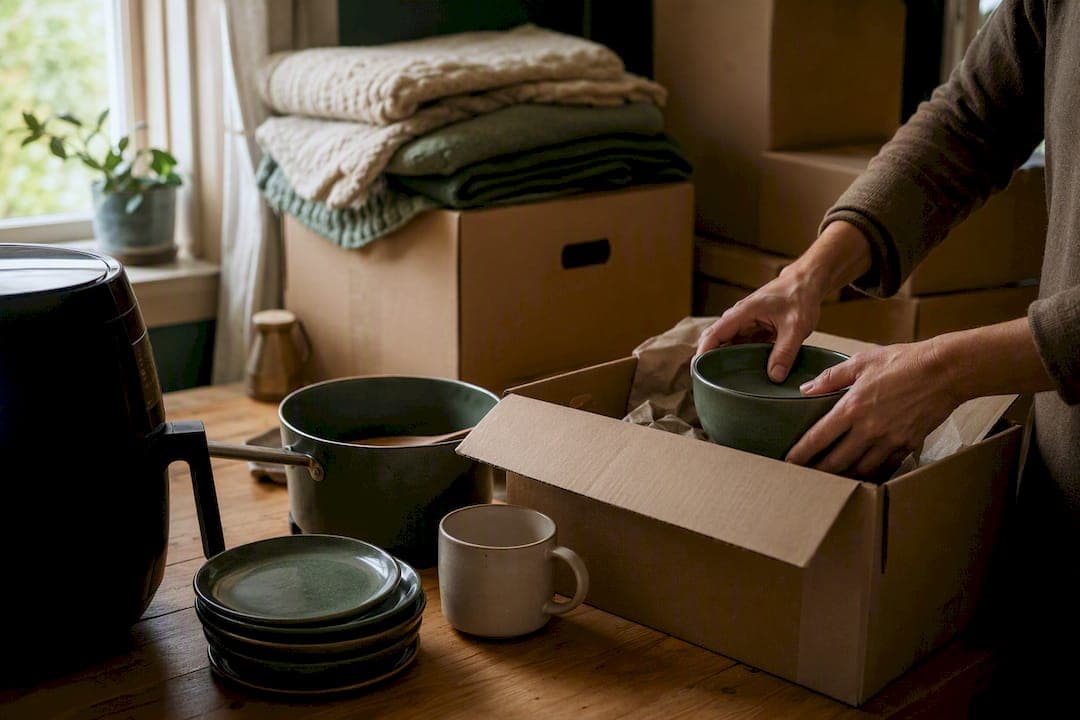
Keep daily-use items, important documents, prescription medications, a handful of true sentimental keepsakes, and compact multiuse furniture. Everything else gets measured against your new floor plan, one category at a time, using a simple inventory. Pack an essentials box with what you need for the first 48 hours, and let square footage, not sentiment alone, make the final calls.
TL;DR:
- Keep only versatile appliances and essential items in each room, and measure storage space to set realistic limits based on your new floor plan.
- Use the one-year rule and prioritize non-negotiables like legal documents and keepsakes when sorting possessions.
- Store items in a temporary unit with a strict six-month review, and only for valuables or things you might want later, with proper labeling.
- Schedule sales, donations, and disposal six to eight weeks before moving, and list furniture early at discounted prices to ensure quick sale.
- Pack a dedicated essentials box for the first 48 hours and update all important documents and records before the move.
Table of Contents
- What to keep when downsizing, room by room
- How do you decide what to keep and what to let go?
- Should you store, sell, or discard items that don't fit yet?
- When should you sell, donate, or dispose of what's left?
- What goes in your moving-day essentials box?
- What a professional cleanout adds to the process
- Don't forget to update your important documents and records
- A final word on letting go
- Sources
What to keep when downsizing, room by room
Your kitchen, closets, and garage each hold different traps. The kitchen tempts you to keep three appliances for one job. Closets hide clothes you forgot you owned. Here's how to move through each room without second-guessing every decision.
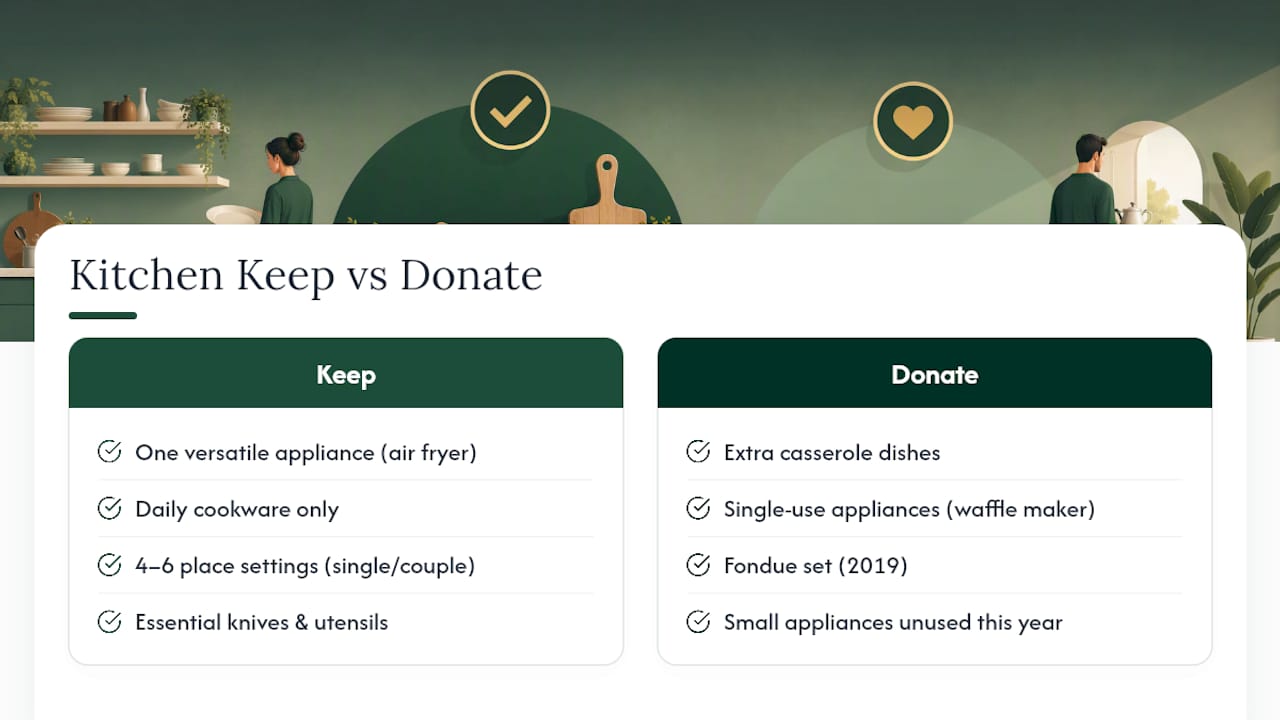
Kitchen. Keep one versatile appliance (an air fryer that also toasts beats a single-use waffle maker), your daily cookware, and four to six place settings if you live alone or as a couple. Donate the extra casserole dishes, the fondue set from 2019, and any small appliance you haven't plugged in this year.
Bedroom and linens. Two sheet sets per bed is the realistic number, not the aspirational one. Keep one set of spare blankets per household, not per bed. Old comforters and mismatched pillowcases go straight to donation.
Living areas. Furniture rules change hard in a smaller home. A couch that seats six becomes a liability when your new living room fits a loveseat. Prioritize pieces that scale to the room and multitask (an ottoman with storage, a console table that hides a drop-leaf extension). Anything oversized or single-purpose should be sold or measured out before moving day, not after.

Bathroom. Purge expired medications, duplicate travel-size toiletries, and old cosmetics. This is the fastest room to clear because almost nothing here carries sentimental weight.
Closets. Apply the one-year rule here first: if you haven't worn it in the last twelve months, and it's not a genuine seasonal or formal exception, it goes.
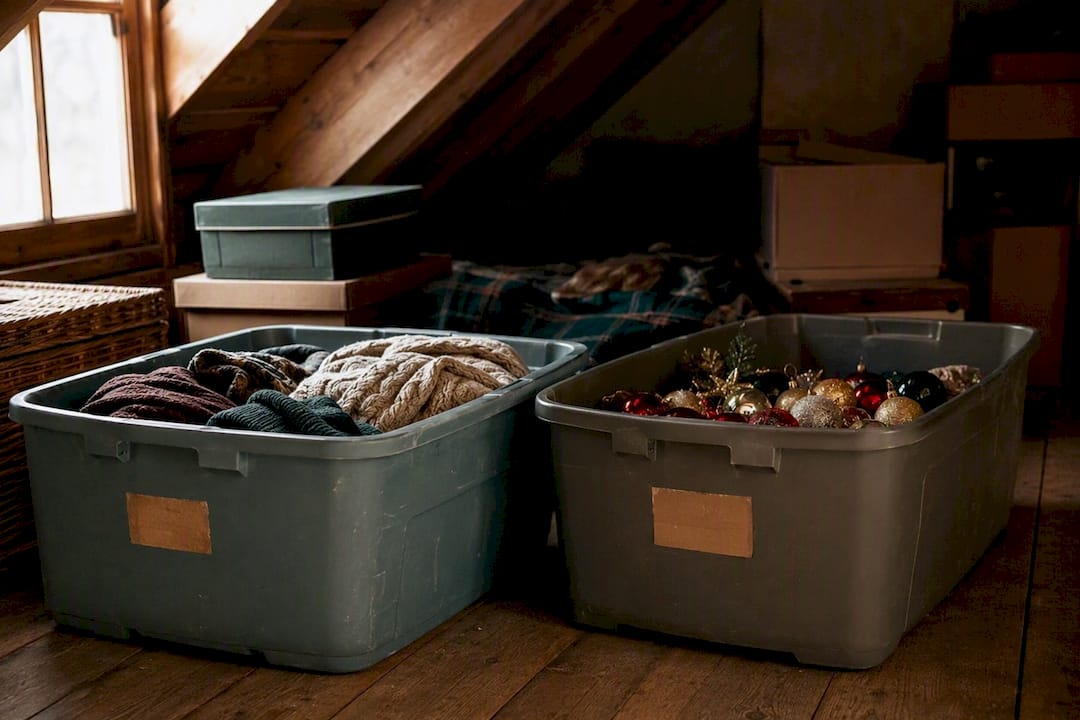
Garage and attic. Someday projects rarely happen someday. Limit seasonal decorations to what fits in two labeled bins per season, and be honest about tools and equipment tied to a house you're leaving behind.
Pro Tip: Photograph anything you're on the fence about before deciding. Seeing it in a photo instead of in your hands makes it easier to let go, and it gives you a digital record if you change your mind later.
How do you decide what to keep and what to let go?
Sorting by category rather than room exposes duplicates fast. Pull every coat, every mug, every book into one pile before you decide what stays.
- Apply the one-year rule. If you haven't used it in the past twelve months, it's likely safe to let go, with exceptions for once-a-year items like holiday decor or formal wear.
- Build your non-negotiables list first. Medications, legal documents, and irreplaceable keepsakes are automatic keeps. Decide these before you touch anything else, so emotion doesn't creep into every later decision.
- Rank everything else by utility, then frequency, then sentiment, then resale value. An item you use weekly outranks one you love but haven't touched since a move three years ago.
- Set numeric limits using your new floor plan. If your new home is 40% smaller, plan to reduce your book, dish, and clothing counts proportionally before you start sorting, not after.
Pro Tip: Measure your new closet, cabinets, and bookshelves before you start sorting. A number like "12 linear feet of hanging space" turns an emotional decision into a math problem.
Should you store, sell, or discard items that don't fit yet?
Storage should be a transition room with a deadline, not a second home for things you can't decide about. Set a firm six-month review date when you rent a unit, and put it on your calendar the same day you sign the lease.
- Store sentimental or valuable items you're not ready to release, but revisit that decision at the six-month mark.
- Choose climate-controlled units for documents, artwork, and instruments, which degrade fast in heat or humidity.
- Weigh monthly storage cost against what selling or donating the item would net you. A $150-a-month unit adds up quickly against a $200 dresser.
- Label boxes with actual contents ("winter coats, size M" beats "misc bedroom").
Pro Tip: If you can't remember what's in a storage box after six months without opening it, that's your answer.
When should you sell, donate, or dispose of what's left?
Timing determines whether items leave smoothly or become a last-week scramble. Start the process six to eight weeks before your move to give yourself room to sell, donate, and haul without panic.
- List furniture on local marketplaces four to six weeks out, and price used pieces in good condition at 30 to 50% of retail to move them quickly.
- Schedule donation pickups at least two weeks ahead. Charities and a local ReStore often book solid closer to month-end.
- Call ahead to confirm what a charity or ReStore will actually accept. Ask for a receipt if you plan to claim a tax deduction.
- For everything that won't sell or donate, book a bulk trash pickup or dumpster rental, and separate hazardous waste like paint and electronics for proper recycling.
What goes in your moving-day essentials box?
The first 24 to 48 hours in a new home go smoother when one box travels with you instead of the truck.
- Medications, chargers, toiletries, a change of clothes, and basic tools like a screwdriver and scissors.
- Important documents (IDs, keys, insurance papers) and snacks for the first day.
- Keep this box in your own vehicle, never in the moving truck, and label it clearly so it doesn't get buried under other bags.
- Pack low-use items first, weeks out, and save daily essentials for the final 48 hours before the move.
Keep cash, jewelry, and sensitive paperwork like deeds or wills on your person rather than in any box at all.
What a professional cleanout adds to the process
Bereavementcleanoutservices approaches every cleanout with a donation-first sorting method, which routes usable furniture and household goods to local charities before anything reaches a dumpster. That single choice tends to lower hauling costs and keeps more items out of landfills.
- Photographed, itemized inventories of keepsakes, useful for heirs and required for many probate filings.
- Broom-clean handoffs once sorting, donation runs, and disposal are complete.
- Discreet scheduling and fully insured crews for estate sales, hoarding cleanups, and whole-house cleanouts.
Pro Tip: If you're managing a loved one's estate alongside your own move, ask any cleanout service whether they document items for probate before work begins. Not all of them do, and that paperwork matters later.
Don't forget to update your important documents and records
Downsizing is also the moment to audit paperwork most people ignore for years. Pull everything into one place before the move: wills, deeds, titles, insurance policies, tax returns, medical records, and account statements. Sort by legal requirement versus convenience.
Scan everything and keep originals only where the law requires it. Tax returns generally need to stay for seven years, and property deeds and titles should be kept as originals indefinitely. Everything else, from old utility bills to expired warranties, can be digitized and shredded.
Update your address with the post office, banks, insurance providers, and any subscription services before your move date, not after. If you're settling a family member's estate at the same time, confirm that beneficiary designations on accounts and policies still reflect current wishes. This is also the right moment to digitize old photos and letters, preserving the memory without the physical bulk.
Readers who want a deeper room-by-room framework can also check this practical decluttering guide for additional tactics on staging a home while you clear it.
If the volume of paperwork, furniture, and keepsakes feels like more than you can sort alone, especially while settling a loved one's estate, Bereavementcleanoutservices handles the sorting, donation runs, and probate documentation so you don't have to do it during an already difficult stretch.
A final word on letting go
Sentiment and square footage rarely agree, and the goal isn't to win that argument, just to make peace with it one decision at a time. Start with an inventory, measure your new space against it, and book your donation pickup before you second-guess yourself. Set hard numeric limits per category, and let storage buy you six months, not six years.
— Derek