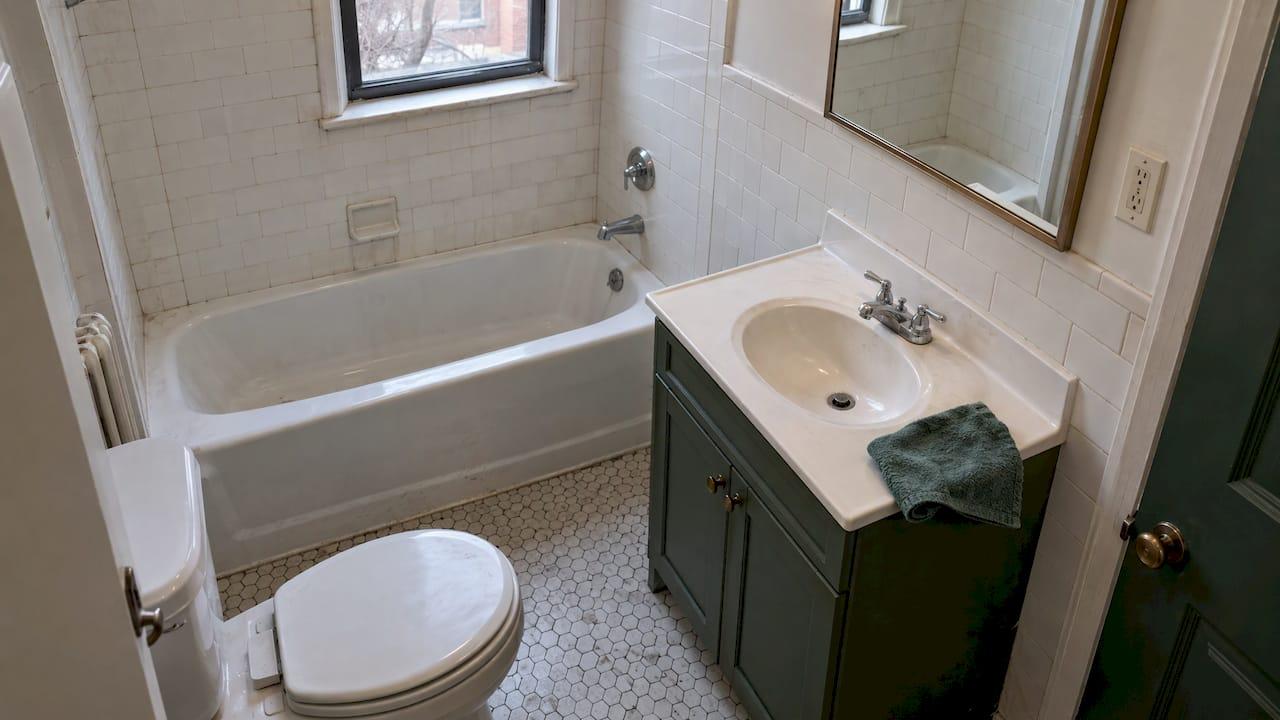
An apartment cleanout goes best in a fixed order: sort belongings first, remove what is leaving, deal with hazardous items, clean the empty rooms top to bottom, then document the finished unit. This checklist follows that order. It works whether you are moving out, clearing a unit for a new tenant, downsizing, or emptying the apartment of a loved one who has died.
If the apartment belonged to someone who passed away, add one step at the very start: find the will, important papers and keepsakes before anything leaves the building. We cover that below.
TL;DR
- Sort first, clean last. Cleaning around belongings is how spots get missed, so empty each room before you scrub it.
- Use four piles: keep, donate, sell, discard. Put anything undecided in a labeled box and review it later.
- Batteries, paint, chemicals and refrigerated appliances never go in regular trash. Use hazardous-waste and appliance recycling programs.
- Check your lease or your landlord's expectations before cleaning, then photograph or video every room after the work is done.
- For a full unit, our apartment and condo cleanouts start from $650, and we handle the sorting, donation runs, hauling and broom-clean finish.
Table of Contents
- Before you touch a single box
- Step 1: Sort everything into four piles
- Step 2: Handle the items that need special care
- Step 3: Keepsakes and important papers
- Step 4: Clean the empty apartment, top to bottom
- Step 5: Document the handoff
- A realistic timeline
- When a professional team makes sense
- Our perspective
- Hand the job to us
- FAQ
- Sources
Before you touch a single box
Two questions decide how the rest of the job goes: who owns what is inside, and what standard does the apartment have to meet at handoff?
If you are moving out of your own apartment, read the lease. Some leases expect the unit to be left broom clean, while others require professional carpet cleaning with a receipt. Ask the property manager directly, in writing if you can, so you clean to the right standard rather than guessing. Our guide to what broom clean really means explains the usual baseline.
If you are clearing a loved one's apartment, pause before anything is thrown away. Look for the will, deeds, insurance papers, tax records, jewelry, cash and photographs. Our walkthrough on finding the will and donating first lays out what to look for and where. Timing matters too: lease end dates, building rules and elevator reservations can set your schedule, so confirm them with the landlord early.

If you are preparing a unit for a new tenant or a sale, you are working to a handoff standard, and photographs of the finished unit protect everyone involved.
Gather supplies once
Buy or borrow everything before you start so you are not interrupted halfway through a room:
- Heavy-duty trash bags and a few boxes in different sizes
- Markers, painter's tape and labels for piles and boxes
- Disinfecting cleaner, degreaser, glass cleaner and a bathroom cleaner
- Sponges, rags, a scrub brush, a mop and a vacuum
- Work gloves and closed-toe shoes
- A shredder or a plan for shredding sensitive papers
- A phone or camera for photos and video
Step 1: Sort everything into four piles
Work one small area at a time, not the whole apartment at once. A drawer, a shelf or a closet is a good unit of work. Label four spots or boxes:
- Keep: things that move with you, go to family, or are needed for the estate.
- Donate: clean, working items in good condition.
- Sell: higher-value pieces such as furniture, art, collectibles or jewelry.
- Discard: broken, soiled or unusable items.
Add a fifth box for "decide later." Tape it shut, date it and review it in a few weeks. This keeps the pace up without forcing hard calls on sentimental objects.
Set limits where you can, such as one closet's worth of clothes or one shelf of books. Limits turn "should I keep this?" into a simpler question.
What to donate, and how
Consumer Reports, in its guidance on throwing out what you don't need, advises that donated items should be clean, safe and in good condition. Practical rules we follow:
- Wash or wipe items before they go in the donation box.
- Keep sets together, such as dishes, cutlery and linens.
- Factory-reset phones, tablets and laptops, and remove any accounts.
- Schedule the drop-off or pickup right away so donation boxes do not become clutter.
Charities decline more than people expect, such as mattresses, damaged upholstery and some electronics. Our list of items charities won't take can save you a wasted trip.
What to do with everything else
The StopWaste guide to moving and decluttering gives a useful breakdown by item type:
| Item | Where it can go |
|---|---|
| Good-condition clothing | Local charities or thrift stores |
| Worn or damaged clothing | Textile recycling |
| Working furniture | Donation, an online listing, or the curb with a "free" sign |
| Non-working bulky items | Bulky-item pickup from a garbage hauler, or a transfer station |
| Paint, chemicals, batteries, motor oil | Household hazardous waste facilities, never regular bins |
Check your own municipality's rules for bulky pickup and hazardous waste days, because they differ across New Jersey towns and counties. Many apartment buildings also restrict where large items may be left, so ask the super or property manager before you stage anything in a hallway or at a dumpster.
Step 2: Handle the items that need special care
Some things are safety issues, not just sorting decisions.
- Refrigerators, freezers and window AC units contain refrigerant. Consumer Reports points to the EPA's Responsible Appliance Disposal program, which lists groups that pick up and recycle these appliances.
- Batteries, paint, solvents and chemicals go to hazardous-waste programs. Consumer Reports notes that Earth911 can direct you to nearby programs.
- Sharps, medications and medical equipment need their own disposal routes. Ask your pharmacy or local health department what they accept.
- Documents with account numbers or Social Security numbers should be shredded, not recycled whole.
If you open a closet, bathroom or kitchen and find biological hazards, heavy odor, pest damage or standing waste, stop. That is not a job for household gloves and a mop. Specialty odor and waste cleaning is a service we provide, and it is far better to bring in trained people than to risk your health.
Step 3: Keepsakes and important papers
This is the part most checklists leave out, and in a family cleanout it is the part that matters most.
Set aside before you sort
Before the main sort begins, do a quick pass for the items that cannot be replaced:
- Wills, trusts, deeds, leases and vehicle titles
- Insurance policies, bank and retirement statements, tax returns
- Passports, birth and marriage certificates, military records
- Jewelry, watches, cash, coins and gift cards
- Photo albums, letters, journals and home videos
Put these in one clearly labeled box or tote and keep it with you, not in the pile that goes out with the crew. Check coat pockets, books, kitchen canisters, freezer bags and the backs of drawers, since people often hide valuables in ordinary places.
Keep a record of decisions
If you are acting as executor or working with siblings, write down what went where: who took which item, what was donated, what was sold. A simple dated list with photos avoids later disagreements and helps with probate paperwork. Our post on protecting sentimental clutter with documentation shows how we do this, and our guide on what to keep when downsizing offers a room-by-room view of the items families most often regret letting go.
Give people room to grieve. It is normal to slow down at a sweater, a recipe card or a handwritten note. Use the "decide later" box, and come back when you are ready.
Step 4: Clean the empty apartment, top to bottom
Once the belongings are out, clean in one direction: high to low, back of the apartment to the front door. Dust and debris fall, so you always clean the surface below after the one above.
A reliable overall order:
- Remove all belongings and trash.
- Photograph the condition of each room before you start, as a record of what you began with.
- Dust ceiling corners, fans, light fixtures and vents.
- Clean inside empty closets, cabinets and drawers.
- Clean the kitchen and bathrooms.
- Wipe doors, trim, baseboards, switches and window sills.
- Vacuum carpet.
- Mop hard floors, finishing at the door.
- Do a final walkthrough with your lease or property checklist.
Kitchen
The kitchen takes the longest and is usually where landlords look hardest. Grease, food residue and appliance interiors are common reasons for deposit deductions.
- Apply oven cleaner the evening before, then wipe it out the next day.
- Clean the stovetop, range hood and filter, and microwave inside and out.
- Empty the refrigerator and freezer completely, then wash shelves, drawers and the door gasket.
- Pull the drip pans and clean beneath and behind the stove if it slides out.
- Wipe cabinet fronts, handles, the inside of cabinets and drawers.
- Scrub the sink and faucet, and run the disposal with a little dish soap.
The refrigerator gasket and the area under the stove are two of the most frequently missed spots, so give them a deliberate pass. These kitchen appliance cleaning tips cover the order of work and the places people forget. If an appliance looks damaged or does not work, note it and tell the landlord rather than leaving it to be discovered.
Bathroom
- Remove everything from shelves, the tub and the medicine cabinet.
- Descale the showerhead, and scrub tile, grout, tub and shower door tracks.
- Disinfect the toilet, including the base and behind the seat hinges.
- Clean the sink, vanity and mirror.
- Wipe exhaust fan covers, and replace any burned-out bulbs.
- Mop the floor, including corners and behind the toilet.
Living room and bedrooms
- Remove nails and picture hooks and note any holes. Patch small ones if your lease allows.
- Wipe walls, doors, light switches and outlet covers.
- Dust blinds and clean window glass, sills and tracks.
- Clean closet shelves and rods, and vacuum the floor of the closet.
- Vacuum carpets, including edges and under where furniture stood.
Entry, hallway, balcony and storage
- Sweep and wipe the balcony or patio and any storage cage.
- Clean the entry closet and shoe area.
- Check the thermostat, smoke detectors and carbon monoxide detectors, and replace dead batteries if that is your responsibility under the lease.
- Remove any mail, packages or flyers from inside the unit.
Step 5: Document the handoff
Your final step is proof. The Minnesota Attorney General's office, in its guide to vacating an apartment, recommends requesting a move-out-day walkthrough with the landlord or manager, taking photographs or video of the unit, reading the lease to confirm your responsibilities are complete, moving out on time, and leaving a forwarding address. Rules differ by state, but this routine is sound anywhere.
A good documentation routine:
- Finish cleaning first. Photos taken before the work is complete will not show the unit at handoff.
- Take wide shots from each doorway, then close-ups of the oven, refrigerator, bathroom fixtures, windows, floors and any repairs.
- Record a continuous video walkthrough, stating the date and address as you go.
- Email the files to yourself and keep a copy, so you have a timestamped record.
- If possible, walk through with the landlord or manager and ask for any sign-off in writing.
The same Minnesota guide notes that landlords cannot charge for normal wear and tear, but that tenants and landlords can see "acceptable damage" differently, which is why dated footage helps if a dispute arises.
Deposit rules depend on the state
Deposit deadlines are set by state law, so check yours. In Georgia, for example, the state's landlord-tenant handbook says landlords must return the deposit within 30 days after the lease ends or the tenant leaves, whichever is later. In Massachusetts, MassLegalHelp explains that a tenant who leaves the unit in the same condition as found is entitled to the full deposit with interest within 30 days. If you are in New Jersey or New York, look up your state's security deposit statute or ask a local tenant-rights organization or an attorney about your specific lease.
Landlords and property managers: if you are clearing a unit after an eviction or abandonment, the process has its own legal steps. Our overview of eviction cleanout laws in New Jersey explains what to know before belongings are removed.

A realistic timeline
How long an apartment takes depends on how much is in it and how many people are working. A rough planning guide:
| Stage | What happens | Typical share of the work |
|---|---|---|
| Planning | Lease check, supplies, building rules, elevator or parking reservations | A few hours |
| Sorting | Four piles, keepsakes and paperwork set aside | The longest stage for most families |
| Removal | Donation runs, hazardous items, hauling | One day for a typical apartment with help |
| Cleaning | Top to bottom, kitchen and bathrooms last | Half a day to a full day |
| Documentation | Photos, video, walkthrough | An hour or two |
Start sorting earlier than you think you need to. Sorting is the stage that stretches, because it involves decisions rather than labor.
When a professional team makes sense
Many people complete a small apartment on their own over a few weekends. Hiring help is common when:
- The apartment belonged to someone who passed away and the family lives far away or is overwhelmed.
- The lease ends soon and there is more inside than you can move in time.
- Heavy clutter, hoarding conditions or strong odors are present.
- You are a realtor, landlord or social worker with a unit that must be turned over quickly.
- Stairs, no elevator or large furniture make hauling unsafe.
Our guide to donation-first apartment cleanouts after a death describes how this works for New Jersey families, and the apartment cleanout cost guide breaks down what affects the final quote.
Our perspective
Most checklists are written for a tenant with a weekend and a rental deposit. Many of the apartments we enter belong to someone who is gone, and the people holding the checklist are grieving, busy, and often hours away.
That changes the order of the work. We start with keepsakes and paperwork, because those cannot be replaced and the probate process may need them. We sort for donation before we think about disposal, because usable furniture, clothing and household goods should reach people who can use them. And we document what we find and where it went, so executors and families have a record they can rely on.
We believe a cleanout is done well when the family feels respected as much as when the floors are clean. That is why our approach combines donation-first sorting, careful handling of keepsakes, discreet crews, full insurance and a broom-clean finish.
Derek
Hand the job to us
If you would rather not carry the whole checklist yourself, we can take it on. Bereavement Cleanout Services provides apartment and condo cleanouts across New Jersey, with donation-first sorting, careful handling of keepsakes, documentation useful for probate, fully insured crews and a broom-clean finish. Apartment and condo cleanouts start from $650, and a single room, garage or basement starts from $295. Final pricing follows a walkthrough and firm quote.
See the full list of services and request a walkthrough on our main site, or check the New Jersey areas we serve.
FAQ
What should I do first when cleaning out an apartment?
Start by sorting, not cleaning. Go room by room and divide belongings into keep, donate, sell and discard, with a box for undecided items. Set aside important papers and valuables before you do anything else, then remove the rest so you can clean empty rooms.
How long does an apartment cleanout take?
It depends on how much is inside and how many people help. A tidy one-bedroom can be finished in a day or two with a small crew, while an apartment full of belongings or sentimental items can take weeks of sorting. The sorting stage, not the hauling, usually sets the pace.
What cleaning supplies do I need for an apartment cleanout?
You need heavy-duty trash bags, boxes, labels, gloves, disinfecting cleaner, degreaser, glass cleaner, sponges, rags, a mop and a vacuum. Oven cleaner is useful for the kitchen. Keep hazardous products and old chemicals out of regular trash and take them to a hazardous-waste program.
What should I photograph before handing back the keys?
Photograph every room from the doorway, then take close-ups of appliance interiors, bathroom fixtures, windows, floors and any repaired or damaged areas. Add a continuous video walkthrough, and take everything after cleaning is finished. Save the files until your deposit or final accounting is settled.
Can someone else clear an apartment for a family member who has died?
Yes, in most cases an executor or authorized family member can arrange it, and a professional team can handle sorting, donation, hauling and cleaning. Confirm who has legal authority over the estate and the lease first. We can walk you through what we need during a walkthrough.
Sources
- Consumer Reports: How to Throw Out Stuff You Don't Need
- StopWaste: Moving & Decluttering
- Minnesota Attorney General: Vacating Your Apartment
- Georgia Landlord-Tenant Handbook
- MassLegalHelp: Handout 11, Moving Out