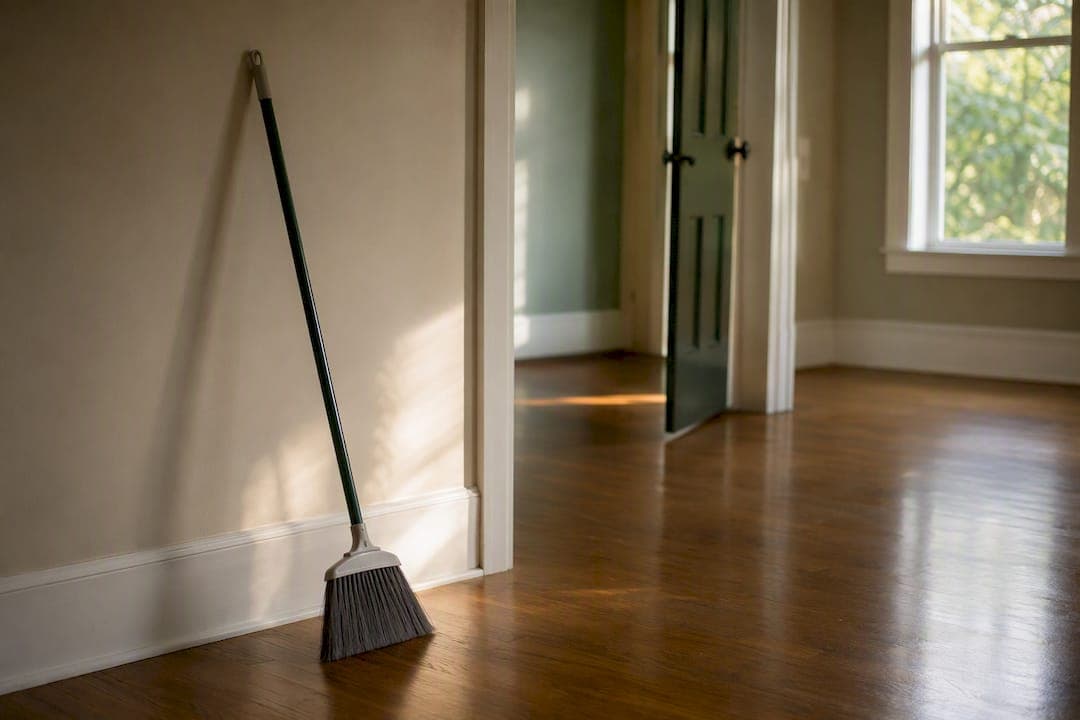
"Broom clean" means the property is free of personal belongings and debris, with floors swept or vacuumed. That's the whole baseline. It does not mean professional deep cleaning, sanitizing, or carpet shampooing unless your lease or purchase agreement spells that out.
The stakes shift depending on where you sit. Tenants risk deductions from their security deposit if they skip this step. Sellers usually face a contractual obligation, or at least a courtesy expectation from the buyer's side. Buyers walking through a home before closing should expect a swept, empty house, not a spotless one.
If you're unsure what your specific agreement requires, act now rather than guess later:
- Remove every personal item, including anything left in attics, sheds, or garages
- Sweep or vacuum all flooring surfaces
- Photograph each room before you hand over keys
- Keep receipts for hauling, donations, or any cleaning you pay for
Key Takeaways
Meeting the broom-clean standard means clearing personal property and debris, sweeping floors, and documenting the result, since courts enforce contract wording, not assumptions about cleanliness.
| Point | Details |
|---|---|
| Know the baseline | Remove belongings, clear debris, and sweep or vacuum floors; that's the full obligation unless the contract adds more. |
| Read your specific clause | Courts enforce exact contract language, so check whether your agreement says "broom clean," "professionally cleaned," or "move-in ready." |
| Skip the deep clean | Sanitizing, carpet shampooing, and repairs aren't required unless explicitly named in the lease or purchase agreement. |
| Document everything | Timestamped photos, a signed checklist, and receipts protect your deposit or closing funds if a dispute arises. |
| Call in help for big jobs | Estate cleanouts, hoarding situations, and tight deadlines are strong reasons to hire an insured, documented cleanout service. |
Table of Contents
- What Does Broom Clean Mean for Renters, Sellers, and Buyers?
- Why Wording and Documentation Matter More Than You Think
- A Room-by-Room Checklist for Meeting the Broom-Clean Standard
- What Broom Clean Does Not Require
- How to Document Your Move-Out and Avoid a Dispute
- When a Cleanout Deserves a Professional
- Sources
What Does Broom Clean Mean for Renters, Sellers, and Buyers?
Broom clean carries different weight depending on your role in the transaction, and confusing the three is where most arguments start.
Renters face the most direct financial consequence. Landlords typically walk the unit after move-out and compare it against the lease's move-out clause. If dressers are still sitting in the bedroom or the kitchen floor is covered in crumbs, that becomes grounds for a deposit deduction.
Sellers usually encounter broom clean as a line item in the purchase agreement rather than a deposit trigger. It's often framed as a courtesy to the buyer, though some contracts make it a binding condition of closing. Leaving furniture behind or forgetting the garage rarely voids a sale, but it can generate a post-closing cleanup bill charged back to you.
Buyers should walk the final inspection expecting an empty, swept house, not a professionally detailed one. If you want a higher standard, that has to be negotiated into the purchase agreement before signing, not assumed after the fact.
Why Wording and Documentation Matter More Than You Think
There's no federal or state statute that defines "broom clean" the same way everywhere. Courts look at the actual language written into the contract, and they generally won't stretch a broom-clean clause into a professional-cleaning obligation just because a buyer expected more.
That gap between expectation and enforceable language is where most disputes are born.
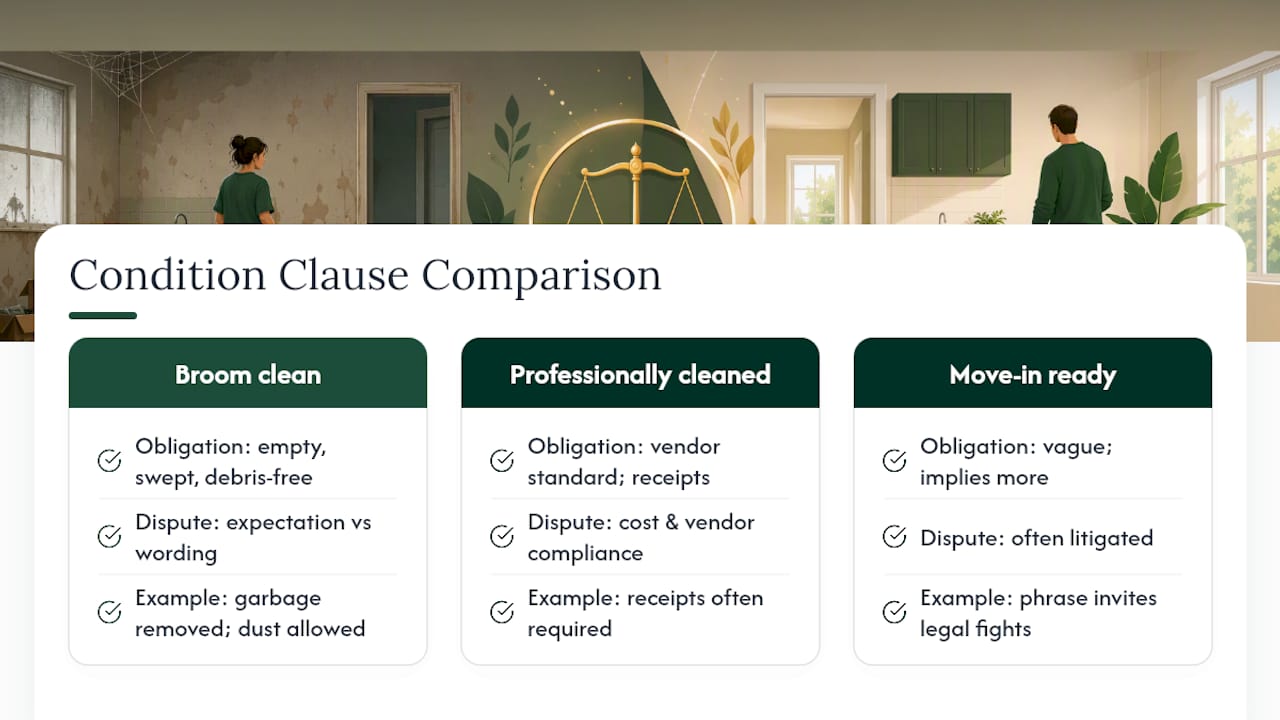
Compare three common clause versions: "broom clean" (empty, swept, debris-free), "professionally cleaned" (receipts required, often a specific vendor standard), and "move-in ready" (vague, and frequently litigated because it implies more than it defines). A Law Insider contract template shows some leases even extend "broom clean" to exterior grounds and require repairing damage caused by removing tenant property, so read the full clause, not just the phrase.
One small-claims case is instructive here: a court found that "broom clean" required removing garbage and debris but did not demand perfection — dust and a few cobwebs didn't justify withholding funds.
Pro Tip: If you're the one drafting the lease or purchase agreement, negotiate a specific dollar cap on cleanup costs rather than leaving "broom clean" open to interpretation. It saves both sides a fight later.
A Room-by-Room Checklist for Meeting the Broom-Clean Standard
Before touching a single room, clear every structure on the property, not just the main house.
- Walk the whole property first. Check the attic, garage, shed, and any detached structures for forgotten belongings.
- Sort as you go. Separate trash, donations, and anything hazardous (paint cans, propane tanks, cleaning chemicals) into different piles. Hazardous materials often need a separate disposal run, not the regular trash.
- Sweep or vacuum every room. This includes closets and any space with flooring, not just the main living areas.
- Empty every cabinet and drawer. Kitchens and bathrooms are the most commonly missed spots.
- Clear appliances of food and debris. You don't need to scrub the oven, but crumbs, spoiled food, and loose trash inside the fridge or cabinets should go.
- Wipe down obviously dirty surfaces. Counters and high-touch areas with visible grime take two minutes and prevent a dispute over "debris."
- Remove all visible trash. Bagged garbage left curbside or in a dumpster still counts as your responsibility until it's actually hauled away.
- Clear the yard and porch. Furniture, toys, and equipment left outside are still your personal property under most lease definitions.
- Double check sheds and detached garages. These get forgotten more than any other spot on the property.
Work through items that create real dispute risk first: leftover personal property, hazardous waste, and anything visibly trashy in a main living space. A few stray cobwebs rarely trigger a legal problem, but a garage full of furniture will.
Pro Tip: Photograph each room after you finish, not before. The "after" photo is your evidence if a dispute comes up later.
What Broom Clean Does Not Require
Broom clean is a floor, not a finish line. It does not obligate you to hire a professional cleaning crew, sanitize surfaces, shampoo carpets, remove stains, or repair worn fixtures.
Those tasks only become your responsibility if the contract names them specifically, such as a clause requiring "professionally cleaned carpets" or "sanitized kitchen surfaces." A common misunderstanding: a buyer expects the oven scrubbed and the grout bleached because the listing said "move-in ready." Neither task falls under broom clean unless the agreement says so in writing.
How to Document Your Move-Out and Avoid a Dispute
A little documentation goes a long way toward protecting your deposit or closing funds.
- Photograph or video every room, including inside cabinets and drawers, with a timestamp visible
- Photograph the exterior, sheds, and garage separately
- Request a signed move-out checklist or written email confirmation from the landlord or buyer's agent
- Ask for a final walkthrough whenever the schedule allows it
- Save every receipt for disposal fees, donation drop-offs, or paid cleaning
- Get any agreed exceptions to the broom-clean standard in writing before you hand over keys
Pro Tip: A donation receipt does double duty. It lowers your disposal costs and gives you dated, third-party proof that you made a good-faith effort to clear the property.
When a Cleanout Deserves a Professional
Some situations outgrow a weekend and a few trash bags. Estate clearances, hoarding conditions, furniture too heavy to move alone, and tight closing deadlines all justify bringing in help.
Bereavementcleanoutservices handles this work across New Jersey with a donation-first approach, meaning usable items go to local charities before anything hits a dumpster. Every job ends in a documented, broom-clean handoff, with photo inventories that support probate paperwork when an estate is involved. The company operates fully insured.

When evaluating any cleanout provider, confirm three things: proof of insurance, a written estimate after an in-person walkthrough, and a clear donation or resale policy. Start with a walkthrough and firm quote rather than a phone estimate.
Practical expectations and empathy
Meeting the broom-clean standard isn't about achieving perfection. It's about making a genuine effort to clear your belongings and debris, then backing that effort up with photos and a checklist. Most disputes I've seen described in case law and industry guidance come down to poor documentation, not actual dirt. Spend an afternoon on photos and a single day arranging hauling if needed. That small investment beats weeks of arguing over a deposit later.
— Derek
Sources
- Realtor
- What Is Broom Swept Condition in Real Estate? — LegalClarity
- Broom clean definition — Law Insider
- Court Answers an Existential Question: How Clean is 'Broom Clean'? — SGR Law