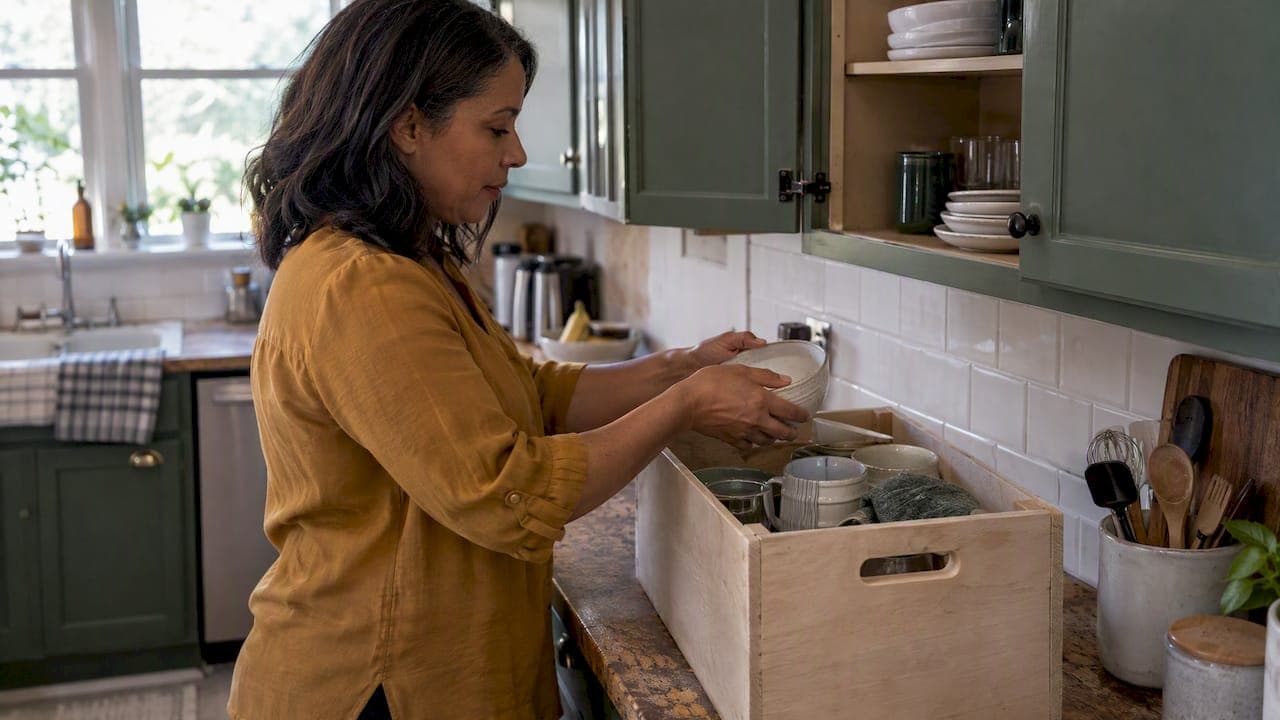
A respectful house cleanout is one that starts with authority and paperwork, moves at the family's pace, protects keepsakes and documents, and sends usable things to people who need them. Nothing leaves the house until you know who is allowed to decide what happens to it. Everything that does leave is sorted, recorded and handled with the same care the person showed when they lived there.
This guide walks through that process in order, from the first walk-through to the final handoff. It also explains where a professional team helps and what that help costs in New Jersey.
TL;DR
- Confirm who has legal authority (the will, the trust, the named executor) before anything is removed, given away or sold.
- Photograph every room first, then sort one room or category at a time into keep, sell, donate and discard.
- Set aside documents, valuables and keepsakes before any bulk removal, and keep a simple written record of every decision.
- Plan for several weeks, not a weekend. Breaks and a family meeting prevent most of the conflict.
- A donation-first professional cleanout can take the heavy lifting off you. Our published starting prices run from $150 for a small pickup to $2,200 for a large estate.
Table of Contents
- Start with authority, not boxes
- Before you sort: walk through and document
- Find the papers first
- Set a pace the family can live with
- Sort with a method
- Donate first, and do it properly
- Different homes, different approaches
- When to bring in professional help
- Our perspective
- What a professional cleanout costs in New Jersey
- Talk to us about your home
- Take care of yourself too
- FAQ
- Sources
Start with authority, not boxes
The most respectful first step is often the least visible one. Before you carry out a single bag, find out who is legally in charge of the home and its contents.
AARP's guidance for families after a death is to take a breath, learn your legal rights and obligations, locate the will or trust, secure the home and belongings, and make a written or video inventory. If there is no will or trust, share that inventory with the attorney, advisers or expected heirs.
When several heirs are involved, the executor formally assigned to administer the estate has authority over the home's disposition. Elder-law attorney Crystal West Edwards, quoted in the same AARP piece, explains that this holds when no specific instruction in the will or trust controls. That is why relatives should settle who is in charge before they take items or book anyone to haul things away.
The executor is also the person who carries out the deceased's wishes and takes responsibility for the property. If you are the executor, that includes the decision to wait. In New Jersey, our own guides cover the specifics: what executors need to confirm before donations begin and when to wait for probate.
If authority is unclear, talk to an estate attorney before you act. Giving away or discarding something that turns out to be specifically left to someone is hard to undo.

A note on debts
Families sometimes worry that clearing the house means taking on the person's bills. The Consumer Financial Protection Bureau explains that a personal representative uses estate assets to pay debts, not their own money. Rules for surviving spouses vary by state, so ask the estate attorney about your situation instead of guessing.
Before you sort: walk through and document
The first visit is not a work session. Walk through the home, sit in it for a while, and photograph every room before you begin sorting. Those photos become your baseline.
Photographs do three jobs:
- They give out-of-town family members a way to see the house without waiting for a visit.
- They record what was where, which settles "I thought Mom had a ring in that drawer" questions later.
- They establish the property's condition. AARP notes that documentation can protect families if questions or damage claims arise when others come into the home.
If you have not yet thought through what to capture, a short guide on photographing rooms and protecting valuables before a cleanup covers the preparation well. Pair it with the inventory advice from the estate professionals at ASEL, who recommend that you photograph and document items with financial or sentimental importance and share the inventory with the appropriate family members or authorized representatives.
Secure the property at this stage as well. Change or collect keys, remove obvious valuables to a safe place, and note who has access.
Find the papers first
Documents matter more than furniture. Before any bulk work starts, look for:
- The will, trust and any estate-planning documents
- Financial records and account statements
- Insurance policies
- Titles and deeds
- Keys, including safe-deposit keys
- Contact details for the person's attorney, accountant and advisers
ASEL lists the same categories as the first things to locate, secure and document. Some people leave a letter of last instruction that points to where these records are. New Mexico State University notes that such a letter supplements a will but never replaces it.
For the paperwork you collect, AARP suggests a labeled box or bin with separate folders for assets, liabilities, legal matters and ongoing household concerns. Ask the attorney which originals to keep, and scan or shred only what is appropriate. Never shred in bulk because a stack looks like junk mail. Old envelopes sometimes hold bonds, deeds or statements.
We cover the record-keeping side in more detail in our guide to estate cleanout documentation for executors.
Set a pace the family can live with
Grief and sorting do not mix well with deadlines. AARP's moving guidance says that if possible you should allow a year, expect the work to take time, and work a few hours at a time. Real life rarely allows a full year, especially with a lease ending or a house on the market, but the principle holds: the shorter your timeline, the more help you should line up.
A workable sequence:
- Week one: authority confirmed, home secured, photos taken, documents gathered.
- Week two: family meeting, keepsake requests, decisions about who takes what.
- Weeks three and four: room-by-room sorting, starting with the least-used rooms.
- Final stretch: donations, sales, disposal, and a broom-clean finish.
Hold a family meeting early
Siblings often react to a parent's home in very different ways. AARP contributors recommend a gentle family meeting that includes distant relatives so that grief does not turn into conflict or rushed decisions. Include out-of-town siblings by video. Ask each person for the three or four things they most want to be sure of, before anyone starts sorting.
Family members also work on their own timelines. When disagreements stall things, a neutral third party can help. That might be an attorney, a mediator, a clergy member, or a professional cleanout team that follows the executor's written instructions rather than anyone's opinion.
Sort with a method
The respectful way to sort is systematic. Work one room, floor or category at a time and separate belongings into keep, sell, donate and discard, as ASEL recommends, while communicating clearly and documenting decisions.
AARP suggests starting with the least-used rooms and using clearly labeled categories such as Move, Sell, Toss, Donate, Up for Grabs and Pass Along. It also suggests photographing meaningful collections when appropriate so the memory can be kept even when the objects cannot.
| Category | What goes here | Respectful handling |
|---|---|---|
| Keep | Keepsakes, photographs, letters, heirlooms | Box and label by room or by person; do not leave in the house during bulk work |
| Pass along | Items requested by relatives or friends | Record who is taking what, ideally in writing |
| Sell | Furniture, collectibles, tools, jewelry | Photograph and list before pricing |
| Donate | Clean, usable clothing, housewares, furniture | Match items to local charities that want them |
| Discard | Broken, unsafe or unusable items | Separate recyclables and hazardous items |
AARP also notes that parting with a beloved item is easier when it goes to a relative, and that recipients should accept such gifts with grace. A coat given to a niece or a toolbox given to a grandson can mean more than anything a charity shelf could offer.
Handle medications and hazards carefully
Old prescriptions should not go in the trash or down the drain. The DEA says that more than 16,500 pharmacies, hospitals and other businesses offer year-round disposal, alongside its twice-yearly take-back events. Set medications aside in one bag and take them to a collection site near you. Paint, chemicals and anything that could be a biological hazard also call for separate handling rather than the curb.

Donate first, and do it properly
Most homes hold far more usable goods than families expect. Clean clothing, kitchenware, linens, furniture, books, and medical equipment like walkers and shower chairs all have a second life. A donation-first approach means that usable things are offered to local charities before anything is thrown out. It is the approach we take on every job, and it respects the person's belongings in a way a dumpster does not.
For New Jersey families, some of the best starting points are our guides on what to do with leftover estate sale items and where to sell furniture in New Jersey. If the home has valuables or collectibles, what sells at estate sales and how to price it helps you decide what to sell and what to give.
Keep a simple record of what you found, kept, donated and sold. A running list on paper or a phone note, with photos before major changes, is enough. A simple record of this kind is also what an attorney, accountant or other heirs may ask for later.
Different homes, different approaches
Not every cleanout looks the same, and the respectful approach changes with the situation.
- An apartment or condo. Smaller footprint, but often a hard landlord deadline and building rules about elevators and dumpsters. See our guide to a donation-first apartment cleanout after a death.
- A house you plan to sell. The goal is usually a clear, clean property. AARP quotes financial adviser Meredith Moore, who says that for inherited properties the priority should be to sell efficiently rather than invest in extensive renovations. Our real estate cleanout checklist for executors covers the steps.
- A storage unit. Often forgotten, and often a source of surprise. Our storage unit plan for executors explains how to approach it.
- A home with heavy clutter. Hoarding conditions need patience, protective gear and no judgment. This is rarely a family job, and rarely a safe one.
When to bring in professional help
Some families do the entire cleanout themselves and find it meaningful. Others find that the distance, the volume, the physical work or the grief makes it impossible. Both are reasonable.
Professional help makes sense when:
- You live out of state or far from the property
- The home is full, heavy or physically unsafe to work in
- A closing date, lease end or foreclosure deadline is close
- Family members disagree and need a neutral party carrying out clear instructions
- You need documentation you can hand to an attorney or the court
AARP also notes that senior move managers can organize and sort possessions, arrange disposal and supervise packing. A cleanout company is a different kind of professional, but a good one overlaps with this: sorting, hauling, donation, and preparing the property.
What to ask before you hire
- Are you insured, and can you show proof?
- How do you handle keepsakes, cash, documents and jewelry that turn up?
- Will you give me a written quote after a walkthrough?
- Where do donated items go?
- What documentation will I receive when the job is done?
- What condition is the property left in?
Any company that cannot answer these plainly is not the right fit for a home in grief.
Our perspective
We do this work in New Jersey homes every week, and what families remember is rarely the speed. It is whether the person who walked through the door treated the house like someone's home.
That is why we do three things on every job. First, we start with the executor's or family's instructions, not ours. Second, we sort for keepsakes before anything is hauled, so photographs, letters, jewelry and documents are separated and handed back. Third, we donate first: usable goods go to local charities, and what is left is disposed of responsibly. We finish with a broom-clean handoff and documentation that helps with probate.
We also tell families when to slow down. If authority is unclear, or relatives have not yet had a chance to take what matters to them, a cleanout can wait a few weeks. A house can be cleared in a day. A family argument can last years.
— Derek
What a professional cleanout costs in New Jersey
Here are our published starting prices, which a walkthrough and firm written quote then refine. The final number depends on volume, access, the amount of disposal and the condition of the home.
| Service | Starting price |
|---|---|
| Single item or small pickup | from $150 |
| Single room, garage or basement | from $295 |
| Apartment or condo cleanout | from $650 |
| Foreclosure or eviction cleanout | from $950 |
| Full house cleanout | from $1,200 |
| Hoarding cleanup | from $1,500 |
| Large estate cleanout | from $2,200 |
| Packing service | $55 per hour, per packer |
| Estate photography and online inventory | $75 per hour |
| On-site estate sale | 15-35% commission |
| Online listings and consignment | 20-40% commission |
Estate sales and consignment are commission-based, so the sale of valuable items can offset part of the cost. Specialty odor and waste cleaning and aftercare are quoted individually.
Talk to us about your home
If you are clearing a home in New Jersey and would rather not do it alone, we can walk through the property with you, give you a firm written quote, and handle the sorting, donation, disposal and cleaning. Everything is documented, discreet and fully insured. See our full list of cleanout services or check the New Jersey towns we serve, including Hoboken, Bayonne and Jersey City.
If you are early in the process, our guide on finding the will and donating first is a good place to begin.
Take care of yourself too
A cleanout is physical work and an emotional one. Stay hydrated, take regular breaks, and do not push yourself past your limits. AARP says grief can create a mental fog and that staying organized helps, which is why labeled folders, a secured home and an inventory are worth the setup time.
A few practical habits:
- Work in short sessions, with a stopping time agreed in advance.
- Bring water, food and someone to talk to.
- Leave the most personal room, often the bedroom, for last, or for someone else.
- Let yourself stop mid-box when a memory arrives.
- Accept help, including paid help.
FAQ
What is the best way to clean out a deceased parent's house?
Confirm who has legal authority first, then secure the home, photograph every room and collect the important papers. After that, sort one room or category at a time into keep, sell, donate and discard. Involve siblings early so that no one is surprised later.
How long does a respectful cleanout take?
AARP suggests allowing up to a year for a move when possible and working a few hours at a time. In practice many families need weeks, and a professional team can clear a home much faster once the executor has approved the plan. Time pressure from a sale or lease is the most common reason to ask for help.
Can I start clearing the house before probate is finished?
You can usually secure the property and document its contents. Removing, selling or donating items depends on who has authority and what the will says, so check with the estate attorney first. Our guide on probate house cleanouts explains the order of operations.
What happens to items that are still usable?
Usable clothing, furniture, housewares and equipment can go to family, to local charities or to an estate sale or consignment. We follow a donation-first approach, so usable items are offered to local charities before disposal. Anything with sentimental or financial value is set aside for the family first.
Sources
- Family Caregiving Doesn't End When Care Recipient Dies (AARP)
- Five Steps to Selling Your Late Parents' Home (AARP)
- Steps to Help Caregivers Plan a Manageable Move (AARP)
- Why a Move Manager Can Ease the Moving Process (AARP)
- What to Know Before Hiring an Estate Sale Company (AARP)
- The Top 15 Tips for Dealing With Personal Property in Estates (ASEL)
- Information to Help Your Heirs (New Mexico State University)
- Taking control of your finances: Help for surviving spouses (CFPB)
- DEA National Prescription Drug Take Back Day
- Sort as you go and don't rush: six steps to clearing out a loved one's home (The Guardian)
- Clearing out the house without burning bridges (Empathy)
- Managing Belongings After a Death: A Gentle Sorting Method
- Cleaning Out a Loved One's Home: A Compassionate Guide
- Preparing rooms and valuables before a cleanup