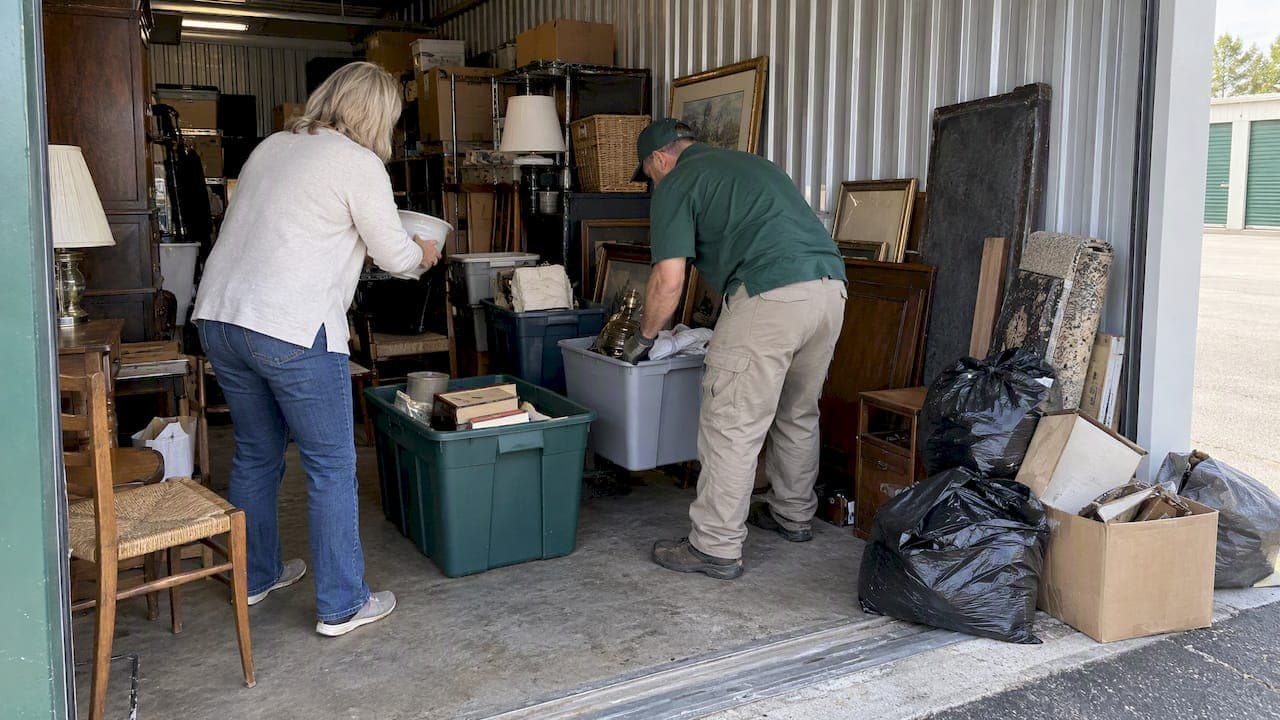
The safest and fastest way to empty a loved one's storage unit is to hire a donation-first professional who documents every item before it leaves the premises. This approach preserves keepsakes, lowers the fiduciary risk an executor carries, and produces the donation receipts and hazardous-waste records that probate accounting requires. A company such as Bereavement Cleanout Services builds this workflow into its process, though any qualified provider with the same standards can serve the same purpose.
TL;DR:
- Professional cleanouts ensure thorough documentation, especially for high-value donations exceeding $5,000 that require a qualified appraisal and signed IRS forms.
- Hazardous household waste like paint, pesticides, and batteries must be isolated, labeled, and routed to certified collection programs to avoid legal and safety risks.
- An accurate inventory with photos, provenance notes, and final disposal details is essential to meet probate and tax reporting standards.
- Costs vary based on unit size, hazardous materials, appraisal needs, and travel distance, with a typical full estate cleanout taking from a day to a few weeks.
- Hiring insured professionals with vetted donation networks and clear documentation processes protects fiduciaries and simplifies probate reporting.
Table of Contents
- Step-by-step donation-first checklist for a storage unit cleanout
- Making donations count for Form 8283 and probate accounting
- Separating and routing household hazardous waste safely
- Building a probate-ready inventory and knowing when to call an appraiser
- Why a professional donation-first cleanout protects fiduciaries
- Timeline and cost expectations for a storage-unit estate cleanout
- Templates and resources to support a donation-first cleanout
- Tips for managing and disposing of electronics and other specialty items
- Effective cleaning techniques for different storage unit materials and conditions
- How to handle and prevent pest infestations during cleanout
- A note on handling a loved one's belongings with care
- How Bereavement Cleanout Services supports a donation-first cleanout
- Sources
- FAQ
Step-by-step donation-first checklist for a storage unit cleanout
A storage unit holding a loved one's belongings deserves a process, not a rush job. Whether you hire a professional or coordinate the work yourself, the sequence below keeps the estate organized and the paperwork intact.
- Confirm executor authority and secure unit access, including the facility's release form and a copy of the lease or lien status.
- Walk the unit first without moving anything, noting obvious hazards, pest activity, or water damage.
- Triage every item into one of six categories: keepsakes, donate, sell, recycle, hazardous waste, or trash.
- Photograph and tag each item before it moves, then log it into an inventory spreadsheet with a short description and estimated condition.
- Flag anything that looks valuable, art, jewelry, coins, or instruments, for a separate appraisal before it joins the donate or sell pile.
- Schedule donation pickups and collect signed receipts, then book hazardous-waste or bulky-item disposal as its own appointment.
- Items in good used condition generally qualify for donation; stained, broken, or heavily worn goods usually do not.
- Keep a printed or digital log at the unit entrance so nothing leaves without being recorded.
- Separate sentimental items into their own labeled bin before sorting begins, so grief does not slow down the rest of the process.
Pro Tip: Do the keepsake pass first, before fatigue sets in. Decision fatigue is real, and the items that matter most deserve attention while you still have patience for them.
Executors coordinating a cleanout on a timeline can lean on a donation-first estate cleanout checklist built specifically around probate timing.
Making donations count for Form 8283 and probate accounting
A donation only helps the estate when it is documented well enough to survive an audit or a beneficiary dispute. The IRS instructions for Form 8283 require the form for any noncash contribution over $500, and once a donated item or group of similar items is valued over $5,000, Section B applies: the estate needs a qualified appraisal, and the donee organization must sign the appraisal summary. The appraisal itself must be signed and dated by a qualified appraiser no earlier than 60 days before the donation date.
The $5,000 appraisal threshold is a hard line, not a guideline: cross it without a signed appraisal summary and the deduction risks disallowance. Ask every charity to provide a contemporaneous written acknowledgment that lists the date, a description of the items, and a statement about whether goods or services were received in exchange. Keep these documents with the estate's other probate records.
- Photograph each donated item before pickup.
- Tag items with a reference number that matches the inventory log.
- Deliver to a verified charity and request a signed receipt on the spot.
- File the receipt with the estate's probate documentation, not loose in a drawer.
For items the charity later sells or disposes of, the Form 8283 PDF instructions note that the organization may need to file Form 8282 within three years, which is another reason to keep the original paperwork organized.
Separating and routing household hazardous waste safely
Storage units often hide things nobody expects to find: old paint cans, pool chemicals, propane tanks, expired pesticides, and corroding batteries. None of these belong in a regular trash haul, and mixing them together can create a genuine safety risk during transport.
The EPA's household hazardous waste guidance directs households and cleanout crews to isolate suspected HHW, label it clearly, and route it to one of the collection programs set up for this purpose rather than the curb. More than 3,000 such collection programs operate for exactly this reason.
- Common HHW finds in storage units: old paint, solvents, pesticides, car batteries, and fluorescent bulbs.
- Isolate these into separate, labeled containers immediately, away from anything flammable.
- Bulky items like mattresses or appliances often carry their own transfer station fees and rules, detailed in EPA guidance on bulky-item handling, though some communities offer reuse areas that keep usable furniture out of landfills.
- A professional crew that screens for HHW as a standard step removes a real source of estate liability, since an executor who knowingly discards hazardous material improperly can face consequences separate from the estate itself.
Building a probate-ready inventory and knowing when to call an appraiser
An executor's job includes marshaling and documenting estate assets, a duty the American Bar Association's guidelines for executors and trustees describes as essential to avoiding personal liability. A spreadsheet with a few sloppy notes will not hold up if a beneficiary later questions where an item went.
A usable inventory needs these columns at minimum:
- Item description and condition
- Date-stamped photo reference
- Provenance notes, such as receipts or labels found with the item
- Estimated fair market value
- Final destination: donated, sold, recycled, or discarded
- Corresponding receipt or appraisal document
Art, rare coins, fine jewelry, and vehicles usually need a specialist appraiser rather than a general estimate, and that appraisal becomes the backbone of any Form 8283 filing for high-value donations. The ABA's guidance also recommends chain-of-custody notes and storage unit access logs, which matter if a dispute ever surfaces later.
Pro Tip: Keep every access log and photo even for items you end up discarding. Proving what wasn't valuable protects an executor just as much as proving what was.
Why a professional donation-first cleanout protects fiduciaries
A reputable cleanout company brings keepsake sorting, donation logistics, HHW handling, and appraisal coordination under one documented process, which is harder to replicate with a rented truck and a weekend.
- Professionals carry insurance that protects the estate if something is damaged or lost during removal.
- Their donation partners are typically pre-vetted, which supports the FTC's guidance on verifying charities before handing anything over.
- Ask any company about their documentation process, their insurance coverage, and which charities they work with before signing a contract.
- Walk away from any provider that will not separate hazardous waste, cannot produce donation receipts, or hesitates when asked for proof of insurance.
A closer look at professional cleanouts versus DIY container removal lays out the tradeoffs in more detail.
Timeline and cost expectations for a storage-unit estate cleanout
Most storage-unit cleanouts move through four phases: intake and walkthrough, sorting and triage, donation pickups paired with any needed appraisals, and final disposal with documentation delivered to the executor. A single storage unit often wraps in a day or two; a larger estate with appraisal needs can stretch to a couple of weeks while waiting on signed paperwork.
- Unit size and total volume are the biggest cost drivers.
- Hazardous materials and bulky items add handling time and sometimes disposal fees.
- Specialist appraisals add scheduling time but rarely add much to the labor cost itself.
- Travel distance and crew size affect labor pricing more than almost anything else.
Coordinate donation pickup windows and appraisal appointments early so neither holds up the final handoff. A professional crew should hand the estate an itemized invoice that lines up with the inventory log, which makes the executor's accounting far easier to defend later.
Templates and resources to support a donation-first cleanout
A few simple documents keep the whole process consistent:
- A minimal inventory column set: description, photo reference, condition, estimated value, and destination.
- A donation receipt checklist confirming the donee acknowledgment includes date, description, and a goods-or-services statement.
- A keepsake tagging format that pairs a reference number with a chain-of-custody note.
Families building these from scratch can start with the keepsake sorting templates for families and executors or the five-step charity verification guide for the donation side.
Tips for managing and disposing of electronics and other specialty items
Old televisions, computers, phones, and small appliances pile up in storage units faster than most families expect, and they need their own lane in the sorting process. Electronics often contain lead, mercury, or lithium batteries, which puts them closer to the hazardous-waste category than to ordinary trash, even though many people toss them in with general discard without thinking twice.
Wipe personal data from any device with storage before it leaves the unit, whether it is headed for donation, resale, or recycling. A factory reset takes a few minutes and protects the deceased's financial and personal information from ending up in the wrong hands.
Working electronics in decent condition are often donation candidates, since many charities accept them for resale or refurbishment. Broken or outdated units usually belong at a certified electronics recycler rather than in a donation pile or the regular trash stream.
Specialty items deserve their own category too. Musical instruments, firearms, medical equipment, and collectibles often need a specific buyer, a specialist appraiser, or in the case of firearms, compliance with separate transfer rules entirely outside the scope of a standard cleanout. Flag these early so they do not get boxed in with general household goods and lost in the shuffle.
Effective cleaning techniques for different storage unit materials and conditions
A storage unit rarely comes out the way it went in. Dust, humidity, and the occasional pest problem all leave their mark, and the cleaning approach should match the unit's materials and condition rather than following one generic method.
Concrete floors typically need a stiff broom first, followed by a degreaser if anything leaked, since storage units often held cars, equipment, or anything with motor oil. A mild bleach solution handles most mildew spots on concrete without damaging the surface.

Metal shelving and walls respond well to a simple soap-and-water wipe down, followed by a dry cloth to prevent new rust from forming. Wood furniture or shelving that picked up moisture damage may need a specialized wood cleaner, and anything with visible mold should be assessed before it moves anywhere near other belongings.
Fabric items, old rugs, upholstered furniture, stored clothing, often carry musty odors that regular cleaning won't fully resolve. A baking soda treatment or a trip through a specialty cleaning service tends to work better than masking the smell with fragrance. The final broom-clean handoff a facility expects at move-out is its own task entirely, and a move-out cleaning checklist built for renters covers that stage well if you're handling it yourself.
How to handle and prevent pest infestations during cleanout
Storage units sit undisturbed for months or years, which makes them attractive to rodents and insects looking for a quiet place to nest. Finding droppings, chewed cardboard, or nests tucked into furniture is common enough that it should be expected rather than treated as a shock.
Wear gloves and a mask when moving boxes that show any sign of pest activity, since droppings from rodents can carry health risks when disturbed. Bag and seal anything with visible infestation before it leaves the unit, rather than carrying it loose to a vehicle or donation pile.
Cardboard boxes are a particular problem since pests nest inside the material itself. Items stored in cardboard for a long period should be inspected carefully and, where the box shows damage, transferred to a plastic bin rather than reused. If an infestation looks extensive, a professional pest control assessment before continuing the cleanout protects both the crew and whatever belongings remain salvageable.

Preventing a repeat problem during the sort is mostly about speed and sealed containers: the faster items move out of a compromised unit and into clean, sealed storage, the less chance pests have to spread to items that were otherwise fine.
A note on handling a loved one's belongings with care
Sorting a parent's or spouse's storage unit is never just logistics. It's a last conversation with their choices, their habits, what they kept and why. A donation-first process honors that by making sure nothing gets discarded carelessly, and it often saves the estate money compared to a straight haul-to-the-dump approach.
Good documentation isn't paperwork for its own sake. It's what lets an executor sleep at night knowing every decision can be explained.
— Derek
How Bereavement Cleanout Services supports a donation-first cleanout
Clearing a loved one's storage unit calls for patience and paperwork in equal measure, and that's the combination Bereavement Cleanout Services builds its process around. The company handles donation-first sorting, hazardous-waste identification, appraisal coordination for higher-value items, and careful keepsake protection, all backed by insured crews and a documentation package suited for probate accounting.

Booking usually starts with a walkthrough and a firm quote, so there are no surprises once the crew arrives. From there, the process typically includes a broom-clean handoff at the finish, with photos and an inventory log included; donation receipts and appraisal referrals organized for the executor's records; and discrete, respectful service from an insured team throughout.
Request a quote or check availability through the Bereavement Cleanout Services landing page to get a firm estimate for a storage unit, a full estate, or anything in between.
This article is general information, not a substitute for advice from a qualified lawyer. Consult a qualified legal professional about your own circumstances before acting on anything here.
Sources
- Instructions for Form 8283 (i8283) — IRS
- Household Hazardous Waste (HHW) — EPA
- Guidelines for Individual Executors & Trustees — American Bar Association
- Before you donate, find out where the money is going | Consumer Advice — FTC
FAQ
What is the Form 8283 threshold for storage unit donations?
Any noncash donation over $500 requires Form 8283, and once the donated items are valued over $5,000, a signed qualified appraisal and a donee signature on Section B are required. Keep the appraisal dated no earlier than 60 days before the donation.
How do I know if an item counts as household hazardous waste?
Paints, solvents, pesticides, car batteries, propane tanks, and similar chemical products typically count as household hazardous waste and should never go in regular trash. These items need to be isolated, labeled, and routed to a certified collection program.
What should I ask a cleanout company before hiring them?
Ask about insurance coverage, their donation partners, and how they document items for probate, since these answers reveal whether the company follows a real process. A provider that hesitates to discuss hazardous-waste handling or cannot produce donation receipts is a sign to look elsewhere.
How much does a professional storage unit cleanout cost?
Pricing depends on volume, hazardous materials, and whether appraisals are needed, so costs vary by job. Services built around single-room or small-item removal, for comparison, often start lower than a full estate cleanout, since the latter involves significantly more sorting and documentation.
Do I need an appraiser for everything I donate?
No, only items or groups of similar items valued over $5,000 require a qualified appraisal under IRS rules. Lower-value items still need a donee receipt but not a formal appraisal.