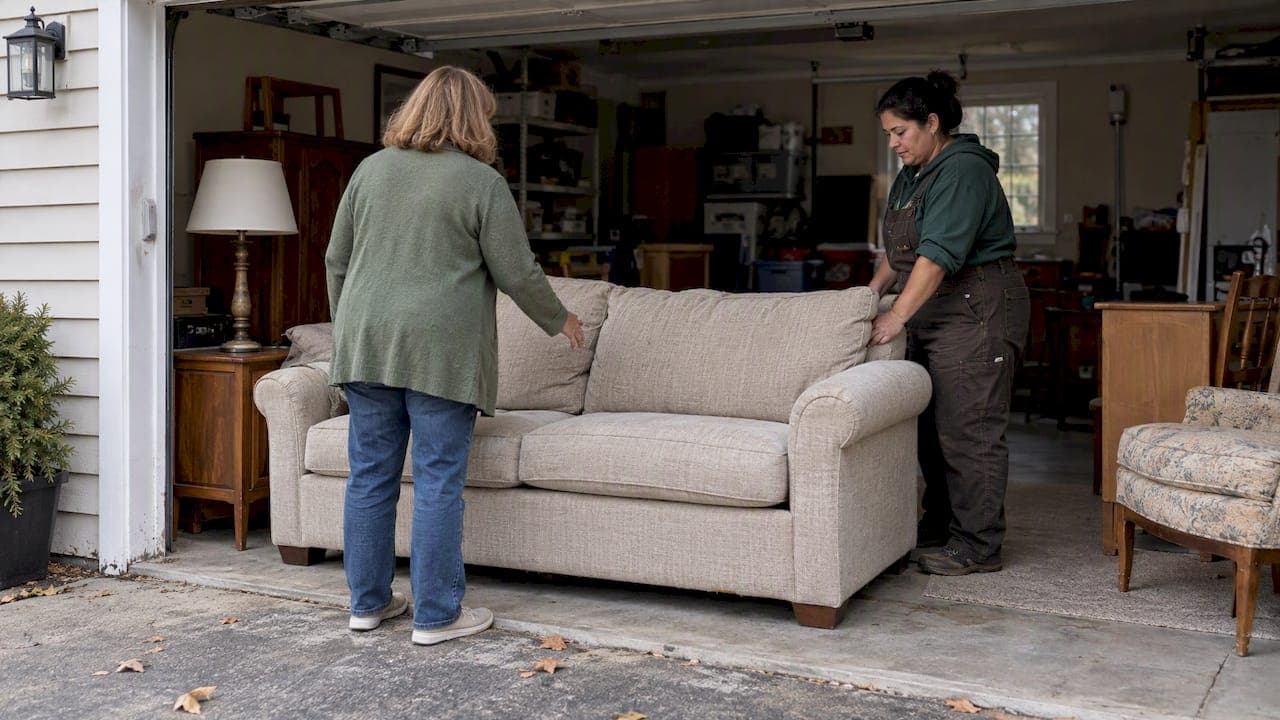
The fastest way to sell used furniture in New Jersey depends on what you need: Craigslist and Facebook Marketplace work best for quick local pickup sales, Goodwill and municipal programs handle unwanted pieces you'd rather donate, and a professional cleanout makes sense for estates or large-volume jobs. Before placing anything curbside, check your town or county bulk-waste rules and NJ DEP e-waste guidelines.
TL;DR:
- Posting on Facebook Marketplace and Craigslist with clear measurements and firm pricing typically results in a quick sale within a few days to a week.
- Cross-posting listings across two or three platforms and marking items as sold immediately speeds up the selling process.
- Donating furniture in good condition can be faster and more sustainable than selling, especially for large or full household clearouts.
- For bulk or estate cleanouts, professional services that handle sorting, donation, and disposal often save time and reduce stress, with lower payouts but faster removal.
- Checking local municipality rules and e-waste guidelines before curbside disposal prevents rejected pickups and ensures responsible handling of electronics embedded in furniture.
Table of Contents
- Quick shortlist: sell fast, reach more buyers, donate, or clear it all out
- How to sell on Facebook Marketplace, Craigslist, OfferUp, and Nextdoor
- Consignment stores and office furniture liquidation for faster or bulk sales
- Donating furniture and checking New Jersey's bulk-waste rules
- Pricing, staging, and scheduling tips that help furniture sell faster
- Staying safe during in-person pickups and payments
- When a professional cleanout makes more sense than selling piece by piece
- Balancing convenience with doing right by the furniture
- A donation-first option when you're clearing an entire home
- FAQ
- Sources
Quick shortlist: sell fast, reach more buyers, donate, or clear it all out
Your best route comes down to your priority: speed, exposure, convenience, or volume. New Jersey sellers generally fall into one of four camps, and each has a clear best fit.
- Fastest cash route: Craigslist or Facebook Marketplace, with a firm price and clear pickup window stated in the listing.
- Widest reach: Facebook Marketplace combined with local buy/sell groups, plus cross-posting to OfferUp and Nextdoor.
- Donation or low-effort clearing: Goodwill NY-NJ or another local donation center, especially when the piece is usable but not worth the hassle of a sale.
- Bulk or estate situations: a professional cleanout service or a consignment and estate-sale organizer who handles sorting, pricing, and removal for you.
If you're selling a single couch or dining set, Craigslist and Facebook Marketplace will almost always get it gone fastest, since local buyers expect to arrange their own pickup. If you're furnishing a move and have ten or more pieces to deal with at once, cross-posting to multiple platforms spreads the work thin and slows you down. That's usually the point where donation or a professional cleanout starts to look more appealing than managing a dozen separate conversations with strangers.
Donation deserves more weight than most guides give it. A couch in decent condition that might sell for $40 after a week of messages could instead go to a family who needs it today, through Goodwill or a similar drop-off. And if you're clearing out a parent's or relative's full household, a cleanout service that sorts, donates, and documents everything often costs less in time and stress than trying to sell piece by piece.
How to sell on Facebook Marketplace, Craigslist, OfferUp, and Nextdoor
Each platform draws a slightly different buyer, and knowing the difference saves you time. Facebook Marketplace reaches the broadest New Jersey audience and works well for anything from a bookshelf to a full bedroom set, since buyers can message you directly and see your profile for trust. Craigslist remains one of the most practical options for pickup-first bulky items because listings favor straightforward, no-frills transactions between people who just want the item gone. OfferUp suits sellers who prefer managing everything from a phone app, and Nextdoor works best for neighborhood-level sales where buyers are already nearby.
A comparison of the three major platforms found that Facebook Marketplace generally delivers the fastest exposure, Craigslist handles practical local pickups well, and OfferUp fits sellers who want a mobile-first experience. Regional Facebook groups, such as the Northern NJ Furniture Exchange, add another layer of local reach, since members are specifically there to buy and sell furniture rather than browsing a general marketplace.
Before you post anywhere, build your listing around these details:
- Measure the piece (height, width, depth) so buyers can confirm it fits their space.
- Note the brand or manufacturer if known, since it affects perceived value.
- Describe the condition honestly, including scratches, stains, or missing hardware.
- Mention access details such as stairs, elevators, or tight doorways that affect pickup.
- Include at least four clear photos: full item, close-ups of any damage, and one with a measuring tape for scale.
Once your listing is ready, post it across two or three platforms at once. Cross-posting to Facebook Marketplace, Craigslist, and a local group tends to speed up a sale for bulky furniture, as long as you mark the item sold everywhere the moment it moves, so you're not fielding messages for something that's already gone.
For messaging, keep a short template ready for your first reply ("Still available, pickup only from [town], cash on pickup"), another to confirm a pickup time, and a polite, firm response for lowball offers ("Price is firm given the condition, but I can hold it until Saturday if that works").
Pro Tip: Post in the evening when most local buyers are browsing after work, for faster responses.
Consignment stores and office furniture liquidation for faster or bulk sales
Not every piece belongs on a general marketplace. Well-made, stylish, or designer furniture in good condition often does better through consignment, where someone else handles pricing and buyer traffic in exchange for a cut of the sale. AptDeco operates several New Jersey locations and specializes in curated or higher-end used furniture, handling pickup and delivery arrangements for qualifying pieces. A local consignment shop or pawn shop can work similarly for smaller furniture, though payout is usually lower than a private sale in exchange for speed and zero buyer-management hassle.
Office furniture is a different category entirely and shouldn't go through household marketplaces. If you're closing a business or clearing out a commercial space, a commercial office-furniture marketplace is built for exactly that kind of inventory.
- Build a full inventory listing manufacturer, quantity, dimensions, and condition for every item.
- Note floor access and whether elevators or loading docks are available for removal.
- Set a firm removal deadline, since commercial liquidators often work on tighter timelines than individual buyers.
- Expect lower per-item payout than retail resale, offset by faster, single-transaction removal of large quantities.
The tradeoff across all of these routes is consistent: more convenience generally means a lower payout, while a higher return usually costs you more time and more buyer interactions.
Donating furniture and checking New Jersey's bulk-waste rules
Donation deserves serious consideration before you haul anything to the curb, both for convenience and because it keeps usable furniture out of landfills. Goodwill NY-NJ accepts many household furniture donations at drop-off locations across the region, though large pieces often require a call ahead to confirm the site can take them, and some locations limit what they'll accept.
Before you set anything on the curb, check your own town's bulk-waste rules. Newark, for example, publishes a detailed trash and bulk collection schedule that spells out eligible items, pickup days, and limits, and other New Jersey municipalities run their own versions with different hours, appointment requirements, or seasonal collection windows.
- Call or check your municipality's DPW website before moving furniture curbside, since rules and schedules differ by town.
- Confirm whether your town requires scheduled bulk pickup appointments or runs on fixed seasonal collection days.
- Ask your local donation center about size and condition limits before you transport anything large.
Furniture containing embedded electronics needs special handling. An entertainment center with a built-in TV, or a desk with integrated electronics, may fall under New Jersey's e-waste rules rather than ordinary furniture disposal. The NJ DEP's covered electronic device guidelines outline collection requirements for bulky covered devices and separate processing for residents who can't transport them themselves, so separating electronics from furniture before donation or curbside pickup avoids a rejected collection. For more detail on donation logistics specific to New Jersey, our furniture donation guide walks through the practical steps.
Pricing, staging, and scheduling tips that help furniture sell faster
A realistic price is the single biggest factor in how fast furniture sells. Check two or three similar listings in your area first, and price slightly below them if you want a quick sale, or close to them if you're willing to wait for the right buyer.
- Set a quick-sale price for items you want gone within a few days, and a higher-expectation price only if you're comfortable waiting weeks.
- Photograph the piece against a plain, uncluttered background in good natural light, from at least three angles.
- Include close-up shots of any flaws, scratches, or wear, since hiding them leads to canceled pickups.
- Offer a two-hour pickup window rather than a vague "weekend" timeframe, and confirm the exact address only once a buyer commits.
A short message template helps set expectations before anyone shows up: "Pickup is available Saturday between 1 and 3 PM at [cross streets]. Cash only, and please bring help carrying it, since I won't be able to assist with stairs."
Pro Tip: List the piece's original retail price alongside your asking price when you know it. Buyers respond well to seeing the discount spelled out.
Staying safe during in-person pickups and payments
Meeting a stranger to hand off furniture calls for a few basic precautions. Schedule pickups during daylight hours when possible, and have a family member or friend present, especially for higher-value items or late-day meetups.
- Prefer cash or a verified payment app transfer completed before the item leaves your home, never a screenshot as proof of payment.
- Watch for overpayment scams, where a buyer sends more than the asking price and asks for the difference back.
- Store the item somewhere secure, like a garage or covered porch, until the confirmed pickup time.
- For heavy pieces like sectionals or armoires, ask the buyer to bring help or consider requiring them to arrange their own movers.
Document the handoff with a quick photo once the item leaves, particularly for consignment or higher-value pieces, so there's no dispute later about condition at pickup.
When a professional cleanout makes more sense than selling piece by piece
Selling furniture item by item works fine for a few pieces, but it stops making sense once you're managing an entire household. Large estates, tight closing timelines, hoarding situations, or any job that requires documentation for an executor or probate attorney are all cases where a professional cleanout saves real time and reduces risk.

A donation-first cleanout team typically handles sorting, decides what's donatable versus what needs disposal, provides a broom-clean finish, and documents items for estate records. That combination matters most when family members are managing grief alongside logistics and don't have the bandwidth to coordinate ten separate furniture sales.
Before hiring anyone, confirm a few basics:
- Ask for proof of insurance covering the crew and the property.
- Ask specifically about their donation policy and which local charities they work with.
- Request references or examples of past estate or hoarding cleanouts.
- Get written documentation of what's removed, donated, or disposed of, which matters for probate.
If you're weighing a professional cleanout against a DIY dumpster rental, our comparison of professional cleanouts versus container removal breaks down the tradeoffs in more detail, and our estate cleanout cost guide covers what to expect when budgeting for one.
Balancing convenience with doing right by the furniture
The biggest mistake we see sellers make isn't pricing, it's underestimating pickup logistics. A buyer who can't get a sectional through a doorway, or who flakes on a scheduled time, costs you more hours than the sale was worth. Skipping the municipal check before curbside placement causes the same kind of wasted effort, since a rejected pickup just means hauling the piece back inside.
When a piece still has life in it, donation deserves the first look, not the last resort. It's often faster than managing a sale and keeps usable furniture out of a landfill.
— Derek
A donation-first option when you're clearing an entire home
When you're facing a full household rather than a single piece of furniture, estate cleanouts built around donation-first thinking can help by sorting what's usable for local charities, handling disposal responsibly, and leaving the space broom-clean when done.
Services often include full house and apartment cleanouts with donation-first sorting, hoarding cleanup and large estate cleanouts, documentation for keepsakes and items removed, and estate photography, packing services, and on-site estate sales for families managing sales or donations.
If you're managing a household that needs more than a few marketplace listings can handle, request a quote from Bereavement Cleanout Services to see how a donation-first cleanout could simplify the process.
FAQ
What is the best place to sell used furniture?
For most New Jersey sellers, Facebook Marketplace and Craigslist offer the fastest results since both connect you directly with local buyers who handle their own pickup. For higher-end or designer pieces, AptDeco's New Jersey locations offer a consignment option that manages pricing and logistics for you.
Where is the best place to sell unwanted furniture?
Local Facebook groups built specifically for furniture, like the Northern NJ Furniture Exchange, often connect you with motivated local buyers faster than a general marketplace. If the item doesn't sell quickly, donating it through Goodwill NY-NJ keeps it out of a landfill with minimal effort on your part.
How do I sell unwanted furniture for cash in New Jersey?
List the item on Facebook Marketplace or Craigslist with a firm cash-on-pickup price and clear measurements, since both platforms are built around quick, local, in-person sales. Cross-posting to two or three platforms at once, while marking the item sold everywhere once it moves, typically speeds up the sale without adding much extra effort.
How do I get rid of furniture in New Jersey?
Start by checking your municipality's bulk-waste rules, since towns like Newark publish a detailed collection schedule outlining eligible items and pickup days, and other towns vary. If the piece contains embedded electronics, it may need separate handling under NJ DEP's e-waste rules rather than standard curbside or donation routes.
How long does it typically take to sell furniture in New Jersey?
A well-priced, clearly photographed listing on Facebook Marketplace or Craigslist often sells within a few days to a week, especially for common pieces like sofas or dining sets. Specialty or designer items through consignment platforms can take longer, since they depend on finding the right buyer rather than the first one.
Sources
- Local Selling Guide OfferUp, Craigslist, Facebook & Nextdoor
- Craigslist vs Facebook Marketplace vs OfferUp
- Newark DPW trash and bulk collection schedule
- Required contents of electronic waste collection plans (NJ DEP)
- ReSeat New Jersey marketplace