An estate sale opens a house full of a loved one's belongings to dozens or hundreds of strangers. Good security means three things: removing what should never be seen or touched before the doors open, controlling who enters and where they go, and keeping a record of the home's condition before and after. Families who hand the sale and the cleanout to an insured team that documents its work take most of that burden off their shoulders. We offer estate sales and estate cleanouts across New Jersey for that reason.
This guide walks through each layer, in the order you will need it.
TL;DR
- Before anyone enters, remove or lock up jewelry, cash, firearms, medications, mail, and financial or identity documents.
- Use one entrance, one exit past checkout, enough staff to see every room, and a cash box that is never left alone.
- Photograph and inventory the home before the sale and check it again afterward, so you can show what was there and what condition it was in.
- Confirm that anyone you hire is bonded, insured, and working under a written contract.
- Control keys and alarm codes throughout, and change codes between sale days if needed.
Table of Contents
- What security means at an estate sale
- Step 1: Secure valuables, documents and personal information
- Step 2: Document the home before the sale
- Step 3: Control the doors, keys and alarm
- Step 4: Run the sale floor safely
- Step 5: Handle payments and proceeds
- Step 6: Secure the property between sale days and after
- When to hire professionals
- How we help
- FAQ
- Sources
What security means at an estate sale
Security at an estate sale is not only about theft. It covers four risks:
- Items: small, valuable objects such as jewelry, coins, watches and collectibles can disappear in a crowd.
- Information: mail, bank statements, checkbooks, computer logins and Wi-Fi passwords can expose a family to fraud.
- People: crowded rooms, cords, stairs and clutter create fall and injury risks for shoppers and staff.
- The property itself: keys, alarm codes, and doors left unlocked can leave the house vulnerable during and after the sale.
The authorized person, usually the executor or personal representative, carries responsibility for this. The American Society of Estate Liquidators' consumer tips say that person should secure keys, review who has access, document valuable items, consider insurance coverage, and protect sensitive information. If you are still sorting out who has that authority, our guide on probate house cleanouts for executors explains why authority comes before anything is donated or sold.
Step 1: Secure valuables, documents and personal information
Do this before the sale is advertised, not the morning of. The National Association of REALTORS® advises that before visitors enter, you put away personal items, mail, calendars, computer logins, Wi-Fi passwords and sensitive documents, and lock up jewelry, important documents, firearms and prescription medications.
A practical sequence:
- Search first. Check drawers, coats, books, freezers and boxes for cash, jewelry, deeds, titles, stock certificates and keepsakes. Families often find valuables in ordinary places.
- Remove what is not for sale. Keepsakes, photographs, and anything a family member has asked for leave the house or go into a locked room.
- Remove medications and firearms. Both need safe handling and should never stay in a house open to the public.
- Clear the paper. Bank statements, tax returns, mail and anything with account numbers should be boxed and taken out, or locked away.
- Photograph and list high-value items you are keeping out of the sale, so there is a record.
If you come across anything that might be hazardous, such as unlabeled chemicals or biological waste, the same professional guidance says to stop work and bring in qualified help. Our specialty, odor and waste cleaning covers those situations.
Keepsakes and antiques deserve extra care
An item that looks ordinary may be worth far more than a tag suggests. Before pricing, have items such as silver, art, coins and vintage pieces looked at. Our guide to selling antiques and collectibles from an estate explains how, and our what sells and how to price it article covers pricing for the rest.

Step 2: Document the home before the sale
A dated record protects you if an item is later missing or a door frame is damaged. Walk through each room with a camera and capture:
- Every room, wall to wall, with doors and windows visible
- Furniture, art and valuables, close up
- Existing damage: scuffs, cracked tile, stains
- Anything set aside for family, with who it is going to
AARP's reporting on hiring a sale company recommends documenting the home's condition and using a written contract. If relatives live far away, a virtual estate walkthrough lets them review the rooms and claim items without traveling. For the paperwork side, see our estate cleanout documentation guide for executors.
We offer estate photography and online inventory at $75 per hour, which creates the kind of record probate and insurance questions tend to call for.
Step 3: Control the doors, keys and alarm
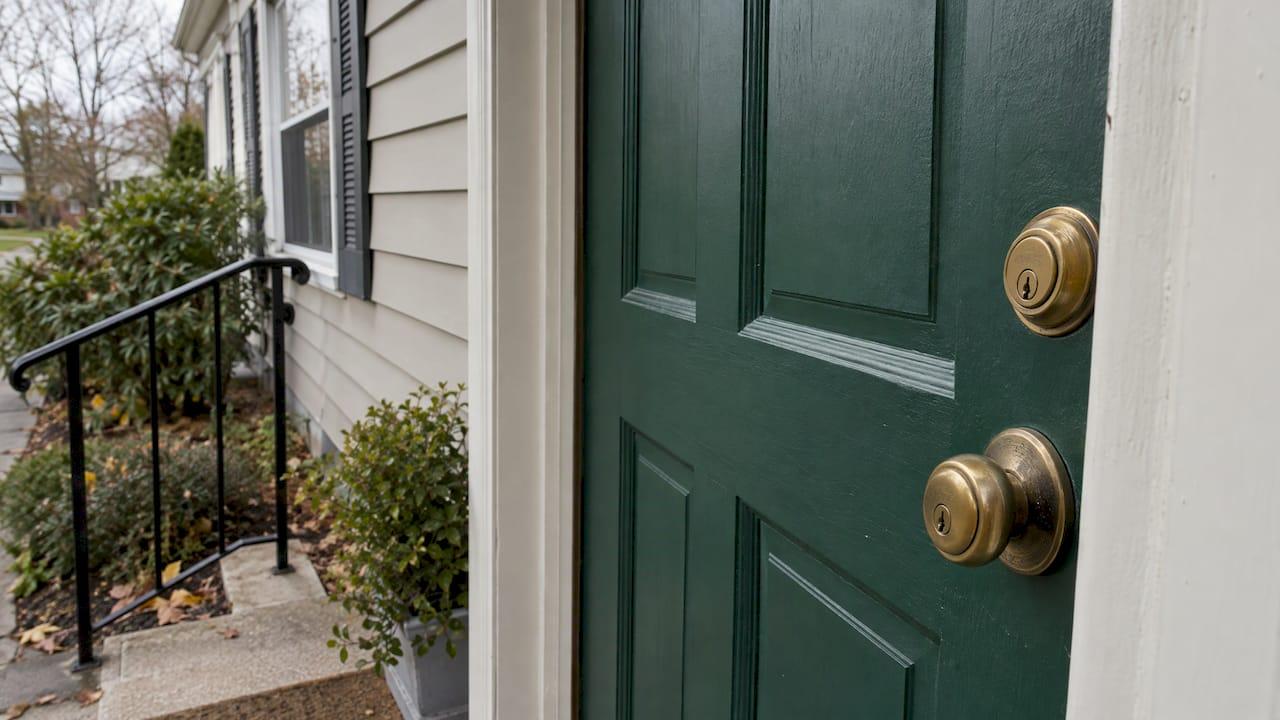
Know who holds a key before you do anything else. List every person with access: relatives, neighbors, caregivers, a cleaning service, a real estate agent.
- Use an electronic lockbox if the house is listed. NAR notes that electronic lockboxes limit access to real estate professionals, can grant one-time access to service providers, and record who enters and when. A combination lock is less safe because the code can be passed around without your knowledge.
- Change codes. Update alarm and door codes before a sale and between sale days if people have had them.
- Account for every key and keep spares with one trusted person.
- Lock private spaces. Deadbolts or padlocks on a bedroom, basement or attic you want closed are standard advice from estate sale security guidance.
Locks matter in older homes, where original mortise hardware may be worn. If a lock sticks or fails to latch, mortise lock diagnosis and cleaning shows what the mechanism needs before the sale begins.
Step 4: Run the sale floor safely
Crowd control is where most theft is prevented. Drawing on several sale-operation guides, the consistent practices are:
| Area | What works |
|---|---|
| Entrances | One main entrance with someone posted there; one way out past checkout (Garage Sale Supply) |
| Staffing | Two to three people for a standard three-bedroom house: door greeter, checkout, floater (DIYAuctions) |
| Restricted rooms | Block off-limits rooms, closets and bathrooms with rope or "Do Not Enter" signs |
| Small valuables | Locked display case or behind checkout, shown one shopper at a time |
| Checkout | Near the main exit with a line of sight on everyone coming and going |
| Cash | A locking cash box, fanny pack or deep apron; never left unattended |
| Bags | A no-bags policy and a cap on shoppers inside at once, layered together (TagLot) |
TagLot's operations guide makes the key point that no single measure stops theft, so the protection comes from layering several.
Safety for shoppers and staff
Do a final walkthrough so two people can pass in every walkway, cords are taped down or removed, rugs are secured and lighting is adequate. Hoarded or heavily cluttered homes need clearing before any public sale; see the five levels of hoarding and what cleanup involves.

Keep strangers out of private areas
Do not let shoppers use the bathroom. Community sale guidance advises locking the home and vehicles during the sale, never admitting anyone inside for any reason, and calling police if someone acts suspiciously. Never run a sale alone.
Step 5: Handle payments and proceeds
Most sale-day losses involve cash. Keep a small float for change, move larger amounts inside regularly to a designated person, and record sales as you go. Employee dishonesty is a real exposure when helpers handle valuables, which is why TagLot recommends an employee-dishonesty insurance endorsement for losses prevention misses.
If you also list higher-value pieces online, protect proceeds and screen buyers. This overview of seller protection tools shows how sellers guard against bad buyers on eBay. Our own online listings and consignment service runs on a 20-40% commission.
Step 6: Secure the property between sale days and after
Multi-day sales need an overnight plan. Store valuables securely, update your inventory, check every entry point each morning, and rotate staff so tired people are not guarding cash. The Greater Philadelphia Association of REALTORS® advises locking doors and windows, accounting for keys, reactivating the security system, and walking the house for people, misplaced items, tampering or damage after showings. The same checks work at the end of every sale day.
At the close of the sale:
- Reconcile sales against your list.
- Compare the home with your before photos.
- Collect keys and change codes again.
- Decide what happens to unsold items. Our estate sale day preparation checklist covers the final week, and estate sale vs. estate cleanout helps you decide what comes next.
If the home must be vacant for a closing, eviction or turnover, a broom-clean handoff finishes the job. Realtors can use our cleanout checklist to coordinate.
When to hire professionals
Hire help when the home is large, the contents are valuable, the family lives out of state, or no one can staff the doors for several days. Before signing, AARP's guidance says to confirm the company is bonded and insured, use a written contract and document the home's condition. In the article, litigation attorney Edward Susolik explains that bonding protects against theft, while insurance covers property damage and personal injury. For legal questions about who may sell estate property, consult the estate's attorney.
Our perspective
Families usually tell us they are not worried about the furniture. They worry about the photographs, the letters, the jewelry, and the idea of strangers walking through a parent's bedroom.
That is why we start with sorting and documentation before anything is sold. Keepsakes are set aside, valuables are recorded, and usable items follow our donation-first approach, so they go to local charities rather than the dumpster. Our estate cleanouts are fully insured, discreet, and documented for probate.
Security is easiest when the house is already organized, photographed and cleared of what should never be on display. That is the work we do before a sale, and it lets families grieve rather than guard a door.
Derek
How we help
We handle estate cleanouts, estate sales (15-35% commission), photography and online inventory, packing, and broom-clean finishes across New Jersey. A single room, garage or basement starts at $295, an apartment or condo at $650, a full house at $1,200 and a large estate at $2,200. Hoarding cleanup starts at $1,500. Prices are listed as of September 2026, and a walkthrough gives you a firm quote. See all our services or where we work in New Jersey.

FAQ
Should I hire security guards for an estate sale?
For a large home or one with high-value contents, a guard at the door can help, but staffing the sale properly matters more. Plan a greeter, a checkout person and a floater, and lock away small valuables. Check that any provider is licensed, bonded and insured.
What should I remove before an estate sale?
Remove jewelry, cash, firearms, medications, mail, financial documents, and any personal keepsakes. Also remove computer logins and Wi-Fi passwords. Lock these away or take them off the property before the sale opens.
Is it safe to let buyers use the bathroom?
No. Keep the home's private areas closed, and direct people to a nearby public restroom. Rope off bathrooms and bedrooms that are not part of the sale.
How do I prove nothing was taken?
Photograph every room and valuable item before the sale and keep a dated inventory. Compare the house with those records afterward. Our photography and online inventory service produces this documentation for you.
Sources
- The Top 15 Tips for Dealing With Personal Property in Estates, ASEL
- Consumer Guide: Home Selling Tips for Privacy and Safety, NAR
- What to Know Before Hiring an Estate Sale Company, AARP
- After Showings: 8 Essential Security Practices, Greater Philadelphia Association of REALTORS®
- Estate Sale Security: Protecting Your Home and Profits
- Estate Sales in Jacksonville FL: A Practical Guide
- Running estate sale days: staffing, crowds, and theft
- Estate Sale: Helpful Hints and Safety Precautions
- Mortise Lock Restoration: Diagnosis, Cleaning and Reassembly
- Starting eBay Selling? Essential Protection Guide 2026