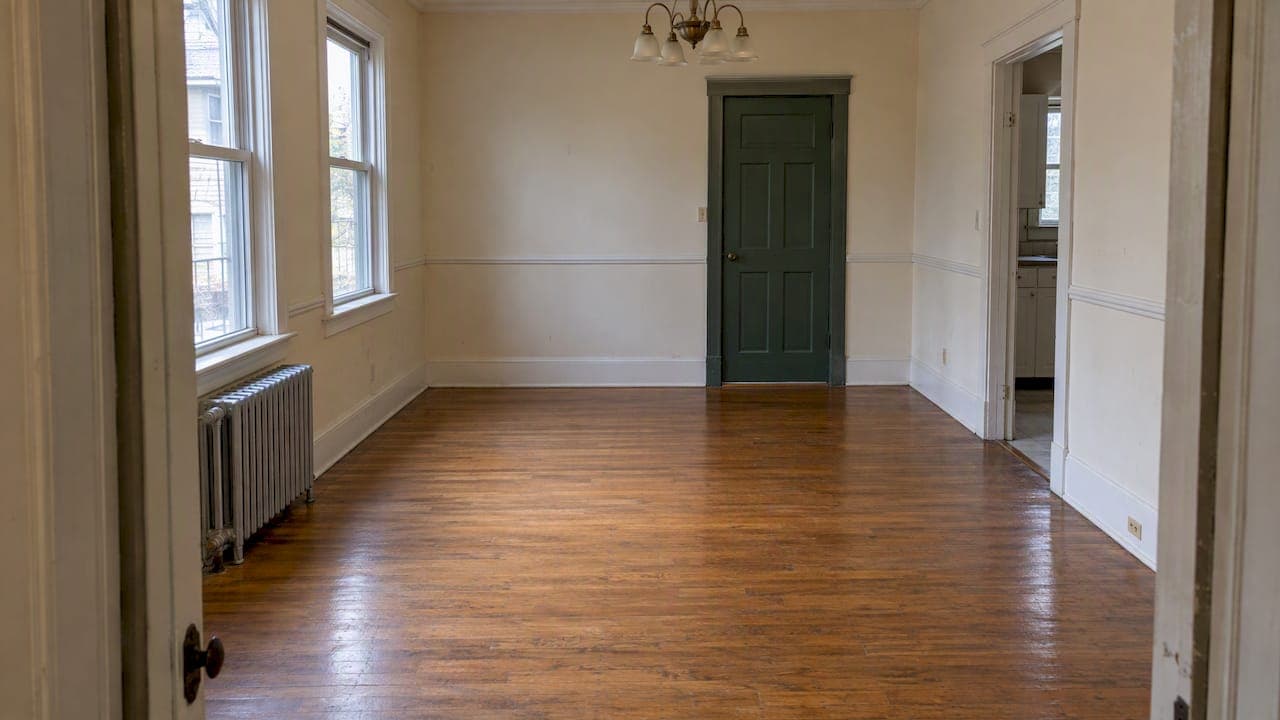
A cash-for-keys cleanout is the move-out that follows a buyout agreement. The landlord or new owner pays the occupant to leave voluntarily, and the occupant returns the keys with the unit empty and swept. According to Realtor.com, it is typically a faster and cheaper alternative to eviction. The payment gets the person out. The cleanout decides whether you can re-lease, list or sell the property the following week or the following month.
This guide covers how the agreement should treat the cleanout, when to pay, how to document the handover, what to do about belongings left behind, and what a professional cleanout typically involves in New Jersey.
TL;DR
- Cash for keys is a voluntary buyout: money in exchange for vacant possession, all keys returned and the unit left broom-clean.
- Put the move-out date, payment amount, condition standard, key return and a mutual release of claims in writing before anyone moves a box.
- Pay at handover, after a walkthrough with photos, never in advance.
- If the occupant declines, you cannot lock them out or shut off utilities. The formal court process is the only route.
- Leftover furniture and belongings are the usual surprise. Plan and budget for a documented cleanout before the handover date.
Table of Contents
- What cash for keys means for a cleanout
- Why the cleanout is where deals go wrong
- What to put in writing
- How much do landlords offer?
- From offer to handover: a step-by-step plan
- What the cleanout should include
- Planning the cleanout budget
- Cash for keys after foreclosure
- When the occupant says no
- If you would rather sell than re-lease
- A note on records
- Our perspective
- Book a walkthrough before the handover
- FAQ
- Sources
What cash for keys means for a cleanout
Cash for keys is a buyout agreement. A landlord pays a tenant to vacate voluntarily and turn over the keys, and the tenant avoids an eviction filing on their record. The same idea appears after foreclosure: Nolo explains that new owners sometimes offer former homeowners money to move out quickly and leave the home in good condition, which avoids a lengthy eviction and reduces property damage.
The phrase "cash for keys cleanout" covers both halves of the deal:
- The buyout: the money, the date and the legal paperwork.
- The cleanout: removing what remains, restoring the unit to an agreed condition and proving that condition on the day the keys change hands.
Most guides spend their words on the first half. In practice, the second half is where a smooth deal turns into a dispute, because "leave it clean" means different things to different people.
Why the cleanout is where deals go wrong
A tenant who agrees to leave is usually stressed, short on time and short on money. A moving truck costs money. Sorting through years of belongings takes energy. When the deadline arrives, a unit often has a few possible states:
- Empty and swept, exactly as agreed.
- Mostly empty, with a few large items such as a couch, a mattress or an old appliance left at the curb or in a closet.
- Full of furniture, bags and clutter because the occupant ran out of time.
The third case is common in apartments after a long tenancy and in houses after a foreclosure. It is also where owners feel pressure to start tossing things quickly. Resist that. What you may do with property left behind depends on New Jersey law and on what the signed agreement says, so read our guide to eviction cleanout laws in NJ and, if there is any doubt, ask your attorney before anything is removed.
What to put in writing
A handshake deal and a text message are not enough. According to a landlord playbook on cash for keys, written terms should include the move-out date and time, the payment amount, broom-clean condition, return of all keys and access devices, and a mutual release of claims.
For the cleanout specifically, write down:
- The condition standard. Use the words "broom-clean" and define them: all of the tenant's belongings removed and no garbage left in the unit. Our explainer on what broom clean really means is a good reference to attach or paraphrase.
- Every key and device. Keys, fobs, mailbox keys, garage door openers and gate codes.
- No further rent. A cash-for-keys template guide advises stating that no further rent is due between signing and the move-out date, and that the payment is the full consideration for that period.
- A mutual release. The same source calls it critical, since it releases both parties from claims related to the tenancy.
- What happens to anything left behind. Say whether leftover items are considered abandoned, and have your attorney confirm that wording is valid in New Jersey.
Tenants should also be encouraged to read before signing. California's Department of Real Estate warns in its consumer alert on cash for keys that a tenant without working knowledge of local law is at a distinct disadvantage, and that tenants should insist on a written agreement reviewed by a trusted, competent person. That advice is from California, but a clear, fair, reviewed agreement protects the landlord too, because it is much harder to challenge later.
How much do landlords offer?
There is no set price. The same California alert reports anecdotally that offers range from $500 to $5,000, with the amount negotiable and dependent on the property's value and condition, the lender's plans and how much time the occupant needs to move. Treat those figures as a rough, informal range, not a benchmark for New Jersey.
What moves the number in practice:
- How long a formal eviction would take and what it would cost you in lost rent and legal fees.
- Whether the occupant has somewhere to go, and how much time they need to find it.
- Moving costs the occupant would face, including a truck, a deposit on a new place and help packing.
- How much work the cleanout will be if the occupant leaves it to you.
Some owners fold cleanup into the offer. For example, they agree to handle removal of bulky items themselves in exchange for a shorter timeline. That can help an overwhelmed occupant, but only if it is in the agreement.
From offer to handover: a step-by-step plan
- Talk to an attorney first. Confirm that a buyout is the right path for your situation and that your agreement language fits New Jersey rules.
- Make the offer in writing. Keep it voluntary, polite and free of threats. A declined offer should be followed by a documented formal process, not pressure.
- Agree on a date, a condition standard and a payment method.
- Schedule your cleanout crew before the handover date. If the unit may not be fully emptied, you want a walkthrough and a quote already done, so the turnover clock does not stall.
- Do the handover walkthrough together. Walk each room with the tenant, photograph every room and the keys, and collect all keys and devices.
- Sign a handover acknowledgment. It should confirm vacant possession and the unit's condition. The same playbook recommends exactly this kind of walkthrough, photos and signed acknowledgment.
- Pay at the handover. The playbook describes payment by certified or cashier's check at that moment, tied to vacant possession by the agreed date and broom-clean condition.
- Start the turnover immediately. Our landlord turnover checklist lays out 10 steps for a fast re-lease.
Why not pay in advance?
The California alert points out the other side of the same coin: tenants should not hand over keys unless the money is delivered, and if paid by check, should make sure it is good or clears. So payment at the handover protects both people. Neither side takes the risk of going first.
What the cleanout should include
The California alert describes broom-swept condition as removing debris from the interior and yard, leaving fixtures and landscaping intact, and turning over keys and garage door openers. For a rental, the practical checklist is similar:
- All personal belongings removed, including closets, cabinets, attic, basement and garage.
- No trash or bags left inside or outside.
- Floors swept, with no debris in corners or on stairs.
- Fixtures, appliances that belong to the unit and anything built in left in place.
- Every key returned.
When the occupant cannot finish the job, a professional crew can handle sorting, haul-away, donation of usable items and a final sweep. Our team documents the work with photos, which gives you a record to put alongside the walkthrough photos.
If the property had signs of heavy clutter or hoarding, or odors and waste, treat it as a specialty cleanup, not a standard haul-away. Those jobs take longer, need more labor and may require special disposal.
Planning the cleanout budget
The prices below are our published starting prices, read from our site. Every job is quoted after a walkthrough, because volume, access, floors, stairs and disposal change the final number.
| Situation | Service | Our starting price |
|---|---|---|
| Small unit left mostly empty | Apartment / condo cleanout | from $650 |
| Foreclosed or evicted home | Foreclosure / eviction cleanout | from $950 |
| Full house of belongings | Full house cleanout | from $1,200 |
| One room, garage or basement | Single room, garage or basement | from $295 |
| A few leftover pieces | Single item / small pickup | from $150 |
| Heavy clutter | Hoarding cleanup | from $1,500 |
For a closer look at what drives price, see our guide to eviction cleanout cost.
A useful way to think about a buyout: compare the total of the offer plus the cleanout against months of lost rent, court costs and the possibility of damage during a drawn-out dispute. The point of cash for keys is speed and certainty. A booked cleanout is part of that certainty.

Cash for keys after foreclosure
A bank or new owner who takes over a foreclosed property faces the same two questions: how to get the property back and what condition it will be in. Nolo notes that the offer is meant to move the former owner out quickly and leave the home in good condition.
Tenants living in a foreclosed property have separate protections. The California alert summarizes that the federal Protecting Tenants at Foreclosure Act provides at least 90 days' notice before eviction proceedings and may allow a tenant with a pre-foreclosure lease to stay until it ends, unless the buyer will occupy the home as a primary residence. It also says state and local laws may add protections. If you hold a foreclosed property in New Jersey, confirm those timelines with an attorney before you make an offer, so your agreement does not conflict with a tenant's rights.
When the occupant says no
An offer is an invitation, not an order. Observed's guide on cash for keys and tenant rights states that a tenant can decline, and that the landlord must then use the formal eviction process instead of locking the tenant out or shutting off utilities. Georgia's official landlord-tenant handbook reinforces the principle for that state: a lease cannot allow eviction without going through court. New Jersey has its own rules, so check with counsel.
If the offer is declined:
- Do not threaten, change the locks or interrupt services.
- Keep a written record of the offer and the response.
- Speak with your attorney about the formal process.
- Leave the door open. Some tenants accept a better-structured offer once they see the timeline of a court case.
If you would rather sell than re-lease
Some owners reach the end of a difficult tenancy and decide they are done being landlords. If that is you, you can get a cash offer for your house from a direct buyer before spending on repairs, and plan the cleanout around the sale instead of around a new lease. Either way, an empty, photographed, broom-clean property is easier to show, price and close.
A note on records
One point that owners often miss is paperwork. A company that studies these transactions, Trigo Data, observes that cash-for-keys deals typically go unreported, which can hide underlying tenancy issues from credit bureaus or third parties. For you, the lesson is simple: your own file is the only record. Keep the signed agreement, photos, key receipt, payment proof and cleanout invoice together for as long as your attorney advises.
Our perspective
We handle many cleanouts after a tenant or former owner has left, and the same pattern repeats: the legal side was settled on paper, and the physical side was left to chance.
Our view is that a cleanout should be planned at the same time as the buyout, not after it. When we walk a property before the handover date, the owner knows the scope, the price and the day the crew arrives. That removes the dead time between getting keys back and getting a unit ready.
We also care about what happens to the things people leave behind. Our donation-first approach means usable furniture, clothing and household goods go to local charities where possible, instead of straight into a dumpster. For an occupant who is leaving under pressure, that matters.
Finally, we document everything: photographs, a clear scope and a broom-clean finish. That documentation protects you if there is ever a question about the condition of the property or about what was removed. We are fully insured, we work discreetly, and we respond quickly, because a vacant unit that is not turned over costs you money every week.
Derek
Book a walkthrough before the handover
If you are planning a cash-for-keys move-out in New Jersey, we can walk the property, give you a firm quote and schedule the cleanout around your handover date. Our foreclosure and eviction cleanouts start at $950, apartment and condo cleanouts at $650, and full house cleanouts at $1,200, with every job priced after a walkthrough. We sort for donation first, document the work and leave the property broom-clean.
Request a walkthrough and quote on our cleanout services page, or check the New Jersey areas we serve.
FAQ
Who pays for the cleanout in a cash-for-keys deal?
That is set by the agreement. Usually the occupant agrees to leave the unit broom-clean, and the owner pays for any cleanup beyond that. If you want the occupant to leave everything and you handle removal, say so in writing and price it into the offer.
Should I pay before or after the keys are returned?
After, or at the same moment. A landlord playbook recommends delivering payment at handover, tied to vacant possession and the agreed condition. Document the walkthrough with photos and a signed acknowledgment first.
What if the tenant leaves belongings behind?
Do not throw them away right away. What you may do depends on New Jersey law and on what your signed agreement says about abandoned property. Speak with your attorney, photograph everything, and then arrange a documented cleanout. Read our guide to eviction cleanout laws in NJ for the background.
Can a landlord evict immediately if the tenant refuses?
No. The offer is voluntary, and a tenant can decline. The landlord must then follow the formal eviction process and may not lock the tenant out or cut off utilities.
How much is a typical cash-for-keys payment?
There is no standard figure. California's Department of Real Estate reports anecdotal offers from $500 to $5,000, depending on the property, the timeline and the occupant's needs. Your attorney can help you set a number that fits your situation in New Jersey.
Sources
- What Is Cash for Keys? (Realtor.com)
- Cash for Keys After Foreclosure Explained (Nolo)
- Cash for Keys: A Landlord's Playbook
- Cash for Keys Agreement Template
- Cash for Keys: Information for Consumers (California DRE)
- Cash for Keys: Agreements, Calculators, and Your Rights
- What does "cash for keys" mean in real estate? (Trigo Data)
- Georgia Landlord-Tenant Handbook