You can clean out a house fast if you decide the order of work before you carry the first box. Sort in one pass, remove everything the same day, and hold back anything that has legal, financial or sentimental weight until it has been checked. Speed comes from a plan. Rushing is what leads to thrown-out wills, lost jewelry and family arguments.
This guide is for people who have a deadline: an estate to settle, a closing date, a tenant moving in, or a parent moving to assisted living. We explain how to move quickly, what must slow you down, and when it makes sense to hand the job to a professional crew.
TL;DR
- Fast cleanouts follow a fixed sequence: secure valuables and papers, set aside keepsakes, donate, then dispose of the rest. Do not mix the steps.
- If the home belongs to someone who has died, confirm who has legal authority before anything is given away or discarded.
- Paint, cleaners, batteries and pesticides are household hazardous waste. They cannot go in the dumpster or down a drain.
- A hoarded or heavily cluttered home should be cleared in phases, and level 3 conditions and above call for professionals.
- Our published rates start at $295 for a single room, garage or basement and $650 for an apartment or condo. We quote firmly after a walkthrough.
Table of Contents
- Decide what "fast" has to mean for your situation
- If the home belonged to someone who passed away
- The fast cleanout sequence that works
- What you cannot rush: hazardous items
- When the home is hoarded or heavily cluttered
- DIY, dumpster or professional crew?
- What a fast professional cleanout looks like with us
- Our perspective: fast is a result, not a method
- Tips for moving quickly when you do it yourself
- Need the house cleared on a deadline?
- FAQ
- Sources
Decide what "fast" has to mean for your situation
A reader with a landlord's deadline and a reader settling a parent's estate both want speed, but they cannot work the same way. Before you start, answer three questions:
- Who has the authority to dispose of what is inside? If you own the home, you do. If the owner has died, the executor or administrator does.
- What is the real deadline? A closing date, a lease turnover, a bank notice, or just your own exhaustion. Each one sets a different pace.
- Is there anything in the house that cannot be replaced? Wills, deeds, tax records, photographs, jewelry, cash and heirlooms all belong in this group.
If you can answer all three, you can move quickly with confidence. If not, spend one day on those answers. It will save you far more than a day later.
If the home belonged to someone who passed away
Grief and urgency often arrive together. Rent or a mortgage is still due, the house sits empty, and relatives are asking when it will be "taken care of." Here is what we ask every family to confirm first.
Authority comes before the dumpster
An executor holds a fiduciary duty to the estate. The Bergen County Surrogate's Court guide to probate points out that administrators must identify and safeguard property, and should not assume something can be distributed or discarded just because a beneficiary asks for it. That includes furniture that "nobody wants." Our own walkthrough of this issue is in Probate House Cleanout for Executors: Authority Before Donations.
The same guidance says to keep the property secured, keep essential utilities and insurance such as fire coverage active, and keep photographs of inventory and receipts. The court may later ask for a full account of how the estate was handled.
Know the New Jersey clock
In New Jersey, the Inheritance Tax return (Form IT-R) and any tax due must be filed and paid within eight months of the date of death. That deadline is the reason timely assessment of the home's contents matters. You need to know what is there, and what it is worth, before the return is due. Ask the estate's attorney or a tax professional how it applies to your case.
Photograph first, then clear
Before any item leaves, walk through with a phone or camera and record each room. Photograph furniture, art, collections, and anything of obvious value. This takes an hour or two and creates the record a probate file can need. Our guide on estate cleanout documentation explains what to keep. If the contents are large, we also offer estate photography and online inventory at $75 per hour.
Give the family a chance to speak
Clearing a loved one's home is more than a chore. Research on bereavement interviews found that sorting a deceased relative's belongings is part of how families make sense of the loss and tell its story. A University of Minnesota Extension guide adds that belongings carry different meanings for different people, so what looks like clutter to one sibling can be the most important thing in the house to another.
A practical way to keep speed and peace: give relatives a short, fixed window to claim items, such as one weekend, and photograph what is left. Anything unclaimed moves on. A deadline that everyone has agreed to is faster than weeks of back-and-forth.
The fast cleanout sequence that works
This is the order we recommend whether you do the work yourself or hire help. Each pass touches every item once.
Step 1: Secure the essentials
Look first for the will, deeds, car titles, insurance policies, tax returns, bank statements, passports, cash, checkbooks and jewelry. Put them in a locked box or a single room that stays closed. Check coat pockets, books, freezers and kitchen drawers, where people often tuck valuables.
Step 2: Pull out keepsakes
Photographs, letters, medals, recipes, and anything with a story go into labeled bins. Do this early, while you have energy. If you leave it to the end, decisions get rushed.
Step 3: Make four zones
Set up four clearly marked areas, in the garage or one large room:
- Keep (family members or the estate)
- Donate (usable items in good condition)
- Sell or consign (items with real resale value)
- Dispose (trash, recycling, hazardous waste)
Handle each item once. If you pick something up and set it down undecided, you have doubled your work.
Step 4: Start with the bulk
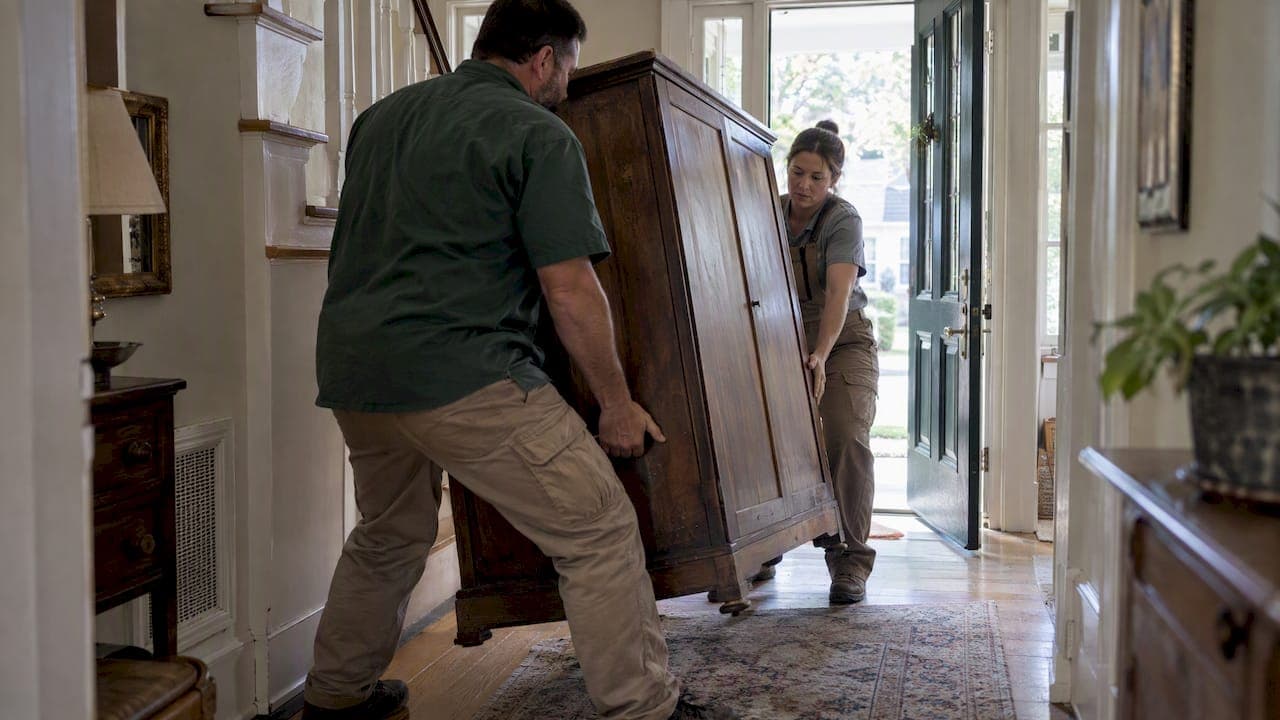
Large furniture and appliances take the longest to move, and clearing them opens space to work. Do this early, ideally with two or more people. Clear a path to the door and the driveway before anything else.
Step 5: Work room by room, top to bottom
Finish one room before starting the next. A house with every room half done feels hopeless, while a house with three finished rooms feels manageable. Many people begin with the least emotional spaces, such as the garage or a hall closet, to build momentum before the bedroom.
Step 6: Remove items the same day
Do not stack donation bags in the living room "for later." Remove them the same day, and keep them out of sight. That is especially important in a home with a hoarding history, covered below.
Step 7: Do a final sweep
Check closets, attics, crawl spaces, under beds and behind appliances. Then sweep or vacuum so the home is broom-clean, meaning free of belongings and loose debris, which is what most buyers, landlords and agents expect at handoff.
What you cannot rush: hazardous items
Old paint, solvents, drain cleaners, pesticides, pool chemicals, motor oil and batteries are common in garages and basements. The EPA classifies these as household hazardous waste: products that can ignite, react, corrode or poison. They should not be poured down a drain or tossed in the trash, and many facilities refuse them at curbside pickup.

In practice, that means separating them from the start and taking them to a designated collection point. Counties in New Jersey run their own programs. For example, the Morris County Municipal Utilities Authority runs a permanent household hazardous waste facility in Mount Olive plus spring and fall collection events for county residents. Check your own county's solid waste agency for hours and what it accepts.
For a wider look at handling and disposing of materials like these around the home, this guide to sustainable home practices is a useful reference.
If you find syringes, sharps, or anything that looks biological in nature, stop. Those need trained handling, not a weekend with gloves. We provide specialty odor and waste cleaning for these conditions.
When the home is hoarded or heavily cluttered
Speed works against you here. Clutter that has built up over years often has an emotional reason behind it, and clearing it all in one day can cause real distress.
The Alzheimer's Association guidance on hoarding behaviors notes that removing all clutter can cause severe emotional upset, and that it is usually not beneficial to remove everything a person hoards. If the clutter is not an immediate safety or health hazard, experts advise leaving it in place. When a person is part of the process, they suggest a phased approach:
- Start only with what poses an immediate hazard, such as blocked pathways or access to the stove.
- Give the person one box at a time to sort.
- Remove discarded items from the property right away, since people may try to retrieve things from the trash.
As for severity, a University of North Carolina hoarding webinar describes a five-level scale. Level 3 and above involves significant disrepair, rotting food, blocked pathways and major pest infestations, and typically needs a trained, multi-disciplinary team rather than family members. If that sounds like the home you are facing, do not try to do it in a weekend. Our article on hoarding versus clutter helps you judge which one you have.
DIY, dumpster or professional crew?
There are three common ways to clear a house. The right one depends on size, timeline, and how much of the work you can physically and emotionally do.
| Option | Best for | Watch out for |
|---|---|---|
| Do it yourself with family | Small homes, a single room, no deadline | Lifting injuries, lost weekends, emotional fatigue |
| Rented dumpster or container | Homes where you have time to load and sort yourself | You still do all the sorting, loading and hazardous waste runs |
| Professional cleanout crew | Tight deadlines, large homes, out-of-state families, heavy clutter | Choose a crew that is insured and documents its work |
We compare the first two in more detail in Professional Estate Cleanout vs. DIY Container Removal in NJ.
The case for a crew is usually about time and distance. Families who live in another state, executors balancing jobs, and realtors with a closing date all gain more from a team that arrives with enough people and a plan than from a long string of weekends.
What a fast professional cleanout looks like with us
We serve families across New Jersey, and our approach is built around the issues covered above.
- Walkthrough and firm quote. We look at the home, talk through your priorities, and give you a quote before work begins.
- Keepsake sorting. We set aside photographs, papers, and anything that could matter to the family, and we hold them for you.
- Donation first. Usable items go to local charities rather than the landfill, where the estate's authority allows it.
- Documentation. We provide professional documentation of the work, which helps executors with probate records.
- Broom-clean handoff. We leave the property empty and swept for the next step, whether that is a sale, a rental or a renovation.
- Discreet, fully insured. Our crews work quietly and are insured.
Our published starting rates
Final pricing depends on volume, access, stairs, hazardous materials and the condition of the home, so every job gets a firm quote after a walkthrough. These are our published starting points:
| Service | Starting price |
|---|---|
| Single item or small pickup | from $150 |
| Single room, garage or basement | from $295 |
| Apartment or condo cleanout | from $650 |
| Foreclosure or eviction cleanout | from $950 |
| Full house cleanout | from $1,200 |
| Hoarding cleanup | from $1,500 |
| Large estate cleanout | from $2,200 |
| Packing service | $55 per hour per packer |
| Estate photography and online inventory | $75 per hour |
If the house holds items worth selling, we also handle on-site estate sales for a 15% to 35% commission and online listings and consignment for 20% to 40%. For the full list of services, see our main page, and to check that we cover your town, see our New Jersey service areas. To compare costs for smaller homes, read our apartment cleanout cost guide.
Our perspective: fast is a result, not a method
We have walked into many homes where a family was told to "just get it done." What we have learned is that the fastest cleanouts are the ones that began with the slowest hour: the walkthrough. That hour tells us where the papers and valuables are likely to be, what needs special handling, and which items a family member might want.
We also believe that nothing usable should be thrown away because of a deadline. That is why we sort donation-first. A set of dishes that is no use to your family can help another household, and the paperwork from the charity can help the executor show where things went.
When families ask how fast we can finish, we answer honestly: it depends on the size of the home and the condition inside. What we can promise is a clear plan, careful handling of anything personal, and a home handed back broom-clean. If you cannot do it yourself because of distance, work, health or grief, that is not a failing. It is a reasonable reason to ask for help.
— Derek
Tips for moving quickly when you do it yourself
- Set a timer. Work in 45 to 60 minute blocks, then break. Decision fatigue slows people down more than the lifting does.
- Stage supplies first. Boxes, heavy trash bags, tape, markers, gloves and a hand truck should be on site before you start.
- Label as you go. A marker and a few boxes marked "family," "donate," "sell" and "hazardous" prevent re-sorting.
- Book hauling early. Charity pickups and bulk-trash collection can take days to schedule. Set them up before you start sorting.
- Do not discard papers. Shred only after the estate attorney or accountant has said it is safe.
- Plan for the weather. Winter can be a good time to book help, since demand is often lower. See our notes on a winter estate cleanout.
For a longer task list, our estate cleanout checklist covers when to wait for probate, and preparing for an estate cleanout covers finding the will first.
Need the house cleared on a deadline?
Tell us the address, the size of the home, and your date. We will schedule a walkthrough, give you a firm quote, and tell you plainly whether your timeline is realistic. Start at bereavementcleanoutservices.com.
FAQ
What is the fastest way to clean out a house?
Sort every item once into keep, donate, sell and dispose, and remove each category the same day. Start with large furniture and finish room by room. For a large or cluttered home, a crew with enough people will usually finish much sooner than a family working weekends.
How long should it take to clean out a house?
It depends on the amount of belongings, the stairs and access, and whether there is hazardous waste or heavy clutter. A single room or garage can be done in a day, while a full house takes longer. We give a realistic timeline with the quote after a walkthrough.
Can I throw everything away after someone dies?
Not until you are sure who has legal authority and what the estate needs. Executors are expected to safeguard property and keep records, according to the Bergen County Surrogate's Court. Confirm with the estate's attorney before disposing of anything of value, and keep photographs of what was removed.
What do I do with paint, cleaners and batteries?
Keep them out of the trash and drains. Take them to your county's household hazardous waste facility or a scheduled collection event, and check what each site accepts. We can separate and handle these items as part of a cleanout.
Should I hire a professional or do it myself?
Do it yourself if the home is small and you have time. Hire a professional if you face a closing or lease deadline, live far away, or find heavy clutter, odors or hazardous materials. In New Jersey, we offer walkthroughs and firm quotes.
Sources
- Bergen County Surrogate's Court: How to Probate a Last Will & Testament
- New Jersey Division of Taxation: IT-R Instructions
- US EPA: Household Hazardous Waste
- Morris County MUA: Household Hazardous Waste Disposal Days
- Alzheimer's Association: Rummaging, Hiding, and Hoarding Behaviors
- UNC hoarding webinar materials
- UM Impact: Cleaning Out the Closet, Narrative Sense-Making of Bereavement
- UMN Extension: Who Gets Grandma's Yellow Pie Plate?