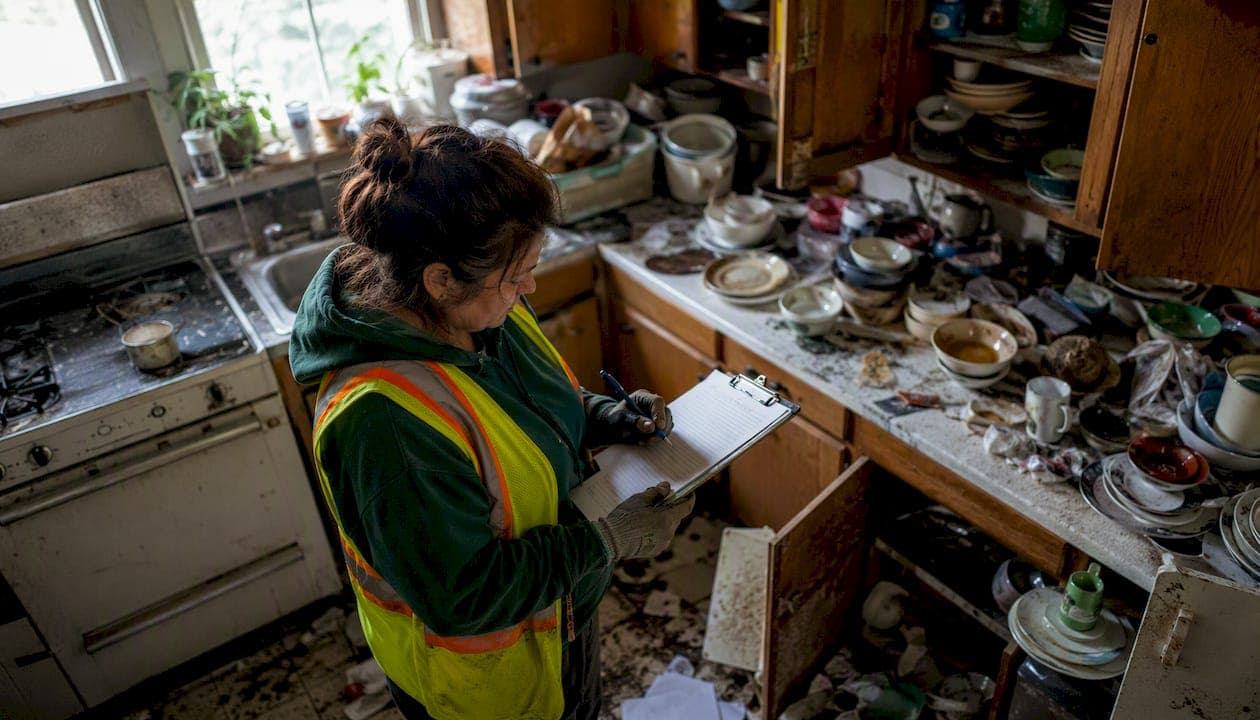
For moderate-to-severe hoarding, call a licensed, trauma-informed hoarding-cleanup team before anyone moves a single item. A professional hoarder house cleanout is not just about removing clutter. It is about doing it safely, preserving what matters, and protecting everyone involved from real physical and emotional harm.
Here is what you need to know right now:
- Do not move anything. Take photos and video of every room first.
- Secure valuables. Move any visible cash, jewelry, or important documents to a safe location.
- Assess for immediate hazards. Blocked exits, pest activity, or signs of mold or structural damage mean you should call professionals today, not next week.
- Request a walkthrough. A reputable company will come to the home, assess conditions, and give you a written quote before any work begins.
Typical cost ranges vary: small stabilization cleanups may be under $2,000, moderate apartment jobs between $2,000 and $6,000, severe house cleanouts $5,000 to $20,000+, with biohazard remediation priced separately and often adding thousands more.
Table of Contents
- What does a professional hoarder-house cleanout actually include?
- How does the cleanout process work, step by step?
- What does a hoarder house cleanup cost, and how are quotes calculated?
- How do you choose the right hoarding cleanout company?
- What health and safety risks do professionals manage?
- What should families do right now, before professionals arrive?
- How Bereavementcleanoutservices approaches hoarding cleanouts
- Key Takeaways
- What families often get wrong about the cleanout process
- Ready to schedule a walkthrough with Bereavementcleanoutservices?
- Useful sources and further reading
What does a professional hoarder-house cleanout actually include?
Families are often surprised by how much a reputable hoarding-cleanup company handles beyond simple hauling. A thorough service covers the entire process from first assessment to final handoff.
- Safety triage. Before any sorting begins, crews identify blocked exits, fire hazards, and structural risks to establish a safe working environment.
- Photo-documented inventory. Every room is photographed before removal. Valuables, documents, and sentimental items are tagged and held securely for family review, which is standard practice for probate and legal purposes.
- Phased sorting with a donation-first policy. Items are sorted into keep, donate, recycle, and dispose categories. Usable goods go to local charities before anything goes to landfill.
- Hauling and legal disposal. This includes hazardous materials, bulk waste, and furniture, all handled in compliance with local disposal regulations.
- Deep cleaning and deodorization. After removal, crews clean and deodorize the space, often using HEPA-filtered vacuums and EPA-registered disinfectants for mold, allergens, and biological residue.
- Specialist coordination. When biohazards, pest infestations, or structural concerns are present, reputable companies coordinate with licensed biohazard remediators, pest control operators, and structural inspectors rather than attempting those tasks themselves.
What to look for on any written estimate: proof of insurance and licensing, trauma-informed staff, discreet service options (including unmarked vehicles), and a written scope of work produced after an in-person walkthrough, not over the phone.
How does the cleanout process work, step by step?
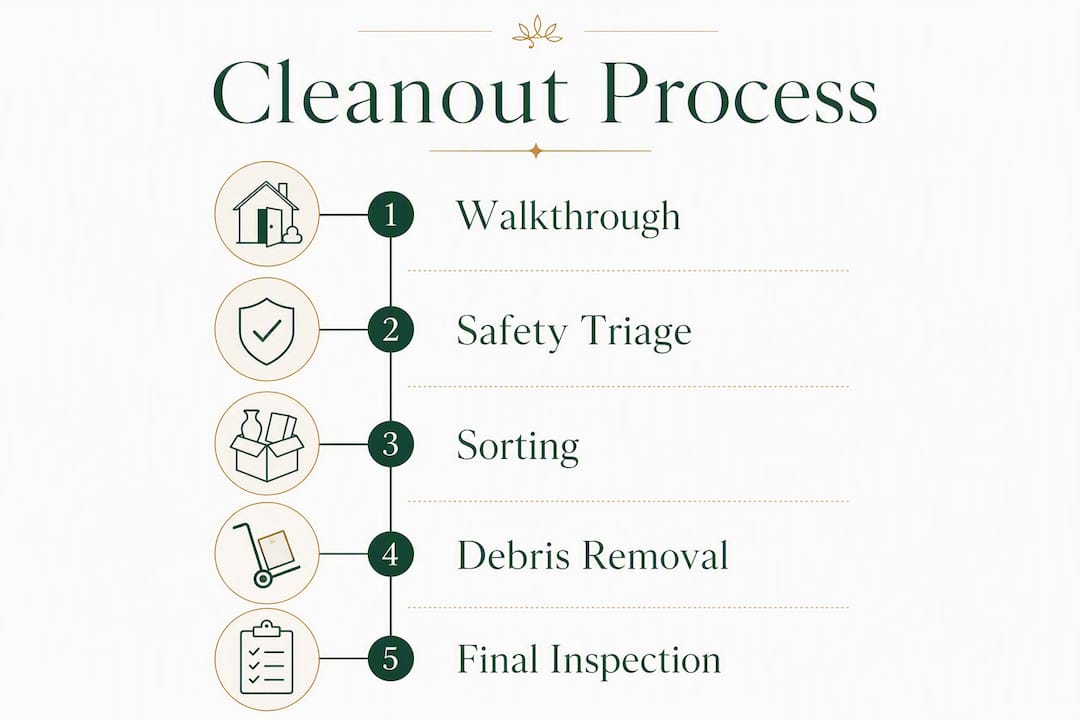
A professional hoarding cleanout follows a phased workflow. Rushing any phase creates safety risks and emotional harm, so understanding the sequence helps families plan their time and set realistic expectations.
| Phase | What Happens | Typical Duration |
|---|---|---|
| Initial walkthrough | Safety triage, hazard identification, consent discussion, written quote | Typically a few hours |
| Documentation | Room-by-room photography, tagging valuables, establishing decision-makers | Usually completed within a day |
| Stabilization | Clearing one safe exit, one functional bathroom, one sleeping area | Generally takes a couple of days |
| Phased removal and sorting | Zone-by-zone sorting using keep/donate/recycle/dispose method | Duration varies widely depending on hoarding severity |
| Remediation and deep clean | Mold, biohazard, pest treatment; final cleaning and deodorization | Varies by specialist |
| Final inspection and handoff | Walk-through with family, broom-clean finish, documentation delivered | Often done within a few hours |

The zone-based, four-box sorting method (keep, donate, recycle, trash) with a temporary "unsure" holding area keeps decisions moving without forcing the resident into a corner. Stalled decisions are one of the most common reasons cleanouts run over schedule.
Pro Tip: Donation staging needs tight management. Limit active donation boxes to one to three per session and schedule off-site pickup within 24–48 hours. Letting donations accumulate on-site slows the entire process and can reignite distress for the resident.
What does a hoarder house cleanup cost, and how are quotes calculated?
Pricing for hoarding cleanup is not one-size-fits-all. Companies use several models, and understanding them helps you compare bids accurately.
Common pricing models
- Fixed quote after walkthrough. The most transparent model, where a crew visits the home and provides a written all-in price.
- Volume or weight-based hauling. Charges depend on the volume or weight of removed material.
- Hourly crew rates. Sometimes used for smaller stabilization jobs.
- Third-party remediation fees. Biohazard, mold, and pest services are usually quoted and invoiced separately by licensed specialists.
Primary cost drivers
| Factor | Impact on Cost |
|---|---|
| Hoarding level (1–5 scale) | Higher levels mean more labor hours, more disposal volume, and specialist coordination |
| Biohazard or mold presence | Licensed remediation is priced separately and can add thousands to the total |
| Property size and access | Multi-story homes, narrow hallways, or no elevator access increase labor time |
| Disposal and hauling fees | Landfill tipping fees, hazardous waste disposal, and fuel surcharges vary by location |
| Donation handling | Sorting, staging, and coordinating charity pickups adds time |
| Timeline urgency | Rush jobs or emergency stabilization carry premium rates |
Questions to ask and red flags to watch for
Ask every company: Do you carry general liability and workers' compensation insurance? Will you provide a written scope of work after the walkthrough? How do you handle valuables found during sorting? Do you coordinate biohazard or pest remediation, or do I need to arrange that separately?

Red flags include vague scopes with no itemized breakdown, quotes given over the phone without a site visit, no proof of insurance, and pressure to sign and start immediately.
How do you choose the right hoarding cleanout company?
The difference between a good outcome and a damaging one often comes down to who you hire. Here is a practical checklist.
- Verify insurance and licensing. Ask for certificates of general liability and workers' compensation insurance before signing anything. A legitimate company provides these without hesitation.
- Confirm trauma-informed training. Ask directly whether crew members have training in hoarding disorder and how they handle resident distress during the process.
- Request a written scope of work. Any reputable company produces a written estimate after an in-person walkthrough, not a ballpark figure over the phone.
- Ask about their donation policy. A donation-first approach reflects both ethical practice and genuine respect for the resident's belongings.
- Check for photo documentation. Companies should photograph the home before, during, and after the cleanout, both for your records and for probate or insurance purposes.
- Ask about discreet service options. Unmarked vehicles and crew who understand confidentiality matter to many families.
- Request references or before-and-after photos. A company with real experience will have both.
Red flags to walk away from:
- Pressure to remove items before documentation is complete
- No plan for securing valuables or important documents
- Flat-rate pricing with no walkthrough
- Inability to coordinate with biohazard or pest specialists
- No written contract or scope
When comparing proposals, look beyond the total price. A lower bid that excludes remediation, disposal receipts, or documentation may cost more in the end.
What health and safety risks do professionals manage?
Hoarded homes present hazards that go well beyond clutter. Mass.gov's guidance on hoarding risks identifies fire, structural instability, and unsanitary conditions as the primary dangers. Professional crews are trained and equipped to handle all of them.
Common hazards found in hoarded homes:
- Human or animal waste, feces, and urine contamination
- Food decomposition and pest infestations (rodents, cockroaches, bedbugs)
- Mold growth, often hidden beneath stacked items
- Sharps (needles, broken glass) buried in debris
- Structural weakness from weight load or water damage
- Carbon monoxide or fire risk from blocked vents and appliances
What professionals use that household cleaners cannot replicate:
- P100 or N95 respirators and disposable coveralls for crew protection
- HEPA-filtered vacuums and EPA-registered, hospital-grade disinfectants for mold, allergens, and biological residue
- Ozone or hydroxyl generators for deep odor treatment
- Negative air pressure containment when biohazards are isolated
When feces, needles, decomposition material, or extensive mold are present, the work escalates to licensed biohazard remediation, which requires separate licensing, separate pricing, and specialist-grade protocols. General junk removal companies are not equipped for this. A professional hoarding-cleanup firm either holds that license or has a vetted partner who does.
DIY attempts in moderate-to-severe cases routinely skip the initial safety triage, which takes as little as 10–15 minutes but identifies electrical, structural, and biological risks that can cause serious injury. Household bleach and a dust mask are not substitutes for industrial-grade remediation.
What should families do right now, before professionals arrive?
If you are managing a hoarded home on behalf of a family member or as an executor, these steps protect both the resident and the property before a professional team arrives.
- Do not move or remove anything. Disturbing the layout before documentation can cause irreplaceable items to be lost and can trigger severe emotional distress in the resident.
- Document with photos and video. Walk through every accessible room and record conditions. This protects you legally and helps the cleanout team plan their approach.
- Secure obvious valuables. Any clearly visible cash, jewelry, financial documents, or legal papers should be moved to a secure location immediately.
- Identify immediate hazards. If exits are blocked, there is evidence of active pest infestation, or you see signs of structural damage, limit access to the home and call a professional today.
- Establish a decision-maker. Confirm who has legal authority to make decisions about the property and its contents, whether that is the resident, a power of attorney, or an executor.
- Schedule an in-person walkthrough. Contact a trauma-informed provider and arrange a site visit. Most reputable companies offer this at no charge.
Pro Tip: Before the walkthrough, write down any items the resident or family has specifically asked to keep or locate. Sharing that list with the crew at the start of the first visit prevents those items from being sorted into removal by mistake.
How Bereavementcleanoutservices approaches hoarding cleanouts
Bereavementcleanoutservices handles hoarding and heavy clutter cleanup across New Jersey with a process built around family consent, careful documentation, and a donation-first philosophy.
- Donation-first sorting. Usable items are directed to local charities before anything goes to disposal. Donations are staged carefully, with scheduled off-site pickups to keep the process moving.
- Photo-documented inventory. Every room is photographed before and after removal. Valuables, documents, and keepsakes are held securely and documented in a format suitable for probate review.
- Trauma-informed crews. Staff are trained to work at a pace the resident and family can manage, to de-escalate distress, and to maintain confidentiality throughout the process.
- Fully insured operations. Bereavementcleanoutservices carries the insurance and documentation families need for peace of mind and legal protection.
- Discreet service options. For families who value privacy, the team can arrive and work without drawing neighborhood attention.
- Clear process from start to finish. The workflow runs from in-person walkthrough and written quote, through phased cleanout and specialist coordination, to a final deep clean and broom-clean handoff.
Key Takeaways
A professional, trauma-informed hoarder house cleanout requires safety triage first, photo documentation before any removal, and a written scope from a licensed, insured company to protect both the resident and the family.
| Point | Details |
|---|---|
| Safety triage comes first | Identify blocked exits, fire hazards, and structural risks before sorting begins. |
| Document before you move anything | Photo and video documentation protects valuables and reduces emotional harm during removal. |
| Cost ranges vary depending on severity | Small stabilization jobs may cost under $2,000, moderate cleanouts between $2,000 and $6,000, and severe jobs with biohazards can reach $20,000 or more, with biohazard remediation priced separately. |
| Written scope is the top trust signal | Any reputable company provides a written estimate after an in-person walkthrough, not over the phone. |
| Bereavementcleanoutservices | Offers donation-first, fully insured hoarding cleanouts across New Jersey with photo documentation and trauma-informed crews. |
What families often get wrong about the cleanout process
The most common mistake families make is treating a hoarding cleanout like a fast declutter. They arrive with good intentions, start moving things, and within an hour the resident is in crisis, a valuable document is missing, and the safety hazards no one checked for are now active risks. That pattern plays out repeatedly, and it is almost always avoidable.
The piece of conventional wisdom I push back on hardest is the idea that speed is kindness. Families often feel that getting it done quickly spares the resident prolonged distress. The research and the field experience both say the opposite. A phased approach, with clear consent at every stage and a secure holding period for uncertain items, produces better outcomes than a one-day blitz, both emotionally and practically. The "finality of removal" trigger, where a resident watches items loaded onto a truck before they have genuinely agreed to let them go, can cause a mental health crisis that sets the entire process back by weeks.
The other thing families underestimate is the gap between general junk removal and actual hoarding remediation. Industrial HEPA vacuums, EPA-registered disinfectants, and licensed biohazard protocols are not upsells. They are the difference between a cleaned home and a home that looks cleaned. If a company cannot tell you exactly what equipment they use and whether they hold or partner with a licensed biohazard remediator, that is a meaningful gap in their capability.
Compassion and competence are not in tension here. The most effective cleanouts move carefully, document everything, and treat the resident's consent as non-negotiable. That is not slower. It is just done right.
Ready to schedule a walkthrough with Bereavementcleanoutservices?
When a home needs professional hoarding cleanup, the clearest next step is an in-person walkthrough with a team that knows what it is looking at. Bereavementcleanoutservices provides exactly that across New Jersey: a no-pressure site visit, a written quote, and a phased cleanout plan built around your family's timeline and the resident's needs.

The donation-first approach means usable items go to local charities, not landfill. Every job is fully insured, photo-documented from start to finish, and handled with the discretion families in difficult situations deserve. Whether you are managing an estate, coordinating for a family member, or working as a social worker or case manager, the team is equipped to handle the full scope, from stabilization through final broom-clean handoff.
To request your free walkthrough, visit Bereavementcleanoutservices or call to speak with someone directly. Have the property address, a rough sense of the home's size, and any known hazards ready when you reach out. That information helps the team prepare and keeps the first visit focused on what matters most.
Useful sources and further reading
These resources provide authoritative guidance on hoarding disorder, safety risks, and remediation standards.
- Risks caused by hoarding — Mass.gov: State-level guidance on fire, structural, and sanitation hazards in hoarded homes.
- Hoarding disorder: symptoms and causes — Mayo Clinic: Clinical overview of hoarding disorder for families seeking to understand the condition.
- What is hoarding disorder? — American Psychiatric Association: Diagnostic criteria and treatment context from the APA.
- How to help a loved one with hoarding disorder — IOCDF: Practical family guidance from the International OCD Foundation's hoarding center.
- Helping someone with hoarding disorder — HelpGuide: Accessible, family-focused advice on communication and intervention.
- Bereavementcleanoutservices — New Jersey hoarding and estate cleanouts: Service details, donation-first process, and contact information for scheduling a walkthrough.
When sharing information with family decision-makers or legal representatives, include copies of the cleanout company's insurance certificates and licensing documentation alongside any written scope of work. Those documents matter for probate, property transactions, and any future insurance claims.