
Turn a vacant unit rent-ready in ten ordered steps: capture the move-out notice, complete a photographed move-out inspection, scope repairs with owner approval, remove junk and abandoned items, finish repairs and safety checks, deep clean, run final quality control and photos, list and show the unit, screen and sign the new lease, then document move-in and hand off keys. Top operators complete this pipeline in 3 to 7 days, according to industry benchmarks from sources like Buildium, Dropcurb, and property management trade groups like NARPM. Every day past that window costs you rent. Here's the order that gets you there.
TL;DR:
- Completing a turnover in three to seven days requires strict sequencing, avoiding delays caused by waiting on vendors, owner approvals, or cleaning.
- Every step, from inspections to repairs and cleaning, must produce documented outputs like photos and receipts to prevent deposit disputes.
- Starting marketing the unit as soon as move-out notice is received can significantly cut vacancy days, especially if marketing overlaps with make-ready work.
- Vendor delays are the main cause of extended turnaround times, so pre-booking contractors and establishing escalation rules can save days.
- In complex cases like estate cleanouts or high-abandonment scenarios, hiring professional cleanout services with documented inventory speeds up the process and reduces disputes.
Table of Contents
- What Is a Landlord Turnover Checklist?
- How Do You Structure the Unit Turnover Process in Phases?
- Room-By-Room Make-Ready Checklist for Rental Units
- How Do You Handle Security Deposits and Abandoned Property?
- What Should You Expect for Turnover Timeline and Cost?
- How Do You Coordinate Vendors Without Losing Days to Scheduling Gaps?
- When Should You Hire a Professional Cleanout Service?
- What Actually Saves Days on a Turnover?
- How Bereavement Cleanout Services Fits Into a New Jersey Turnover
- Key Takeaways
- Sources
What Is a Landlord Turnover Checklist?
A landlord turnover checklist is the ordered sequence of tasks that turns an occupied unit into a leased one, with documentation at every handoff. It exists because turnovers rarely fail from any single mistake. They fail from gaps between steps: the three days waiting on a contractor, the week lost because nobody scheduled the cleaner until repairs were done, the deposit dispute that drags on because nobody took photos.
Think of the process less as a to-do list and more as a rental turnover checklist built around handoffs. Each phase produces something the next phase needs: signed inspection notes, a repair scope, dated receipts, final photos. Miss a handoff and the whole pipeline stalls, even if every individual task gets done eventually.
How Do You Structure the Unit Turnover Process in Phases?
Six phases move a unit from occupied to leased. Each has a trigger event, specific tasks, and an output that feeds the next phase.
- Notice and pre-listing (trigger: move-out notice received). Confirm the move-out date in writing, send a written notice-response with expectations for the final walkthrough, and start marketing photos and listing copy immediately using the current lease photos or a scheduled pre-move photo session. This is the single biggest lever for cutting vacancy days, according to Buildium's tenant turnover research, because it overlaps marketing time with make-ready time instead of stacking them.
- Move-out inspection (trigger: keys returned or lease end date). Walk the unit with a phone or tablet, photograph every room including ceilings, corners, and appliance interiors, and log the meter readings. This inspection report becomes your legal backbone for any deposit deduction.
- Scope and approval (trigger: inspection complete). Compare photos against the move-in condition report, draft a repair scope with cost estimates, and route anything above your damage-dollar threshold (commonly $500 to $1,000) to the owner for sign-off before work begins.
- Removal and repairs (trigger: scope approved). Clear abandoned items first, since tenant-left junk is the most common bottleneck in the whole pipeline, then dispatch trades in a fixed order: general repairs, then paint, then flooring.
- Cleaning and final QC (trigger: repairs signed off). Deep clean, then walk the unit a second time with a punch list and take listing-quality photos only after everything passes.
- Marketing and move-in (trigger: unit passes QC). Publish the listing, screen applicants against your standard criteria, sign the lease, and complete a documented move-in walkthrough with the new tenant present.
Pro Tip: Keep a single shared folder per unit, named by address and turn date, and drop every photo, receipt, and signed document into it as you go. When a deposit dispute lands six months later, that folder is the difference between a five-minute answer and a scramble.
The best-order principle matters more than any individual task: inspect, scope, repair, clean, photograph, then list. Landlords who clean before repairs are finished, or list before cleaning is done, end up paying for the same work twice.
Room-By-Room Make-Ready Checklist for Rental Units
Once the scope is approved, work room by room so nothing gets missed on the way to final photos.
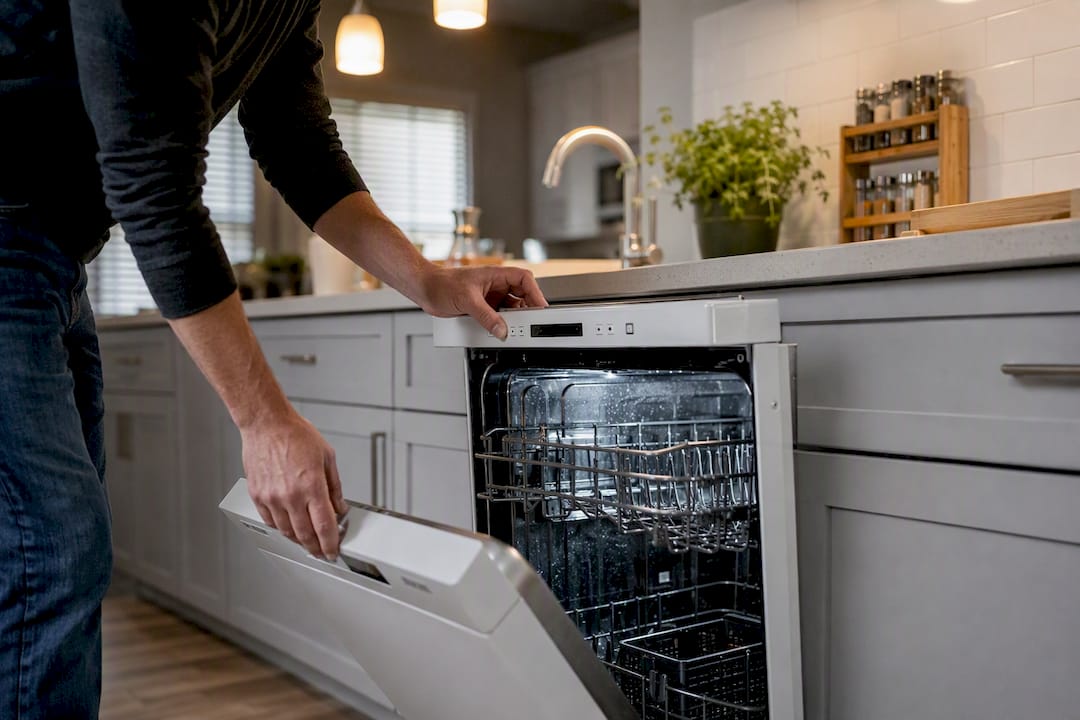
Kitchen. Test every appliance through a full cycle, not just power-on: run the dishwasher, cycle the oven to 350°F, and check the disposal for jams. Tighten or replace loose cabinet hardware, and confirm the fridge holds between 35°F and 38°F for at least an hour before you call it done.
Bathrooms. Re-caulk tubs and showers where the seal has yellowed or gapped, scrub or replace grout that's holding mildew, and confirm the exhaust fan actually vents outside rather than into the attic. Check every fixture for slow drains and running toilets.
Bedrooms and living areas. Patch nail holes and scuffs, then repaint full walls rather than spot-touching if the color has faded unevenly. Inspect flooring for gouges or stains that need more than a cleaning, test every closet door and track, and confirm all window locks engage properly.
Systems. Change the HVAC filter and run the system on both heat and cool to catch anything that only fails under load. Test every GFCI outlet with the built-in test button, and confirm smoke and carbon monoxide alarms are within their expiration dates and actually sound when tested.
Curb appeal. Sweep entries and walkways, replace any burned-out exterior bulbs, and make sure the path to the unit is clear of the previous tenant's leftover items. First impressions during showings start at the curb, not the front door.
Pro Tip: Photograph the HVAC filter date, the smoke alarm test, and the water heater dial before you close up the unit. If a tenant ever claims a system wasn't working at move-in, you'll have a timestamped answer.

How Do You Handle Security Deposits and Abandoned Property?
Your itemized deposit statement needs three things to hold up: a clear description of each deduction, the dollar amount tied to it, and photo or receipt evidence attached to the statement itself. A deduction for "cleaning, $200" without a photo of the condition and a copy of the cleaner's invoice is the kind of thing that loses small claims disputes.
Deadlines and abandoned-property notice periods vary significantly by state, so treat any general timeline as a starting point, not a final answer. California, for example, requires deposit return within 21 days and an 18-day abandoned property notice window before you can dispose of left-behind belongings.
| State | Typical Deposit Return Window | Notes |
|---|---|---|
| California | 21 days | 18-day abandoned property notice required before disposal |
| New York | 14 days | Itemized statement required if any deduction is made |
| New Jersey | 30 days | Deposit must be held in an interest-bearing account |
| Texas | 30 days | Written notice required if deductions are made |
Always verify current statutes with your state's landlord-tenant office before disposing of anything. For abandoned property specifically:
- Photograph every item left behind, dated and timestamped, before you touch it.
- Send written notice to the tenant's last known address by certified mail and keep the receipt.
- Store or dispose of items only after your state's required notice period has fully elapsed.
What Should You Expect for Turnover Timeline and Cost?
The gap between a well-run turn and a poorly coordinated one is measured in weeks, not days. Top-quartile operators finish in 3 to 7 days, while turns that lack a clear pipeline commonly stretch to 14 to 30 days. The difference usually isn't the work itself. It's the dead time between phases: waiting on a contractor callback, waiting on owner approval, waiting on a cleaner's schedule.
A basic turnover cost breakdown for a typical one or two-bedroom unit looks something like this:
- Cleaning: $150 to $400
- Paint (full unit): $500 to $1,500
- Minor repairs: $200 to $800
- Junk and abandoned-item removal: $150 to $600
- Lost rent per vacant day: your monthly rent divided by 30
If your unit rents for $1,800 a month, every extra vacant day costs you roughly $60. A turn that drags from 7 days to 21 days doesn't just cost more in labor. It costs an additional $840 in lost rent alone.
Cutting days usually comes down to three moves: start marketing on the notice date instead of after move-out, pre-book vendors before you need them, and remove junk immediately rather than waiting for a full repair scope.
How Do You Coordinate Vendors Without Losing Days to Scheduling Gaps?
Vendor delays are the single most common source of blown timelines, and almost all of them trace back to unclear sequencing or missing escalation rules.
- Dispatch removal and cleanout crews the moment the inspection is signed, not after the repair scope is finalized.
- Send trades in fixed order: structural and general repairs first, then paint, then flooring, then final cleaning.
- Set a maximum 24-hour response window for any vendor before you escalate to a backup.
- Define your damage-dollar approval threshold in the owner agreement upfront to prevent delays on routine repairs from waiting on owner approval calls.
Automating these triggers with conditional workflows, so a completed inspection automatically notifies the next vendor, removes the manual dispatch delay that eats up entire days in a typical turn.
Pro Tip: Book two vendors per trade category, a primary and a backup, before peak leasing season hits in late spring. Preferred vendors get booked solid by April, and a backup relationship saved in advance beats scrambling for anyone available in June.
When Should You Hire a Professional Cleanout Service?
Some turns don't fit a normal punch-list timeline. Hoarding situations, biohazard conditions, high volumes of abandoned furniture, or probate cases with court-driven deadlines all call for outside help rather than a weekend of your own labor.
A quality cleanout vendor should deliver a broom-clean handoff, donation-first sorting of usable items, a documented inventory with receipts you can attach to deposit statements, and fully insured crews working on your property.
The most common bottleneck in a unit turn is tenant-abandoned junk, and services offering same-day removal with digital, time-stamped receipts turn a multi-day holdup into a defensible, same-day resolution.
Hiring a professional cleanout crew shortens your critical path exactly where it usually breaks: same-day removal instead of a week of hauling trips, and documented receipts that make your deposit deductions hold up if a tenant disputes them.
What Actually Saves Days on a Turnover?
The biggest lesson from running turns isn't a tool or a template. It's sequencing discipline. One process change that consistently saves the most time: starting marketing photos and listing prep on the day notice is received, running in parallel with the make-ready work instead of waiting until the unit is spotless.
For smaller owners without a property management team, the practical version of that same idea is simpler: don't wait for perfection before you start showing interest in the unit. [brand_signal]. If you're managing this solo, batch your vendor calls into a single afternoon rather than spreading them across a week. That alone recovers days.
— Derek
How Bereavement Cleanout Services Fits Into a New Jersey Turnover
Some turns involve more than a punch list. When a unit comes back full of a previous tenant's belongings, or when an estate situation overlaps with a lease ending, the cleanup itself becomes the bottleneck standing between you and your next tenant.
Bereavement Cleanout Services works across New Jersey handling exactly this kind of overflow: broom-clean finishes, donation-first removal that routes usable items to local charities instead of landfills, full inventory documentation you can attach to deposit statements, and fully insured crews on every job. For landlords, that documentation piece matters as much as the cleanout itself. It's the same photo-and-receipt standard you need for any deposit deduction, done for you as part of the job.
To get a fast, accurate quote, have photos of the unit ready, a clear window for site access, and a rough count of large items like furniture or appliances. If you're working against a lease deadline or a probate timeline, mention it upfront. Start by requesting a quote through Bereavement Cleanout Services and get a firm scope before your next tenant's move-in date locks in.
Key Takeaways
A landlord turnover checklist works best when it treats the process as a documented pipeline, not a loose task list, because dated photos and receipts at each handoff prevent both delays and deposit disputes.
| Point | Details |
|---|---|
| Follow the six-phase pipeline | Move from notice to inspection, scope, removal, repairs, cleaning, then listing without skipping handoffs. |
| Target 3 to 7 days | Top-performing operators hit this window versus 14 to 30 days for uncoordinated turns. |
| Document every deduction | Attach photos and receipts to itemized deposit statements and verify your state's specific deadlines. |
| Set escalation thresholds | Define a damage-dollar approval limit, commonly $500 to $1,000, so repairs don't stall on owner sign-off. |
| Bring in a pro for overflow | Bereavement Cleanout Services handles broom-clean, donation-first cleanouts with documented inventory for New Jersey turnovers. |
Sources
For deeper reading on turnover timelines and process design, see Buildium's tenant turnover checklist, Dropcurb's move-out guide, the rental turnover playbook on sequencing and vacancy costs, make-ready order guidance, and NARPM's residential resource guide. For move-in documentation templates, EchoPM's move-in checklist guide is a useful reference, and Hauzed's tenant screening checklist covers the re-leasing side. Always confirm deposit and abandoned-property deadlines against your own state's landlord-tenant statutes.
- An easy-to-use tenant turnover checklist for property managers
- The Rental Turnover Playbook: Turn a Unit Between Tenants Without Losing a Month (2026)
- How Do You Schedule Unit Turn Tasks Between Leases in 2026?