
Start by choosing your destination and measuring the new space, because everything you keep must fit through that door. Secure your critical documents and a meds bag before anything else moves. Then sort every remaining item into four piles: keep, give, sell, or dispose. Pick a timeline that matches your health, budget, and support system, and let that timeline set the pace.
TL;DR:
- Prioritize sorting large furniture and appliances early to prevent surprises that they won't fit through new doorways, especially within a tight timeline.
- Families should allocate around 12 weeks for a full-house downsizing process to allow sentimental sorting without rushing, with shorter timelines increasing stress and mistakes.
- Essential documents such as IDs, insurance, and legal papers must be gathered, scanned, and stored securely before packing to avoid last-minute legal complications.
- Start with low-emotional, high-volume spaces like the garage and attic, then move to more sentimental items last to maintain momentum and emotional balance.
- Selling items before donating or disposing ensures maximum financial return and prevents the accidental donation of valuable possessions.
Table of Contents
- Senior Downsizing Checklist: A Printable Quick-Reference
- How Long Does Downsizing Actually Take?
- What Documents Do You Need to Gather First?
- Which Rooms Should You Sort First?
- Sell, Donate, or Haul Away: What's the Right Order?
- What Should Move Day Actually Look Like?
- How Do You Settle in During the First Week?
- When Should You Hire Professional Help?
- What Will Downsizing Actually Cost?
- Why Does Downsizing Feel So Emotionally Heavy?
- How Do You Preserve Sentimental Items Without Keeping Everything?
- What Legal Paperwork Should You Update Before You Move?
- How Do You Set Up Technology in the New Home?
- How Do You Sell or Donate Large Furniture Without It Sitting for Weeks?
- Ready for Professional Help With Your Estate Cleanout?
- Where to Find More Downsizing Resources
- What Most Downsizing Advice Gets Wrong
- Sources
Senior Downsizing Checklist: A Printable Quick-Reference
Print this page and tape it inside your move binder. It covers the sequence that Caregiver recommends, condensed into steps you can act on today.
Ten steps to start the project:
- Choose the destination (new home, apartment, or senior living community).
- Get the exact floor plan and room dimensions.
- Measure your current furniture against that floor plan.
- Set a moving date and work backward to build your timeline.
- Gather essential documents into one folder or binder.
- Assemble your meds and essentials bag.
- Walk each room and start the keep/give/sell/dispose sort.
- Schedule donation pickups and any estate sale or cleanout help.
- Book movers and confirm insurance and availability.
- Pack your "Open First" box last, and keep it with you, not the truck.
"Open First" box contents:
- Medications and a printed medication list
- Glasses, hearing aids, and chargers
- Phone chargers and a phone charger for a family member
- Essential documents folder (copies, not originals if space is tight)
- House keys, mailbox key, and new address keys
- A change of clothes and basic toiletries
Urgent tasks to close out before move day:
- Transfer prescriptions to a pharmacy near the new location.
- File a mail forwarding request with the post office.
- Schedule utility shutoff at the old address and setup at the new one.
How Long Does Downsizing Actually Take?
Most families need a 12-week runway for a full-house downsizing, though your timeline should bend to fit your circumstances, not the other way around.
The 12-week standard template:
- Weeks 1 to 2: Measure the new space, get the floor plan, and decide what furniture fits.
- Weeks 3 to 4: Handle big-ticket items first (furniture, appliances) since these decisions shape everything else.
- Weeks 5 to 6: Sort sentimental items slowly, with breaks built in.
- Weeks 7 to 8: Clear the kitchen and closets using the daily-use rule.
- Weeks 9 to 10: Tackle the garage and attic, the most physically demanding rooms.
- Weeks 11 to 12: Sell, donate, or schedule cleanout help, then pack and move.
Pro Tip: Sort big furniture and appliances before anything else. One planning insight notes that deciding on large items early prevents the frustrating surprise of a sofa that won't fit through a new doorway three weeks before moving day.
The 6-week moderate timeline compresses the same milestones into pairs of weeks, and it works well when health is stable but time is limited. The 2 to 4 week urgent timeline (often triggered by a fall, hospitalization, or foreclosure deadline) skips DIY sorting almost entirely and leans on professional help for the bulk of the work.
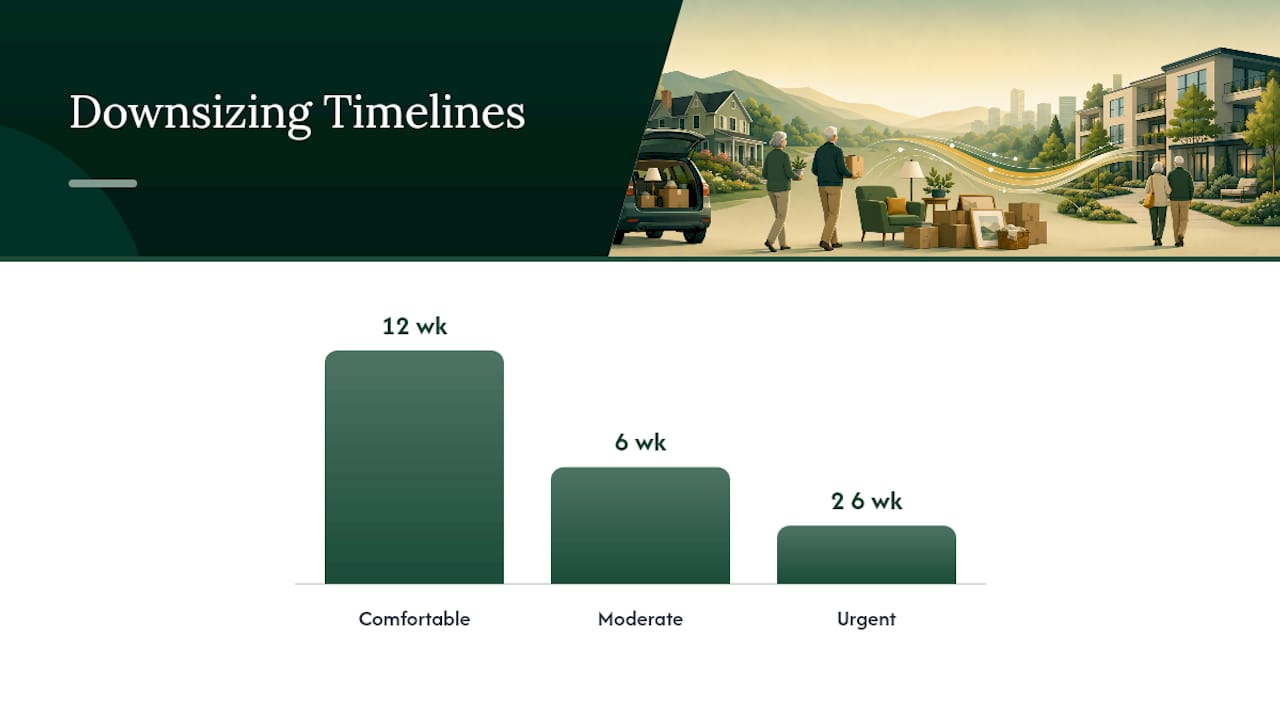
Many senior-move guides treat 12 weeks as the comfortable default for a full house, precisely because it allows sentimental sorting to happen without rushing. Whichever timeline you pick, assign one family member as decision-maker to prevent the paralysis that comes from too many opinions in one room.
What Documents Do You Need to Gather First?
Missing paperwork causes more move-day panic than missing furniture. Gather these before you touch a single box:
- Birth certificate, Social Security card, and passport
- Medicare card, supplemental insurance cards, and a current medication list
- Will, power of attorney, and healthcare directive
- Property deed, mortgage or lease documents, and homeowner's insurance
- Recent tax returns and bank account information
- Vehicle title and insurance
Scan everything into a passworded cloud folder or an encrypted external drive, and keep the physical originals with a family member, never inside a moving box. Copies can travel; originals should not ride in the truck.
Pro Tip: Shred anything with an account number, birthdate, or signature before it goes in the recycling bin. Identity theft targeting seniors during a move is common enough that a $40 shredder is cheap insurance.
Which Rooms Should You Sort First?
Start with the rooms that carry the least emotional weight and the most physical volume: the garage, attic, and utility closets. Momentum matters more than perfection here, and clearing these spaces first gives you visible progress before you hit anything sentimental.
- Garage, attic, utility room. Low emotional attachment, high volume. Clear these first to build confidence.
- Kitchen. Keep only what you use weekly. A drawer of mismatched utensils rarely earns a spot in a smaller kitchen.
- Bedrooms and closets. Apply the one-year rule: if a piece of clothing hasn't been worn in a year, it goes to give or sell.
- Living and dining rooms. Measure every large piece against the new floor plan using painter's tape to mark dimensions on the floor before deciding.
- Sentimental items last. Photos, letters, and heirlooms deserve unhurried attention, not a rushed decision made at 9 p.m. on a Tuesday.
- Basement, chemicals, hazardous materials. Save for last and handle paint, propane, and old cleaning chemicals through your municipality's hazardous waste program, not the regular trash.
Pro Tip: Create one small memory box, roughly the size of a shoebox, for items that matter most. Photographing large sentimental pieces you can't keep, like a childhood piano or a dining set, preserves the memory without requiring the square footage.
Before you decide what furniture survives the move, check our guide on what to keep when downsizing for room-specific priorities.
Sell, Donate, or Haul Away: What's the Right Order?
Sequence matters more than most families realize. Selling first, donating second, and scheduling junk removal last prevents you from giving away something you could have sold, and it keeps your calendar from turning into three separate visits from three separate crews.
- Sell first. List higher-value furniture, tools, and collectibles individually, or run a full estate sale if the volume warrants it.
- Estate sales and consignment typically run on a commission structure, so confirm the percentage and what's included before signing anything.
- Donate second, once sale items are gone. Many charities offer scheduled pickup, so book that date early rather than waiting until moving week.
- Dispose last. Junk removal or a cleanout crew clears whatever remains, which keeps the "broom-clean" standard achievable on a single visit.
A sale-first, donation-second, junk-last order keeps schedules predictable and avoids the common mistake of donating an item you later wish you'd sold.
Safety note: wipe electronics of personal data before selling or donating, and shred any documents found tucked inside furniture drawers or filing cabinets. For guidance on listing items safely online, see how to sell estate items online.
What Should Move Day Actually Look Like?
- Pack the "Open First" and "Week 1" boxes last, and load them in your own car, not the moving truck.
- Color code boxes by room (blue for kitchen, green for bedroom) and number each one against a master inventory list.
- Confirm your movers' licensing and insurance in writing before move day, and check your new building's elevator reservation window and loading dock rules.
- Assign roles: one decision-maker, one runner who fetches supplies, and one documentation lead who tracks what's on each box.
Keep this checklist taped to the front door on move day so every helper, family or professional, knows the plan without asking twice.
How Do You Settle in During the First Week?
Set up the bed and bathroom before anything else. A senior who can find the toothbrush and fall asleep in a made bed on night one adjusts faster than one surrounded by boxes.
- Place familiar photos, a favorite blanket, or a well-loved chair somewhere visible immediately.
- Keep meal times and sleep schedules close to the old routine for the first week.
- Confirm medication refills and any follow-up medical appointments within the first few days.
- Update the address with the post office, Social Security, Medicare, and any subscription services.
- Schedule a short visit from a close friend or family member around day three, not day one, once the basics feel settled.
Pro Tip: Unpack one "comfort item" before you unpack anything practical. A familiar quilt on the bed does more for a senior's sense of security than a fully stocked pantry.
When Should You Hire Professional Help?
Not every move needs a full team, but some do, and knowing the difference saves both money and stress. A NASMM-certified senior move manager plans, sorts, and coordinates the entire process, often working alongside family. A full-service mover handles transport and heavy lifting but usually doesn't sort or pack sentimental items. An estate cleanout team clears what's left behind, sorts donations, and leaves the space broom-clean, which matters most for probate situations, hoarding cleanup, or a health event that forces a fast exit.
Complexity, health emergencies, and probate deadlines are the three biggest reasons to call in help rather than go it alone. NASMM guidance recommends checking insurance, references, and specific senior-move experience before hiring anyone.
Ask any provider these questions:
- Are you fully insured, and can you provide proof?
- What happens to donated items, and which charities do you work with?
- Is a broom-clean handoff included in the quote?
- Do you provide documentation or photo inventory for probate purposes?
This company follows a donation-first approach: usable items go to local charities before anything is hauled away, keepsakes are sorted with care, and every job ends broom-clean with documentation that supports probate requirements.
What Will Downsizing Actually Cost?
Budget for three categories: professional help, moving logistics, and the gap between what you sell and what you spend. Estate cleanout services typically quote a flat fee after an in-person or video walkthrough, so get that number in writing before committing. Movers price by weight, distance, and crew size, and a smaller apartment often means lower costs than families expect, since less furniture means fewer trucks and fewer hours.
Selling furniture, tools, and collectibles can offset moving costs meaningfully, particularly through an estate sale, which typically nets a percentage after commission rather than a flat sum. Donations don't generate cash, but many are tax-deductible, so keep receipts from every charity pickup.
Set aside a contingency of roughly 10 to 15% above your initial estimate. Hazardous material disposal, unexpected repairs revealed once furniture moves out, or an extra donation pickup fee can all add small costs that pile up quickly. If you're weighing whether to hire a cleanout crew at all, understanding what a firm quote should include helps you compare bids apples to apples instead of guessing at what's covered.
Families selling the home afterward should also budget time and money for staging, since a cleared, cleaned space shows better and sells faster. That overlap between cleanout and staging is worth planning early rather than treating as an afterthought once the moving truck pulls away.
Why Does Downsizing Feel So Emotionally Heavy?
Downsizing forces a senior to make dozens of small decisions about identity, memory, and loss, often in a compressed window of time. That's exhausting in a way that has nothing to do with physical boxes.
Clinical research on clutter and mental health links organized, decluttered spaces to measurably lower stress and better emotional wellbeing, which suggests the discomfort of sorting is temporary while the relief afterward tends to last. The hard part is the middle: the box of photos, the shelf of trophies, the drawer that hasn't been opened in a decade but still feels important.
Give the process room to breathe. Sort sentimental rooms in short sessions, not marathon days, and expect some decisions to take longer than logic says they should. It helps to separate the emotional sort (what does this mean to me) from the practical sort (does this fit in the new space) into two different conversations rather than one overwhelming one.
Families who frame the move around what's gained, not just what's lost, tend to navigate it better. A senior moving toward more social contact, less home maintenance, or safer daily living is moving toward something, and wellness research on senior living communities backs that framing with real outcomes tied to healthy aging.
How Do You Preserve Sentimental Items Without Keeping Everything?
You can't keep the house, but you can keep what the house meant. That distinction is the entire trick to sorting sentimental items without guilt.
Build one memory box, roughly the size of a footlocker, and fill it with the items that carry the most weight: letters, a handful of photos, a piece of jewelry, a child's drawing. Everything else that feels sentimental but won't fit gets photographed instead of stored. A photo of the dining table where thirty years of holidays happened preserves the memory in a form that fits in a phone, not a moving truck.
Digitize photo albums and home videos rather than boxing the originals, and consider offering specific items to specific family members by name rather than leaving a pile for someone else to divide later. Ambiguity around who gets what causes more family friction than almost anything else in a downsizing project.
If a piece is too large to keep but too meaningful to donate blindly, ask whether a family member wants it before it goes into the sell or donate pile. A five-minute phone call prevents a lot of regret.
What Legal Paperwork Should You Update Before You Move?
A move is a natural trigger to check whether your legal documents still reflect your wishes, your health status, and your new address. Review your will, your power of attorney, and your healthcare directive before the move, not after, since changes are easier to make while everyone involved is already gathered to help with the transition.
Confirm that your power of attorney names someone who can act on your behalf in the new state if you're moving across state lines, since some designations don't automatically transfer. Update your address with your estate attorney, and make sure any named executor or agent has a copy of the current documents, not an outdated version from a decade ago.
If the move involves selling a home that's part of an estate or trust, loop in the estate attorney early so probate documentation and the cleanout timeline don't collide. A rushed cleanout before legal clearance can create real problems for an executor trying to close an estate cleanly.
How Do You Set Up Technology in the New Home?
Internet and phone service should be scheduled before move day, not after, since a senior without a working phone line during the first 48 hours in a new place is a preventable source of anxiety. Call the provider two to three weeks ahead to confirm installation timing.
Set up a simple, large-button phone or a tablet with video calling preloaded before the move, so staying in touch with family doesn't depend on figuring out new technology during an already stressful week. Medical alert systems, if used, need to be tested in the new home immediately, since layout changes (thicker walls, different Wi-Fi router placement) can affect signal range.
Label chargers and remotes clearly, and keep a single folder with Wi-Fi passwords and account logins somewhere accessible, not buried in a drawer.
How Do You Sell or Donate Large Furniture Without It Sitting for Weeks?
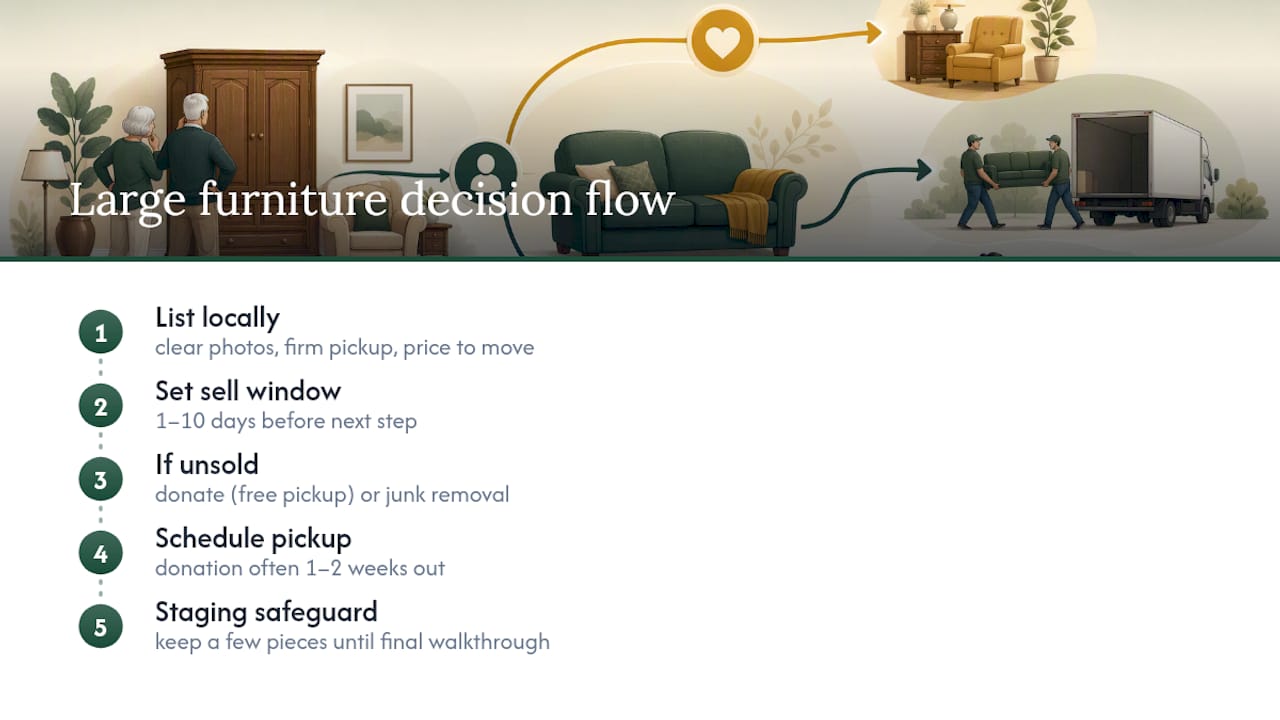
Large furniture is the hardest category to move quickly, because it's expensive to ship, awkward to store, and rarely urgent for a buyer. List it locally with clear photos and firm pickup windows, and price it to move rather than to maximize value. A sofa that sits unsold for three weeks costs more in delayed timelines than it would have earned in extra dollars.
For pieces that don't sell within a set window (a week to ten days is reasonable), move straight to donation rather than relisting repeatedly. Many charities offer free pickup for furniture in good condition, though scheduling often runs one to two weeks out, so book early. For pieces too worn for donation, a junk removal service or estate cleanout crew can clear them on the same visit as everything else, which is often more efficient than trying to sell furniture that realistically won't find a buyer.
If you're staging the home for sale after the cleanout, keep a few key pieces (a table, a couch) until the final walkthrough, since an empty room can photograph worse than a lightly furnished one. Compare removal options, including dumpster versus professional haul-away, before committing to a single method. For closet and storage overflow specifically, organizing strategies for smaller spaces can help you decide what's worth keeping versus what's simply taking up room out of habit.
Ready for Professional Help With Your Estate Cleanout?
If the sorting, hauling, and donation logistics feel bigger than your family can manage alone, that's exactly the gap Bereavementcleanoutservices exists to close. Their donation-first approach across New Jersey means usable items go to local charities before anything else happens, keepsakes get sorted with care rather than rushed into a dumpster, and every job wraps up broom-clean with documentation that holds up for probate. Fully insured, discreet, and built for families navigating exactly this kind of transition, Bereavementcleanoutservices can step in for the parts of the checklist that need more hands, more speed, or more experience than one family has time for.
Where to Find More Downsizing Resources
For further reading, caregiver.org's downsizing checklist and the NASMM directory are worth bookmarking, alongside decluttering's mental health research. Print this checklist and keep it in your move binder.
What Most Downsizing Advice Gets Wrong
Most downsizing guides treat this as a logistics problem: measure the room, sort the boxes, book the truck. That's necessary but incomplete. The research on clutter and stress makes a stronger point than most checklists admit: the emotional cost of downsizing isn't a side effect of the logistics, it's the actual hard part, and rushing the sentimental sort to hit a moving date is where most families go wrong.
The conventional advice to "declutter room by room" is fine as far as it goes, but it buries the more useful insight, which is sequencing by emotional weight, not just physical location. Clear the garage before you touch the photo albums, not because the garage matters less, but because early momentum makes the harder rooms survivable later.
If you take one thing from this checklist, take the timeline seriously. A rushed two-week downsizing under a health crisis is sometimes unavoidable, but a family that chooses a 12-week window when they didn't have to will make better decisions, keep more of what matters, and end the process with less regret.
— Derek
Sources
- Downsizing a Home: A Checklist for Caregivers
- NASMM find-a-move-manager
- PMC research on clutter and related mental health outcomes
- The mental benefits of decluttering
- Research shows senior living communities promote wellness and healthy aging