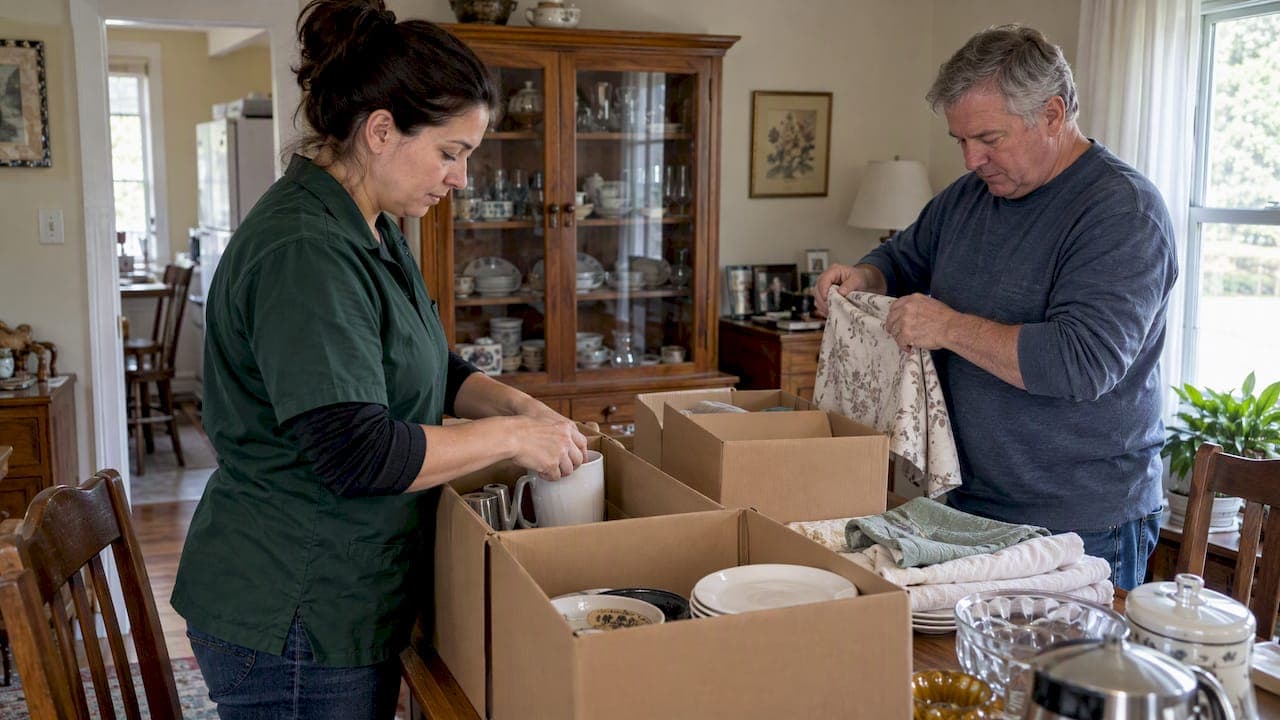
Start by securing documents and a small keepsake box, then run a room-by-room sort with donation, sale, and trash piles. Call a professional if the estate is large, hoarded, or emotionally fraught. This approach protects what matters most first and keeps the rest of the process from stalling under decisions that can wait.
TL;DR:
- Start sorting at least four weeks before moving day, then begin active packing two to four weeks out to avoid rushed decisions.
- Keep anything named in a will untouched until the executor confirms distribution, and store wills, deeds, and titles in one secure folder.
- Photograph heirlooms before packing, match box labels to photo reference numbers, and use tissue that is acid free for textiles and paper keepsakes.
- Separate paints, solvents, batteries, pesticides, and compressed gas cylinders from household boxes; check mover restrictions and confirm local collection dates before moving day.
- A tight closing date, probate restrictions, or family disagreement can justify hiring a professional; request a written quote, timeline, and donation records.
Table of Contents
- Supplies and box priorities for an estate move
- Building a week-by-week packing schedule
- How to sort keepsakes without dividing the family
- Packing fragile heirlooms and preserving photo documentation
- Items movers won't take and how to dispose of them safely
- Labeling and inventory that support executors and probate
- When to bring in a professional packing or cleanout team
- Why we lead with donation first
- How we help with packing and estate cleanouts
- FAQ
- Sources
Supplies and box priorities for an estate move
Before you tape a single box, gather what you need so you are not running to the store mid-sort. Having the right materials on hand turns a chaotic weekend into a manageable process.
- Small, medium, and large boxes, enough boxes in a range of sizes for the items in the home, plus a handful of dish-pack boxes for kitchenware
- Packing paper, bubble wrap, stretch wrap for furniture, strong tape, permanent markers, and color-coded label stickers
- A locking file box or fireproof bag for legal and financial documents
- Acid-free tissue for textiles, photographs, and paper keepsakes
Pack in order of priority: documents and valuables first, fragile heirlooms second, everyday items third, and donate or sell piles last. Fragile heirlooms deserve double-boxing, meaning a cushioned inner box nested inside a larger outer box with ample padding on every side. For expensive china or crystal, professional crating is worth the cost when a single piece would be costly or impossible to replace.
Building a week-by-week packing schedule
Movers often charge by weight, so decluttering before a move early reduces both the physical load and the final bill. A realistic schedule keeps the work from piling up in the final days, when decisions get rushed and mistakes happen.
- Early in the process: declutter room by room, measure furniture for the next home, and list large items for sale or donation
- As moving day approaches: begin packing nonessentials, label boxes by room, and confirm mover or cleanout appointments
- Before moving day: secure documents, pack a first-night essentials box, and schedule a final walk-through
Involve family members for emotional decisions, an executor for anything tied to the will, and a professional organizer or estate cleanout checklist when probate timing affects what can be moved and when.
How to sort keepsakes without dividing the family

AARP notes that downsizing is a major life transition and that feelings of overwhelm are common, which is exactly why a neutral third party often helps families stay objective when sentimental attachments complicate decisions.
Start in the garage, basement, or storage areas rather than the bedroom closet. These lower-stakes spaces build momentum before you reach anything tied to deep memory.
- Set up donation, sell, keep, and trash bins before you open the first drawer
- Photograph sentimental items you plan to donate so the memory survives even after the object leaves the house
- Separate anything named specifically in a will or bequest and keep it untouched until the executor confirms distribution
- Track donation receipts for tax and probate records
Pro Tip: Photograph a sentimental item from multiple angles before donating it: the picture preserves the memory, and the space in your home or storage unit gets freed up immediately.
Our keepsake sorting templates give families and executors a structured way to track these decisions as they go.
Packing fragile heirlooms and preserving photo documentation
Heirlooms carry weight beyond their material value, so they deserve packing steps that go further than a standard move. Double-box anything fragile: wrap each piece individually, pad every seam, and leave ample cushioning between the inner and outer box.
- Wrap valuable textiles, linens, and paper keepsakes in acid-free tissue to prevent yellowing or acid transfer over time
- Reserve professional crating for high-value china, crystal, or art; professional crating may be a reasonable safeguard against an irreplaceable loss
- Create a shot list before packing so every heirloom is photographed before it goes into a box
- Match each box label to its corresponding photo ID number and add a short provenance note where the item's history matters
Our guide to packing fragile heirlooms walks through the double-boxing method in more detail for anyone tackling a china cabinet or a curio full of glassware.
Items movers won't take and how to dispose of them safely
Movers may have restrictions on transporting certain hazardous materials, so check with your mover before packing them. The EPA identifies household hazardous waste as products like paints, solvents, batteries, pesticides, and compressed gas cylinders that require special handling rather than disposal in regular trash or down a drain.
- Set aside anything flammable, corrosive, or pressurized in its own clearly labeled area, away from packed boxes
- Keep hazardous items separate from household boxes, and ask your mover how to handle them.
- Contact your local household hazardous waste collection program before move day to confirm drop-off dates and accepted materials
Labeling and inventory that support executors and probate
A clear labeling system saves hours later and gives an executor something reliable to point to when questions come up. Number every box and keep a matching digital spreadsheet with a short description and a linked photo for anything of value.
- Label each box with its destination room, a brief contents summary, and any beneficiary name tied to a specific item
- Flag boxes that need special handling, such as fragile heirlooms or documents
- Keep wills, deeds, and titles in a single secure folder with the executor or another authorized person, separate from general packing boxes
Our cleanout-before-closing checklist covers how to document donations in the final days before a sale closes, which is often when probate questions surface.
When to bring in a professional packing or cleanout team
Some estates call for more hands and more structure than a family can provide alone. A large property, a hoarding situation, a tight closing date, family disagreement, or probate constraints are all strong signals that professional help will save time and reduce stress.
- Ask about valuation options: federal mover guidance describes Full-Value Protection, which covers repair, replacement, or payment up to declared value, against Released Value, which typically limits recovery to 60 cents per pound per article unless higher-value items are declared
- Ask whether the provider follows a donation-first approach and how they document those donations
- Ask whether photo inventory services are included and request a written quote with a clear timeline
A reputable provider should hand over a documented inventory, donation receipts, and a broom-clean space when the job is finished. Our apartment cleanout guide shows what that process looks like for families handling a loved one's apartment after a death.
Why we lead with donation first

Estate moves ask families to make hundreds of small decisions while grieving, and that combination wears people down faster than the physical work does. A donation-first mindset gives every item somewhere good to go, which makes letting go easier than throwing away.
Pace yourself, ask for help before you are exhausted, and photograph what you cannot keep. The picture stays even after the object doesn't.
— Derek
How we help with packing and estate cleanouts
We handle the physical and emotional weight of an estate move so families don't have to carry it alone. Our packing service runs $55 per hour per packer, and our full house cleanout starts from $1,200. We use donation-first sorting and offer estate photography and inventory documentation.

- Request a walkthrough so we can assess the estate and give you a firm, written quote
- Ask us about our insurance before booking
- Confirm donation handling, documentation for probate, and a realistic timeline up front
If part of the estate includes items better suited to auction, our partner at estate auction cleanup handles appraisal and online bidding for collectibles and higher-value pieces, while we handle the cleanout, packing, and donation-first sorting for everything else. Check our service areas across New Jersey to confirm coverage, then reach out to start with a walkthrough.
FAQ
How far in advance do you start packing for a move?
Most families should start decluttering and sorting at least four weeks before move day, then shift into active packing two to four weeks out. Starting early spreads the workload and gives you time to handle sentimental decisions without rushing.
What is the 3-5-7 rule in packing?
The 3-5-7 rule is a popular decluttering guideline suggesting you remove three items from a drawer, five from a closet shelf, and seven from a larger shared space like a kitchen cabinet. Definitions vary across sources, so treat it as a rough prompt for momentum rather than a strict formula.
What are 12 items I should throw away before moving?
There is no single official list, but common candidates include expired medications, old paint cans, dead batteries, expired food, broken electronics, worn-out linens, outdated documents already filed elsewhere, and products the EPA classifies as household hazardous waste. When in doubt about a hazardous item, set it aside for your local collection program instead of the trash.
What items will movers not pack?
Movers generally won't pack or transport paints, solvents, batteries, pesticides, or compressed gas cylinders, since these fall under household hazardous waste rules. Check with your mover directly, since some will also decline perishable food, plants, or irreplaceable valuables above a certain declared value.
Sources
- Before Requesting Services from Any Mover (Subpart B) | FMCSA
- Household Hazardous Waste (HHW) | US EPA