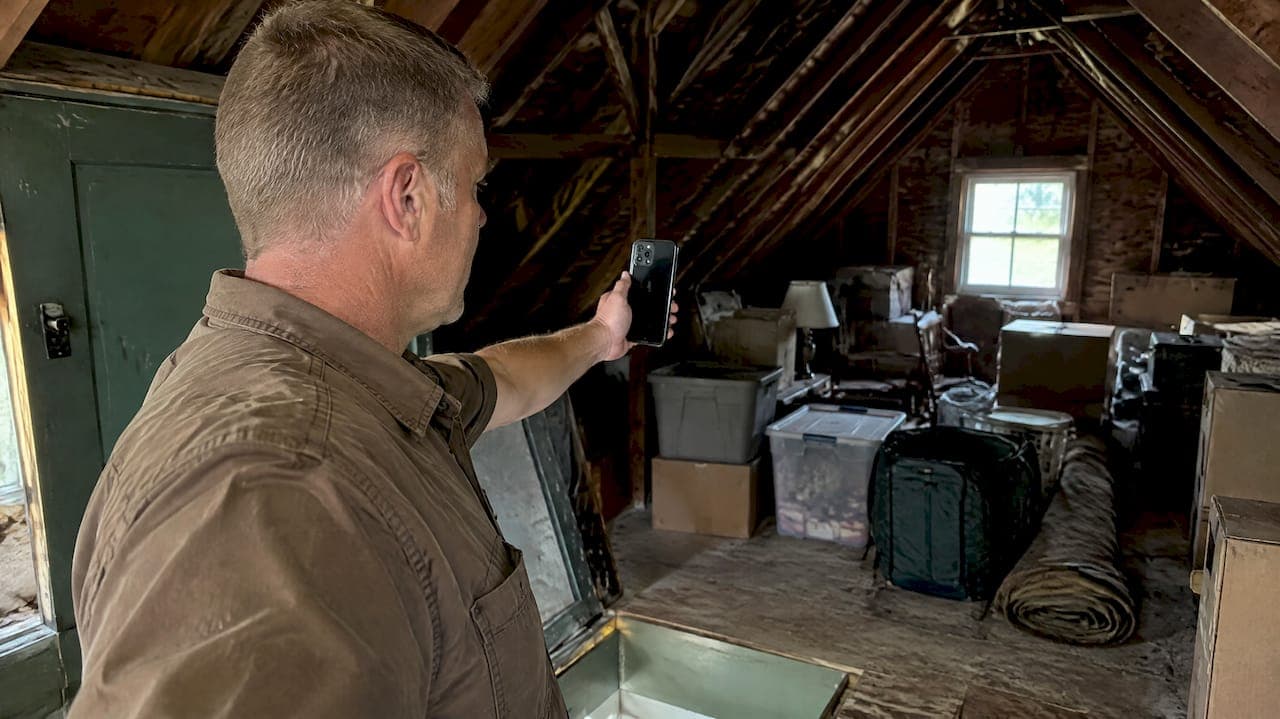
If you are the executor and live in another state, you can run the cleanout of your loved one's home without being there for every step. You need two things first: legal authority from the court, and a local team that documents everything it touches. Get those in place and one short trip, or none, can be enough.
This guide walks through what the role requires, what to confirm before anyone removes a single item, how to coordinate remotely, and where families most often run into delays.
TL;DR
- Living out of state rarely stops you from serving as executor, but some states add conditions such as a bond, a local agent or a family relationship.
- Do not donate, sell or discard anything until you hold your Letters Testamentary or Letters of Administration.
- Hire a local cleanout team that photographs, inventories and itemizes receipts, so you can prove each decision to the court and to beneficiaries.
- Sort belongings into four groups first: valuables, keepsakes, everyday items, and disposal or hazardous items.
- Set a clear escalation rule for leaks, break-ins, disputes and cost overruns, and call a probate attorney early when authority is unclear.
Table of Contents
- Can you serve as executor from another state?
- What authority you need before anything leaves the house
- Before you hire: a remote planning checklist
- How to run the cleanout remotely
- Sorting: what stays, what goes, what gets donated
- Records that protect you as executor
- What a remote cleanout typically costs
- Our perspective
- Where out-of-state cleanouts get delayed
- Let us handle the house while you handle the estate
- FAQ
- Sources
Can you serve as executor from another state?
Usually, yes. Nolo's guide to out-of-state executors explains that every state lets a nonresident serve as executor, though many attach conditions. The most common are:
- A local agent. You name an in-state resident to accept legal papers on your behalf.
- A bond. The court may require you to post a probate bond, which is a form of insurance protecting the estate.
- A co-executor. Some states want a resident serving alongside you.
- A family tie. Florida and Kentucky, for example, allow a nonresident to serve only when related to the person who made the will by blood, marriage or adoption, according to Nolo.
Requirements differ by state, and a state-by-state summary such as Settled Estate's out-of-state executor rules shows how varied they are. The state that matters is the one where the will is probated, usually where your loved one lived. A probate attorney there can tell you in one conversation what applies to you.
If the home is in New Jersey and you live in, say, California or Florida, the cleanout itself still happens in New Jersey. That is where a local team earns its keep.
What authority you need before anything leaves the house
The most expensive mistake an out-of-state executor makes is acting too early. Until the court appoints you, you generally are not the person who can dispose of the estate's property. After appointment, the court issues Letters Testamentary (when there is a will) or Letters of Administration (when there is not). Those letters are your written proof of authority, and cleanout companies, banks, utilities and insurers will ask to see them.
A few practical points:
- Secure, do not clear. Before you have authority, the sensible steps are protective: lock the property, collect mail, keep utilities on, and photograph the contents as they are.
- Authority to hire. One professional guide on out-of-state probate sales points out that before appointment, a person you hire acts on your authority as an individual, not on behalf of the estate. That is one more reason to wait for the letters.
- Property in more than one state. If your loved one owned real estate outside their home state, a second, ancillary probate proceeding may be needed there. Ask your attorney early, because it affects timing.
We cover this sequence in more depth in our guide to probate house cleanouts for executors, and our donation-first estate cleanout checklist explains when it is safe to start donating.
Before you hire: a remote planning checklist
You can do most of the planning from your kitchen table. Work through these in order.
- Find the will and key papers. Locate the original will, deeds, insurance policies, vehicle titles and recent tax returns. Our guide to finding the will before an estate cleanout covers where they tend to turn up.
- Confirm who else has a say. Talk to siblings, beneficiaries and the attorney about who expects what. Disagreements are cheaper to settle before items move.
- Ask about a key holder. A trusted neighbor or relative nearby can let the team in and confirm the address, though they do not need to supervise.
- Decide on a target date. Ask whether the home is being sold, rented or held. A listing date, lease end or foreclosure timeline drives how fast you need to move.
- Pick the scope. Is it a full house, an apartment, one garage, or a hoarded property? Scope is the biggest driver of price.
It also helps to keep the originals you find safe. Paperwork that surfaces during a cleanout, such as deeds, titles and policies, should not sit in a box on a shelf. Many executors buy fire-resistant filing cabinets for the interim, or simply ship originals to their attorney, so nothing is lost before probate closes.
How to run the cleanout remotely
Local professionals, including cleanout companies and real estate agents, can handle on-site tasks and reduce how often you need to travel. The trick is to make the work visible to you.
Start with a walkthrough you can watch
Ask for a video walkthrough of the property, or a live video call while a team member walks each room. A good estimator will open closets, check the attic and basement, and note anything that needs special handling. Then you receive a firm written quote rather than a guess.
Name your keepsake priorities up front
Tell the team, and any family members, what you are looking for: jewelry, photographs, letters, military medals, a recipe box, a specific chair. Sentimental items are the ones that cannot be replaced, so we recommend a written list before the team opens the first drawer.
Put a hold on high-value items
Cash, jewelry, firearms, collectibles, artwork and papers should be set aside, photographed and either shipped to you with tracking or held securely until the attorney says what to do. One reference on estate property recommends asking an estate sale professional or appraiser to review unfamiliar items before discarding them.
Use an inventory the court and family can follow
A simple inventory sorts contents into high-value or scheduled items, sentimental or specifically bequeathed items, everyday household goods, and items to shred, discard or treat as hazardous. Use those same four groups for the photographs and the receipts, and the paperwork writes itself.

Receive updates on a schedule
Agree on a rhythm before work starts: for example, a photo update at the end of each day, a summary when each room is complete, and a call before any decision that was not in the quote. That rhythm replaces your presence.
Sorting: what stays, what goes, what gets donated
Once authority is in place, sorting follows a predictable order.
| Category | What it includes | What happens |
|---|---|---|
| Valuables | Jewelry, cash, coins, art, firearms, collectibles | Photographed, set aside, appraised or shipped to you |
| Keepsakes | Photos, letters, heirlooms, items named in the will | Held for beneficiaries or distributed as the will directs |
| Usable household goods | Furniture, kitchenware, clothing, tools | Offered to family, then donated, sold or consigned |
| Disposal | Damaged items, expired food, hazardous materials, shredding | Removed responsibly, with receipts |
Dividing keepsakes without conflict
When several relatives want the same things, a fair method matters more than the items themselves. University of Minnesota Extension describes two options: rotation-based selection or a play-money auction. Either can be done by video call, with the cleanout team holding up items to the camera.
Donations, sales and consignment
Sellable goods can follow different routes. Higher-value pieces may go to an on-site estate sale or to online consignment, and the rest to charity. Our guide on what to do with estate sale leftovers describes a five-bucket system for the items nobody bought.
Once you are appointed, use a written, fair process for distributions and sales, document each sale and deposit proceeds into the estate account, as one probate firm advises for North Carolina estates. That firm also recommends keeping hauler and donation receipts. The rules differ by state, so confirm yours with your attorney, but the habit of recording everything travels well.
Hazardous or unsafe items
Old medications, chemicals, propane, paint, and sharp or biological waste need protective equipment and qualified handling, not a weekend with trash bags. If the home is heavily cluttered, has pests, or has odor or biohazard concerns, a team trained for hoarding and specialty cleaning is the right call. Do not try to manage that by phone alone.
Records that protect you as executor
Distance does not change your duties. The same professional guide notes that being out of state does not authorize anything the estate process would not otherwise permit. So records matter, because you may need to account for every decision to the court and to beneficiaries.
Keep these in one shared folder:
- A copy of your Letters Testamentary or Letters of Administration
- Dated before-and-after photos and video of each room
- The itemized inventory with categories
- Signed quotes, invoices and proof of insurance from the cleanout company
- Donation receipts, with a description of what was given
- Hauling and disposal receipts
- Records of any items shipped, sold or distributed, with who received them and when
Our articles on estate cleanout documentation for executors and the real estate cleanout checklist go into the specifics of each record.
What a remote cleanout typically costs
Prices depend on volume, access, distance from the nearest staging point and what is in the home. These are our published starting prices in New Jersey:
| Service | Starting price |
|---|---|
| Single item or small pickup | from $150 |
| Single room, garage or basement | from $295 |
| Apartment or condo cleanout | from $650 |
| Foreclosure or eviction cleanout | from $950 |
| Full house cleanout | from $1,200 |
| Hoarding cleanup | from $1,500 |
| Large estate cleanout | from $2,200 |
| Packing service | $55 per hour per packer |
| Estate photography and online inventory | $75 per hour |
Estate sales are commission-based, at 15% to 35%, and online listings and consignment run 20% to 40%. Those commissions are paid from sales, so they do not require money out of your pocket up front. A walkthrough leads to a firm quote before any work begins.
If you are weighing a rented container against a full-service team, our comparison of professional cleanout versus DIY container removal in New Jersey shows what you take on yourself with each option. For an executor who is not on site, that difference is large.
Our perspective
We hear from out-of-state executors every week, and nearly all of them say the same thing: they are grieving, working full time, and being asked to manage a house hundreds of miles away.
Our approach is built for that situation. We start with a donation-first plan, so usable items go to local charities rather than a dumpster, and we sort keepsakes with extra care because those are the things families ask about months later. We photograph and document each room, so you can show the court and your family what happened to every category of belongings.
We also tell executors to slow down at the right moment. Wait for your letters from the court, send us your keepsake list, and let us handle the lifting, the hauling and the paperwork trail. A calm, documented cleanout is the best protection against disputes later. We are fully insured, we work discreetly, and we hand the property back broom-clean, ready for a listing, a tenant or a final walkthrough.
Derek
Where out-of-state cleanouts get delayed
Most delays come from a short list of causes:
- Waiting on the court. Letters of authority take time to issue. Use the wait for planning, inventory photos and quotes.
- Family disagreements. An unresolved argument over a piece of furniture can hold up the entire house. Agree on a fair method, such as rotation, early.
- Hidden conditions. Water damage, pests, mold or heavy clutter discovered mid-job change the scope and the quote.
- Break-ins or leaks. A vacant house is vulnerable. Have someone check it regularly and know who to call.
- Property in two states. Ancillary probate adds another set of filings.
- Cost overruns. Unplanned extras erode the estate's funds, so approve changes in writing.
Set an escalation rule before work begins. The guide mentioned above recommends deciding in advance how you will handle leaks, break-ins, insurance issues, unsafe conditions, cost overruns, disputes and deadlines, and when a probate attorney should step in. In practice, call the attorney when you are unsure whether you have authority for an action, when a beneficiary contests a decision, or when something of unclear value turns up.
If the property is a rental, a foreclosure or an eviction, the timeline may be tighter, and landlords and realtors on those jobs usually need a faster turnaround. Our staging after cleanout guide covers the one to two weeks that follow when the home is going on the market. If the person also rented a storage unit, see our storage unit cleanout plan for executors.
Let us handle the house while you handle the estate
We serve families across New Jersey, and we work with executors who cannot be there in person. After a walkthrough by video or on site, you receive a firm quote. Our team then sorts with donation first, sets keepsakes aside, documents each room for probate, and leaves the property broom-clean.

See our estate cleanout services and starting prices or check the New Jersey areas we serve to request a walkthrough.
FAQ
Can I start clearing the house before I am officially appointed?
It is safest to limit yourself to protective steps: securing the home, photographing the contents and gathering quotes. Until the court appoints you, you generally cannot act for the estate, and anyone you hire is acting on your personal authority. Ask your probate attorney before donating or discarding anything.
Do I have to be present for the cleanout?
No. Many executors never set foot in the house during the work. A local team can run a video walkthrough, send daily photos, hold keepsakes and provide itemized receipts. Your job is to approve the plan, set priorities and keep the records.
What if the will names me but my state restricts nonresident executors?
Some states require a bond, a local agent or a family relationship, and a few limit nonresidents to relatives. A probate attorney in the state where the will is probated can tell you what applies and what to file. Do not start the cleanout until that is settled.
How do I make sure valuable items are not thrown out?
Give the team a written list of what you are looking for before work begins. Valuables, papers and keepsakes should be set aside, photographed and held for you or the attorney. For unfamiliar items, have an appraiser or estate sale professional review them before anything is discarded.
What records will the court or beneficiaries expect?
Expect to show your letters of authority, an inventory, photographs, invoices, and receipts for donations, hauling and sales. Requirements vary by state, so your attorney will tell you what to submit. Keeping everything in one shared folder from day one makes accounting far easier.
Sources
- Naming an Out-of-State Executor in Your Will (Nolo)
- Out-of-State Executor: Rules by State (Settled Estate)
- Out-of-State Executor Probate Sale Guide (Seeking Agents)
- Home Contents Inventory Checklist (Executor Checklists)
- Distributing Personal and Household Assets (UMN Extension)
- The Top 15 Tips for Dealing With Personal Property in Estates (ASEL)
- Can We Do an Estate Auction or Clear Out the Home Before the Estate Is Opened (Pierce Law)
- Fire Resistant Filing Cabinets (Safes and Security Direct)