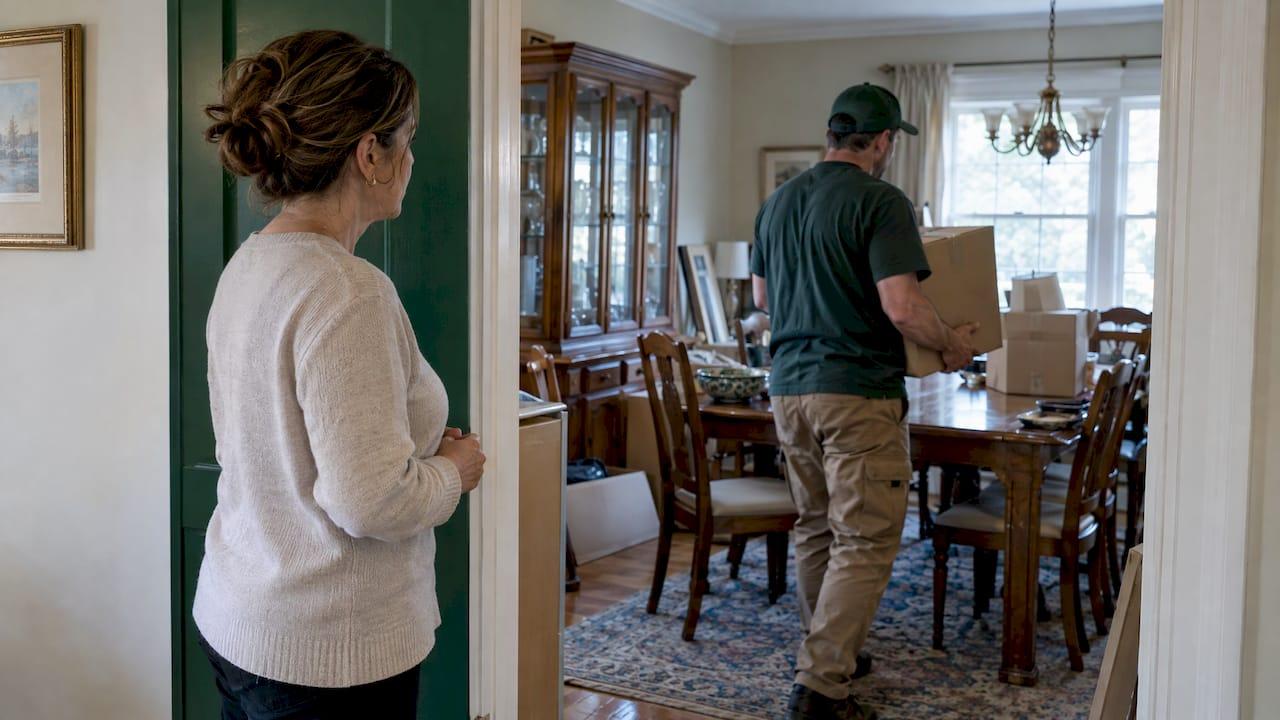
During an estate cleanout, responsibility usually sits with whoever controls the property and the work: the estate through its executor, and the crew doing the job under a written agreement. You protect yourself by hiring an insured crew, confirming you have the authority to clear and donate, reading the contract's liability language before work starts, and keeping a record of what left the house. This guide explains each of those steps in plain terms for families, social workers, realtors, landlords and anyone downsizing.
We are a New Jersey cleanout company, so we handle these questions with families every day. Nothing here is legal advice. For a specific dispute or a question about your authority over an estate, speak with a probate attorney in your state.
TL;DR
- The estate generally keeps control of a home during a cleanout, so a contractor's presence does not automatically move all liability off the family.
- An executor is usually answerable for the estate in an official capacity, and personally only in certain situations, such as personal fault. Rules vary by state.
- Confirm your authority to remove, sell or donate belongings before anything leaves the house.
- Read the contract for hold-harmless clauses, and make sure the crew carries insurance for property damage, injuries and hauling.
- Photos, inventories and donation receipts are your best protection if a question comes up later.
Table of Contents
- Who can be held responsible when something goes wrong
- Authority comes first: what you may remove, donate or sell
- Insurance: what covers what
- Read the contract before the work begins
- Hazardous materials and disposal
- Records that protect you
- A sample timeline for a lower-risk cleanout
- Our perspective
- Getting a documented, insured cleanout in New Jersey
- FAQ
- Sources
Who can be held responsible when something goes wrong
Three parties are involved in most cleanouts: the estate (represented by the executor or personal representative), the cleanout company, and sometimes a third party such as a landlord, a buyer or a visitor to the property. Each can carry a share of responsibility depending on who controlled the space and who caused the problem.
The estate and the executor
An executor, also called a personal representative, is the person a court or a will names to settle the estate. Their role is a fiduciary one, meaning they must act in the interests of the people who inherit. New Mexico's probate code, for example, says a personal representative must settle and distribute the estate efficiently and in its best interests, using the authority given by the code, the will and court orders (New Mexico Statutes 45-3-703).
That duty has a practical meaning for a cleanout. Belongings are estate property, and the executor is expected to protect them. Texas law, for instance, requires a personal representative to use ordinary diligence to recover estate property when recovery is reasonably possible, and willful neglect can create liability to interested persons for the value lost (Texas Estates Code ch. 351).
Personal exposure is narrower than many executors fear. Montana's statute says a personal representative is individually liable for torts committed during estate administration only when personally at fault, while claims can still be brought against the estate through the representative (Montana Code 72-3-612). Virginia takes a related approach: an action for waste, destruction or damage to a decedent's estate may be brought by or against the personal representative (Virginia Code 64.2-520).
The common thread is that executors act for the estate, and carelessness is where personal risk begins. State law differs, so confirm how your state treats this with the attorney handling the probate.
Hiring a crew does not hand off everything
Families often assume that once a company is hired, every risk travels with it. Courts look at the facts. In Matja v. Estate of Bock, the Michigan Court of Appeals held that an estate kept possession and control of a home while a limited-service contractor was present, and could be liable if the evidence supported it. The court sent the case back to decide whether the estate had breached its duties as the possessor of the land, rather than treating the contractor's presence as the answer (Michigan Lawyers Weekly, 2021).
Take this as a reason to put the division of responsibility in writing, not as a cause for alarm. A clear agreement, an insured crew and a controlled work site all reduce the questions that arise afterward.
Tenants, landlords and realtors
If you are a landlord clearing a unit or a realtor expediting a turnover, the same logic applies. Whoever controls the property carries duties to people who enter it, and a signed scope of work shows who was responsible for what. If a social worker is coordinating for a client, make sure the person with legal authority over the belongings signs the agreement.
Authority comes first: what you may remove, donate or sell
The most avoidable liability problem is clearing items you were not yet authorized to touch. Heirs may disagree about who gets what, a will may name specific gifts, and some property may need court approval to sell.
A Georgia county handbook for personal representatives explains that authority to sell property may come from the will, from law, from a court order, or from a petition about specific property. It also describes how sales that need court authority generally involve a petition, notice to heirs or beneficiaries, a chance for a hearing, and a report to the court afterward (Houston County, Georgia). Georgia's process is one example, so your state's steps may differ.
Before a crew arrives, settle these points:
- Do you hold letters testamentary or letters of administration, the court documents that show your authority?
- Does the will name any specific items for specific people?
- Have heirs had a chance to claim keepsakes, in writing where possible?
- Is the home owned, rented or in foreclosure, and who else has rights to what is inside?
Our guides walk through this in detail: probate house cleanout and authority before donations and our donation-first checklist, including when to wait for probate. If you live out of state, see how to clear a home from afar.
Insurance: what covers what
Estate cleanouts involve heavy lifting, stairs, trucks and valuable items, so several kinds of coverage matter. Insurance brokers who serve this field describe the basic split this way: general liability responds to claims of property damage or lost or discarded valuables, workers' compensation covers crew injuries, and commercial auto covers the trucks that haul belongings, all subject to policy terms and exclusions (Provident). Another broker adds bailee coverage, which protects contents in a vendor's possession, custody or control during sorting, staging and temporary storage, and inland-marine coverage for items in transit or off-site storage (Harper).

Why the homeowner policy is not the safety net
It is tempting to assume the late owner's homeowner policy covers everything that happens inside the house. Policy forms say otherwise. One published homeowners form excludes bodily injury to people eligible for workers' compensation, and excludes, with stated exceptions, damage to property in the care of an insured (Safeco form, Oklahoma Insurance Department). Another form states it will not extend coverage to a person or organization holding, storing or transporting property for a fee (Safeco form, Maine Bureau of Insurance).
The lesson is that a crew handling estate contents needs its own coverage, and you should not assume the home's policy fills the gap. Also tell the homeowner's insurer when a home becomes vacant, since vacancy can affect a policy. Your agent can explain the terms.
Bonded and insured are different things
AARP's 2026 reporting quotes litigation attorney Edward Susolik advising families to confirm that an estate sale company is bonded and insured. Bonding protects against theft, while insurance addresses property damage and personal injury (AARP). Our guide to bonded versus insured cleanout crews explains the terms in more depth. We operate fully insured, and that is the standard we think every family should expect when strangers are carrying a loved one's belongings out the door.
Read the contract before the work begins
The contract is where liability is actually assigned. AARP reported that estate sale contracts may contain broad hold-harmless clauses, which can shift liability to the family even when the company was negligent, and it advised reviewing the contract before work begins (AARP).
When you read an agreement, look for:
- Scope of work. Which rooms, which items, and what a finished result looks like. A broom-clean finish, for example, should be described, not implied.
- Hold-harmless or indemnity language. Who agrees not to hold whom responsible, and for what.
- Insurance statements. Which coverages the company carries.
- Handling of valuables. What happens when cash, jewelry, documents or keepsakes turn up.
- Disposal and donation terms. Where items go and what paperwork you receive.
- Payment terms. For estate sales, how commissions and payout timing are set. Our guide on estate sale contract terms covers the clauses to look for.
If the home is headed to a quick as-is sale, the cleaning question changes too. Understanding selling a house without cleaning it shows how responsibility for the contents can be spelled out in a sale agreement. For any contract you are unsure about, a probate attorney can review it before you sign. Our guide to estate cleanout scams lists further checks worth making.
Hazardous materials and disposal
Liability does not end when the truck leaves. What is in the load, and where it goes, matters. Houses often hold leftover paints, cleaners, oils, batteries and pesticides. The EPA defines household hazardous waste as leftover household products with corrosive, toxic, ignitable or reactive ingredients, and notes that states may regulate more strictly than the federal baseline (EPA household hazardous waste guide).
The same EPA guide recommends a storage and disposal plan: keep chemicals in original containers, never mix them, separate incompatible materials, secure containers against leaks, and have handlers use proper protective equipment. If you are clearing a house yourself or supervising, follow those points and do not pour anything down a drain or toss it in a regular load. Households with heavy clutter, biological hazards or strong odors deserve extra care. Those situations are why we offer specialty odor and waste cleaning, and why our hoarding cleanup levels guide explains what each stage involves.

Records that protect you
A clear paper trail answers most questions before they become disputes. Whether you are an executor, a case manager or a landlord, keep:
- Before photos of every room and of valuables, taken before anyone starts.
- An inventory of what is kept, sold, donated and discarded, with approximate values for significant items.
- The signed contract and scope of work.
- Proof of insurance supplied by the crew.
- Donation receipts from each charity that received items.
- After photos showing the finished condition.
- A written note of heir decisions about keepsakes.
This documentation also supports probate filings, since the executor accounts for estate property. Our estate cleanout documentation guide lays out what to gather, and the executor's checklist places it in the wider settlement timeline. We provide professional documentation as part of our service, and we offer estate photography and online inventory at $75 per hour for families who want a full visual record.
A sample timeline for a lower-risk cleanout
Every estate differs, but the order below keeps liability questions manageable:
- Before the walkthrough: confirm authority, locate the will, notify heirs, and secure valuables and documents.
- At the walkthrough: photograph rooms, agree on what is kept, and request a written, firm quote. Our guide to estate cleanout cost explains how to budget.
- Before signing: read the hold-harmless, insurance and scope sections.
- During the work: keep the site controlled, limit who enters, and handle valuables and hazardous items separately.
- At handoff: walk through the finished home, collect receipts, and file your records.
Our perspective
Families rarely ask us about liability first. They ask whether we can start this week. But the families who feel the most at peace afterward are the ones who knew who was responsible for what before the first box moved.
We believe a cleanout should be as documented as it is compassionate. That is why we sort keepsakes carefully with the family, photograph and inventory what we find, and put donation first so that usable items go to local charities with a record of where they went. We operate fully insured, because the people we work for should never have to wonder what happens if something is damaged or someone is hurt.
Our broom-clean handoffs are written into the scope of work, so you know what finished means. If you are an executor, a realtor on a deadline or a social worker protecting a client's belongings, that clarity is the best protection we can offer.
Derek
Getting a documented, insured cleanout in New Jersey
If you are clearing a home in New Jersey, we handle the sorting, hauling, donation runs, disposal and documentation under a written scope and a firm quote after a walkthrough. Published starting prices include full house cleanouts from $1,200, apartment or condo cleanouts from $650, hoarding cleanup from $1,500, foreclosure or eviction cleanouts from $950, and single rooms, garages or basements from $295. Estate sales are commission-based at 15-35%.

See our New Jersey service areas or start with a walkthrough through our main site. If you are unsure whether you need a sale or a cleanout, read estate sale vs. cleanout.
FAQ
Is the executor personally liable if something is damaged or someone is hurt?
Usually the executor answers for the estate in an official capacity, and personal liability tends to arise from personal fault. Montana's statute is one example of that approach. State rules differ, so confirm with the probate attorney handling the estate.
Does the homeowner's insurance cover a cleanout crew?
Do not assume it does. Published homeowners forms exclude certain injuries to workers and do not extend coverage to those storing or transporting property for a fee. A crew should carry its own general liability, workers' compensation and vehicle coverage.
What is a hold-harmless clause?
It is contract language in which one party agrees not to hold the other responsible for certain losses. AARP reports that broad versions can shift liability to the family even when the company was negligent, so read it before you sign.
Can I donate a loved one's belongings right away?
Only once you have authority to do so and heirs have had the chance to claim keepsakes. Authority can come from the will, the law or a court order. Our donation-first approach is built around waiting for that clearance and keeping receipts.
What should I do with paint, chemicals and batteries found in the house?
Keep them in their original containers, do not mix them, and take them to a household hazardous waste program. The EPA recommends separating incompatible materials and securing containers against leaks.
Sources
- New Mexico Statutes 45-3-703
- Texas Estates Code chapter 351
- Montana Code 72-3-612
- Virginia Code 64.2-520
- Michigan Lawyers Weekly, Matja v. Estate of Bock
- Houston County, Georgia, personal representative duties
- Provident, insurance for estate cleanout companies
- Harper, estate sale insurance
- Safeco homeowners form, Oklahoma Insurance Department
- Safeco homeowners form, Maine Bureau of Insurance
- AARP, what to know before hiring an estate sale company
- EPA household hazardous waste guide