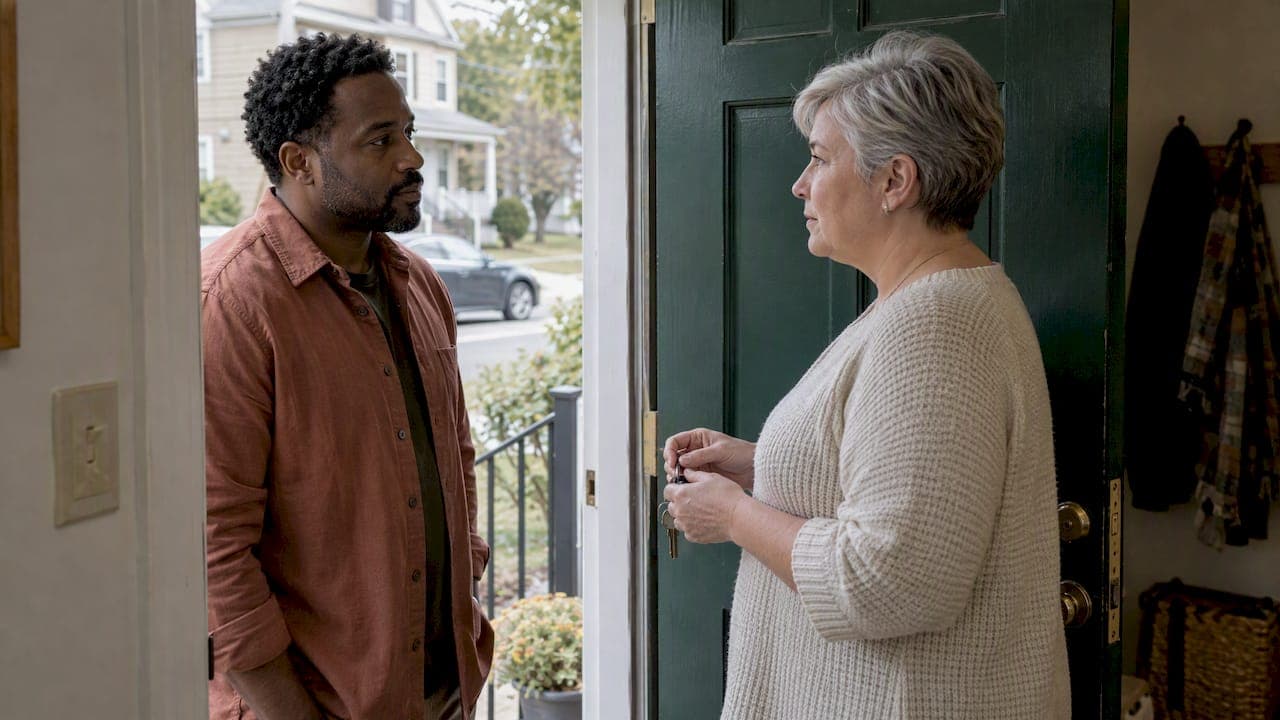
If your tenant has died, do not enter the unit, clear it out or throw anything away yet. In New Jersey the tenancy generally passes to the tenant's estate, so you deal with the executor or administrator, not with whoever happens to show up with a key. You also need written notice and proper steps before you dispose of anything left behind. This guide walks through the order of events, what you can and cannot do, and how to get the unit back on the market without creating liability.
We are sorry you are in this position. A tenant's death is a human loss first and a property problem second, and the law expects you to handle both with care.
TL;DR
- The tenancy passes to the estate, and the estate owes rent until the lease is properly terminated. A month-to-month tenancy can be ended with one month's notice to the estate's legal representatives.
- Only a court-appointed executor or administrator can act for the deceased tenant. Ask for their paperwork before you grant access or release anything.
- You generally cannot enter without consent or a court judgment, except in a real emergency. Do not dispose of belongings without following New Jersey's abandoned property rules.
- A person who lived with the tenant may have protected rights as a "functional tenant," so do not assume the unit is simply vacant.
- When the estate is ready, a documented cleanout gets the unit back to broom-clean condition and protects you on the paper trail.
Table of Contents
- What happens to the lease when a tenant dies
- Who can act for the deceased tenant
- When you may enter the unit
- Can someone else stay in the unit?
- Belongings left behind: what the law lets you do
- Rent and the security deposit
- A step-by-step timeline for landlords
- Where a professional cleanout fits
- Our perspective
- Get the unit back without the guesswork
- Practical tips for a smoother process
- FAQ
- Sources
What happens to the lease when a tenant dies
The first surprise for many landlords is that death does not automatically wipe out the lease. Under New Jersey common law, a tenancy passes to the estate, and for a month-to-month tenancy the landlord may end it by giving one month's notice to the estate's legal representatives. That reasoning comes from an Appellate Division opinion in a case involving a deceased tenant's estate.
Some online summaries say a lease is simply void when the tenant dies. The court opinion is a better guide: the tenancy does not vanish, it becomes the estate's responsibility.
What that means in practice:
- Rent. The estate is responsible for rent until the lease is terminated. Rent does not stop on the date of death just because the tenant is gone.
- Termination. A fixed-term lease and a month-to-month tenancy do not end the same way. Read your lease and its early-termination or death clause before you send anything.
- Who receives notice. Notice goes to the estate's legal representatives, which brings us to the next question.
If the family wants to end things quickly, the cleanest path is usually a written agreement with the executor or administrator that sets a surrender date, covers rent through that date and spells out how belongings will be removed. Have your attorney review it.
Who can act for the deceased tenant
A spouse, adult child or friend who calls you the day after the death is almost always acting out of grief and goodwill. They may also have no legal authority at all.
Only a person legally authorized to act for the estate, such as an executor or administrator appointed by a court through letters testamentary or letters of administration, can act on behalf of the deceased tenant. The same source advises landlords to request that documentation before granting access to the unit or releasing personal property.
For a sense of how strict this can be, the Wildwood Housing Authority's deceased-tenant guidance says access to a deceased resident's apartment is granted only after an Executor or Administrator Certificate from the Surrogate's Office is presented, with no exceptions. That is one public housing authority's policy, not a rule for every private rental, but it shows the standard institutions apply. A private landlord who follows the same habit protects themselves.
What to ask for
- A copy of the letters testamentary or letters of administration, or the Surrogate's certificate
- Government photo ID for the person presenting them
- A written contact for all future communication
- A written list of who may enter and when
If no one has been appointed yet, that is common in the first weeks. The family may need to open the estate with the county Surrogate's Court. You can politely explain that you need the paperwork before you can release anything, and that you will keep the unit secure in the meantime.
When you may enter the unit
New Jersey landlords already work under tight entry rules. In general, a landlord may not enter residential rental premises without the tenant's consent or a Superior Court judgment. The state's Right of Entry publication also describes reasonable-notice access for inspection and maintenance, and immediate access for safety or structural emergencies.
After a death, that gives you a practical framework:
- Emergency. A gas smell, active water leak, fire, or a welfare concern can justify immediate entry. Call 911 or the proper emergency service first, and document why you entered.
- No emergency. Treat the estate's representative as the person whose consent you need. Schedule entry with them, in writing.
- No representative yet. Keep the door locked, check the exterior and common areas, and keep a log. If you believe the unit needs inspection, talk to a New Jersey landlord-tenant attorney about the right way to proceed.
The advice from the same New Jersey law resource is to avoid taking possession of the unit or disposing of belongings right away, because the estate keeps a legal right to access the premises and recover personal property.
Our own landlord checklist covers the first 48 hours in more detail in What to Do When a Tenant Dies: A Landlord's Action Guide.
Can someone else stay in the unit?
Before you plan a cleanout, find out whether anyone still lives there. A spouse, partner, adult child or roommate who shared the apartment may have rights of their own.
New Jersey's Anti-Eviction Act requires a landlord to establish one of 18 enumerated grounds for a good-cause eviction. An occupant may qualify as a "functional tenant" protected by the Act by showing:
- continuous residence in the unit,
- a substantial contribution toward the tenancy's financial obligations, and
- the landlord's acknowledgment and acquiescence to that contribution.
The Appellate Division has applied these principles in more than one estate case, including sending a matter back to the trial court to decide whether an occupant was a functional tenant under the Maglies line of cases.
For you, this means:
- Do not change locks or remove an occupant's belongings on your own. Self-help can be costly.
- If someone lived there and paid rent, accepted rent checks or was known to you, talk to an attorney before sending any notice to vacate.
- If the person is clearly an unrelated guest or has no connection to the rent, still follow a lawful process rather than removing them yourself.
A person staying on after a lease expires raises related questions. Because the Anti-Eviction Act requires a recognized ground for removal, you cannot simply remove someone because the lease term ended. Ask your attorney how the Act applies to your specific facts.
Belongings left behind: what the law lets you do
This is the part that causes the most trouble. A cluttered or full apartment tempts a landlord to just have it hauled away so the next tenant can move in. In New Jersey that shortcut can cost you far more than the lost rent.

The state's Truth in Renting guide explains that under the Abandoned Property Law (N.J.S.A. 2A:18-72 et seq.), a landlord may dispose of personal property left in a unit only after giving specific written notice to the tenant or the estate and then either obtaining a warrant for removal, regaining possession, or receiving notice of voluntary relinquishment.
The same guide says you must store abandoned property in a safe place with reasonable care, and that you may recover reasonable storage costs and incidental expenses from the estate.
In plain terms:
- Confirm who the executor or administrator is.
- Arrange removal of belongings with them. If items are not removed within a reasonable time, they may need to be stored, and the estate should be told where they are and what storage costs.
- Give the written notices the Abandoned Property Law requires before disposing of anything.
- Keep records of every notice, photo, call and email.
Two cautions. Keepsakes, documents, medications, cash, jewelry and electronics can carry real value or legal importance for the estate, so they are not items to sort casually. And the rules differ by state: if you also own property in New York, our guide to New York's abandoned property law covers that separately.
For how this overlaps with court-ordered removals, see Eviction Cleanout Laws in NJ: What Landlords Must Know.
Rent and the security deposit
Rent is the estate's responsibility until the lease is terminated, as described above. That is why a quick written surrender agreement with the executor helps both sides: the estate stops accruing rent, and you get a clear return date.
The security deposit is a separate matter. New Jersey regulates how landlords hold and return deposits, and the state's Truth in Renting guide is the place to start. With a deceased tenant, the person to account to is the estate's representative. Ask your attorney to confirm the timing and the itemized statement you need, because a mistake with a deposit can create penalties. And do not treat the deposit as a cleaning fund before the abandoned property steps are done.
A step-by-step timeline for landlords
| Stage | What to do | What to avoid |
|---|---|---|
| First days | Confirm the death through the family or official channels, secure the building, send a brief, kind note to the contact you have | Entering without cause, announcing the death to other tenants |
| First weeks | Ask for letters testamentary or administration; read the lease; check for co-occupants | Accepting verbal authority from relatives |
| Termination | Agree on a surrender date in writing, or serve proper notice to the estate's representatives | Changing locks, ignoring a co-occupant's possible rights |
| Belongings | Arrange removal with the executor; give required written notices; store if needed | Hauling items away without notice |
| Turnover | Document condition, return the deposit per the statute, then clean and repair | Billing the estate without records |
Where a professional cleanout fits
Once the estate is ready to release the unit, the cleanout is often the longest step. The executor may live out of state, may be grieving, and may not know what to keep. You want the unit empty and clean, and they want their loved one's things treated with respect.
The cost of a professional cleanout depends on volume, access (stairs, elevators, parking), the condition of the unit and how much needs sorting. Our published starting prices are:
- Single room, garage or basement: from $295
- Apartment or condo cleanout: from $650
- Foreclosure or eviction cleanout: from $950
- Full house cleanout: from $1,200
Final quotes follow a walkthrough. Our apartment cleanout cost guide explains what moves a price up or down, and Donation First Apartment Cleanout After Death shows how the process works from the family's side.
Our perspective
In our work with executors, landlords and property managers, the same pattern repeats. Problems rarely begin with the cleanout itself. They begin when someone moves too fast, or when nobody can show what was removed and who approved it.
That is why we put documentation first. Before we touch a room, we want to know who is authorized to release the unit. During the work we sort keepsakes, papers and valuables separately from items to donate and items to discard. When we finish, you and the estate receive a record of the work, which is the kind of paper trail probate and a deposit dispute both reward.
We also take a donation-first approach. Usable furniture, household goods and clothing go to local charities where possible, so the estate gets something good out of a hard situation, and the landlord gets a faster turnover than a full-service retail liquidation would give. We are fully insured and we work discreetly, because neighbors and other tenants do not need to watch the process.
If you manage rentals in New Jersey, our advice is to call before you have a crisis. Knowing who to phone when a tenant passes, and having the steps in order, makes the first week far less stressful.
Derek
Get the unit back without the guesswork
We handle apartment, condo and whole-house cleanouts for estates, landlords and property managers across New Jersey, with sensitive sorting, donation-first removal, documentation and a broom-clean handoff. When you have the executor's authorization, we can walk the unit, give a firm quote and schedule the work around your turnover date.

See our cleanout services and starting prices or check the New Jersey areas we serve. We also work in Newark, Elizabeth and Trenton.
Practical tips for a smoother process
- Write everything down. Note the date you learned of the death, each call, each notice and each visit.
- Stay kind in writing. Emails can end up in probate files. A short, respectful tone helps everyone.
- Ask about pets, medications and perishables. If there is an animal or spoiled food, coordinate with the executor immediately and, in a welfare or health emergency, with emergency services.
- Photograph the unit with the executor present. Before and after photos protect both sides.
- Do not tell other tenants details. A short notice about building access is enough.
- Consider specialty cleaning early. If the tenant was not found for some time, or the unit had heavy clutter or biological hazards, plan for specialty odor and waste cleaning rather than standard cleaning.
- Talk to a New Jersey landlord-tenant attorney whenever a co-occupant, a dispute over belongings or a missing executor complicates the picture.
FAQ
Does the lease end when a tenant dies in New Jersey?
Not automatically. A tenancy generally passes to the tenant's estate, and the estate owes rent until the lease is properly terminated. For a month-to-month tenancy, a landlord may end it with one month's notice to the estate's legal representatives. Check your lease and ask an attorney about fixed-term leases.
Can I enter the apartment after the tenant dies?
Only in limited cases. New Jersey generally requires consent or a Superior Court judgment, with immediate access allowed for safety or structural emergencies. Otherwise, arrange entry with the executor or administrator and keep the unit secured in the meantime.
Can I throw away a deceased tenant's belongings?
Not right away. The Abandoned Property Law requires specific written notice and one of several steps, such as a warrant for removal or notice of voluntary relinquishment, before you dispose of personal property. Work with the estate's representative to remove items, and store them if they are not collected.
Who is responsible for paying for the cleanout?
That depends on the lease, the estate's arrangement and what the law allows you to recover. The estate may be responsible for reasonable storage costs and incidental expenses, but confirm the details with your attorney before you bill anyone.
Can a roommate or family member stay after the tenant dies?
Possibly. An occupant who can show continuous residence, substantial financial contribution to the tenancy and your acknowledgment of it may be protected as a functional tenant under the Anti-Eviction Act. Get legal advice before sending any notice to vacate.
Sources
- Golden Apple Holdings, LLC v. Estate of (A-1533-19), NJ Courts
- Devi Ma Newkirk, LLC v. Estate of Marvin (A-3129-20), NJ Courts
- Truth in Renting, NJ Department of Community Affairs
- Right of Entry, NJ Department of Community Affairs
- Handling the Death of a Tenant: A Legal Guide for New Jersey Landlords
- Wildwood Housing Authority deceased tenant information sheet