
Secure the scene, call emergency services if you're the one who discovered the death, and then identify the estate representative before you touch a single belonging. That order matters. Acting out of sequence, especially removing property or changing locks before someone has legal authority over the estate, is how landlords end up facing wrongful disposal claims.
- Call 911 immediately if you find the tenant; do not enter further than needed to confirm the emergency.
- Wait for police or the medical examiner to release the unit before doing anything else.
- Lock and secure the unit once authorities clear you to do so.
- Contact the emergency contact on file or wait for the family or executor to reach out.
- Do not throw away, sell, or distribute any belongings until you know who has legal authority.
Pro Tip: Photograph the door and any lockbox you install the moment you secure the unit. That single image, time stamped, becomes your first piece of evidence that you didn't enter before you had the right to.
Most disputes in this situation trace back to landlords moving too fast. The tenancy generally continues as an obligation of the deceased tenant's estate, which means possession and property rights don't just transfer to you because the unit is empty.
Key Takeaways
Securing the unit, waiting for estate authorization, and documenting everything with photos are what protect landlords from liability after a tenant dies.
| Point | Details |
|---|---|
| Secure before you act | Call 911 if you discover the death, then wait for the scene to be released before entering. |
| The lease binds the estate | Rent and lease terms remain the estate's responsibility until legal surrender, not the family's personally. |
| Document everything | Photograph and inventory belongings, notices, and communications before any property moves. |
| Deposit timing starts at surrender | Apply deductions only after legal surrender, with receipts and photos attached to each one. |
| Bereavementcleanoutservices speeds turnover | Donation-first, insured cleanouts with dated inventories help landlords in New Jersey document the process for probate and re-rent faster. |
Table of Contents
- What to Do When a Tenant Dies: The First Hours vs. the First Calls
- Who Pays the Rent and Holds the Lease After a Tenant Dies
- How to Handle a Deceased Tenant's Belongings the Right Way
- Security Deposit and Final Rent Accounting
- Entry Rules and Respecting the Scene
- When You Can Legally Re-Rent the Unit
- Records That Protect You If a Dispute Comes Later
- Insurance and Liability Exposure During Vacancy
- When to Call a Lawyer
- Where a Professional Cleanout Service Fits Into the Process
- A Faster, Gentler Path to Turning Over the Unit
- Frequently Asked Questions
- Sources
What to Do When a Tenant Dies: The First Hours vs. the First Calls
How you learn about the death changes what happens next. If you find the tenant yourself, your first move is 911, not your leasing file.
- Call 911 or the police. Do not move anything in the unit.
- Wait for police or the medical examiner to complete their work and formally release the scene.
- Once released, secure the unit (new lock or lockbox) and document the condition with photos.
- Reach out to the property owner or your property manager, then your insurer, then the emergency contact listed in your file.
- Request written notification of death from the family or executor before proceeding with any lease action.
If a family member calls you first, the timeline flips. You'll typically hear from a spouse, adult child, or the person handling the estate before police contact you at all.
- Ask for a copy of the death certificate or a funeral home notice when it's available.
- Get the name and contact information for the estate representative in writing.
- Confirm whether police were involved, since that determines whether the unit is still off-limits.
A landlord's practical checklist generally centers on these same three moves: notify, secure, and coordinate with whoever has legal authority over the deceased tenant's affairs.
Who Pays the Rent and Holds the Lease After a Tenant Dies
The lease doesn't die with the tenant. It becomes an obligation of the estate, and family members who never signed it owe you nothing personally, no matter how involved they get in cleaning out the unit.
- The estate remains liable for rent and lease terms until the tenancy is properly terminated.
- Co-tenants who did sign the lease stay bound by its terms.
- A family member helping coordinate the move-out isn't automatically liable for anything unless they cosigned.
State law shapes how quickly that obligation ends. Under RCW 59.18.595, Washington terminates a sole occupant's tenancy 15 days after notice is delivered, or through the period rent is already paid, whichever comes later; a representative can also pay for up to 60 days to remove belongings. Texas Property Code §92.0162 works differently: a representative can terminate by written notice, effective 30 days after that notice or once specific conditions are met, and the estate stays on the hook for unpaid rent and damages up to that date.
The gap between "the tenant died" and "the lease is over" is a real legal window, not a formality. Skipping it is what turns a routine estate matter into a liability claim against the landlord.
Pro Tip: When you send notice to an estate representative, include the exact date rent was last paid through, your requested move-out date, and a request for written confirmation of their authority to act for the estate.
How to Handle a Deceased Tenant's Belongings the Right Way
Once the unit is legally secured, your job is documentation, not decision-making. You don't get to decide what stays, goes, or gets donated. The estate does.
- Photograph every room before touching anything, and date stamp each image.
- Create a written inventory listing furniture, electronics, documents, and anything visibly valuable.
- Photograph the lease, keys, remote controls, and any tenancy-related items separately.
Perishable food and clear biological hazards are the narrow exception. Most guidance allows disposal of spoiled food or hazardous waste for health reasons, but everything else, including medicine cabinets and personal papers, needs to wait for the estate's authorization.
Pro Tip: Keep a printed copy of your inventory and photos in the same folder as your lease file, not just on your phone. Executors often ask for this within days, and a scattered photo library slows everything down.
Security Deposit and Final Rent Accounting
The deposit clock doesn't start on the date of death. It starts when the estate formally surrenders the unit or a court process authorizes possession, which is a distinct legal moment from when the tenant passed.
- Apply the deposit to unpaid rent through the legal surrender date first.
- Deduct documented damage beyond normal wear and tear, not routine aging.
- Attach receipts, invoices, and dated photos to every deduction you claim.
Roughly 30 to 60 days is a common vacancy window before insurance terms shift, which makes prompt, well-documented accounting worth doing early rather than waiting for a formal deadline to force your hand.
Entry Rules and Respecting the Scene
If the death is under investigation, wait. Police and the medical examiner control access until they release the scene, and entering early can compromise both the investigation and your legal standing.
- Secure obvious hazards (gas, water, spoiled food) once you're cleared to enter.
- Document the unit's condition with photos before changing anything.
- Change locks only after you have documented legal possession, not before.
Neighbors and family members are watching how you handle this. A calm, professional presence, rather than a rushed cleanout crew, tells them you're treating the situation with the seriousness it deserves.
When You Can Legally Re-Rent the Unit
You can't list the unit the moment it's empty. Legal surrender, whether through a signed release from the estate or the state's statutory termination window, has to happen first.
- Confirm legal surrender or termination under your state's statute.
- Complete a move-out inspection and document the unit's condition.
- Make repairs, deep clean, and complete any required safety recertifications.
- List the unit and begin showings once it's rent-ready.
- Save dated screenshots of your listing and ad copy.
- Log every showing date and prospective tenant contact.
- Keep this file as proof you mitigated losses in good faith, since courts often expect landlords to make a reasonable effort to re-rent rather than let a unit sit empty and bill the estate indefinitely.
Records That Protect You If a Dispute Comes Later
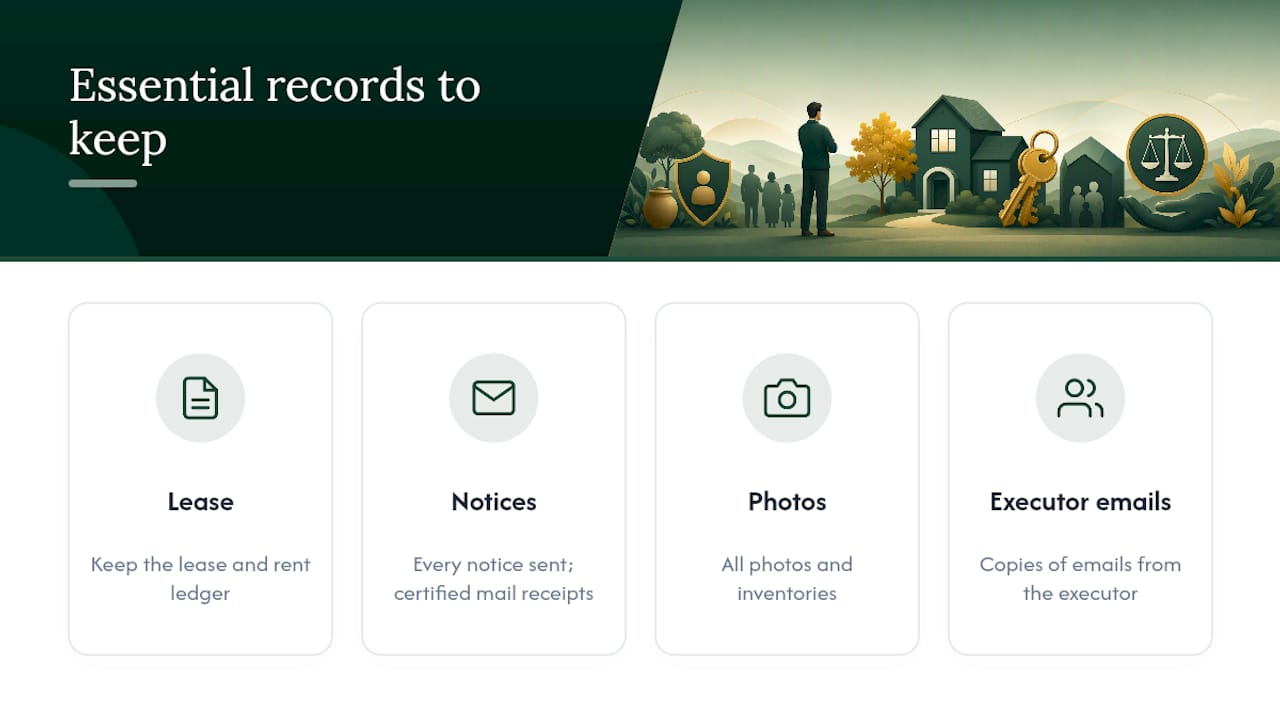
Keep the lease, rent ledger, every notice you sent, all photos and inventories, certified mail receipts, and copies of emails from the executor. Documentation habits like these are what separate a clean file from a messy dispute. Put requests and confirmations in writing whenever you can, even after a friendly phone call.
Insurance and Liability Exposure During Vacancy
Call your insurer as soon as the unit is vacant. Many landlord policies quietly reduce or exclude coverage after a set vacancy period, and you don't want to discover that gap after a pipe bursts.
- Improper entry, discarding belongings without authorization, and privacy violations are the three most common sources of liability here.
- Document every inspection and visit during the vacancy period.
- Update your policy the moment vacancy status changes, not weeks later.
Pro Tip: Ask your insurer directly whether your current policy has a vacancy clause and what triggers it. Many landlords assume standard coverage carries through and find out otherwise at claim time.
When to Call a Lawyer
Talk to an attorney before you change locks, dispose of significant property, or pursue unpaid rent without probate guidance. The cost of a consult is nothing compared to a wrongful disposal suit.
- Multiple people claiming authority to act for the estate.
- No clear executor and no probate filed yet.
- Large unpaid rent balances or high-value property disputes.
Bring your lease, notice history, photos, and inventory to that first meeting. It saves billable time and gets you a real answer faster.
Where a Professional Cleanout Service Fits Into the Process
A compassionate, insured cleanout provider can shorten the gap between legal surrender and re-renting, which matters when every vacant week costs you rent. Look for a donation-first policy, documented inventory and photography, and secure, traceable disposal of anything not claimed by the estate.
- Ask for proof of insurance before any crew enters the unit.
- Request a dated inventory and photos of items set aside as keepsakes.
- Get receipts for donated or disposed items, useful for both your file and the estate's probate records.
- Confirm the crew provides a broom-clean guarantee at the end of the job.
Pro Tip: Ask whether the provider photographs items before removal. That record can matter for probate, and it protects you if the estate later has questions about what was in the unit.
A typical process starts with a walkthrough, followed by a written quote, then scheduled removal coordinated with the estate representative's timeline. You get a final report for your files when it's done.
Handling These Conversations With Care
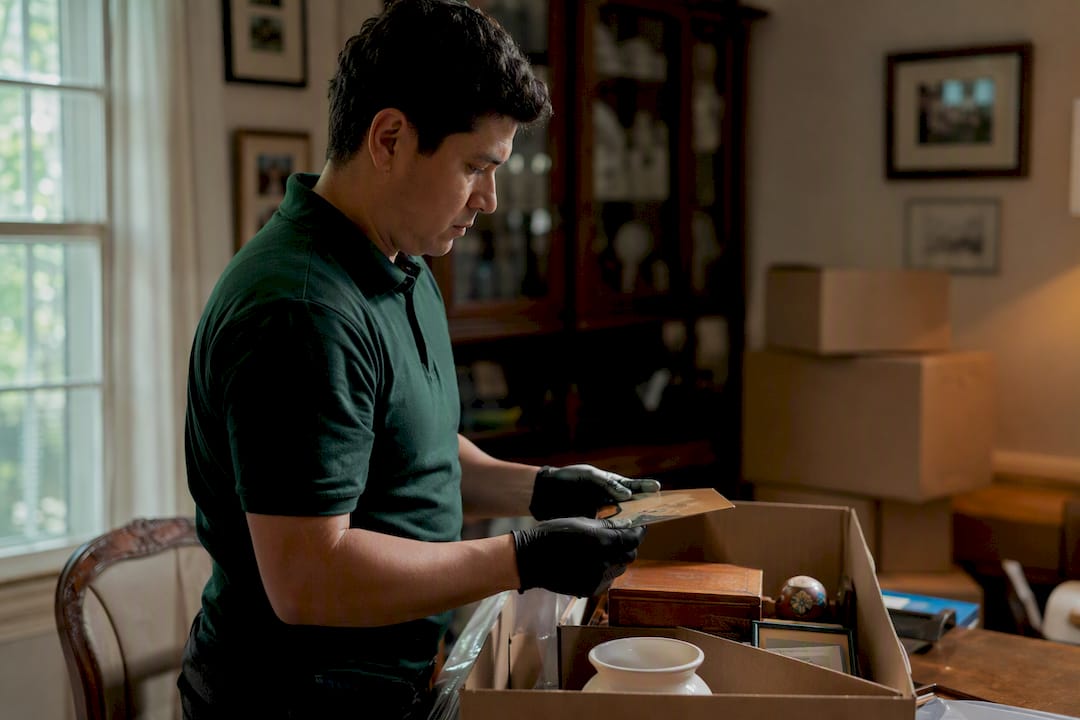
Set one point of contact on your side, keep every conversation factual, and put offers to help in writing. A short, respectful message, acknowledging the loss and outlining next steps, goes further than a lengthy legal notice. A professional cleanout crew can also absorb the physical and emotional weight of clearing the unit, which lets the family focus on grieving instead of hauling boxes.
A Faster, Gentler Path to Turning Over the Unit
There are other routes to clearing a unit, hiring a general junk removal outfit, or asking family to handle it themselves on their own timeline, but neither gives you the documentation a probate process or a security deposit dispute might require. Bereavementcleanoutservices is the alternative built specifically for this situation in New Jersey: donation-first sorting, insured crews, and dated photo inventories that double as your paper trail for probate and for your own deposit accounting.

What to expect is straightforward: a quick walkthrough, a firm quote, a documented inventory with photos, secure removal, and receipts for anything donated or disposed of. Every job ends with a broom-clean handoff, so the unit is ready for repairs or listing the same week. Response times run fast because vacant units cost landlords money every day they sit empty.
If you're managing a time-sensitive turnover right now, request a walkthrough from Bereavementcleanoutservices and get a firm quote before you commit to a moving date.
Frequently Asked Questions
Can I enter the unit right after I hear a tenant has died? Only once police or the medical examiner have released the scene. Before that, entering can interfere with an investigation and expose you to liability.
Am I allowed to re-rent the unit right away? No. You need legal surrender of the tenancy first, whether through the estate's written release or your state's statutory termination window, plus a move-out inspection.
Who is responsible for unpaid rent after a tenant dies? The estate is, not surviving family members, unless they personally cosigned the lease.
Can I keep the entire security deposit if the tenant dies with unpaid rent? Only the portion tied to documented unpaid rent and actual damage beyond normal wear and tear. You still need receipts and photos to support any deduction.
What if I can't figure out who the estate representative is? Wait for a death certificate or probate filing before taking action on the lease or property, and consult an attorney if multiple people claim authority.
This article is general information, not a substitute for advice from a qualified lawyer. Consult a qualified legal professional about your own circumstances before acting on anything here.
Sources
- RCW 59.18.595
- Texas Property Code Section 92.0162
- Death of a Tenant — Landlord Responsibilities | Catalyst Legal
- What to Do When a Tenant Dies: A Landlord's Guide | Trust & Will
- What Happens to a Lease When a Tenant Dies: Rights of Family, Estate & Co-Tenants | ReadYourLease
Search your own state's landlord-tenant code directly, since termination windows and disposal procedures vary widely, and check with your state bar's referral service if you need probate-specific counsel.