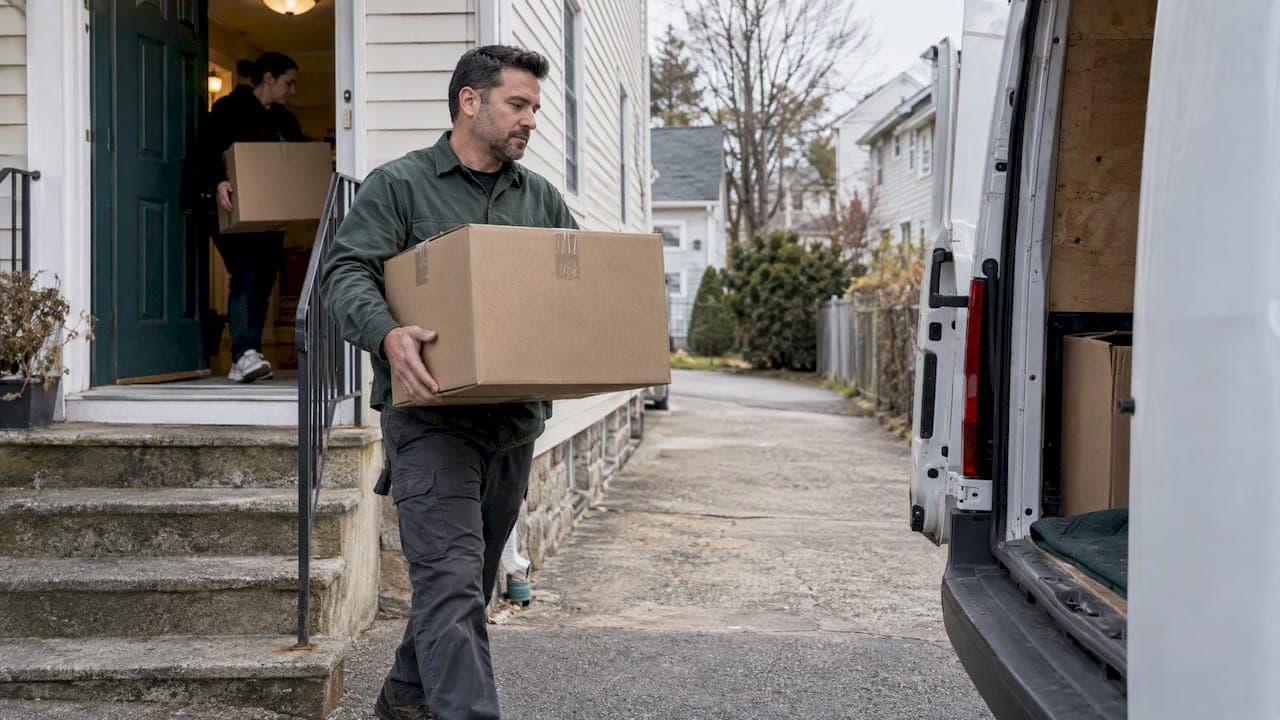
A discreet estate cleanout is one where the people in the house treat the home, its contents and your family's privacy with care, and where the work happens without drawing attention or putting your loved one's belongings on display. In practice that means a small, respectful crew, careful sorting of keepsakes and papers, usable items going to charity, and a written record you can hand to the attorney handling probate. This guide explains how to judge discretion before you hire, what the process looks like, and what New Jersey cleanouts cost at our published starting prices.
TL;DR
- Discretion is a set of habits you can check: who enters the home, how papers and keepsakes are handled, and what is written down.
- Ask for a walkthrough and a firm written quote. Be wary of anyone who contacts you first and pushes for fast payment.
- Keep anything that may matter to probate (documents, jewelry, cash, devices) set aside before the crew starts.
- Our published starting prices run from $150 for a small pickup to $2,200 for a large estate, and the final quote follows a walkthrough.
- Paint, batteries, pesticides and similar items need special disposal, not the curb.
Table of Contents
- What "discreet" should mean when you hire a cleanout crew
- Who asks for a quiet cleanout, and why
- How a discreet cleanout runs, step by step
- Protecting keepsakes and private papers
- Hazardous items: don't send them out with the trash
- Scams aimed at grieving families
- What a discreet cleanout costs
- Our perspective
- Getting started with us
- FAQ
- Sources
What "discreet" should mean when you hire a cleanout crew
Most companies say they work "with respect and discretion." The word costs nothing to print. What matters is whether you can see it in the way the job is run. Here is how we would test it if we were in your position.
- Who comes into the house. You should know the crew lead by name before the job begins, and the number of people should match the size of the job. Neighbors notice crowds.
- How papers are treated. Mail, tax records, checkbooks, and address books carry private information about your family. Ask what happens when a crew member finds a folder of papers. The right answer is that it is set aside for you, not thrown out or sorted by a stranger.
- How the work is explained. A discreet company does not need to talk about your situation outside the job. It also does not pressure you to decide anything on the spot.
- What is documented. Photos and an itemized record protect everyone, including the executor who must account for the estate later.
- Where things go. Usable furniture, clothing and household goods can go to local charities. Items that cannot be donated need responsible disposal, and you should be able to ask where they went.
Discretion is also about pace. In a first conversation, a good company asks what you want kept, what the timeline is, and who else needs to be involved, before it talks about price.
Who asks for a quiet cleanout, and why
The reasons vary, and each calls for slightly different handling.
- Families after a death. You may be grieving, living out of state, and trying to meet probate deadlines at once. Privacy matters because the home still holds personal things you have not had time to look at.
- Social workers and case managers. When you coordinate a cleanout for a client, the person's dignity comes first. Clear communication and documentation help the whole care team.
- Individuals downsizing. Moving to assisted living is emotional enough. Many people want the work done in a way that lets them choose what comes along.
- Realtors and landlords. Speed matters, but so does a quiet handoff. A foreclosure or eviction cleanout is a case where the property must be cleared promptly and respectfully, and where the remaining belongings may still belong to a family.
- Hoarding or heavy clutter situations. Shame is common. A crew that works without comment, and without photos posted anywhere, makes it easier to ask for help.
How a discreet cleanout runs, step by step
The details differ by property, but the order is usually the same.
- Confirm authority. Before anything leaves the house, make sure the right person is making decisions. If the estate is in probate, check with the estate attorney about what can be removed and when. Our checklist on when to wait for probate walks through this.
- Walk the property. A walkthrough lets the company see the volume, the access (stairs, parking, elevators in condos), and any special conditions such as odor, hazardous items or heavy clutter. A firm quote comes from this visit, not from a phone guess.
- Set aside what matters. You, or the family, take out keepsakes, documents, valuables and anything with sentimental weight. If you cannot be there, tell the crew lead what to look for and how to hand it to you.
- Photograph and inventory. For larger estates, an itemized record helps with probate, with dividing items among heirs, and with online sales. We cover what to document in our guide to estate cleanout documentation for executors.
- Sort donation first. Usable items are separated for local charities. Anything of value can go to an estate sale or online consignment instead.
- Haul and dispose. What cannot be donated or sold is removed and disposed of responsibly.
- Finish broom clean. The space is swept clear so it is ready for a realtor, a buyer, a landlord or a family walkthrough.
- Receive the paperwork. You should leave with a record of what was done, which is useful for the attorney and for the estate's accounting.
Protecting keepsakes and private papers
The fear most families name is not the cost. It is that something irreplaceable will be thrown out by accident. A few habits reduce that risk.
- Do a first pass yourself, or with a relative, and mark or remove items before the crew arrives.
- Check the usual hiding places: coat pockets, books, kitchen drawers, freezers, shoeboxes, and the backs of closets.
- Gather paper that could matter to probate: wills, deeds, account statements, insurance policies, vehicle titles, and tax returns. Keep them with you or with the attorney.
- Collect phones, tablets and computers. They hold accounts, photos and sometimes financial access.
- Ask your cleanout company to pause and call you if the crew finds cash, jewelry, firearms, medications, or documents.
If the family disagrees about who gets what, hold the cleanout until the estate attorney or executor has set the rules. Clearing a house cannot be undone.
Hazardous items: don't send them out with the trash
Every house has some. Household hazardous waste, or HHW, typically includes paints, cleaning supplies, batteries, pesticides and oils. According to the EPA's household hazardous waste guide, households are exempt from federal hazardous waste regulations, but these products still call for specialized collection or disposal rather than the standard trash stream.
For a quiet cleanout this matters twice. A bag of old paint cans left curbside draws attention, and it can cause real harm to sanitation workers and the environment. Set these items aside during your first pass and ask your cleanout company how it handles them. In New Jersey, collection is typically organized by county, and our guide to county-first HHW in New Jersey explains how to find calendars and prepare for drop-off.
If you are also thinking about what stays in the home or goes to a new one, this guide to choosing non-toxic home decor is a helpful read for families rebuilding a space after a cleanout.
Scams aimed at grieving families
Discretion also means protecting yourself from people who find you through an obituary. The FTC warns that imposters pose as funeral home staff and say the family must pay immediately. It has also reported letters from supposed lawyers about unclaimed life insurance money.
The same instincts help when you are hiring a cleanout company:
- Verify any unsolicited contact by calling a number you already know is real.
- Never give personal or financial details to someone who reached out to you.
- Refuse pressure to pay at once, and refuse payment by gift card or wire transfer.
- Get the quote in writing after someone has seen the property.
- Report suspected fraud to the FTC at ReportFraud.ftc.gov.
We go through contract red flags in more detail in 6 checks executors need before signing, and the risks around sales in estate sale scams.
What a discreet cleanout costs
Price depends on volume, access, the amount of sorting, disposal needs and the condition of the property. These are our published starting prices, and each final price follows a walkthrough and a written quote.
| Service | Starting price |
|---|---|
| Single item or small pickup | from $150 |
| Single room, garage or basement | from $295 |
| Apartment or condo cleanout | from $650 |
| Foreclosure or eviction cleanout | from $950 |
| Full house cleanout | from $1,200 |
| Hoarding cleanup | from $1,500 |
| Large estate cleanout | from $2,200 |
| Packing service | $55 per hour, per packer |
| Estate photography and online inventory | $75 per hour |
| On-site estate sale | 15-35% commission |
| Online listings and consignment | 20-40% commission |
Sales can offset part of the cost when an estate holds items of value, since those are commission-based rather than fee-based. For a fuller explanation of what moves a quote up or down, read our guide to estate cleanout cost and how to get a firm quote.
Dumpster or crew?
Some families consider renting a container and doing the work themselves. That can work for simple jobs, but it puts sorting, lifting and the privacy of every box on you, and a container sits visibly in the driveway. We compare the two in professional cleanout versus DIY container removal in NJ.
Our perspective

We have found that families rarely ask first about price. They ask whether we will treat the house, and them, with care. So we build the job around that. We start with a walkthrough and a firm quote, we ask you what must be kept, and we sort donation first so usable items go to local charities instead of a landfill. We photograph and document so the executor has records for probate, and we finish broom clean so the property can move on.
We are fully insured, and we respond quickly, because a family waiting on a house is a family waiting on closure. What we would tell any family, whether or not they hire us: do not rush the keepsakes. A cleanout can be scheduled for next week, but a missing photo album cannot be recovered. Take the time to look, ask the attorney what you may remove, and hire the company that is willing to wait for those answers.
— Derek
Getting started with us
We handle estate cleanouts, apartment and condo cleanouts, hoarding and heavy clutter cleanup, foreclosure and eviction cleanouts, packing, estate photography, and estate sales across New Jersey. If you want a private walkthrough and a written quote, visit Bereavement Cleanout Services and tell us about the property. You can also check our New Jersey service areas, including Elizabeth, Freehold and Salem.
FAQ
What does a discreet estate cleanout include?
It covers sorting, removing and disposing of a property's contents with attention to privacy. That means a respectful crew, careful handling of keepsakes and papers, donation of usable items, documentation, and a broom-clean finish. The exact scope is set in your written quote.
What is the best way to clean out a deceased parent's house?
Start by confirming with the executor or estate attorney what can be removed. Then collect documents, valuables and keepsakes yourself, and hire a professional crew for the rest. Our real estate cleanout checklist lays out nine steps for executors.
How much does it cost to have a basement cleaned out?
Our single room, garage or basement cleanouts start at $295. The final price depends on how much is there, how hard it is to reach, and whether hazardous or bulky items are involved. A walkthrough gives you a firm figure.
Can the cleanout be done if I live out of state?
Often, yes. You can walk through the property by phone or video with the crew, set aside items to be shipped or held, and receive photos and documentation afterward. Tell the attorney and the company who has authority to make decisions.
Sources
- EPA household hazardous waste guide
- FTC: Imposters prey on families preparing for the funeral of a loved one
- FTC: Unclaimed life insurance money? It's a scam