Here, "reo trash out process" refers to a donation-first, bereavement-focused estate cleanout that protects keepsakes and creates probate-ready documentation. Most searches for this phrase are actually about clearing a loved one's home with care, not a lender's vacant property. Before anyone removes a single box, confirm who holds legal authority to act, usually the named executor or administrator.
- Confirm executor authority before disposing of anything
- Choose donation-first sorting over a straight dumpster pull
- Call a compassionate, insured crew if grief or logistics feel unmanageable
Key Takeaways
A compassionate estate cleanout succeeds when legal authority is confirmed first, keepsakes are photographed before sorting, and every donation or disposal is documented for probate.
| Point | Details |
|---|---|
| Confirm authority first | Secure Letters Testamentary or executor documentation before removing any assets. |
| Sort with a clear framework | Use keep, family review, donate, dispose to avoid decision paralysis room by room. |
| Photograph before you box | Room and item photos protect memories and support probate documentation later. |
| Choose donation-first disposal | Route usable goods to charity partners and keep every pickup receipt for estate records. |
| Vet crews on documentation | Bereavementcleanoutservices offers insured, donation-first cleanouts with photo inventories and broom-clean handoffs. |
Table of Contents
- How Does a Bereavement Estate Cleanout Actually Work?
- What Should You Protect and Document First?
- How Should You Handle Donations and Disposal?
- When Can You Legally Start Removing Items?
- What Should You Ask Before Hiring a Cleanout Crew?
- Why the Standard Cleanout Checklist Misses the Point
- Ready to Request a Compassionate Cleanout?
- Frequently Asked Questions
- Sources
How Does a Bereavement Estate Cleanout Actually Work?
A room-by-room, zone-based plan keeps a cleanout from turning into chaos. The goal is steady, documented progress, not speed for its own sake.
Pre-work first. Identify the decision-maker, usually the executor, and gather the will, any Letters Testamentary, insurance policies, and a house key inventory before touching a closet. Realtor guidance on estate cleanouts stresses aligning goals, timeline, and decision-makers up front, since disputes over who decides what almost always cause the longest delays.
- Zone the property. Start with rooms that unlock a sale or transfer, like the primary bedroom and home office, then move to garages and storage areas.
- Sort with a simple framework. Use four categories: keep, family review, donate, or dispose. Estate cleanout guides recommend exactly this four-category method, paired with pulling documents and valuables out first, before boxes start moving.
- Tag as you go. Mark family-review items with sticky notes and photograph them in place so relatives who live out of state can weigh in from photos or a short video walkthrough.
- Run the cadence. Photograph the room, tag each item, schedule donation pickup or a sale, haul away what's left, then finish with a broom-clean sweep and final photos for the file.
Professionals who manage these jobs regularly advise staging the work into manageable sections, one room or closet at a time, rather than trying to clear an entire house in a single exhausting push. That pacing matters as much for the family's stamina as for the crew's efficiency.
Pro Tip: Set a reasonable time limit per room before taking a break to reduce decision fatigue. Decision fatigue sets in fast when every object carries a memory, and rushed calls are the ones families regret later.
What Should You Protect and Document First?
Before any donation truck arrives, pull the items that matter legally and emotionally. Wills, deeds, vehicle titles, insurance papers, unused medications, jewelry, and small valuables should leave the house in the first pass, not the last.
- Wills, deeds, and property titles
- Insurance policies and financial statements
- Prescription medications (for proper disposal, not donation)
- Jewelry, watches, and small heirlooms
- Photo albums and personal correspondence
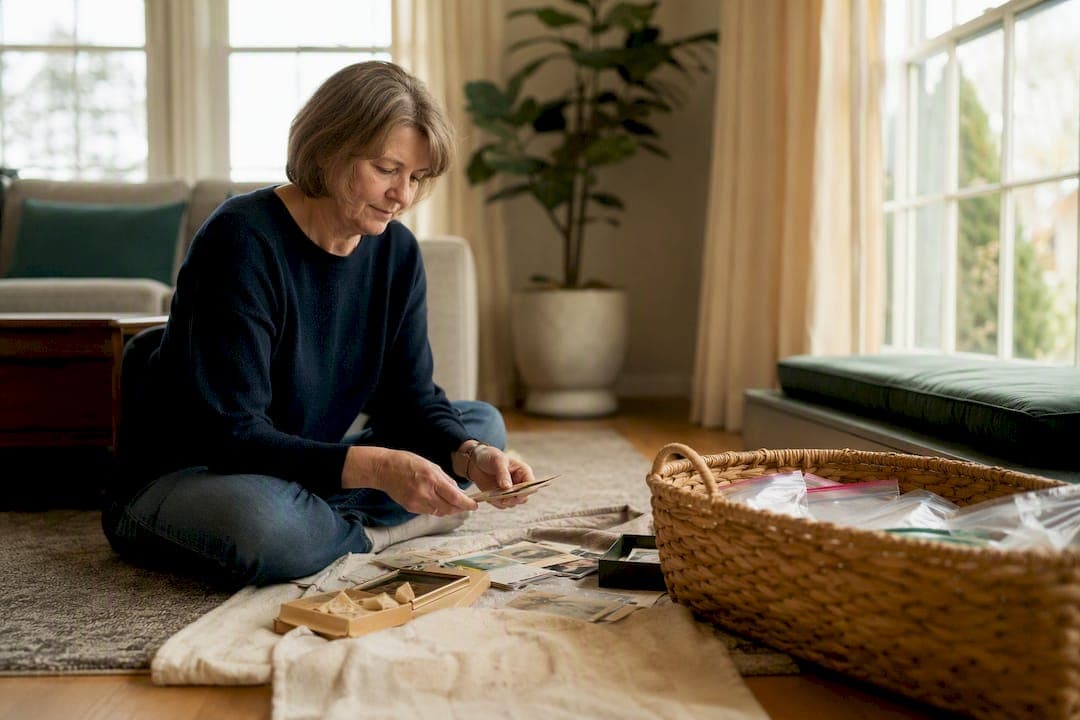
Photograph every room before sorting begins, then photograph individual items with any unique identifiers, a maker's mark, an inscription, a serial number, before they're boxed or moved. Family-facing guides consistently advise photographing sentimental items before donating or discarding them, since a clear photo often makes it easier for relatives to let an item go without feeling like the memory went with it.
Documented estate cleanouts hold up better in probate. Detailed inventories, dated photos, and donation or disposal receipts are frequently required to show heirs and the court exactly what happened to the estate's contents, which protects the executor from later disputes over missing or undervalued items.

Log every donation drop-off, every sold item, and every disposal ticket in one running file. That single document becomes the backbone of the estate accounting an executor eventually files.
How Should You Handle Donations and Disposal?
A donation-first approach keeps usable furniture, clothing, and household goods out of landfills while generating paper records the estate actually needs. Most charities issue a receipt on pickup, and that receipt belongs in the same file as the room photos.
- Call charity partners ahead to confirm what they accept and schedule pickup around your sorting timeline
- Keep donation receipts and pickup confirmations with the estate's paperwork
- Route mattresses, box springs, and large appliances to specialty disposal or recycling, since most charities decline them
- Send electronics to certified e-waste recycling rather than curbside trash
- Drop unused medications at a pharmacy take-back location instead of the donation pile
Coordinating pickup days around your room-by-room schedule cuts down on repeat trips and keeps hauling costs lower, since one full truck run is cheaper than three partial ones.
When Can You Legally Start Removing Items?
Legal authority matters more than motivation here. An executor generally needs to secure formal recognition, often through Letters Testamentary or Letters of Administration, before disposing of assets that creditors or the will itself might have a claim on. Skipping that step can expose an executor to personal liability if a dispute surfaces later.
Timelines vary widely depending on the size of the estate:
- A small apartment with few assets can often be cleared in a matter of days once authority is confirmed
- A full house with appraisals, creditor notice periods, and multiple heirs can stretch into weeks or months before everything is settled
- Real estate transfers usually wait until the cleanout is complete and documented, since realtor guidance recommends documenting progress before listing to avoid delays
Estate funds typically cover cleanout costs, which is why executors should keep every invoice, disposal ticket, and donation receipt attached to the probate filing. That ledger is what justifies reimbursement later. A checklist of documents needed for a quick home sale can help realtors and executors confirm what paperwork the eventual sale will require.
What Should You Ask Before Hiring a Cleanout Crew?
Not every cleanout company treats a family's grief the way it deserves. A short vetting call reveals a lot before anyone sets foot in the house.
- Verify insurance and references. Ask for proof of coverage and speak with a past client if possible.
- Ask how they handle keepsakes. A crew that treats every box the same way isn't the right fit for a bereavement job.
- Ask about documentation. Will you receive photo inventories, donation receipts, and disposal proof for your probate file?
- Ask about their donation partners. A donation-first crew should name specific local charities, not a vague "we donate what we can."
- Watch for red flags. Vague pricing, no proof of insurance, or pressure to skip photo documentation are reasons to get another estimate.
Bereavementcleanoutservices was built around exactly this checklist: donation-first sorting, careful keepsake handling, insured operations, and documented receipts that support probate accounting. Families and executors get a broom-clean handoff, along with the paperwork to back it up.
Pro Tip: Ask any crew directly, "What happens to items you don't take?" The answer separates a genuine donation-first operation from one that quietly hauls everything to a transfer station.
Why the Standard Cleanout Checklist Misses the Point
Most guides treat an estate cleanout as a logistics problem: rent a dumpster, call a hauler, done in a weekend. That advice moves fast and it misses what actually slows families down, which isn't the boxes. It's the decisions.
Framing the work as "making space for healing" rather than "getting rid of stuff" changes the pace families can tolerate. A crew that rushes past that reality, however efficient, leaves families with regret they carry longer than the clutter ever sat in the garage. The families who handle this well aren't the ones who finish fastest. They're the ones who documented enough, protected the right five items, and had a single person making calls instead of five relatives arguing over a couch.
Executors and realtors who treat documentation as an afterthought are the ones who end up defending an estate's accounting months later. Build the paper trail as you go, not after a dispute forces you to reconstruct it from memory.
Ready to Request a Compassionate Cleanout?
Bereavementcleanoutservices handles estate and bereavement cleanouts across New Jersey with a donation-first approach built around keepsake protection and probate-ready documentation. Every job includes photo inventories, tracked donation receipts, and a broom-clean handoff when the work is done.

A typical engagement starts with a walkthrough, either in person or by video for remote family members, followed by a written quote before any work begins. From there, scheduling is fast: insured crews handle sorting, donation coordination, and haul-away on a timeline the family sets. If you're managing a loved one's home right now and want a documented, respectful process instead of a rented dumpster, request an assessment from Bereavementcleanoutservices and get a written quote before anything leaves the house.
Frequently Asked Questions
What does "REO trash out process" mean in an estate cleanout context? In this context, it describes a bereavement-focused, donation-first cleanout of a family home, not a lender's foreclosure property. The process centers on keepsake sorting and probate documentation rather than fast debris removal.
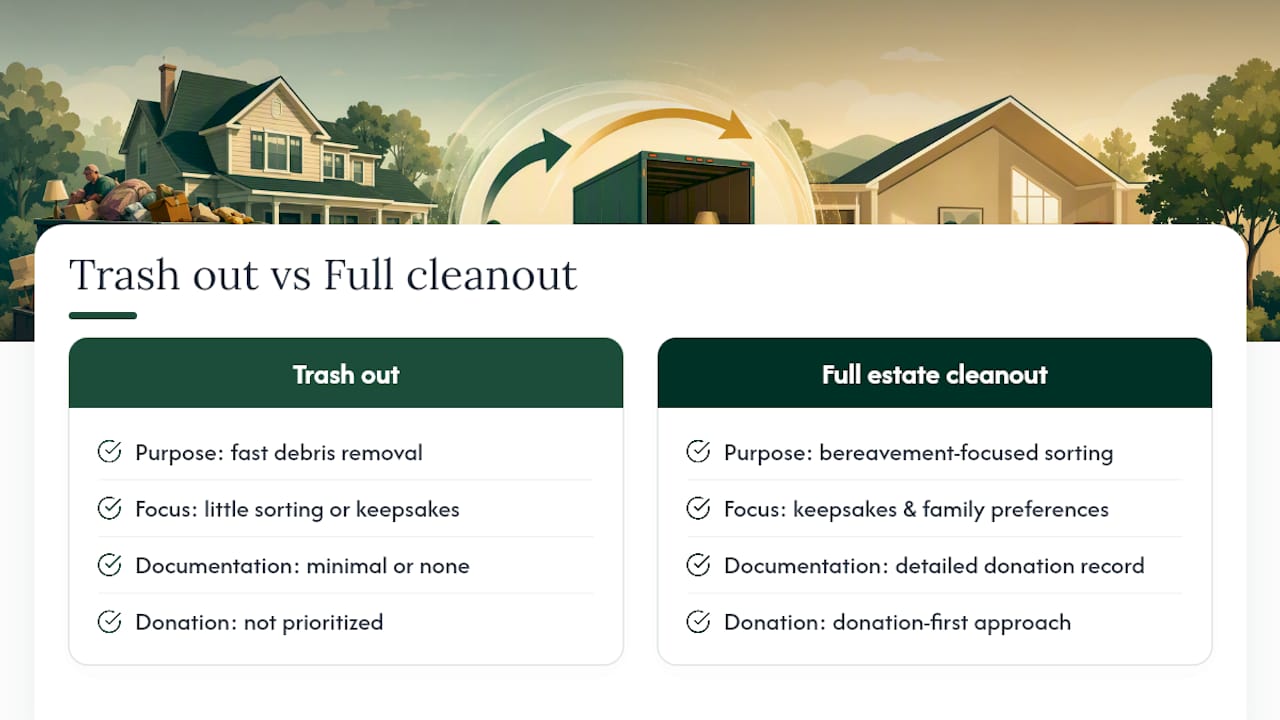
How is a trash out different from a full estate cleanout? A basic trash out removes debris with little regard for what's inside. A full estate cleanout sorts keepsakes, documents donations, and preserves items family members may want, which matters most during bereavement.
Do executors need probate before starting a cleanout? Executors generally need Letters Testamentary or Letters of Administration before disposing of assets that creditors or the will might affect. Smaller, uncontested estates can sometimes move faster with documented family agreement.
What happens to items that can't be donated? Mattresses, certain electronics, and expired medications typically require recycling or special disposal rather than standard donation, and a documented disposal record should still go into the estate file.
How much does a professional estate cleanout typically cost? Pricing usually depends on square footage, volume of belongings, and how much sorting and documentation the family wants, with most companies providing a written quote after an in-person or video walkthrough.
Sources
- Planning an estate cleanout | Frontier Waste
- The Compassionate Guide to Estate Cleanouts After a Loss | Busy Bees Concierge
- Managing an estate or probate cleanout: A practical guide for realtors | NAR
- 10 Steps to Cleaning Out a Home After a Death | Woodlawn Cemetery