
A professional estate cleanout is the right call whenever a home has blocked exits, biological hazards, or a looming probate deadline the family cannot manage alone. The outcome you should expect is a broom-clean handoff: donation-first sorting that respects keepsakes, a documented inventory for the estate, and a home ready to sell, lease, or hand back. Bereavementcleanoutservices builds its entire process around that outcome for New Jersey families.
TL;DR:
- Most estate cleanouts involving hoarding or biological hazards require licensed remediation and cannot be safely DIY, especially in severe cases.
- Cost typically starts at around $1,500 for moderate jobs and can exceed $10,000 for hazardous or extensive cleanouts, with timeline ranges from 1 day to several weeks.
- Proper documentation, including signed receipts, photos, and detailed inventories, is essential for legal and probate purposes to prevent disputes later.
- Family decision-makers should identify a single contact person and prepare valuables and utility access beforehand to keep the process efficient.
- For hazardous zones, specialized cleanup, mold removal, or pest control is necessary, and crews often use containment measures to prevent cross-contamination during the process.
Table of Contents
- How Does an Animal Hoarding Cleanup Actually Work?
- Do You Need a Specialist, a Junk Hauler, or Can You DIY It?
- What Will It Cost and How Long Will It Take?
- What Legal Steps and Documentation Does an Executor Need?
- How Do You Prepare for Cleanout Day?
- What's Included in a Standard Cleanout, and What Needs a Specialist?
- Why Documentation Matters More Than People Think
- Ready to Book an Estate or Hoarding Cleanout?
- Where to Read More
- Sources
- FAQ
How Does an Animal Hoarding Cleanup Actually Work?
The term "animal hoarding cleanup" gets used loosely online, but in the estate and property world it describes a hoarding or heavy clutter cleanout inside a residence, not a wildlife or animal rescue operation. That distinction matters because the process, the crew, and the paperwork all follow the estate-services model.
A structured cleanout moves through five predictable phases:
- Walkthrough and consult. The crew assesses volume, hazards, and access before quoting anything firm.
- Safety setup. Crews clear walkways first and remove obvious trash before touching anything sentimental, which cuts early risk and speeds the rest of the job.
- Sorting. Items get separated into keep, donate, recycle, and dispose, with donation-first routing sending usable goods to local charities.
- Hauling and cleaning. Crews haul debris, route hazardous material appropriately, and finish with sanitizing and deep cleaning.
- Documentation and final walkthrough. The provider delivers photos, itemized lists, and donation receipts alongside the finished space.
Companies that also run estate cleanout services typically recommend scheduling the cleanout after any estate sale, so nothing of resale value gets hauled away by mistake.
Pro Tip: Ask any provider to walk the property with you before quoting a flat price. A firm number given sight unseen is one of the clearest red flags in this industry.
Do You Need a Specialist, a Junk Hauler, or Can You DIY It?
Hoarding situations fall into rough tiers, and the Level 1 through 5 severity framework that many cleanout companies use is a useful shorthand. Light cases (Level 1 to 2) often mean excess clutter with clear pathways. Moderate cases (Level 3) usually need a trained crew for volume and awkward access. Severe cases (Level 4 to 5) frequently involve structural blockages, pest activity, or biological waste that require licensed remediation.
Watch for these signals that push a job out of DIY territory:
- Mold visible on walls, ceilings, or fabric
- Rodent or insect infestation
- Human or animal waste, or strong ammonia odor
- Blocked doors, windows, or stairwells
- A probate, sale, or lease deadline that leaves no room for trial and error
Hiring a licensed, insured provider also matters for liability. If a worker gets hurt or a hazardous material gets mishandled on an uninsured job, the family or executor can end up holding that risk.
What Will It Cost and How Long Will It Take?
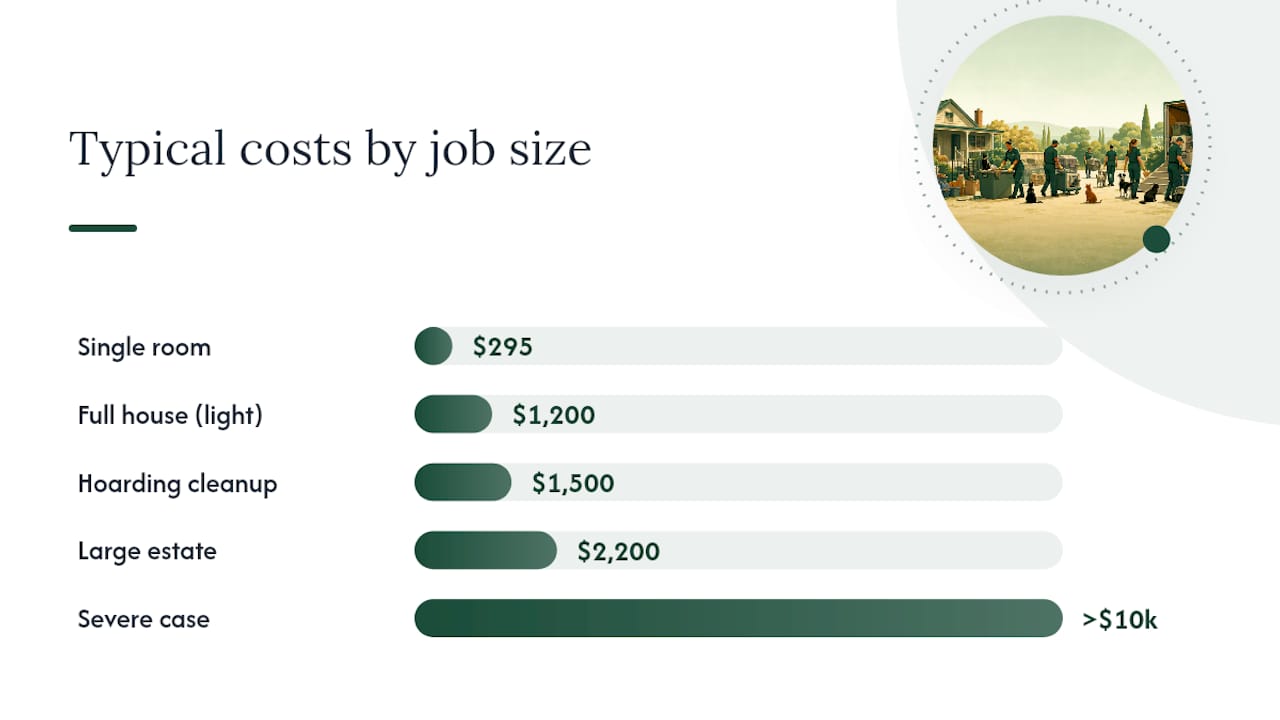
Cost tracks severity almost exactly. Light hoarding cleanouts can run a few hundred dollars, while severe cases involving hazardous material and structural cleanup can exceed $10,000 and stretch across weeks. Bereavementcleanoutservices prices its own full house cleanout from $1,200 and its hoarding cleanup service from $1,500, with a large estate cleanout starting at $2,200. A smaller job, like a single room, garage, or basement, starts at $295.
Four factors move the price most:
- Total volume and how many trips hauling requires
- Stairs, narrow hallways, or limited parking that slow the crew down
- Hazardous material requiring specialized disposal
- Rush timelines tied to a closing date or lease deadline
Typical timeline: Light cases run 1 to 3 days, moderate cases run 3 to 7 days, and severe cases with remediation needs can stretch to 4 or more weeks.
Some providers offer phased work or buy-out arrangements on furniture and fixtures, which can trim the net cost when usable items get routed to resale or donation instead of the landfill.
What Legal Steps and Documentation Does an Executor Need?
Before anything leaves the property, confirm you actually hold the legal authority to dispose of it. Executors managing an active estate should avoid discarding items until the estate inventory requirement is satisfied, since probate courts can ask for a full accounting later.
Require these documents from any provider:
- An itemized inventory of everything removed
- Signed donation receipts naming the receiving charity
- Photos of major items before removal
- Disposal manifests for hazardous or bulk waste
- A signed work order describing the agreed scope
Donation-first documentation does more than satisfy a court. It gives beneficiaries a traceable record that heads off disputes over what happened to specific items, and a photo inventory with proper metadata makes that record court-ready. If the estate is contested or valuables are unaccounted for, pause and loop in the estate attorney before the crew starts.
How Do You Prepare for Cleanout Day?
The single biggest slowdown on most projects is not labor. It is family indecision. Naming one decision-maker before the crew arrives, with a clear rule for who gets end-of-day updates, keeps the job moving.
- Pull obvious valuables, jewelry, and important documents out of the house before work begins.
- Confirm utilities are on, arrange parking or elevator access, and give neighbors a heads-up if a dumpster will sit on the street.
- Settle pet arrangements for the day so animals are not underfoot during hauling.
- Walk the finished rooms at the end of each day and sign off on what stays.
Crews that use simple keep rules, like always setting aside photos, passports, and legal papers into a labeled bin, avoid the constant stop-and-ask interruptions that stretch a two-day job into four; this practice aligns well with end-of-tenancy inspection requirements familiar to landlords and property managers. A downsizing checklist helps families decide what to keep before the crew ever walks in.
Pro Tip: Put the decision-maker's phone number on the work order itself. Crews waste real time chasing down whoever answers the phone that day.
What's Included in a Standard Cleanout, and What Needs a Specialist?
A standard cleanout covers sorting, hauling, and a solid cleaning and sanitizing pass. It does not cover structural repair, mold remediation, or major pest eradication. Those need a licensed remediation contractor or pest control specialist, and a good provider will say so rather than quote a job outside its scope.
Watch for these indicators that point toward specialized help:
- Visible mold colonies or water damage behind walls
- Heavy pest droppings requiring biohazard-level cleaning, similar to the protocols used for mouse dropping cleanup
- Severe filth situations that go beyond routine sanitizing, the kind covered in gross filth cleaning guidance
- Odor that persists after a standard cleaning pass, which usually means porous materials like carpet need replacement
Crews working hazardous zones often hang plastic sheeting to separate areas and run continuous air filtration while sorting, which limits cross-contamination into cleared rooms. Aftercare frequently includes contractor referrals for repairs, plus certified disposal routing so hazardous waste never ends up in a standard hauling load.
Why Documentation Matters More Than People Think
Families rarely fight about the cleanout itself. They fight about what happened to Mom's jewelry box or Dad's coin collection six months later, when nobody can remember who took what. That is the gap most cleanout guides skip past.
A donation-first approach only works as a trust-builder when it comes with paper behind it. A signed receipt naming the charity, a photo taken before removal, a dated work order, these are the things that turn "we gave it away" into something a skeptical sibling or a probate judge can actually verify. Naming one decision-maker matters just as much as the paperwork. Estates rarely stall because a crew works too slowly. They stall because three people disagree about a couch nobody has looked at in ten years.
— Derek
Ready to Book an Estate or Hoarding Cleanout?
Bereavementcleanoutservices gives families and executors a fixed, transparent path instead of an open-ended hourly bill: quoted scope after a walkthrough, donation-first sorting, and a broom-clean handoff with documentation built for probate from day one. Services span full house and apartment cleanouts, hoarding cleanup, foreclosure and eviction turnovers, packing, and estate sales, all fully insured.

Before your walkthrough, have a rough sense of square footage, any known hazards, and your target move-out or closing date ready. The crew documents every donation and disposal item as they go, so you get receipts and photos without having to ask twice. Request a quote or schedule a walkthrough directly through Bereavementcleanoutservices and expect a prompt response, since rapid turnaround is part of how the company handles time-sensitive probate and lease deadlines.
Where to Read More
For deeper detail on scope and safety, see the hoarder house cleanout safety guide and, for foreclosure-adjacent turnovers, the REO trash-out process explainer.
Sources
- Estate Cleanout Services: Costs, Process & How to Find One
- Hoarder Cleanout Service: What to Expect and Costs
- Hoarding Cleanup Services: Cost, Process & What to Expect 2026 | Dropcurb
- Step-by-Step Guide to Professional Hoarding Cleanup Assistance
FAQ
What Does an Animal Hoarding Cleanup Actually Cover?
It covers assessment, safe sorting into keep, donate, recycle, and dispose categories, hauling, and a final cleaning pass, with Bereavementcleanoutservices adding donation-first documentation and probate-ready inventories.
How Much Does a Hoarding Cleanup Cost?
Light cases can run a few hundred dollars, while severe cases with hazards can exceed $10,000; Bereavementcleanoutservices' hoarding cleanup service starts at $1,500.
How Long Does a Cleanout Take?
Light jobs typically finish in 1 to 3 days, moderate jobs take 3 to 7 days, and severe cases needing remediation can run 4 or more weeks.
Who Has the Final Say on What Gets Removed?
The named decision-maker, usually the executor or a designated family member, has final sign-off, and confirming legal authority before disposal protects everyone involved.
Does Donation-First Sorting Cost More?
No. Routing usable items to charity or resale can actually lower net cost, since it reduces hauling volume while still giving the family a documented receipt for every donated item.