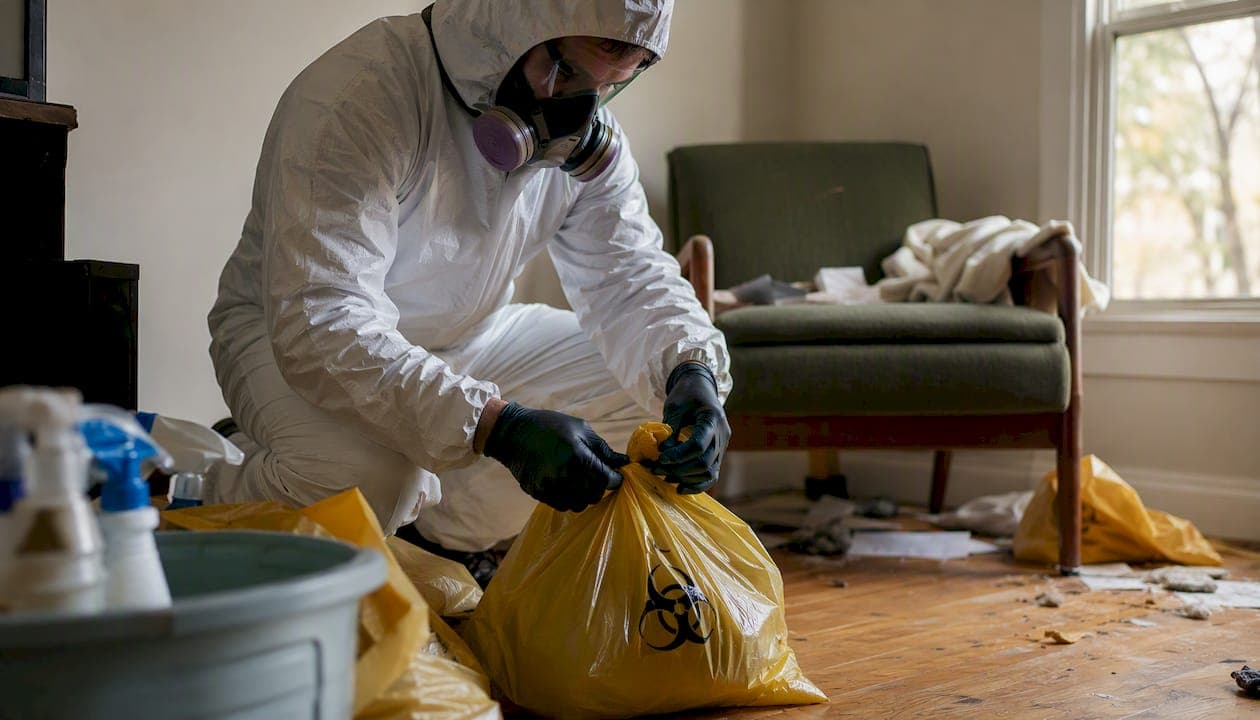
Gross filth cleaning refers to the professional remediation of spaces contaminated with biohazards — feces, urine, decomposition, bodily fluids, heavy infestations, or rotting organic matter — that pose serious health risks and require trained crews, specialized equipment, and regulated disposal. If you are facing this situation right now, secure the area, keep others out, and contact a licensed biohazard remediation or estate cleanout service before anyone enters. The CDC and NIOSH are clear that bloodborne pathogens and biological hazards require engineering controls, proper PPE, and trained handling — conditions no household cleaner or standard cleaning crew can meet.
The industry term you will hear most often is biohazard remediation, though "gross filth cleanup" is widely used by service providers and families alike. Both refer to the same category of work: sanitation for filthy spaces that have crossed the threshold from ordinary mess into genuine health hazard.
Key Takeaways
Gross filth cleaning requires trained biohazard crews, regulated disposal, and documented completion reports — not standard cleaning services or DIY removal.
| Point | Details |
|---|---|
| Secure the space first | Keep everyone out until a trained crew completes a formal site assessment. |
| Verify insurance and disposal | Ask for liability certificates and licensed biohazardous waste manifests before signing any contract. |
| Cost varies widely | Heavily affected properties can range from several thousand dollars to well above $10,000 depending on contamination depth and demolition needed. |
| Documentation protects you | Photographic records, disposal manifests, and a written completion certificate support insurance claims and probate filings. |
| Bereavementcleanoutservices | Provides donation-first estate cleanouts with biohazard-safe disposal, probate documentation, and fully insured crews across New Jersey. |
Table of Contents
- What situations qualify for gross filth cleaning?
- How does gross filth cleanup differ from hoarding cleanup and a standard deep clean?
- What health, structural, and legal risks should you understand before cleanup?
- What does a professional gross filth cleanup actually involve?
- What does gross filth cleanup typically cost, and how long does it take?
- How do you pick a reputable gross filth cleanup company?
- What should you do before the crew arrives?
- A donation-first estate cleanout: how the process looks in practice
- What families often get wrong about this kind of cleanup
- Bereavementcleanoutservices handles gross filth and estate cleanouts across New Jersey
- Sources
What situations qualify for gross filth cleaning?
Not every dirty home needs a biohazard crew. These are the scenarios that do:
- Unattended death or decomposition. A body undiscovered for days or weeks leaves behind fluids, odor compounds, and pathogens that saturate flooring, subfloor, and drywall.
- Feces or urine saturation. Human or animal waste soaked into carpet, furniture, or structural materials cannot be safely removed with household products.
- Extensive rodent or insect infestation. Rodent droppings, nesting material, and carcasses carry hantavirus and other pathogens. The EPA's rodent guidance recommends professional sanitation and pest-control coordination, not DIY removal.
- Heavy food or organic rot. Months or years of accumulated rotting food creates mold colonies and attracts pests, compounding the hazard.
- Sewage backups. Category 3 "black water" contains fecal bacteria and requires professional extraction and disinfection.
- Meth contamination or drug-residue sites. Chemical residues from drug production require specialized testing and disposal under state environmental rules.
- Animal hoarding with waste accumulation. Dozens of animals in an enclosed space produce ammonia concentrations and fecal loads that can cause respiratory injury on entry.
- Long-vacant or abandoned properties. Mold, structural rot, and pest colonization often combine in ways that make standard cleaning unsafe.
Call emergency services first if the structure is unstable, if there is an active sewage release, or if you suspect a chemical hazard. Urgency cues that signal you need a professional immediately: visible feces on walls or floors, a persistent ammonia or decomposition odor, active vermin movement, or visible black mold on structural surfaces.
How does gross filth cleanup differ from hoarding cleanup and a standard deep clean?
These three service types overlap in name but differ sharply in scope, risk, and required training.
| Criteria | Standard deep clean | Hoarding cleanup | Gross filth / biohazard remediation |
|---|---|---|---|
| Primary problem | Dirt, grime, surface buildup | Clutter, excess possessions, access issues | Biohazards, pathogens, regulated waste |
| Health and safety hazards | Minimal | Moderate (mold, fall risk, air quality) | Severe (bloodborne pathogens, fecal bacteria, chemical residues) |
| Salvageability of items | Most items kept | Triage between keep, donate, discard | Many items are unsalvageable biohazardous material |
| Required training and equipment | General cleaning products | Decluttering, organizing, hauling | OSHA/NIOSH-aligned PPE, containment, regulated disposal |
| Disposal rules | Standard trash | Donation runs, bulk hauling | Biohazardous waste manifests, licensed disposal facilities |
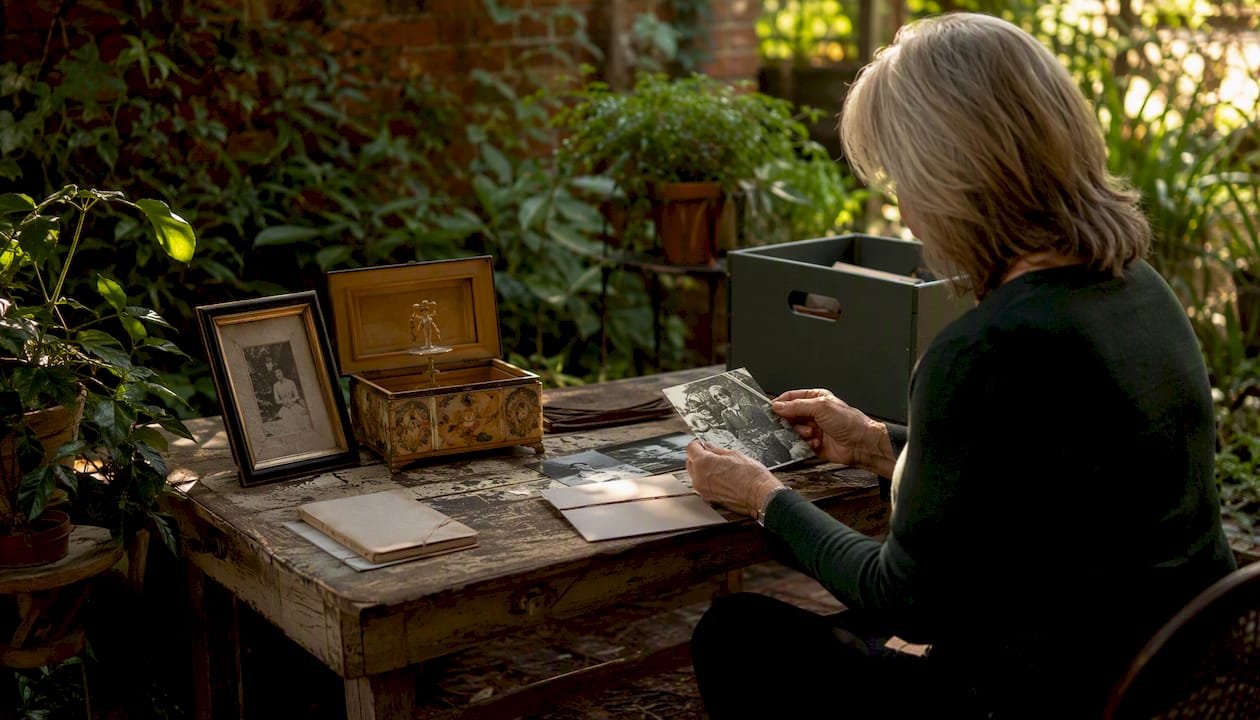
When hoarding and gross filth occur together — which is common in animal hoarding or long-term self-neglect situations — crews must triage simultaneously. Salvageable keepsakes (documents, jewelry, photographs) are identified and bagged separately before any biohazard removal begins. If you are coordinating an estate, request a crew experienced in both disciplines, because the sorting decisions made in the first hour affect what can be recovered for probate.
What health, structural, and legal risks should you understand before cleanup?
The biological hazards in a gross filth environment fall into three categories. First, bloodborne pathogens and fecal bacteria: Hepatitis B, Hepatitis C, MRSA, E. coli, and Salmonella can survive on surfaces for days to weeks. Second, mold spores: water damage and organic rot create conditions for Aspergillus and Stachybotrys (black mold), both of which cause respiratory illness with repeated exposure. Third, chemical hazards: cleaning agents used improperly in confined spaces, or residues from drug production, add a toxicological layer that standard PPE does not address without specific training.
Vector risks compound the biological hazards. Rodents carry hantavirus and leptospirosis; their fleas can transmit disease to humans. The EPA's identification and prevention guidance notes that sanitation — removing food sources and nesting material — is the primary control step, which is why pest-control coordination typically follows gross filth removal rather than preceding it.
Structural risks are easy to underestimate. Saturated subfloors, weakened joists from moisture, and compromised load-bearing walls can fail without warning. Legal exposure is also real: property owners who knowingly allow tenants or buyers to enter a biohazard-contaminated space without disclosure face liability under state health codes.
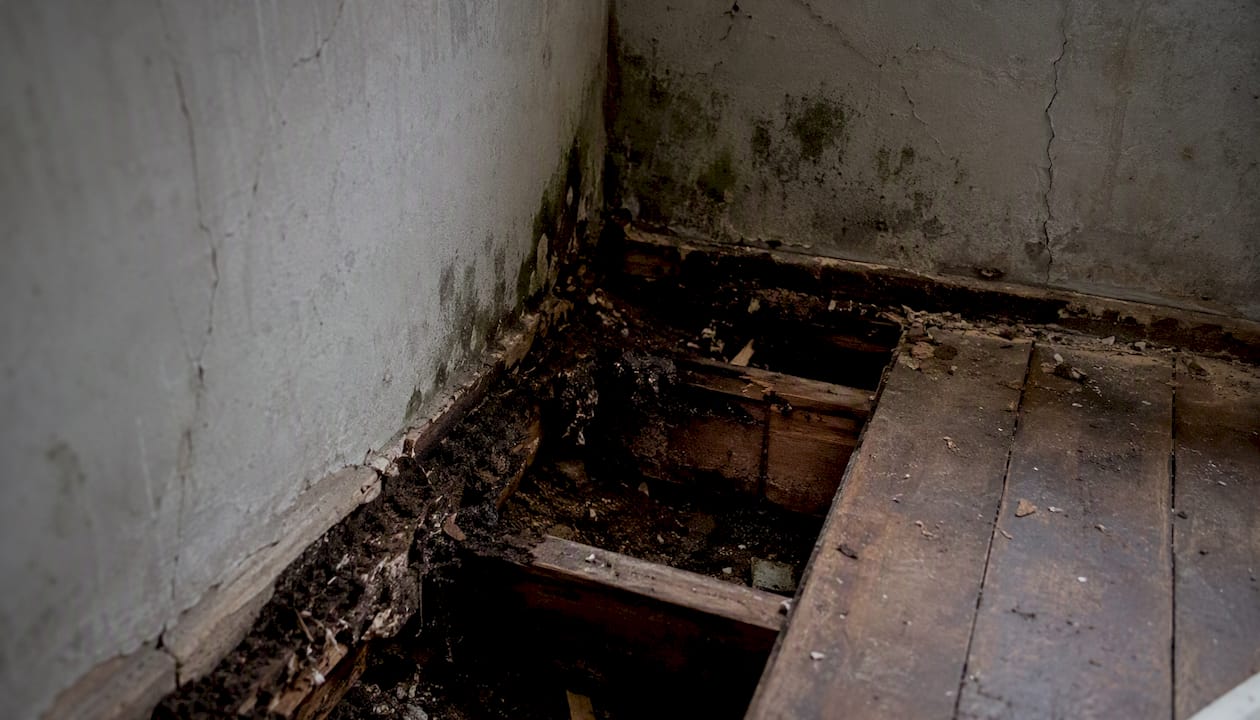
Pro Tip: Do not enter a heavily contaminated or structurally suspect room to assess it yourself. Photograph the space from the doorway or hallway for documentation purposes, then wait for the crew's formal site assessment before anyone steps inside.
What does a professional gross filth cleanup actually involve?
A trained crew follows a defined sequence. Skipping steps or reordering them creates cross-contamination.
- Site assessment and written estimate. The crew lead walks the perimeter, identifies hazard zones, and documents contamination levels. You receive a written scope before work begins.
- Containment and safety controls. Plastic sheeting, negative-air machines, and HEPA filtration isolate the work area from the rest of the property. Crew members don appropriate PPE — typically Tyvek suits, N95 or P100 respirators, and nitrile gloves at minimum, with higher protection levels for decomposition or chemical hazards per NIOSH bloodborne pathogen standards.
- Bulk removal of unsalvageable material. Contaminated furniture, flooring, drywall, and debris are bagged, labeled, and staged for regulated disposal. Keepsakes identified during assessment are bagged separately.
- Biohazard cleaning and disinfection. EPA-registered hospital-grade disinfectants are applied to all affected surfaces. Contact time matters: crews follow manufacturer dwell-time specifications, not a quick wipe.
- Odor remediation and moisture treatment. Thermal fogging, hydroxyl generators, or ozone treatment addresses embedded odor compounds. Moisture meters confirm subfloor and wall cavity readings before any reconstruction.
- Demolition or reconstruction if required. Saturated subfloors or drywall are removed and replaced. This phase may require licensed contractors depending on scope.
- Final verification and documentation. ATP testing or visual inspection confirms sanitation. A photographic final report, disposal manifests, and a written completion certificate are provided for insurance claims and probate files.
Expect the assessment and estimate to take one to three hours. Removal and disinfection for a moderately affected single room typically runs one to two days; a heavily contaminated multi-room property may require three to five days or more. You will be asked to be present for the initial walkthrough and for keepsake decisions, but you do not need to remain on-site during the work itself.
Pro Tip: Request documented procedures in writing before work begins: PPE levels used, disinfectants applied (with EPA registration numbers), disposal manifests, and an insurer-ready final report. A reputable crew provides these without hesitation.
What does gross filth cleanup typically cost, and how long does it take?
Several factors drive the price of extreme grime removal, and no honest estimate can be given without a site inspection.
- Extent and type of biohazard. Decomposition and fecal saturation require more protective equipment, longer disinfection cycles, and higher disposal fees than mold or rodent waste alone.
- Square footage affected. A single bathroom is a different project than a 2,000 sq ft home with contamination throughout.
- Demolition required. Removing and replacing saturated subfloor or drywall adds material and labor costs.
- Hazardous waste disposal fees. Licensed biohazardous waste disposal is regulated and priced separately from standard hauling.
- Odor-remediation technology. Thermal fogging or hydroxyl generation adds equipment time and cost.
- Emergency or after-hours response. Rapid response and weekend or overnight work carry a premium.
Costs for gross filth cleanup vary widely depending on the extent of contamination, local disposal fees, and the need for reconstruction, with significant price differences based on specific circumstances. Consumer-facing cost guides on hoarding and biohazard cleanup confirm that wide ranges are the norm, not the exception, and that severity is the dominant variable. Treat any flat-rate quote given without an in-person inspection as a red flag.
Homeowners insurance sometimes covers biohazard remediation following an unattended death or sewage backup, depending on the policy and the cause of loss. Documentation matters here: a written scope, photographic evidence, disposal manifests, and a completion certificate give your adjuster what they need to process the claim.
Pro Tip: Request an itemized written estimate that separates labor, disposal fees, and odor remediation. This format is what insurance adjusters and probate courts expect, and it protects you if the scope changes mid-project.
How do you pick a reputable gross filth cleanup company?
The right questions, asked before you sign anything, protect you from underqualified crews and inflated scopes.
- Insurance: Ask for a certificate of general liability and workers' compensation insurance. Confirm the limits are adequate for the property value.
- Training and certifications: Ask whether technicians have OSHA 10 or 30 training, familiarity with NIOSH bloodborne pathogen protocols, and any trauma-scene or S540 biohazard certification. The NIOSH safety culture learning module outlines what documented hazard-recognition training looks like — use it as a benchmark.
- Disposal methods: Ask where biohazardous waste goes and whether they provide a licensed disposal manifest. A crew that cannot answer this question clearly is not compliant.
- Confidentiality: Ask whether they use unmarked vehicles and maintain client confidentiality. For estate and bereavement situations, this is not optional.
- Written estimate with scope: Never accept a verbal quote. The written estimate should specify what is included, what is excluded, and what triggers a change order.
- References: Ask for references from similar jobs — not just general cleaning work.
Red flags to walk away from: a quote given by phone without inspection, refusal to provide insurance documentation, no clear disposal plan, aggressive upsells during the estimate, or a crew that cannot produce a written completion report. Get at least two estimates for any job above a single room. For estate and bereavement situations, a trauma-informed approach matters as much as technical competence. Mental Health First Aid resources support the value of compassionate communication during high-stress cleanouts, and a crew that assigns a single family liaison reduces conflict and confusion significantly.
What should you do before the crew arrives?
A little preparation protects both the people you care about and the items that matter most.
Do:
- Secure pets in a separate location or off-site.
- Photograph each room from the doorway for your own documentation record. The NPR triage framework suggests a rapid "identify and categorize" pass that works well for noting keepsake locations before a crew arrives.
- Assemble probate paperwork, deeds, and any known inventory of valuables.
- Write a list of items you want preserved — photographs, documents, jewelry, sentimental objects.
- Confirm property access: keys, gate codes, and neighbor notification if vehicles will block the street.
Don't:
- Attempt to remove biohazardous waste yourself, even with gloves and household cleaners. The exposure risk is real, and improper disposal carries legal liability.
- Start cleaning with bleach or other household products. This can spread contamination and interfere with the crew's disinfection protocol.
- Enter structurally compromised areas. Saturated floors and weakened joists fail without warning.
- Move or discard items that may be needed for probate without photographing and documenting them first.
Pro Tip: If you must enter briefly to retrieve a document or photograph a room, wear nitrile gloves and an N95 mask, limit your time inside, and wash your hands and forearms thoroughly afterward. Otherwise, wait for the crew.
A donation-first estate cleanout: how the process looks in practice
Consider a scenario many families face: an elderly relative passes away after months of declining health, and the home has accumulated years of clutter alongside areas of genuine biohazard contamination. The executor needs the property cleared for probate and eventually for sale, but family members want to preserve photographs, documents, and heirlooms.
A crew following a donation-first approach handles this in a defined sequence. The site assessment identifies which areas require biohazard protocols and which are standard clutter. Keepsakes are photographed and inventoried before any removal begins. Usable furniture and household goods are sorted for donation runs to local charities, with donation receipts provided for the estate's tax records. Biohazardous material is removed under proper containment, with licensed disposal manifests issued for each load. The property receives a broom-clean finish, and the family receives a documented inventory, photographic record, and completion certificate suitable for the probate file.
Client deliverables from this type of engagement typically include:
- Photographic inventory of the property before and after
- Itemized donation receipts for charitable contributions
- Licensed biohazardous waste disposal manifests
- Written completion certificate for insurance and probate
- Broom-clean handoff confirmed in writing
This approach reduces family conflict because decisions about keepsakes are made transparently, with documentation, before anything leaves the property.
What families often get wrong about this kind of cleanup
Most people underestimate how quickly a gross filth situation becomes a structural problem, not just a sanitation one. Fecal matter and decomposition fluids do not stay on surfaces — they wick into subfloor, wall cavities, and HVAC systems within days. By the time a family notices the odor, the contamination has often spread well beyond the visible area. That is why the scope of a professional assessment almost always exceeds what the family expected when they first walked through the door.
The other thing families consistently underestimate is the emotional weight of the decisions made during cleanup. Sorting a loved one's belongings while a crew works around you is genuinely hard. A trauma-informed crew, one that assigns a single point of contact, communicates before moving anything, and gives families time to make keepsake decisions, makes a measurable difference in how families experience the process. The Mental Health First Aid framework for crisis communication applies directly here: clear, calm, consistent communication from a single liaison reduces the sense of chaos that families describe as the most distressing part of the experience.
The technical work is important. The human work is equally so.
Bereavementcleanoutservices handles gross filth and estate cleanouts across New Jersey
When a property needs both biohazard-safe remediation and compassionate estate handling, Bereavementcleanoutservices brings both to the same job. The team handles site assessment and written estimates, donation-first sorting with charitable donation receipts, biohazard-safe disposal with licensed waste manifests, probate documentation and photographic inventory, odor mitigation, and a confirmed broom-clean finish.
Crews are fully insured, trained in trauma-informed communication, and operate with unmarked vehicles for complete discretion. Every job ends with a documented final report ready for your insurance adjuster or probate attorney. Bereavementcleanoutservices serves families, executors, social workers, and landlords across New Jersey with rapid response availability. To request a walkthrough and written estimate, visit Bereavementcleanoutservices and contact the team directly.
Sources
- NIOSH | Bloodborne Pathogens (CDC/NIOSH)
- EPA | Identify and prevent rodent infestations
- How to keep your house clean (NPR)
- Mental Health First Aid