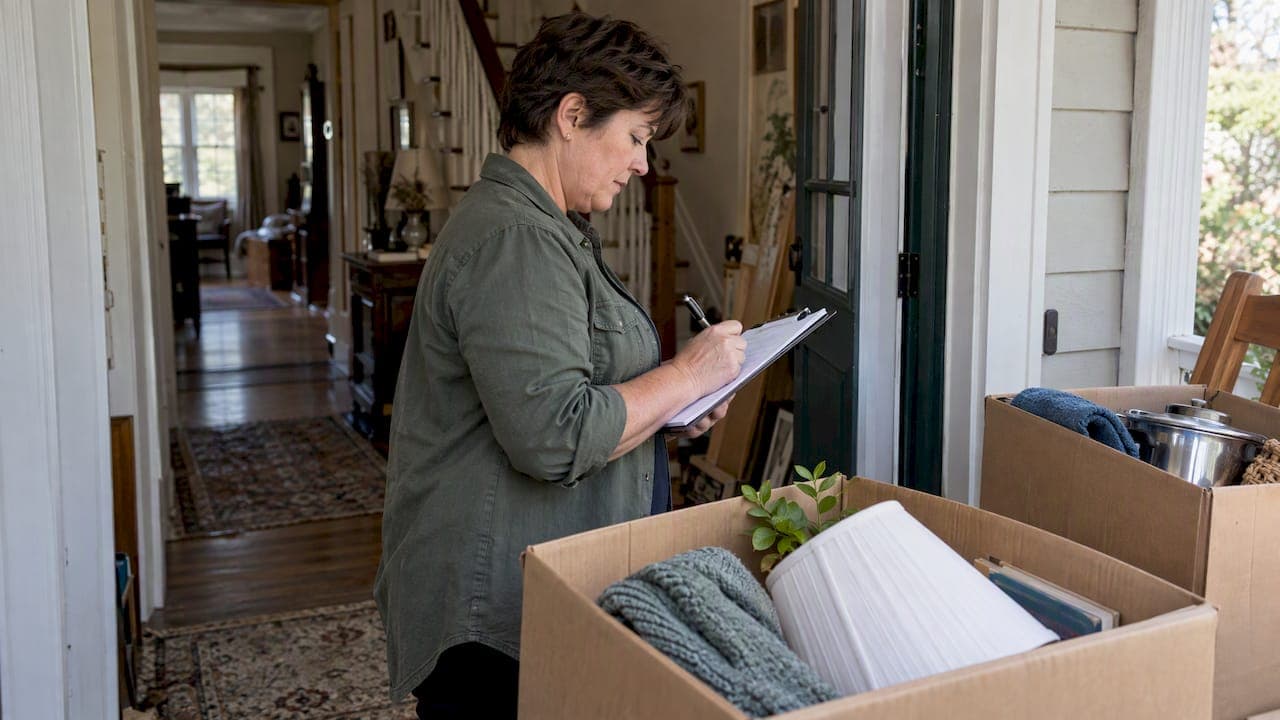
A realtor partnership cleanout gives you a photo-ready, broom-clean handoff on your timeline, so confirm who has authority before any work starts. First, identify the executor or power of attorney. Second, lock in your photography date and ask for priority scheduling. Third, request donation receipts, which the NAR guide for REALTORS® ties to probate records.
TL;DR:
- Confirm the executor or power of attorney in writing, define clear out zones with them, and secure approval before donations or disposal begin.
- Collect itemized donation receipts, before and after photos, and disposal logs; complete donation paperwork 48–72 hours before closing when possible.
- Get a property walkthrough before accepting a quote, confirm included services, and verify insurance and the vendor’s tax form before scheduling.
- Bring in help for probate disputes, out of state heirs, hoarding conditions, or tight photography and closing dates; agree on turnaround and a backup plan.
Table of Contents
- What does a real estate cleanout partner deliver for listings and closings?
- When should you bring in professional cleanout support?
- How do you set up a cleanout partnership step by step?
- What should you track for donations and probate documentation?
- Which logistical problems threaten your timeline?
- Why does a documented, donation-first partner matter?
- Editorial take: The cleanout is part of the listing, not a task before it
- How can we help you right now?
- FAQ
- Sources
What does a real estate cleanout partner deliver for listings and closings?
A good partner takes the property from cluttered to show-ready without you carrying the load. Here is what you should expect and request:
- Broom-clean and photo-ready clearing, with hauling and disposal handled for you
- Donation-first sorting and pickup, so usable items go to local charities instead of a dumpster
- Optional estate photography and an online inventory when contents need to be sold or tracked
- Priority scheduling and one point of contact who answers your calls
- Proof of insurance and a W‑9 on request
- Before and after photos for your listing file
- Donation receipts and disposal records where relevant
That last group matters most. Documentation is what separates a partner you can rely on from a crew that simply shows up with a truck. When an heir, an attorney or a buyer's agent asks what happened to the contents, you hand over the paperwork instead of guessing.
Our team works this way. We deliver a broom-clean finish, donation-first sorting and documentation, so you do not have to chase any of them.
When should you bring in professional cleanout support?
Some listings fit a quick weekend of help from the family. Many do not. Call a professional when you see any of these situations:
- Probate or estate cleanouts, where heirs are grieving, scattered or disagreeing about what stays.
- Foreclosures and evictions, where the property needs to be cleared fast and left clean.
- Out-of-state heirs, who cannot walk through the home or supervise the work.
- Large volume or hoarding conditions, where sorting alone can take longer than your listing window.
- Tight photography, inspection or closing dates, where one missed day pushes the whole deal.
The NAR guide says to start by identifying decision-makers and defining clear-out zones, because skipping that step is a common source of delays. It also names a frequent agent mistake: trying to manage sorting, hauling and disposal personally. Handing that work to professionals protects your reputation and your listing timeline, and it keeps you focused on pricing, marketing and negotiating.
How do you set up a cleanout partnership step by step?
Treat the partnership as a small project with clear owners. Work through this checklist before any physical work begins:
- Confirm authority. Get the name of the executor or power of attorney in writing, and note the listing milestones they need to meet.
- Walk the property. Define clear-out zones with the decision-maker, so the crew knows which rooms, garages and sheds are in scope.
- Start a removal pile. Give heirs a designated area to mark keepsakes early. They can decide quickly without stalling the full clearance.
- Agree on scheduling. Ask about scheduling and a point of contact for updates.
- Settle pricing. Request a quote based on a walkthrough rather than a phone guess, and confirm what is and is not included.
- Verify the vendor. Ask for proof of insurance and a W‑9.
- Set documentation deliverables. Agree up front on donation receipts, before and after photos and disposal logs.
If you want a template for the keepsake step, our keepsake sorting guide gives families simple sorting categories you can share during the walkthrough. For storage units tied to an estate, our storage unit cleanout plan covers the same donation-first logic.
Pro Tip: Ask the executor to sign off on the clear-out zones by text or email before the crew arrives, so no one disputes scope on cleanout day.
What should you track for donations and probate documentation?
Your job is to make sure the paperwork exists and the authority behind it is clear.
- Confirm authority first. Never approve a donation or disposal until you know the executor or power of attorney has signed off. NAR guidance stresses aligning decision-makers before work starts.
- Collect itemized receipts. Ask the partner to provide donation receipts that the executor can file with the estate.
- Keep before and after photos. They show the condition of the home at handoff and settle questions later.
- Document ahead of closing. Where possible, finish donation paperwork 48–72 hours before closing, as laid out in our guide to cleanout before closing.
- Share the executor's side. Our article on donating estate items with probate-ready receipts explains what executors should keep.
If a sale is not the right path for a particular estate, some agents also point heirs toward estate sale options for inherited properties so the family can weigh their choices.
Which logistical problems threaten your timeline?
Most delays are predictable, and you can head them off with a short pre-inspection.
Spot potential issues early and plan specialist disposal before the cleanout date.
Use this checklist before the crew arrives:
- Written access instructions, including lockbox codes and who holds keys
- Keepsakes labeled or moved to the removal pile
- Utilities on, so the crew has light and water
- A named contact who can approve decisions on site
- A list of any hazardous items spotted during the walkthrough
- A realistic turnaround window agreed with the partner in advance
- A backup plan if photos need to happen sooner than planned
A cleanout does not fail because the crew was slow. It fails because no one knew who could approve a decision when the crew needed an answer.
Pro Tip: Build in a buffer between cleanout completion and your photographer's arrival. A touch-up pass is much easier than rescheduling a shoot.
Why does a documented, donation-first partner matter?
The NAR guide frames cleanouts as project management and risk reduction. Its stepwise approach starts with decision-makers and clear-out zones, then uses a removal pile so executors can designate keepers and donations without halting the full clearance. It also notes that professional support protects schedules and reduces agent risk.
That is the model we follow. Here is what you can expect from us:
- A donation-first approach, so usable items go to local charities
- A broom-clean handoff when the work is done
- Professional documentation that executors can use for probate records
- Fully insured operations
- Discreet, compassionate handling of family belongings across New Jersey
You can see where we work on our service areas page, which helps you confirm coverage before you promise a client a date.
Editorial take: The cleanout is part of the listing, not a task before it
Most agents treat the cleanout as a chore that happens before the real work starts. I think that gets the order backward. The cleanout is the first stage of marketing the home, because it decides what your photographer shoots and what a buyer feels walking in.

The usual advice says to find the cheapest hauler and keep the family out of it. That misses what actually causes trouble: unclear authority and no paper trail. A low quote means little if the executor disputes what was donated, or if nobody can prove the home was cleared on the day you said it was.
Spend your first hour on authority and zones, not on price shopping. Then pick one partner and keep them. A partner who knows your standards and your timelines saves you more over a year than any single discount. The agents who build that relationship stop firefighting and start planning.
— Derek
How can we help you right now?
You have a listing, a deadline and a home that is not ready. We can help you close that gap, with fewer calls, a documented handoff and a crew that treats the family's belongings with care.

Our services for agents include:
- Estate cleanouts and whole-house or apartment cleanouts
- Broom-clean finishes
- Donation-first sorting with documentation for probate
- Scheduling for tight timelines
Have the property address, the decision-maker's name, your target dates and a few photos ready, and we can move quickly on a quote. Request an estimate or priority pickup on our estate cleanout services page today. Full house cleanouts start at 1200 USD.
FAQ
How much do estate cleanout services cost?
Cost depends on the size of the property and the volume of contents. Our pricing starts at 650 USD for an apartment or condo cleanout and 1200 USD for a full house cleanout, and a walkthrough gives you a firm quote before work begins.
What should a realtor ask before hiring a cleanout partner?
Ask who the single point of contact is, whether the company carries insurance, and whether it can supply a W‑9. Also confirm what documentation you will receive, such as donation receipts and before and after photos.
Why does a cleanout need documentation for a listing?
Receipts and photos give executors the records they need for probate and help you answer questions from heirs or buyers. The NAR guide emphasizes donation-first sorting and professional documentation for this reason.
What is the biggest mistake an agent can make during an estate cleanout?
Skipping the step of identifying decision-makers often causes friction later in the project.