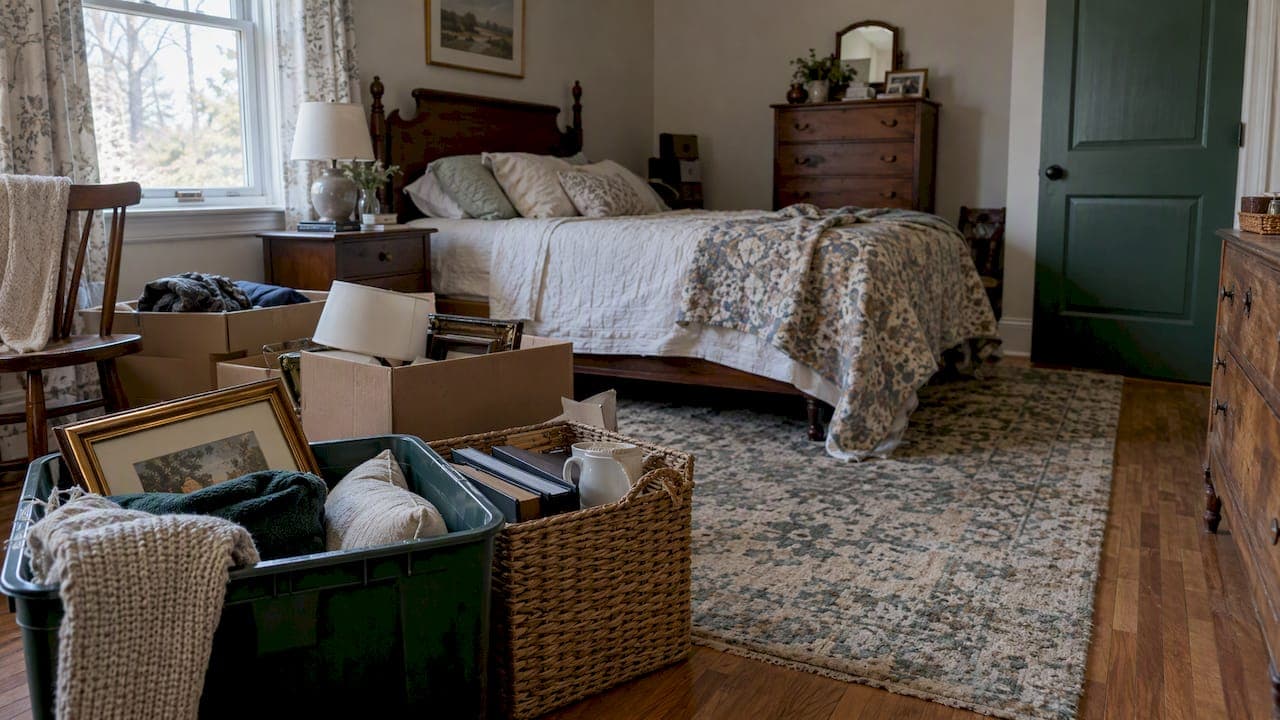
In New Jersey, you can secure a home and gather paperwork right away, but an executor's authority to remove, donate or sell belongings begins with Letters Testamentary, and a will cannot be probated until at least 10 days after death. Most cleanouts then take place within the first few months, well before the estate formally closes, which often takes a year or more. The sequence below shows what to do at each stage, which deadlines shape the schedule, and where a professional cleanout fits.
TL;DR
- Day 1 to day 10: secure the house, locate the original will, and photograph and list contents. Do not discard, donate or sell anything yet.
- After probate: once the Surrogate issues Letters Testamentary, the executor has authority to take possession of personal property and act for the estate.
- Weeks 2 to 12 is the usual window for sorting keepsakes, donating, selling and a broom-clean handoff, timed around any sale or listing of the house.
- Formal closing of the estate commonly takes about a year, partly because creditors have nine months to file claims, and inheritance tax returns, if required, are due in eight.
- Documentation made during the cleanout is what you will lean on later if a beneficiary, creditor or the court asks what happened to an item.
Table of Contents
- The short answer: three phases, not one deadline
- Phase 1: before the executor has authority
- Phase 2: authority granted, the cleanout window opens
- Phase 3: the legal clock that runs after the house is empty
- When the house does not go through probate
- Timeline pressures that change the schedule
- Perspective: sequence beats speed
- How we can help with the cleanout phase
- A simple checklist to keep the timeline on track
- FAQ
- Sources
The short answer: three phases, not one deadline
New Jersey does not set a single "cleanout deadline." Instead, the cleanout sits between several legal milestones. It helps to think in three phases:
- Before authority (first days to a few weeks). Protect, document, and do not dispose.
- After authority (roughly weeks 2 to 12, depending on the county and the estate). Sort, donate, sell, remove and hand off the property.
- Administration (months 3 to 12 and beyond). Notice, creditor period, tax, accounting and distribution. The house is usually empty by now, but your records still matter.
The timing in phases 1 and 2 varies with how quickly the will is filed, how many items there are, and whether the property must be listed or turned over to a landlord. Phase 3 is driven by law.
Phase 1: before the executor has authority
The earliest legal marker is the 10-day wait. Bergen County's Surrogate's Court states that probate cannot be completed until at least 10 days after death. After review, the executor signs qualification papers, the Surrogate issues the judgment of probate, and Letters Testamentary confirm the executor's authority to act. Union County's Surrogate adds that a will may be presented earlier, and that the named executor should bring the original will, the original death certificate, next-of-kin information and the filing payment.

If there is no will, an administrator must be appointed instead, as Monmouth County's Surrogate guide explains. The same logic applies: authority comes from the court, not from being the closest relative or holding a key.
What is safe to do now
- Secure the property. Change the locks if any keys are unaccounted for, and collect mail. A New Jersey estate-planning firm advises securing the house and rekeying when keys are missing.
- Find the original will and key papers: deed, mortgage statements, insurance policies, vehicle titles, account statements.
- Remove perishables and obvious hazards, such as spoiled food, and keep utilities on so the home stays safe and in condition.
- Photograph every room as it stands. The same firm notes that executors are expected to inventory and photograph estate assets room by room before items leave, to account for the estate and protect against later claims. Our guide to a court-ready estate photo inventory covers the shot list.
- Set aside the obvious valuables (jewelry, documents, firearms, cash) in a secure place, listed in writing.
What to hold off on
- Donating, selling or discarding furniture, vehicles or collections.
- Letting relatives take items "that were promised."
- Hiring a hauler to clear the home without a written scope.
The reason is simple. Until the Surrogate issues the letters, no one has legal authority to dispose of estate property. Giving away an item too early can create disputes among heirs that are far harder to repair than a two-week wait.
This is also a good time to document the home's condition, particularly if the person rented or the property will be handed to a landlord or buyer. A practical walkthrough on documenting a property's condition shows how photos and notes taken early protect everyone later.
Phase 2: authority granted, the cleanout window opens
Once the judgment is signed and the Surrogate's certificates issue, Atlantic County explains that the executor or administrator may take possession of personal property and must take immediate steps to protect the estate. Under N.J.S.A. 3B:10-30, a personal representative holds the same power over estate property title as an absolute owner, held in trust for creditors and other interested persons, and may use it without notice, hearing or court order. Under N.J.S.A. 3B:14-23, absent limits in the will, an executor may take possession of estate property and sell it, as summarized by a New Jersey estate firm.
That authority is a trust, not a free hand. Because the executor answers to creditors and beneficiaries, the order of work in this phase matters more than the speed.
A realistic sequence
| Step | What happens | Typical pace |
|---|---|---|
| 1. Walkthrough and scope | Executor and cleanout team tour the property, flag keepsakes, valuables and hazards, and agree on a written scope and quote | A few days |
| 2. Family keepsake round | Heirs identify items they want, ideally with the executor's written list | 1 to 2 weeks |
| 3. Valuables and sales | Appraisals, estate sale or online consignment for items with resale value | 2 to 6 weeks |
| 4. Donation sorting | Usable furniture, clothing and housewares go to local charities with receipts | 1 to 2 weeks |
| 5. Removal and disposal | Remaining items hauled or recycled; hazardous or biological waste handled separately | 1 to 3 days for most homes |
| 6. Broom-clean handoff | Home swept and ready for the realtor, buyer, landlord or family | 1 day |
These ranges are planning estimates drawn from how cleanouts typically run, not legal requirements. A full house with decades of belongings, or a home with heavy clutter, runs longer than a one-bedroom apartment. Our real estate cleanout checklist breaks the same sequence into nine executor steps.
Why donating and selling come before hauling
Tax and accounting rules point the same direction. New Jersey's Division of Taxation instructions for the inheritance tax return list furniture, jewelry, collections, firearms, vehicles and other tangible personal property among estate property to report, and say specifically bequeathed items should be listed separately. Separately, N.J.S.A. 3B:16-2 says a personal representative may, or if the court requires shall, file an inventory and appraisal of estate property. In practice, that means you want a record of what existed, what it was worth, and where it went before the dumpster arrives. See our note on documentation before donations.
Phase 3: the legal clock that runs after the house is empty
Most families are surprised that the house can be cleared in weeks while the estate stays open for a year. Several deadlines run in the background.
Notice to heirs: 60 days after probate
After a will is admitted, the executor or the executor's attorney must send notice of probate to the spouse, heirs and others within 60 days. Bergen County's Surrogate lists this alongside the 10-day rule on its probate page. Sorting and donation decisions go smoothly when beneficiaries have already been told what is happening.
Creditor claims: nine months
Under N.J.S.A. 3B:22-4, a creditor must present a claim to the personal representative in writing and under oath within nine months of death. This window is one reason New Jersey estates, even uncontested ones, commonly take about a year to close, according to a New Jersey probate firm. For the cleanout, the practical lesson is to keep items of value accounted for, because the executor is holding property in trust for creditors as well as heirs.
Inheritance tax: eight months
When New Jersey inheritance tax applies, the return and any tax due are generally due within eight months of death. The state says the tax is a 15-year lien unless paid or bonded. Whether the tax applies depends on who inherits, so ask the estate's attorney. An appraisal of jewelry, art or collectibles done during the cleanout can feed directly into that return.
Release and refunding bond: before final distribution
Before final distribution, each beneficiary must sign a Release and Refunding Bond. Complete records of what was given, sold or donated make that conversation easier.
When the house does not go through probate
Not every property needs the steps above. If a home passes through tenancy by the entirety, joint tenancy with survivorship or a revocable trust, the survivor or trustee signs and no estate has to open. Personal property in the home may still belong to the estate, though, so confirm with an attorney before clearing everything. If you are unsure which category you are in, treat the house as if authority is still pending until you have an answer in writing.
Timeline pressures that change the schedule
- Listing the home. If the estate will sell the property, the cleanout usually needs to finish before photos and showings. Our winter estate cleanout guide explains why scheduling ahead of the spring rush can help.
- Rental units. Landlords and executors of a tenant's estate have different obligations. Our summary of eviction cleanout laws in NJ covers the landlord side.
- Hoarding or heavy clutter. Add time for careful sorting, because paperwork, cash and keepsakes are often buried. Plan for more days, not fewer.
- Family distance. Heirs out of state may want video walkthroughs and an online inventory rather than a trip. This often shortens the keepsake round.
- Container or dumpster shortcuts. Self-loading may look faster, but it removes the sorting step that protects the record. See professional cleanout vs. DIY container removal.
Perspective: sequence beats speed
We are often called in the first week, when the family is exhausted and wants the house "done." Our advice is almost always the same: do the quick things now, and let the legal things set the pace for the rest.

We sort donation-first, so usable furniture, clothing and housewares go to local charities rather than a landfill, and we set keepsakes aside for the family before anything leaves. We document each room, which is what executors tell us they need most when questions come up months later. And we finish with a broom-clean handoff so the next step, whether a sale, a tenant or a family move, can start on time.
What we see go wrong is rarely the cleanout itself. It is an item given away before authority was confirmed, a keepsake nobody wrote down, or a rushed haul that mixed paperwork into the trash. A few extra days up front prevent those.
— Derek
How we can help with the cleanout phase
We handle estate cleanouts across New Jersey with a donation-first process, careful keepsake sorting, documentation and fully insured crews. Our published starting prices are $650 for an apartment or condo cleanout, $1,200 for a full house, $2,200 for a large estate, $950 for a foreclosure or eviction cleanout and $1,500 for hoarding cleanup. A single room, garage or basement starts at $295, and estate photography and online inventory is $75 per hour. Final pricing follows a walkthrough and firm quote. Our guide to estate cleanout cost explains what moves a quote up or down.

To schedule a walkthrough, see our estate cleanout services, or check the New Jersey towns we serve, including Fort Lee and Freehold. For a deeper look at who may act and when, read our probate house cleanout guide for executors.
A simple checklist to keep the timeline on track
- Confirm in writing that Letters Testamentary or Letters of Administration have been issued before anything is donated, sold or discarded.
- Keep a dated photo inventory and a running list of where each item went.
- Ask the estate's attorney about the inheritance tax and creditor-claim dates for your case.
- Give heirs a clear window to claim keepsakes, and record each choice.
- Keep donation receipts and sale records with the estate file.
- Book the cleanout team for after authority is confirmed, and early enough for any listing date.
FAQ
How soon after a death can an executor start clearing the house in New Jersey?
The executor can secure the home, collect papers and photograph contents right away. Removing, donating or selling belongings should wait for Letters Testamentary, which can issue only after the 10-day waiting period and the Surrogate's review.
Do I have to wait until probate is finished to clean out the house?
No. You need authority, not a closed estate. Once the Surrogate issues the letters, the executor can take possession of personal property and act for the estate, so the cleanout usually happens months before the estate formally closes.
How long does probate take in New Jersey?
Even uncontested estates commonly take around a year, partly because creditors have nine months to present claims. Complex estates, disputes or late-discovered assets can take longer. An estate attorney can give you a realistic estimate for your county.
Can family members take items before probate is complete?
It is safer to wait until the executor has authority and has recorded who receives what. Informal removals before that point are a common cause of disagreements among heirs, and they leave gaps in the estate's records.
What if the house must be sold quickly?
Ask the estate's attorney to confirm authority first, then schedule the cleanout around the listing date. A professional team can sort, donate and deliver a broom-clean home in days for many properties, so a quick sale is usually workable with early planning.
Sources
- Probate, Bergen County Surrogate's Court
- Frequently Asked Questions, Union County Surrogate
- The Duties of Executor/Administrator, Atlantic County, NJ
- A Citizen's Guide to Wills, Estates and Probate, Monmouth County Surrogate
- N.J.S.A. 3B:10-30
- N.J.S.A. 3B:16-2
- NJ Division of Taxation, Inheritance Tax Filing Requirements
- Inheritance Tax Resident Return, Instructions
- NJ Inheritance Tax Instructions (IT-R)
- Debts After Death: NJ Creditor Claims
- Estate Sales: What an Executor Needs to Know
- How Long Does Probate Take in New Jersey?
- Selling Inherited Property in New Jersey
- Document Rental Unit Condition