
The executor or authorized representative must secure the property first, take no removals before a full inventory, and follow a donation-first sorting process for everything left behind. Document each donation, sale, and disposal with receipts and photos. When the volume, timeline, or documentation demands exceed what family members can manage alone, hire a professional estate cleanout service.
TL;DR:
- Only after completing a full inventory should items be removed, with documentation of every donation, sale, or disposal to ensure proper estate accounting.
- Limit access to the property immediately after securing it and photograph each room to establish a baseline record before sorting begins.
- Proper sorting involves categorizing all items efficiently and recording detailed information for every item leaving the house, especially high-value or sentimental pieces.
- Donation should be the default after family claims are resolved, with high-value items targeted for consignment and unsellable items routed to licensed disposal services.
- A professional estate cleanout typically costs between $2,000 and over $10,000 depending on size and accumulation, and usually takes two to six weeks to complete fully.
Table of Contents
- What Is the First Step in Flood Damaged Contents Disposal?
- How Do You Sort and Document Contents for Probate?
- Where Should Estate Contents Go: Donate, Sell, or Dispose?
- How Long Does an Estate Cleanout Take, and What Does It Cost?
- What Records Do You Need for the Final Handoff?
- What Health and Safety Precautions Matter During Disposal?
- Do You Need a Permit to Dispose of Estate Contents?
- How Should Hazardous Materials Be Disposed of Responsibly?
- Why Donation-First, Documented Cleanouts Actually Protect Families
- When Should You Call a Professional Cleanout Crew?
- Sources
- FAQ
What Is the First Step in Flood Damaged Contents Disposal?
Before anyone touches a single box, secure the property. Change the locks if multiple family members had keys, forward the mail, and limit who has access during the sorting window. This is not about mistrust. It is about protecting the estate and the executor's own legal standing.
Here is the 24 to 72 hour sequence that works:
- Change locks and control access. Limit entry to the executor and anyone formally authorized to help.
- Locate the will and secure legal or financial documents. Deeds, insurance policies, bank statements, and irreplaceable family papers come out first, before any general sorting begins.
- Photograph every room before touching anything. A walk-through video or photo set, room by room, creates a baseline record that protects everyone if a dispute comes up later.
- Set up three physical zones: Keep, Donate/Sell, Dispose. Give family members a firm deadline, in writing, to claim sentimental items before general sorting starts.
- Schedule your donation pickup or estate sale window, and book dumpster or junk removal in the same call. Charities and haulers both book out during busy seasons, so lock in dates early rather than scrambling later.
Nothing should leave the property until this inventory step is done. Items removed beforehand still count toward the estate and need to be documented and valued for distribution, according to ProbatePedia's executor guide.
How Do You Sort and Document Contents for Probate?
Sorting is not a weekend of hauling boxes to the curb. It is a room-by-room process with a paper trail, because every item that leaves the house needs a documented reason for where it went.
Work through the home methodically:
- Walk each room in the same order every time, and open every drawer, closet, and cabinet. Flood-prone basements and garages hide the items most likely to cause disputes later, so don't skip them.
- Photograph items before moving them, especially anything of visible value or sentimental weight.
- Categorize each item into one of five buckets: specifically bequeathed in the will, claimed by a family member, routed to an estate sale, donated, or disposed of.
- Order a formal appraisal only for items you suspect carry real value (jewelry, art, collectibles). For everyday furniture and household goods, an estate sale's actual selling price is usually the more practical valuation.
- Shred sensitive paperwork and use a certified data destruction service for hard drives or old computers rather than tossing them in the donate pile.
For every item that leaves the property, log an item ID, a short description, its condition, where it went (recipient, buyer, or disposal site), the date, and a photo reference number. This six-field format is simple enough to maintain in a spreadsheet, and it becomes the backbone of your final probate accounting. The Bin Bandits estate cleanout guide recommends this same keep, donate/sell, or haul-away split, specifically because it stops the "maybe" pile from stalling the whole project. Executors handling sentimental clutter especially benefit from documenting decisions in the moment, before grief turns a five-minute call into a two-hour debate.
Pro Tip: Assign one person, and only one person, the job of updating the log. Split logging duties between two family members and you will end up with two different versions of "what happened to Mom's china."
Where Should Estate Contents Go: Donate, Sell, or Dispose?
Once the keep pile is settled and family claims are resolved, most of what remains splits three ways: charity donation, consignment for higher-value pieces, and junk removal for what nobody wants.
Donation should be your default, not your fallback:
- Habitat for Humanity ReStore accepts furniture, appliances, cabinetry, and building materials in usable condition, and typically issues a donation receipt on request.
- Goodwill and Salvation Army take clothing, housewares, small furniture, and electronics, and both organizations provide written receipts for estate tax and accounting purposes.
- Ask for the receipt to list item categories and estimated quantities, not just "household goods," since that specificity holds up better in a final estate accounting.
- High-value unsold pieces (mid-century furniture, art, certain antiques) often do better through targeted consignment than a general estate sale, even though it takes longer to place them.
- Licensed junk removal should be the last stop for genuinely unsellable, undonatable items. Request an itemized disposal manifest showing category, volume, and disposal or recycling destination.
Estate sales themselves typically sell through 60 to 80% of listed inventory, according to ProbatePedia's liquidation guide, which means a real donation and disposal plan for the remaining 20 to 40% is not optional. When a family member is handling apartment cleanout after a death with a hard moveout deadline, prioritize donation pickups first and schedule junk removal for the same week rather than letting leftover items sit and accumulate storage fees.
How Long Does an Estate Cleanout Take, and What Does It Cost?
Plan for a phased timeline rather than a single moving day. Inventory and family claims typically take one to two weeks. An estate sale, if you run one, adds another week or two for setup, the sale itself, and post-sale donation pickups. Final removal and broom-clean handoff close out the process.
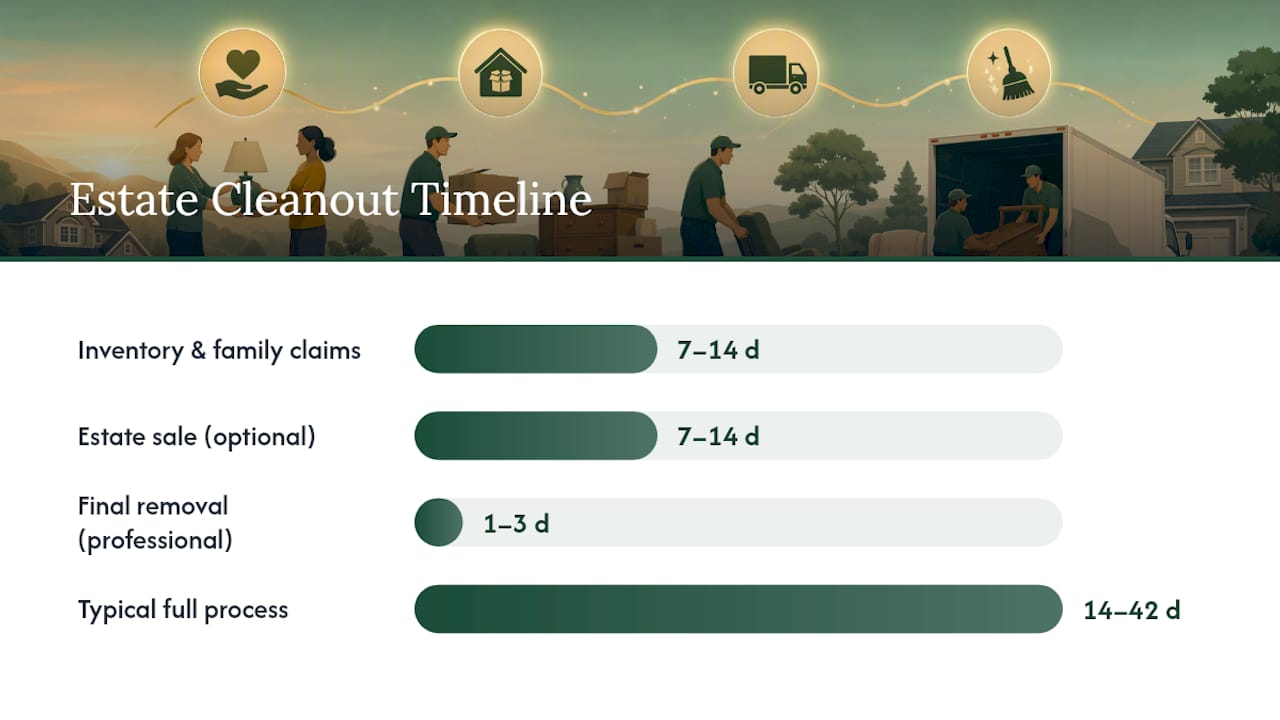
Professional crews move fast once sorting is finished. Otesse's estate cleanout checklist notes that a fully sorted home can be cleared by professionals in one to three days, while the entire properly staged process, start to finish, usually runs two to six weeks.
Costs vary by home size and how much accumulated volume you're dealing with:
- Small homes with light accumulation: professional cleanout services often start around $2,000.
- Large estates or homes with heavy hoarding-level accumulation: costs can exceed $10,000, according to Ultimate Dumpsters' estate cleanout guide, driven largely by dumpster rental fees and weight overages.
- Full-service crews become more cost-effective than DIY dumpster rental once you factor in labor time, disposal fees, and the risk of blowing past a probate or closing deadline.
Build your timeline backward from any hard deadline. Creditor-claim windows, probate court dates, and real estate closings do not move for a slow cleanout.
What Records Do You Need for the Final Handoff?
The final accounting is where a well-documented cleanout pays off. Probate courts, buyers, and landlords all want the same basic proof: where things went, when, and to whom.
Pull together these documents before you consider the estate closed:
- Photo inventory from the initial walkthrough
- Itemized estate sale report showing what sold and for how much
- Signed donation receipts from every charity pickup
- Disposal manifests from any junk removal service
- Appraisal reports for high-value items, where you ordered one
Compile these into one concise packet rather than a scattered folder of receipts. A simple cover sheet listing totals (amount sold, amount donated by category, amount disposed) with the supporting documents attached behind it satisfies most probate courts and most buyers' attorneys without extra back-and-forth.
The most common documentation mistake is treating verbal family agreements as sufficient. "Mom's neighbor already knows she's getting the dining table" is not a record. Write it down, get a signature if the item has real value, and attach it to the file. The Advantage points to exactly this gap, family disputes over undocumented informal claims, as one of the most preventable sources of probate delay.
What Health and Safety Precautions Matter During Disposal?
Estate cleanouts, especially in homes that sat vacant or under-ventilated for a stretch, can expose you to real hazards beyond dust and clutter. Mold is the most common issue in basements, attics, and any room with a history of leaks or humidity problems. Wear an N95 or better respirator, gloves, and eye protection when sorting through affected areas, and isolate visibly moldy items rather than moving them through the rest of the house.
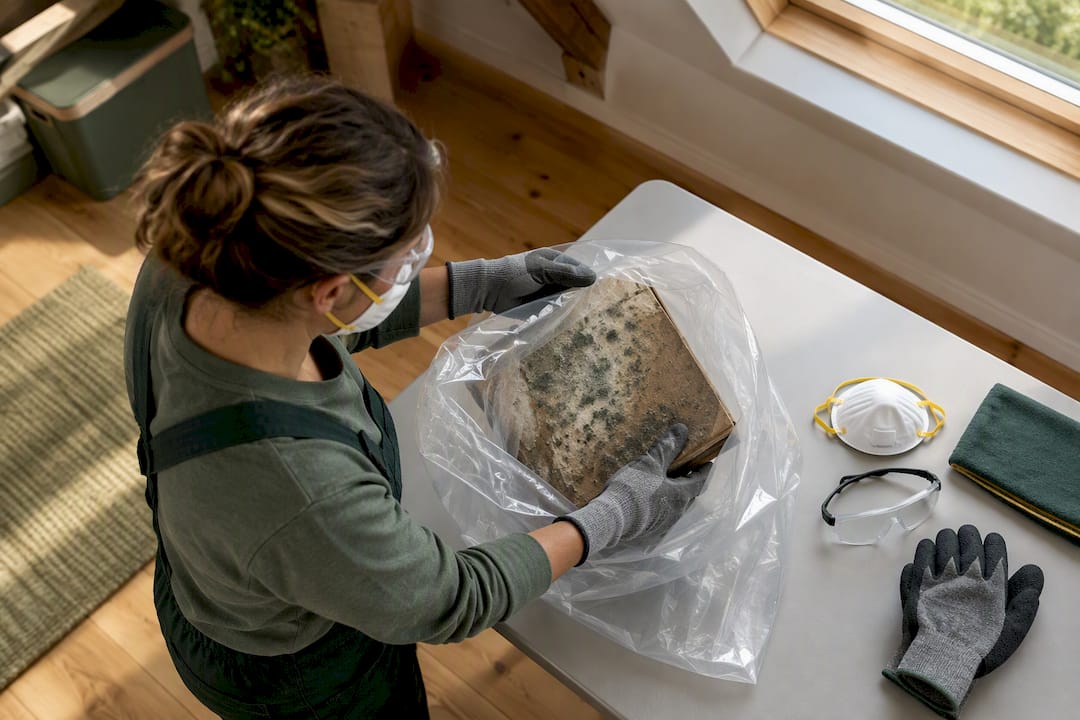
Biological hazards show up more often than people expect in elderly or hoarding-related cleanouts: expired medications, needles, spoiled food, and in some cases bodily fluids from illness or a pet accident. These need separate handling, not a spot in the regular donate or dispose pile. Treat any unidentified chemical containers, old paint cans, or aerosols the same way, as hazardous rather than household trash.
Ventilate the home before extended work sessions, take breaks outside if you're sensitive to dust or mold, and never let anyone under 18 handle cleanup in a home with known mold, pest, or biological contamination. If a room shows heavy mold growth or a strong chemical odor, that is a signal to bring in a licensed remediation or specialty cleaning crew rather than pushing through with family labor. This is exactly where professional crews earn their fee: they carry the protective equipment and disposal routes that a family doing this once, under grief and time pressure, usually does not have on hand.
Do You Need a Permit to Dispose of Estate Contents?
Most routine estate cleanouts, furniture, clothing, housewares, general trash, do not require a permit. Where local rules tighten up is around specific material categories: electronics, paint, appliances containing refrigerants, tires, and construction debris from any renovation work tied to the cleanout.
Many municipalities restrict curbside disposal of electronics and appliances entirely, requiring a scheduled bulk pickup or a trip to a designated drop-off facility instead. Paint is its own category almost everywhere; latex paint can sometimes be dried out and disposed of as solid waste, while oil-based paint typically must go through a household hazardous waste program. NJ homeowners handling old cans should check local paint disposal rules before assuming they can toss them with regular trash.
Dumpster rentals themselves sometimes need a placement permit if they'll sit on a street or public right-of-way rather than entirely on private property, particularly in denser towns and cities. Check with the local public works or sanitation department before the dumpster arrives, not after it's parked illegally.
None of these rules are uniform from one town to the next, which is exactly why professional cleanout crews are worth their fee for larger jobs: they already know which items need a special drop-off versus a standard haul, and they carry the volume relationships with recycling and donation partners that make sorting faster.
How Should Hazardous Materials Be Disposed of Responsibly?
Certain items in an estate cleanout cannot go into a regular donation pile or a standard dumpster, and treating them like ordinary household goods creates real environmental and legal risk. Old paint, motor oil, pesticides, propane tanks, batteries, and fluorescent bulbs all fall under household hazardous waste rules in most areas, and most counties run dedicated drop-off events or permanent collection sites for exactly this category.
Electronics deserve their own path. Old computers, TVs, and printers often contain materials that shouldn't go to a landfill, and many retailers and municipal programs offer free e-waste recycling. This is also where hard drive disposal matters most: wipe or physically destroy drives before recycling the device, since donation and recycling partners are not responsible for scrubbing personal data off equipment they receive.
Appliances containing refrigerants (older refrigerators, air conditioners, dehumidifiers) need certified disposal because of refrigerant recapture requirements. A general junk hauler without the right certification may not be equipped to handle this correctly, so ask directly before booking.
For everything else, recycling should be the default before disposal. Scrap metal, cardboard, and clean furniture that's too worn for donation but still structurally sound often has a recycling or salvage path rather than a landfill destination. A licensed estate cleanout crew typically sorts for recycling automatically as part of the standard process, since it reduces their own dumping fees, which means the environmentally responsible choice and the cost-effective choice usually point the same direction.
Why Donation-First, Documented Cleanouts Actually Protect Families
Most guides treat documentation as a bureaucratic box to check. It's not. A photo inventory and itemized donation receipts are the difference between a probate process that closes cleanly and one that drags into months of disputes over who took what.
This process is built around donation-first sorting specifically because it solves two problems at once: it honors what a family member would have wanted done with their belongings, and it generates the paper trail an executor needs. Derek, who guides much of the hands-on approach behind this content, has focused particularly on secure hard drive disposal, structuring donation strategy so charities actually take what's offered, and using EPA-based methods for odor removal in homes that sat vacant too long.
A discrete, insured crew that documents every step doesn't just clear a house faster. It removes the emotional weight of decision fatigue from grieving families and gives executors a clean record that holds up under scrutiny.
— Derek
When Should You Call a Professional Cleanout Crew?
Some estates genuinely can be handled by family alone over a few weekends. Others cannot, and knowing which situation you're in before you start saves weeks of stalled progress.
A donation-first process addresses the documentation problem executors face: full house cleanouts, coordinated donation pickups, careful keepsake sorting, itemized reporting, and a broom-clean handoff at the end. That last point matters more than it sounds. A property ready to list or hand back to a landlord the same day the cleanout finishes saves an entire extra step most families don't budget time for.

Call in a professional crew when heirs live out of state and can't manage a multi-week sort in person, when a probate or closing deadline is weeks away rather than months, or when the home involves hoarding-level accumulation that would take a family years to sort alone. Current prices for services such as full house cleanouts, large estate cleanouts, and single room, garage, or basement cleanouts are available on the pricing page of the service provider. To request a walkthrough, have a rough sense of square footage, any known hazardous materials, and your target timeline ready. That single call, scheduled through Bereavementcleanoutservices, gets you a firm quote and a realistic date, not another item on a to-do list that keeps sliding.
Sources
For deeper reading on executor duties, realtor-side prep, and cleanout logistics, see ProbatePedia's executor liquidation guide, the NAR practical cleanout guide for realtors, and Otesse's estate cleanout checklist.
- How to Run an Estate Sale: Personal Property Liquidation Guide for Executors | ProbatePedia
- The Best Estate Cleanout Checklist for Executors and Families | Otesse
- The Complete Guide to Estate Cleanouts | Ultimate Dumpsters
FAQ
What Counts as Flood Damaged Contents Disposal in an Estate?
It refers to sorting, donating, selling, and disposing of a deceased person's or household's belongings during an estate cleanout, hoarding cleanup, or downsizing. The process follows a donation-first sequence with documentation for probate rather than a simple haul-away job.
Can an Executor Remove Items Before Probate Is Finalized?
Generally, no items should leave the property until the executor completes a full inventory. Items removed earlier still count toward the estate and need to be documented and valued for distribution.
How Much Does a Professional Estate Cleanout Cost?
Costs typically range from about $2,000 for a small home to over $10,000 for a large estate with heavy accumulation, according to Ultimate Dumpsters. Bereavementcleanoutservices lists a full house cleanout from 1200 USD one-off and a large estate cleanout from 2200 USD one-off, with exact pricing confirmed after a walkthrough.
How Long Does an Estate Cleanout Usually Take?
A properly staged cleanout, from inventory through final removal, typically takes two to six weeks. Professional crews can clear a fully sorted home in one to three days once family claims and sorting are complete.
What Documents Do I Need for the Final Estate Accounting?
You need a photo inventory, an itemized estate sale report, signed donation receipts, disposal manifests, and any appraisal reports for high-value items. Compiling these into one packet with a summary cover sheet is usually enough to satisfy probate courts and buyers' attorneys.