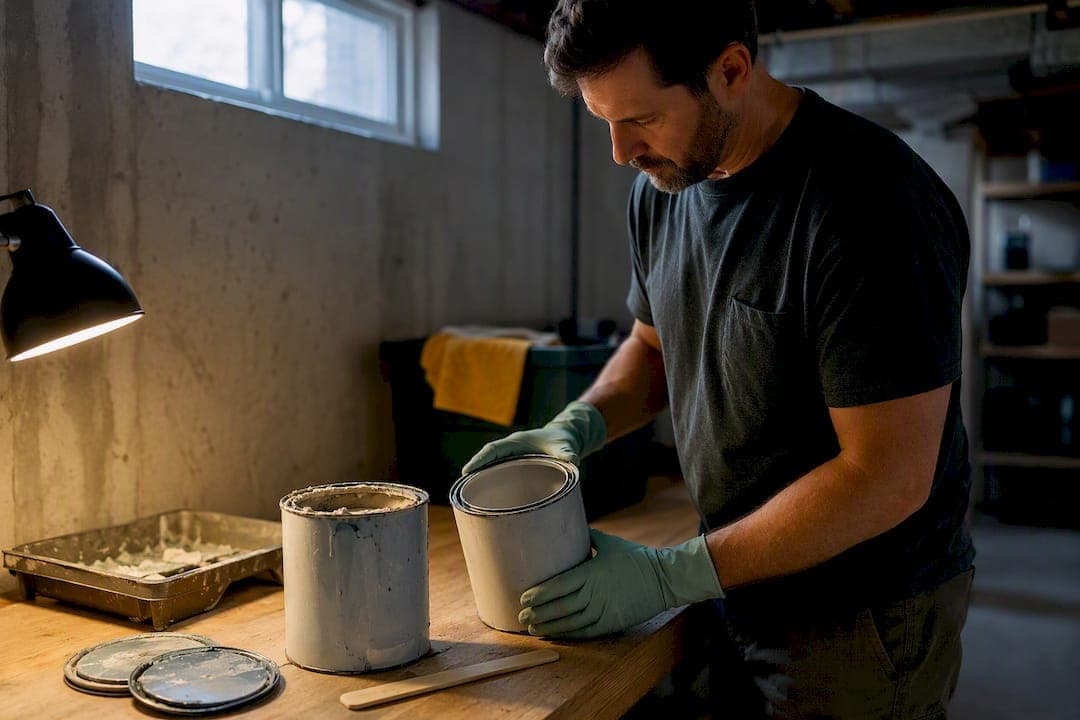
Oil-based paint counts as household hazardous waste in New Jersey and must go to a county HHW collection event or permanent facility, never the trash. Latex paint is different: dry it until solid, and it goes in with regular household trash. Find your county's program at Njhazwaste.
TL;DR:
- Latex paint can be dried and landfilled if fully solidified and properly drained, but oil-based paint must be taken to authorized HHW facilities only.
- County hazardous waste programs vary between scheduled events and permanent drop-off sites, with proof of residency required for household disposal.
- Disposing of oil-based paint improperly or attempting to dry it at home creates hazardous waste and is illegal in New Jersey.
- Donating usable paint to charities or recycling programs reduces waste and eases county HHW facility capacity.
- For large or complicated jobs, hiring a professional estate cleanout service ensures proper sorting, transportation, and disposal of hazardous and household items.
Table of Contents
- How Does Paint Disposal Work Through NJ County Programs?
- How Do You Safely Dispose of Latex Paint?
- What About Oil-Based Paint, Stains, and Varnishes?
- Can You Donate or Reuse Leftover Paint Instead?
- What Should You Bring to an HHW Event or Drop-Off?
- When Does It Make Sense to Hire a Professional?
- Where Can You Find Official NJ Paint Disposal Resources?
- A Family-First Take on Getting This Right
- Need Help With a Large or Mixed Paint Inventory?
- Sources
How Does Paint Disposal Work Through NJ County Programs?
Every one of New Jersey's 21 counties runs its own household hazardous waste program, and no two look exactly alike. The Association of New Jersey Household Hazardous Waste Coordinators maintains the statewide directory at njhazwaste.com, which is the fastest way to find your county's rules, dates, and locations without digging through a dozen municipal websites.
Most counties fall into one of two models:
- Periodic collection days. Spring and fall events where residents drop off hazardous materials at a designated site, often requiring a scheduled appointment.
- Permanent drop-off facilities. Year-round sites, sometimes appointment-based, sometimes walk-in during posted hours.
Rules vary more than most residents expect. Union County lists specific event dates and, at some events, excludes latex paint entirely since it isn't classified as hazardous. Somerset County runs multiple annual collection days rather than a single event. Nearly all programs are restricted to county residents, and contractors or commercial businesses are typically turned away since these programs are funded for households, not job sites. Bring proof of residency, like a driver's license or utility bill, before you make the trip.
How Do You Safely Dispose of Latex Paint?
Latex, or water-based, paint is not classified as hazardous waste in New Jersey once it's fully dried. Check the can label or original cleanup instructions. Latex cleans up with soap and water; oil-based products require mineral spirits or paint thinner. If you're not sure which you're holding, that cleanup method is your best clue.
Here's how to dry it out correctly:
- Small amounts (an inch or two in the can): remove the lid and let it air-dry outdoors or in a well-ventilated garage. It usually solidifies within a few days.
- Faster drying: stir in clay-based kitty litter or a commercial paint hardener, like Speedy Dry, until the mixture no longer sloshes.
- Larger amounts: line a cardboard box with a plastic bag, pour the paint in, and mix in kitty litter or sawdust in layers until it's fully absorbed.
- Confirm it's solid all the way through, not just on the surface, then leave the lid off the empty can and set it out on your regular trash day.
Pro Tip: A paint can that looks dry on top can still be liquid at the center. Push a stick or paint stirrer down into the middle before you call it done. Haulers will reject anything that still sloshes.
What About Oil-Based Paint, Stains, and Varnishes?
Oil-based finishes are flammable and classified as hazardous waste in New Jersey, which means they're banned from household trash and storm drains. NJDEP guidance is explicit that oil-based paint should not be dried, blended, or treated at home the way latex can be. It needs to go to your county's HHW event or a permanent facility.
Before you transport any:
- Keep cans sealed and stored upright, never on their side, to prevent leaks.
- Secure them in a box or crate in your trunk so they can't tip during the drive.
- Never combine different products into one container, even if both are oil-based.
- Check your county's page for the nearest permanent facility. Ocean County, for example, operates a paint recycling program that accepts drop-offs year-round rather than only on scheduled event days.
Trying to dry oil-based paint at home doesn't work the way it does with latex, and attempting it just leaves you with a hazardous mess you still can't legally throw away.
Can You Donate or Reuse Leftover Paint Instead?
Before any of it heads to disposal, check whether it's still usable. A gallon that's more than half full, properly sealed, and free of mold is often worth a second life somewhere else. The MCMUA recommends reaching out to reuse groups before assuming disposal is the only option.
- Habitat for Humanity ReStore locations often accept usable paint, but call ahead to confirm what they need.
- Community theaters, school art departments, and local nonprofits frequently take small quantities for sets and projects.
- Some counties run paint-exchange programs where residents can pick up partial cans for free.
- Stir it, check for a skin or separation, and reseal tightly if it passes the test.
Donating first isn't just good for your neighbor's project. It keeps usable material out of already-stretched county HHW capacity.
What Should You Bring to an HHW Event or Drop-Off?
A little prep prevents a wasted trip. HHW staff can turn away loads that aren't sorted or labeled correctly, so get organized before you leave the house.
- Keep lids tightly secured and cans upright in the vehicle, ideally in a box that won't tip.
- Label unmarked cans with contents if you can identify them.
- Separate latex from oil-based paint. Don't mix unknown products into one container.
- Check quantity limits. Ocean County, for instance, caps drop-offs at 20 cans per resident per day.
- Bring ID or a utility bill for proof of residency, and confirm whether your event requires an appointment.
- Commonly rejected items include unlabeled mystery containers, leaking cans, and anything brought by a contractor rather than a resident.
When Does It Make Sense to Hire a Professional?
Some situations go beyond a single trunk-load to the county drop-off. Clearing out a family member's home after a loss often means a garage full of decades-old paint cans, some latex, some oil-based, some unlabeled, mixed in with tools, chemicals, and furniture. Mobility limits, tight timelines for a home sale, or simply not knowing which cans are hazardous can turn a weekend project into a logistical headache.
That's where a professional estate cleanout team earns its keep.
- Inventories hazardous materials on-site and separates them before hauling begins.
- Coordinates transport to the appropriate HHW facility instead of leaving that step to the family.
- Sorts donation-first, so usable furniture, tools, and household goods go to local charities instead of the landfill.
- Leaves the space broom-clean, which matters for estate sales, closings, and probate documentation.
Pro Tip: If you're facing a full house of leftover paint, solvents, and old chemicals alongside furniture and personal belongings, don't sort it can-by-can yourself. A donation-first estate cleanout handles the hazardous items and the household items in one coordinated pass.
Bereavementcleanoutservices approaches every job insured and documented, which matters when a family needs paperwork for probate as much as they need the garage cleared out.
Where Can You Find Official NJ Paint Disposal Resources?
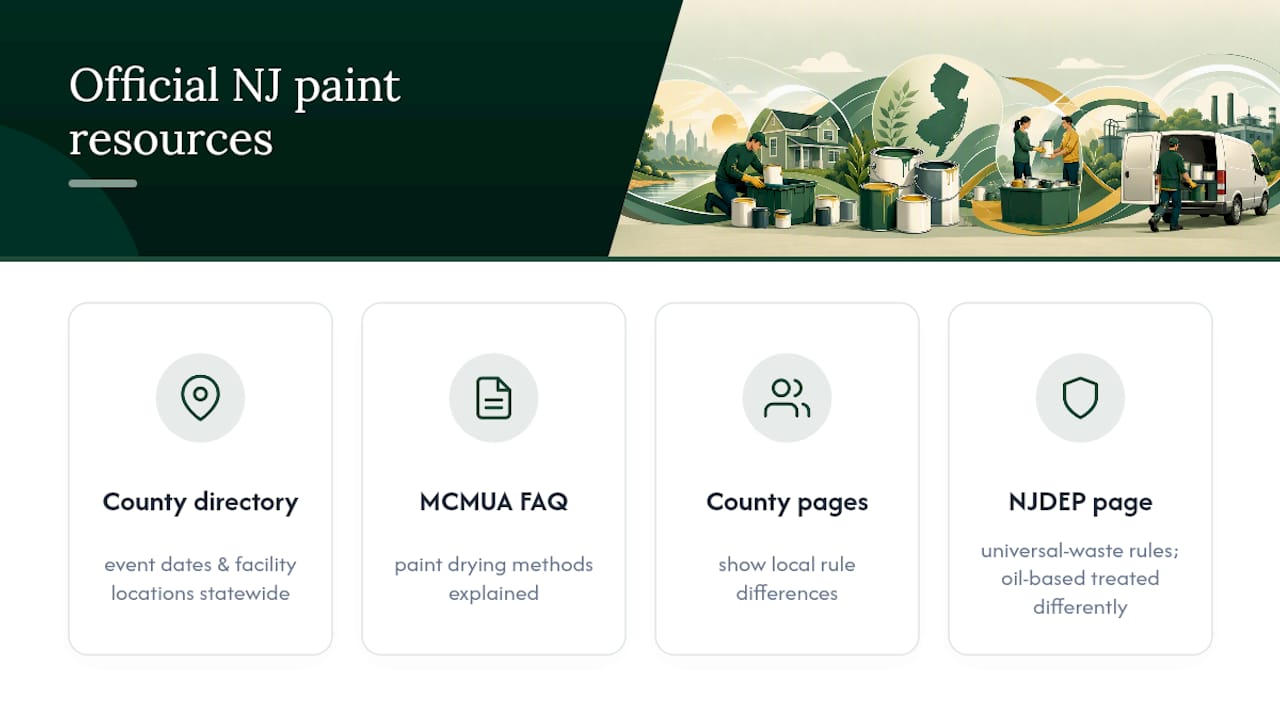
Start with njhazwaste.com's county directory for event dates and facility locations statewide. For paint-specific rules, the MCMUA paint FAQ covers drying methods in plain language, while Ocean County's program page and Union County's HHW page show how local rules can differ. For the regulatory backbone, NJDEP's page on paint as universal waste lays out why oil-based products get treated differently under state law.
A Family-First Take on Getting This Right
We've cleared out plenty of garages holding paint cans that outlived the person who bought them. Handling that safely, sorting what a charity can still use from what belongs at an HHW site, is second nature to us because donation-first isn't a slogan we bolted on. It's how every job gets sorted, documented, and insured from the first walkthrough.
— Derek
Need Help With a Large or Mixed Paint Inventory?
If you're facing a garage full of paint cans, chemicals, and years of accumulated household items, sorting it alone can turn into weeks of trips to the county drop-off and the donation center. Bereavementcleanoutservices handles the whole inventory in one visit, separating hazardous materials for proper HHW transport while routing anything usable to local charities first.

Our teams work insured and documented, which matters when paperwork for probate or an estate sale is part of the picture. We also coordinate with local partners like One Day Doors & Closets of North Jersey when a cleanout overlaps with home repairs or renovation leftovers. If a property needs to be cleared, sorted, and left broom-clean without you making a dozen separate trips, request a quote from Bereavementcleanoutservices and get a straightforward walkthrough of what the job actually involves.
Sources
- County Programs - Association of New Jersey Household Hazardous Waste Coordinators
- MCMUA - Paints and Stains FAQ
- Solid Waste Management | Ocean County Government
- NJDEP - Paint as universal waste