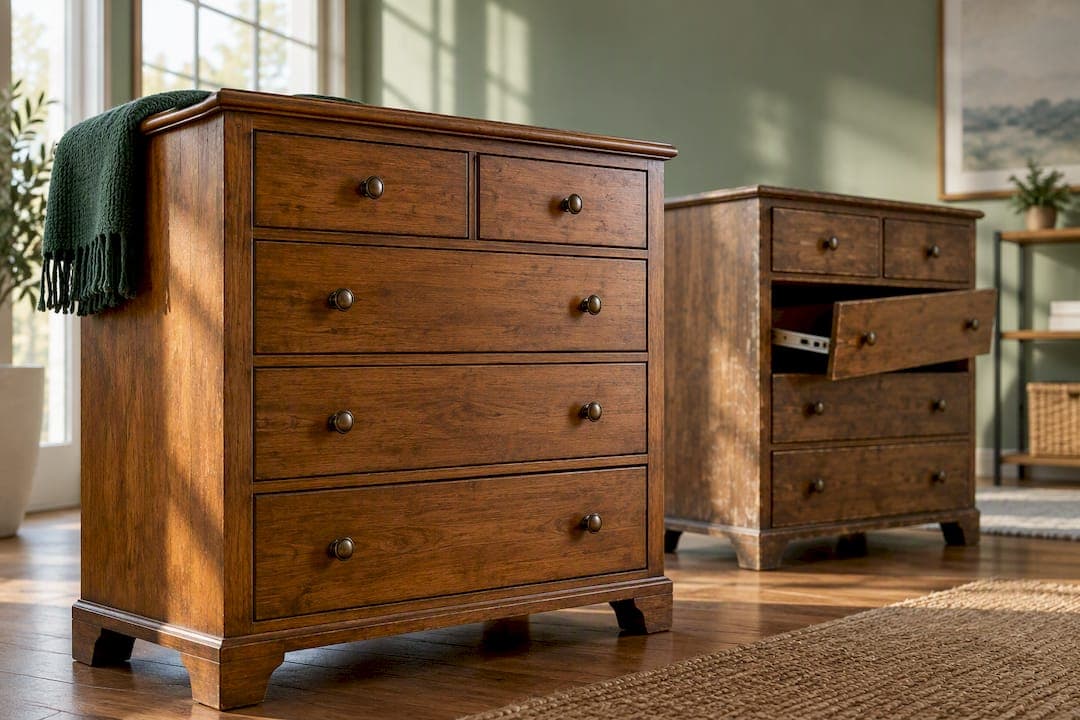
For tax purposes, your noncash deduction is limited to the property's fair market value (FMV) on the date you gave it away. Document the item's condition with a photo, get the charity's contemporaneous written acknowledgment for any gift of $250 or more, and file Form 8283 if your total noncash deductions exceed $500. If a single item or a group of similar items is worth more than $5,000, plan on a qualified appraisal.
TL;DR:
- Donations exceeding $5,000 require a qualified appraisal and Section B of Form 8283, except for publicly traded securities and certain inventory.
- The fair market value relies on comparable sales and local market evidence, not the original purchase price or replacement cost.
- For donations over $250, a contemporaneous written acknowledgment from the charity is mandatory and must be obtained by the tax filing deadline.
- Vehicle donation deductions are limited to the charity’s actual sale proceeds, not an estimated FMV, with supporting Form 1098-C required.
- Most valuation disputes arise from overestimating value or missing documentation, making thorough recordkeeping and timely paperwork essential.
Table of Contents
- What fair market value means for donations
- Which forms and paperwork rules apply to your donation
- When you need a qualified appraisal
- A step-by-step method for estimating value yourself
- Realistic value ranges for common donated items
- Mistakes that trigger audits, and a recordkeeping checklist
- How donation-first estate cleanouts improve valuation and substantiation
- Lessons from estate cleanouts on avoiding valuation mistakes
- Getting professional help with donation-first cleanouts
- Sources
- FAQ
What fair market value means for donations
Fair market value is not what you paid for something, and it is not what your insurance company says it would cost to replace. According to Publication 561, FMV is the price that property would sell for on the open market, the amount a willing buyer would pay a willing seller when neither party is under pressure to act and both have reasonable knowledge of the facts.
That standard matters because it rules out two numbers people instinctively reach for. The first is the original purchase price. A leather sofa bought for $2,200 five years ago is not worth $2,200 today, and the IRS does not care what the receipt from the furniture store says. The second is the insured replacement value, the figure your homeowner's policy might use to cover a loss. Replacement cost tells you what it would take to buy something new, not what your used version would fetch from a real buyer. Publication 561 is direct about this: appraisers and taxpayers should rely on comparable sales and local market evidence, not what an item costs to replace or insure.
The IRS also flags a subtlety that trips people up in the other direction. When a charity sells your donated item quickly, often at a thrift store price, that sale price might understate true FMV because a quick sale does not always reflect what a patient seller could get. Publication 561 advises donors to weigh all relevant facts and circumstances rather than treating a single quick sale as the final word on value. In practice, this cuts both ways: it is a reason not to automatically deflate your estimate to whatever a thrift store charges, but it is not license to inflate a number you cannot support with any comparable at all.
There is one category where FMV is simple rather than judgment-based: publicly traded securities. If you donate stock, the FMV is the average of the high and low trading prices on the date of the gift, a number you can pull from any financial site. Stock donations sidestep almost every valuation headache described in this article because the market sets the price for you.
For everything else, condition drives value more than any other factor. A dresser with water stains and a broken drawer track is not the same asset as one in solid working order, even if they left the same factory. The "willing buyer, willing seller" standard assumes the buyer can inspect the item, so a realistic buyer would price in visible wear, missing parts, or the need for repair. This is also why "highest and best use" matters: if an item has a specialty market where it is worth more (a vintage guitar sold through a collector network rather than a general pawn shop, for instance), that market can set a higher FMV than a generic thrift comparison, provided you can document it.
The practical takeaway is that FMV is always evidence-based. You are not being asked for a feeling about what something is worth. You are being asked to find a number that a real transaction, or a close comparable to one, would support.
Which forms and paperwork rules apply to your donation
The IRS ties documentation requirements to specific dollar thresholds, and missing one of them is the single most common reason a legitimate deduction gets denied. Here is what applies at each level.
- Any donation of $250 or more requires a contemporaneous written acknowledgment (CWA) from the charity, describing the property and stating whether you received anything in return, according to IRS guidance on substantiating contributions.
- Total noncash deductions over $500 require you to file Form 8283 with your tax return, completing Section A for most property.
- A single item or group of similar items valued over $5,000 requires Section B of Form 8283 and, in most cases, a qualified appraisal.
- Vehicle donations with a claimed value over $500 require Form 1098-C from the charity, and your deduction is generally limited to the gross proceeds the charity receives when it sells the vehicle.
The CWA rule deserves extra attention because the word "contemporaneous" is doing real work in that sentence. Under IRS rules on substantiating charitable contributions, you must have the acknowledgment in hand by the earlier of the date you file your return or the due date, including extensions, for that year's return. Tax practitioners are blunt about how strictly this gets enforced: a written acknowledgment that arrives late, or one that technically omits required language, has been enough to disallow an entire deduction in real cases, even when nobody disputes that the donation happened. A bank record or canceled check is not an adequate substitute for this rule; you need the charity's own written statement.
Vehicle donations run on a separate track. Publication 526 explains that once a donated car's claimed value exceeds $500, your deduction is capped at whatever the charity actually receives when it sells the vehicle, not what a used car guide says it is worth. Say you donate a car you believe is worth $4,000, but the charity auctions it for $2,300. Your deduction is $2,300, and the charity's Form 1098-C is what proves that number to the IRS. This is one of the clearest examples in the tax code of the government replacing your opinion of value with an actual sale price.
Acceptable substantiation, in order of strength, looks like this: the charity's contemporaneous written acknowledgment, a dated receipt listing the items donated, photographs showing condition at the time of donation, and, for anything crossing the $5,000 line, a written appraisal from a qualified appraiser. Bank or credit card records can support that a transaction occurred but rarely describe the property well enough to stand alone for noncash gifts.

When you need a qualified appraisal
Once a single item, or a group of similar items given to one or more charities in the same year, adds up to more than $5,000 in claimed value, Form 8283 instructions require a qualified appraisal and completion of Section B. There are limited exceptions, including publicly traded securities and certain inventory, which do not need an appraisal even above that threshold, per Publication 561.
A "qualified appraiser" is not just someone who knows antiques. The IRS requires the appraiser to hold recognized credentials or have completed relevant coursework, to regularly perform appraisals for a fee, and to have no disqualifying relationship with you or the charity that would compromise independence. The written appraisal itself needs to describe the property in enough detail to identify it, state the appraisal date and the valuation date, explain the method used to determine value, and include the appraiser's qualifications.
A detail that surprises a lot of people: the fee you pay the appraiser is not itself deductible as a charitable contribution. It is a cost of doing your taxes correctly, not a gift to a charity, so it does not add to your deduction total.
Special rules layer on top of the general $5,000 threshold for certain property types. Vehicles follow the gross-proceeds rule described above rather than a straight appraisal path in most cases. Donations of intellectual property, like patents or trademarks, and conservation easements carry their own valuation frameworks that go beyond what a household-goods appraisal covers. If you are dealing with either, a tax professional familiar with that specific asset class is worth the consultation before you file.
A step-by-step method for estimating value yourself
Most donations never need a professional appraiser. Here is a workflow that gets you a defensible number for ordinary household items, clothing, and electronics.
- Classify the item and check its condition. Clothing, furniture, electronics, and collectibles are valued differently, and the IRS generally requires clothing and household items to be in "good used condition or better" to qualify for a deduction at all, per Publication 526.
- Gather comparables from real markets. Check what similar items sell for at local thrift stores, consignment shops, or on marketplaces like Facebook Marketplace or eBay, and note the date and source of each comparable you use.
- Apply a conservative percentage if you lack a direct comparable. Goodwill's donation value guide suggests using roughly 30% of the original purchase price as a rough estimate for common items that are not listed in its specific ranges, a useful fallback rather than a precise rule.
- Create a record and keep it with your tax files. Photograph the item, write a short description, note the charity's name and the date, and attach the receipt or CWA the charity gives you.
- Decide whether to escalate. If your comparables put an item or group near or above $5,000, stop estimating and get a qualified appraisal before you claim the deduction.
The percentage heuristic in step three is a starting point, not a substitute for evidence when you have it. A five-year-old couch in solid condition might reasonably land at 20 to 30% of its original price if that is what similar couches are fetching secondhand, but a couch with a broken frame or stained cushions is worth less than that formula suggests, regardless of what math says. Comparables from an actual thrift or consignment listing will always beat a generic percentage, because they reflect what buyers are paying right now for something like what you have.
Documentation is where most people cut corners, and it is also where most denied deductions originate. A simple system works: keep a folder, physical or digital, with a photo of each donated item or group, a one-line description, the charity's name and address, the date of the donation, and the acknowledgment letter once it arrives. This takes minutes per item if you do it as you pack, and it becomes nearly impossible to reconstruct accurately six months later at tax time.
Pro Tip: Take a phone photo of every box or bag before it leaves your house, dated automatically by your camera, and you will have contemporaneous proof of condition without any extra effort.
Knowing when to stop estimating and call a professional is its own skill. If you are unsure whether an item is a $200 comparable or a $2,000 collectible, that uncertainty is itself a signal to get a second opinion before you guess wrong in either direction. A tax preparer or an appraiser is far cheaper than an audit adjustment that disallows a deduction you claimed in good faith but could not support.
Realistic value ranges for common donated items
Charity-published guides give you a starting point for the categories people donate most often, but every range assumes the item is in usable, "good used condition or better," the standard Publication 526 applies to clothing and household goods.
- Clothing: The Salvation Army's donation value guide and Goodwill's guide list separate low and high figures for shirts, coats, shoes, and other garments, reflecting typical thrift-store resale prices in each condition band.
- Furniture: Everyday pieces like sofas, dining tables, and dressers generally track well below new retail prices once resold secondhand, while true antiques or designer pieces can justify a higher FMV if you have a specialty-market comparable.
- Electronics and appliances: A working item and a nonworking one are not the same donation. Charities typically will not resell nonfunctioning electronics, which limits both their acceptance and their deductible value.
- Books, collectibles, and jewelry: These categories move quickly from thrift-level values into appraisal territory once you are talking about a signed first edition, a coin collection, or fine jewelry rather than a box of paperbacks.
- Vehicles: Your deduction is generally the gross proceeds the charity receives when it sells the car, not a used car guide's estimate, once the claimed value passes $500.
Charity donation-value guides from organizations like Goodwill and Salvation Army provide the low and high thrift-sale ranges most taxpayers use as their first comparable, giving you a documented, third-party starting point rather than a guess pulled from memory.
A worked vehicle example shows how the rules interact. Say you donate a car you believe is worth $3,500 based on a used car pricing guide. The charity sells it at auction for $1,900. Under Publication 526, your deduction is $1,900, the actual gross proceeds, and you need the charity's Form 1098-C reporting that sale to substantiate the number on your return. The gap between your estimate and the deductible amount is common with vehicles, which is why the gross-proceeds rule exists: it replaces a subjective guide price with an actual transaction.
Books and collectibles illustrate the opposite pattern, where value can run higher than a generic thrift comparison suggests. A box of used paperbacks might be worth a few dollars total, appropriately valued using thrift-shop comparables. A single first-edition novel in strong condition, or a coin with numismatic value, can individually clear the $5,000 appraisal threshold, at which point you are no longer in percentage-of-original-price territory at all. If you are unsure which category a specific piece of furniture falls into before you donate it, a resource on identifying furniture that may carry unexpected value can help you decide whether to sell, appraise, or donate.

Mistakes that trigger audits, and a recordkeeping checklist
The most common error is anchoring your estimate to what you paid rather than what the item would sell for today. Original price is emotionally intuitive and legally irrelevant, and Publication 561 is explicit that FMV rests on current market comparables, not purchase history.
The second is timing. Missing the contemporaneous written acknowledgment deadline, the earlier of your filing date or your return's due date with extensions, can cost you the entire deduction even when the donation itself is undisputed, per IRS substantiation guidance.
The third involves property that would have produced ordinary income if sold, such as inventory or items you created yourself, where the deduction generally must be reduced and the reduction explained on your return rather than simply claimed at full FMV.
- Keep the charity's name, address, and date of donation for every gift.
- Save the receipt or CWA the moment you receive it, rather than trusting memory later.
- Photograph items before they leave your possession, especially anything approaching $250 in value.
- File any appraisal paperwork with your tax records for at least three years after filing.
Pro Tip: If you are ever unsure whether an acknowledgment letter meets the CWA requirements, ask the charity for a corrected version before your filing deadline rather than after.
How donation-first estate cleanouts improve valuation and substantiation
Estate cleanouts create a unique documentation challenge: dozens or hundreds of items move out of a home in days, often while a family is grieving and has little bandwidth for paperwork. A donation-first approach to that process, sorting items for charitable donation rather than defaulting to landfill, produces exactly the records the IRS asks for as a byproduct of doing the sorting carefully in the first place.
When items are itemized and photographed before pickup, the family ends up with a dated inventory that supports condition and quantity, the two things Publication 561 says matter most for FMV. Pairing that inventory with the donee's acknowledgment letter closes the loop that substantiation rules require for any single gift of $250 or more.
Some cleanout services organize this work as part of their standard process, providing photo inventories and consolidated receipts alongside the donation runs they coordinate. For a family also handling probate, having one packet of receipts, acknowledgments, and photos rather than a scattered pile of paper is often the difference between a smooth Form 8283 filing and a scramble months later. A companion post on donation receipt rules and template language for acknowledgments walks through what a compliant CWA should say, and a broader overview of documentation families need for tax purposes covers the Form 8283 basics in more depth.
Lessons from estate cleanouts on avoiding valuation mistakes
Families going through a loved one's belongings almost always overvalue sentimental items and undervalue plain ones. A parent's old recliner gets assigned a number based on memory rather than market, while a perfectly good set of tools gets tossed without a second thought. Neither instinct serves the estate well, tax-wise or otherwise.
The fix is not complicated: separate the emotional decision (keep, donate, sell) from the valuation decision (what would this actually sell for). Once you make that separation, conservative, well-documented numbers become easy to defend and far less stressful than optimistic ones you cannot back up. I have seen executors lose deductions entirely over a missing acknowledgment letter for a donation nobody disputes actually happened, which is a preventable loss if the paperwork gets requested at the time of pickup rather than after.
My advice to anyone settling an estate: treat the charity's paperwork with the same seriousness as the estate's other legal documents. It costs nothing to ask for a written acknowledgment on the spot, and it can save the deduction later.
— Derek
Getting professional help with donation-first cleanouts
If sorting a home's worth of belongings while also trying to track receipts and photograph every donated item sounds like more than you can manage right now, that is a normal reaction, not a failure of organization. Bereavement Cleanout Services builds documentation into the cleanout itself rather than leaving it for you to assemble afterward.

Our donation-first sorting means usable items go to local charities instead of the dump, and our team photographs and itemizes what leaves the home so you have a record tied to each donation. We consolidate receipts and acknowledgment letters into a single handoff packet, the kind of documentation that supports a Form 8283 filing without you having to chase paperwork weeks later. Whether you need a full house cleanout, a single room cleared, or help with a hoarding situation, we handle the sorting, the hauling, and the paper trail so you can focus on the parts of settling an estate that actually need you. Visit our services page to see what fits your situation and get a quote.
Sources
Start with Publication 561 and Publication 526 for the legal framework, the Form 8283 instructions for filing thresholds, and Goodwill's and Salvation Army's value guides for practical thrift-based comparables. For furniture you are considering selling instead of donating, this guide on selling furniture before a move covers the tradeoffs.
- Substantiating charitable contributions | IRS
- Form 8283 instructions (draft / 2025)
- Donation value guide | Goodwill
- The Salvation Army Thrift Stores | Donation Valuation Guide
FAQ
How much does the IRS allow for noncash charitable donations?
There is no flat dollar cap; your deduction is limited to the item's fair market value on the donation date, per Publication 561. Filing requirements kick in at specific thresholds: Form 8283 is required once total noncash deductions exceed $500, and a qualified appraisal is generally required above $5,000.
What happens if my noncash donations are more than $500?
You must file Form 8283 with your tax return once your total noncash deductions exceed $500, completing Section A for most property. If a single item or group of similar items is valued over $5,000, you also need Section B and a qualified appraisal.
How much can I write off for donations to Goodwill?
The amount is based on the fair market value of what you donate, not a fixed figure, and Goodwill's donation value guide lists ranges by item type and condition to help you estimate. Keep the receipt Goodwill gives you, and get a contemporaneous written acknowledgment for any single donation valued at $250 or more.
Do I need a receipt for every item I donate?
Yes, for any donation of $250 or more you need a contemporaneous written acknowledgment from the charity, and it is good practice to get one for smaller donations too, according to IRS substantiation rules. Keep it with a photo and description of the item as part of your tax records.