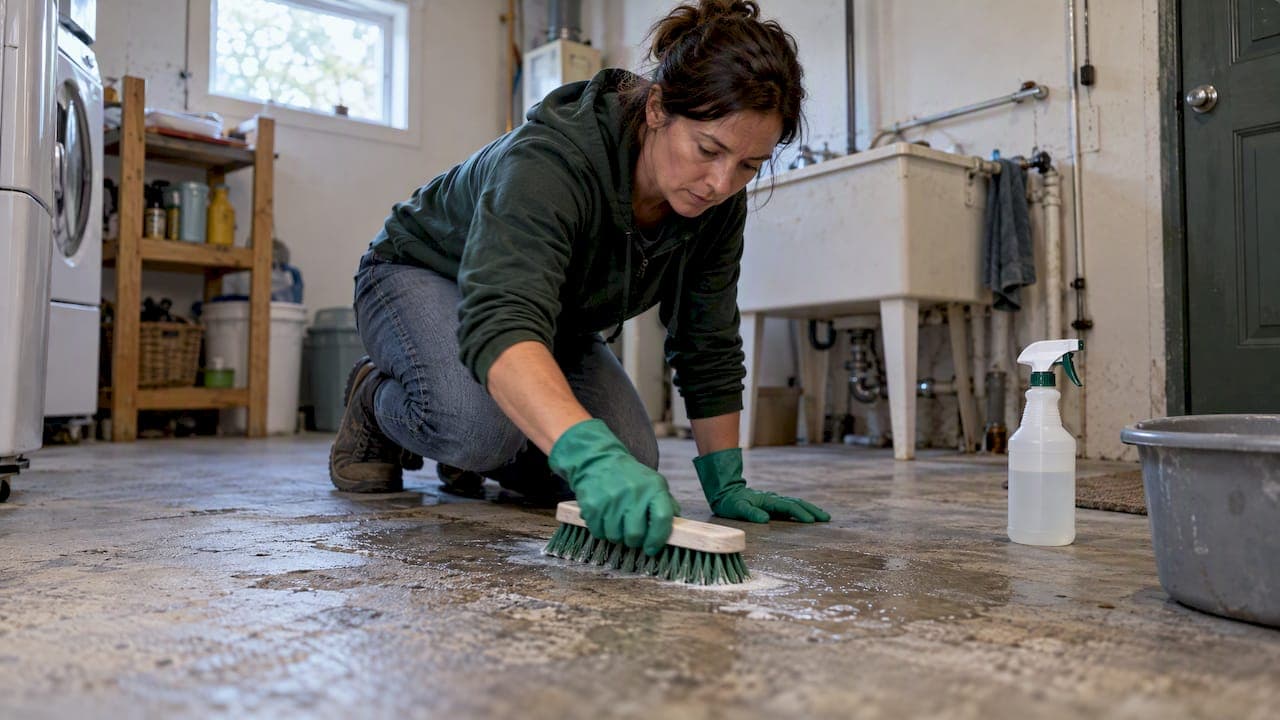
The quickest reliable fix for fresh urine on concrete is an enzyme-based cleaner paired with proper rinsing and extraction, applied as soon as you notice the accident. For urine that has sat for weeks or soaked deep into a slab, you often need professional remediation such as ozone treatment, enzyme injection, or resurfacing. Either way, never seal the concrete until testing confirms the odor is completely gone.
TL;DR:
- Enzyme cleaners target uric acid crystals specifically and require multiple applications with full drying time to remove urine odor from porous concrete surfaces.
- Fresh urine should be blotted, rinsed, and vacuumed promptly, while aged stains often need repeated enzyme treatments and possibly preceding oxidizer use.
- Sealing concrete is only effective after confirming complete odor removal through testing with UV light and smell checks; sealing residual odor traps it permanently.
- Professional remediation like ozone treatment or enzyme injection is necessary when odors persist after multiple enzyme cycles or UV inspections, indicating deep contamination.
- Avoid using bleach, ammonia, vinegar, or steam cleaners, as these can worsen odors or push urine further into the concrete pores, complicating remediation efforts.
Table of Contents
- Step-by-step treatment for fresh versus aged urine stains
- Why enzymatic cleaners work better than bleach or ammonia
- When DIY isn't enough and you need professional remediation
- Prevention and sealing: protecting concrete after odor removal
- Common mistakes that make urine odor worse
- Quick checklist: what to grab and do right now
- What estate cleanouts teach us about stubborn urine odor
- How we help when urine odor goes beyond a home remedy
- FAQ
- Sources
Step-by-step treatment for fresh versus aged urine stains
Concrete is porous, so urine doesn't just sit on top of it the way it does on tile. Urine contains urea and uric acid that recrystallize and bond into porous surfaces as it dries, which is exactly why speed matters and why a quick response prevents the problem from working its way deeper into the slab.
For a fresh accident, follow this sequence:
- Blot up as much liquid as possible with paper towels or a cloth, pressing rather than wiping.
- Rinse the area with cool water to dilute remaining urine before it dries.
- Extract the rinse water with a wet-dry shop vac so moisture doesn't sit in the pores.
- Apply an enzyme cleaner generously, covering slightly beyond the visible stain.
- Let it dwell for the time listed on the label, often several hours, then rinse and dry fully.
For aged or saturated urine, the approach changes. Use a UV flashlight in a dark room to map out the full extent of the stain, since the visible mark is often smaller than the saturated area underneath. Repeat enzyme applications are standard on concrete, so plan for multiple cycles with full drying time between each one. If someone already tried bleach, ammonia, or another household cleaner on the spot, an oxidizer may be needed first to break down that residue before enzymes can do their job. Wear gloves and work in a ventilated space, and if odor persists after two or three honest attempts, that's your signal to call in a professional rather than keep guessing.
Why enzymatic cleaners work better than bleach or ammonia
Enzymes work because they digest the actual source of the smell. Bleach and ammonia don't remove uric acid crystals, they just mask the smell temporarily or, worse, react with ammonia compounds already in the urine and make the odor sharper. An enzyme cleaner breaks the uric acid down into odorless, water-soluble compounds that rinse away, which is a fundamentally different process than scrubbing or deodorizing.
When you're shopping for a product, check the label for these details:
- Confirms it targets uric acid specifically, not just surface stains or general odors.
- Lists a dwell time, since enzymes need sustained contact to break down crystallized residue.
- States whether it's rated for concrete or porous surfaces, not just fabric or carpet.
- Notes pet-safe certification if you have animals or children using the space afterward.
Pro Tip: Warm (not hot) water activates most enzyme formulas better than cold water, but check your product label since heat above a certain point can actually kill the enzymes.
Dilute according to instructions rather than guessing at a stronger mix, and agitate the solution lightly with a stiff brush so it works into the surface texture instead of pooling. If a previous cleaning attempt used bleach or ammonia, those chemicals can neutralize enzymes on contact. In that case, treat with an oxidizing cleaner, rinse thoroughly, and let the surface dry before starting your enzyme treatment.
When DIY isn't enough and you need professional remediation
Some concrete odor problems go beyond what enzyme cleaners can fix, especially in garages, basements, or older properties where urine has had months or years to penetrate. A few signs tell you it's time to call a professional:
- The smell returns within days of treatment, especially one with an ammonia-like edge.
- A UV light still shows glowing patches after two or more full enzyme cycles.
- The odor is strongest in a specific spot that never fully dries between treatments.
At that point, professional options typically include ozone or activated-carbon air treatment to neutralize airborne odor compounds, enzyme injection directly into the slab to reach contamination below the surface, or resurfacing and overlay work when the concrete itself is too far gone. In the most severe cases, grinding down the contaminated layer or removing and replacing the slab is the only permanent answer. Our guide to ozone treatment covers how that process works and what it realistically solves.
Expect a professional visit to include testing before and after treatment, since reputable technicians confirm odor removal with smell checks and UV inspection rather than assuming the job is done once the product has been applied.

Prevention and sealing: protecting concrete after odor removal
Sealing concrete is a smart move, but only once you've confirmed the odor is gone. Sealing over residual urine traps the problem underneath, where it can resurface later with no easy way to treat it. Test the area with a UV light and a direct smell check after full drying, and only move forward with sealant once both come back clean.
- Penetrating sealers soak into the concrete and block future absorption without changing the surface look, which works well for garages and basements.
- Topical or epoxy sealers sit on top and offer a more finished appearance, suited to spaces that see regular foot traffic.
- Clean up new accidents immediately going forward, since a fast response is still your best prevention tool.
- Place a washable mat or barrier in spots where pets repeatedly mark, especially near doors or feeding areas.
Common mistakes that make urine odor worse
A surprising number of go-to home remedies actually work against you on concrete. Avoid steam cleaners, ammonia, and strong vinegar solutions, since steam can push urine deeper into the pores before enzymes get a chance to work, and ammonia's smell can actually encourage pets to re-mark the same spot.
- Bleach reacts with ammonia compounds in urine and can create a harsher, more persistent smell.
- Vinegar and baking soda may mask odor short-term but don't break down the uric acid causing it.
- Sealing before testing locks residual odor beneath a permanent finish with no easy fix.
- Over-scrubbing with harsh chemicals can deactivate the enzymes in your cleaner before they finish working.
For a broader rundown of what to keep off your cleaning shelf when pets are involved, this pet-safe cleaning guide is worth a look.
Quick checklist: what to grab and do right now
- Blot the fresh urine, then rinse with cool water.
- Extract moisture with a shop vac.
- Apply an enzyme cleaner and let it dwell fully.
- Rinse, dry, and check with a UV light.
- Repeat if any odor or glow remains.
- Call a professional after two or three cycles with no improvement.
Keep an enzyme cleaner, a shop vac, a stiff brush, gloves, and an oxidizer on hand for stubborn residues.
What estate cleanouts teach us about stubborn urine odor
Homes left unattended for months, especially during estate transitions, often have urine saturation far beyond what a single pet accident creates: multiple pets, multiple seasons, and sometimes layers of prior cleaning attempts that complicate treatment. That scale is part of why the EPA-aligned four-step sequence we follow treats testing and sealing as separate, sequential steps rather than skipping ahead.
— Derek
How we help when urine odor goes beyond a home remedy
When enzyme treatments and repeated cycles haven't solved the problem, or when a property has months of layered contamination, we offer Specialty, Odor & Waste Cleaning alongside full cleanout support for homes that need both. A typical professional visit typically starts with an inspection to locate saturated zones, a quote, and a remediation plan that includes verification testing before anything gets sealed.

Related services include full house cleanout, hoarding cleanup, and specialty, odor & waste cleaning, with pricing details available on the company's website.
If a stubborn odor has you stuck, reach out through our main page to schedule a walkthrough and get a firm plan in place.

FAQ
What takes pee smell out of concrete?
An enzyme-based cleaner is the most reliable option because it breaks down the uric acid crystals causing the smell rather than covering it up. For concrete, plan on applying it more than once with full drying time between treatments, since the surface is porous.
How long does pee smell last on concrete?
Untreated urine odor can persist indefinitely on concrete because uric acid crystals don't break down on their own and can reactivate with humidity. Prompt enzyme treatment shortens that timeline significantly, while aged or saturated spots may take several rounds of treatment to fully clear.
What is the best concrete cleaner for removing pet urine smells?
Look for a cleaner that specifically lists uric acid as a target and states a dwell time, since that confirms it's enzyme-based rather than a masking agent. Products rated safe for porous surfaces and pets tend to perform best on concrete specifically.
What is the most powerful urine odor eliminator?
No single product works for every situation. Fresh stains respond well to enzyme cleaners, while long-set or heavily saturated concrete often needs a combined approach involving oxidizers, enzyme injection, or professional ozone treatment to fully resolve.