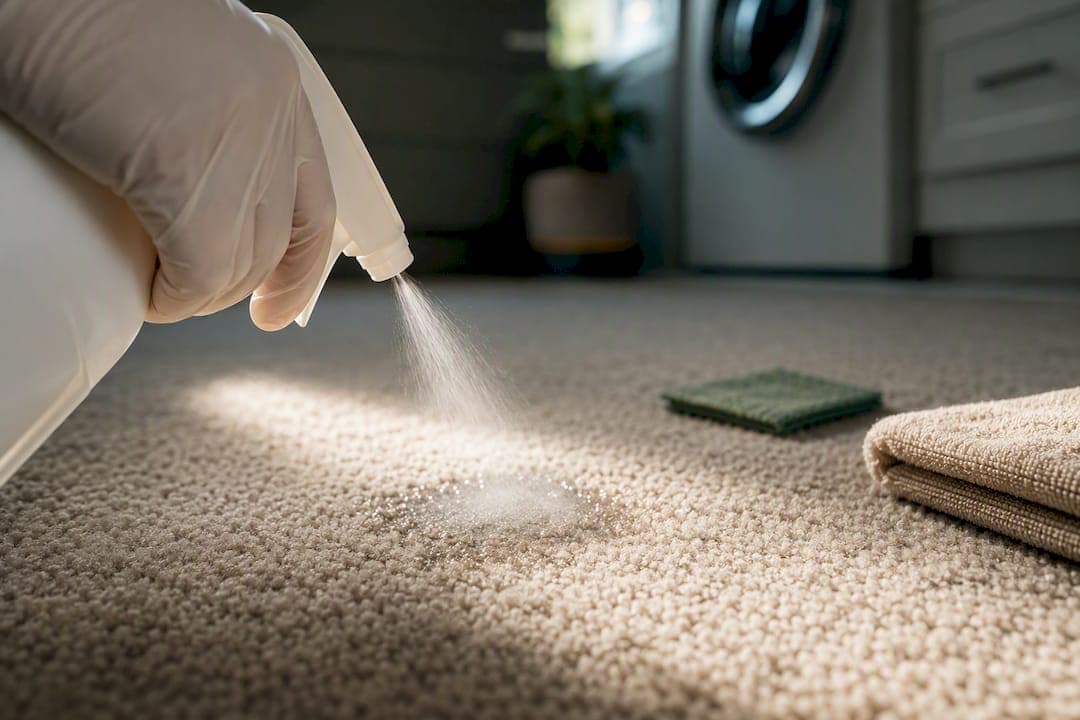
To stop your house from smelling like cat urine, find every hidden stain and treat it with an enzyme cleaner built to break down uric acid, giving it enough contact time to work. Enzymatic cleaners are the only reliable permanent fix for that smell. Blot fresh accidents with cold water, then apply enzyme cleaner right away. If the odor persists after repeated treatments, or if padding or subfloor has soaked through, the stain has likely moved beyond the capability of typical household enzyme treatments.
TL;DR:
- Enzymatic cleaners require thorough contact time, often up to two days, and are essential for permanently removing the uric acid crystals that cause odor.
- Using a UV blacklight helps locate hidden stains, especially in overlooked spots like under furniture, inside closets, or behind boxes, which are common sources of lingering smell.
- Deep cleaning carpets, padding, and subfloor involves removing and replacing saturated padding or structural materials when stains are old or moisture has penetrated surfaces.
- Masking odors with sprays or air fresheners provides only temporary relief, while ventilation, baking soda, and extractor tools accelerate odor elimination during treatment.
- Persistent or widespread urine odors often require professional intervention, especially when stains have seeped into subflooring or multiple rooms over long periods.
Table of Contents
- Finding Every Cat Urine Odor Source in Your House
- Why Enzyme Cleaners Beat Air Fresheners and Sprays
- Cleaning Carpets, Upholstery, Mattresses, and Floors Step by Step
- Quick Ways to Cut the Smell While You Work
- Preventing New Accidents Before They Start
- When DIY Isn't Enough and You Need a Professional
- What Years of Estate Cleanouts Taught Us About Odor
- If the Smell Won't Quit, Get an Assessment
- Sources
- FAQ
Finding Every Cat Urine Odor Source in Your House
You can't treat what you can't find, and cat urine odor almost always outruns the stains you can see. A UV blacklight solves that problem fast. Darken the room completely, then sweep the light low and slow across floors, walls, and furniture legs. Dried urine fluoresces yellow or green under the beam, though fresh urine sometimes doesn't glow as clearly, so plan to sniff along baseboards too if the light comes up empty in a spot that smells strong.
Cats are creatures of habit, and so are their accidents. Check these spots first:
- Baseboards and the carpet edge where it meets the wall
- Under couches, beds, and other furniture that rarely gets moved
- Inside closets and behind stored boxes
- Potted plant soil, which cats sometimes mistake for litter
- Laundry piles and hampers left on the floor
- Mattress seams and the underside of box springs
Mark each spot with a sticky note or piece of tape as you go. Working room by room from a map, rather than chasing your nose, keeps you from missing a stain that's still feeding the smell days later.
Why Enzyme Cleaners Beat Air Fresheners and Sprays
Cat urine smells the way it does because of uric acid crystals, and those crystals are stubborn. They don't dissolve in water, which is why the odor can flare back up on a humid day even after you've scrubbed a spot Catster reports. A can of odor spray or a scented candle covers that smell for an hour. It does nothing to the crystals underneath, so the odor always comes back once the fragrance fades.
Enzyme cleaners work differently. They contain bacteria or enzymes that digest uric acid and sulfur compounds, breaking them down into byproducts that don't smell.
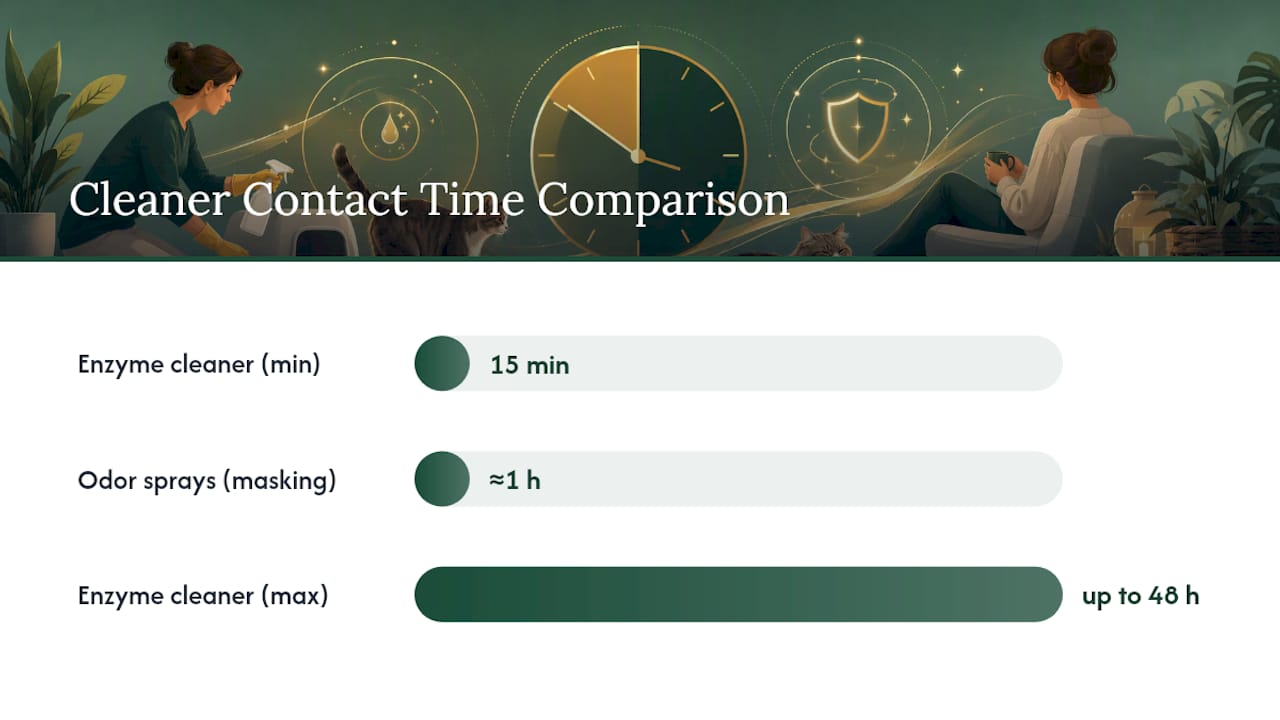
Enzymatic cleaners typically need a wet contact time ranging from a quarter of an hour to up to two days depending on the severity of the stain, according to BISSELL's cleaning guidance. Follow the specific product label, since formulas vary.
A few rules matter more than the brand you choose:
- Never use hot water on a urine stain. Heat sets the proteins and can make the stain and smell permanent.
- Skip ammonia-based cleaners entirely. Ammonia is a component of cat urine, and cleaning with it can actually encourage a cat to remark the same spot.
- Keep the area wet for the full dwell time listed on the bottle. A cleaner that dries out before it finishes working leaves crystals behind.
- Plan on a second treatment for old or heavily soaked stains. One pass rarely finishes the job on a spot that's been there for weeks.
Cleaning Carpets, Upholstery, Mattresses, and Floors Step by Step
Different surfaces trap urine differently, so the right method changes with what you're cleaning. Here's how to work through the most common ones without locking the smell in further.
-
Carpet. Blot up as much liquid as possible with cold water first, working from the outside of the stain inward. Saturate the area with enzyme cleaner well beyond the visible stain, since urine spreads sideways through the fibers as it soaks down. Cover with plastic if the product calls for extended dwell time, then extract the liquid with a wet vac or a rented carpet extractor once the enzyme has finished working. If the padding underneath still smells after you pull back the carpet, plan to replace that section of padding. Padding absorbs urine like a sponge and rarely comes clean.
-
Upholstery and mattresses. Blot first, then apply enzyme cleaner generously and use a handheld extractor if you have one. DIY methods have a real limit here: foam padding inside a couch cushion or a mattress core can absorb urine deep enough that no surface treatment reaches it. When that happens, professional treatment or replacement is usually the more practical fix.
-
Hard floors and grout. Sealed tile or finished hardwood can be wiped down and followed with an enzyme application, since the surface itself won't absorb much. Unsealed wood and grout lines are porous, though, and often need longer enzyme contact time plus resealing once the area is fully dry and odor free.
-
Laundry. Rinse bedding or clothing in cold water first, then wash with an enzyme laundry additive or let items pre-soak before a normal cycle. Chewy's cleaning guide recommends holding off on the dryer's heat setting until you've confirmed the odor is gone, since heat can set any residue that's left.
Pro Tip: Run a Shop-Vac or wet extractor over carpet and upholstery after every enzyme application, not just at the end. Pulling out the liquid speeds drying and keeps residue from sitting in the fibers and feeding new odor.
Quick Ways to Cut the Smell While You Work
You'll want relief in the room while the enzyme does its slower work underneath. Baking soda sprinkled over a treated area absorbs moisture and some surface odor. Let it sit for a few hours, ideally overnight, before vacuuming it up.
Open windows for cross ventilation, run a box fan, and let a HEPA or activated carbon air purifier run continuously in the affected room. These steps clear airborne odor while the enzyme treatment finishes.
Skip two shortcuts that seem tempting:
- Masking sprays and heavy fragrances only cover the smell, and mixing scents with lingering urine odor often smells worse than the original problem.
- Ozone generators can be unsafe to run in occupied spaces and don't reliably reach urine trapped in padding or subfloor anyway. If you're weighing one, our breakdown of ozone treatment covers where it does and doesn't help.
Preventing New Accidents Before They Start
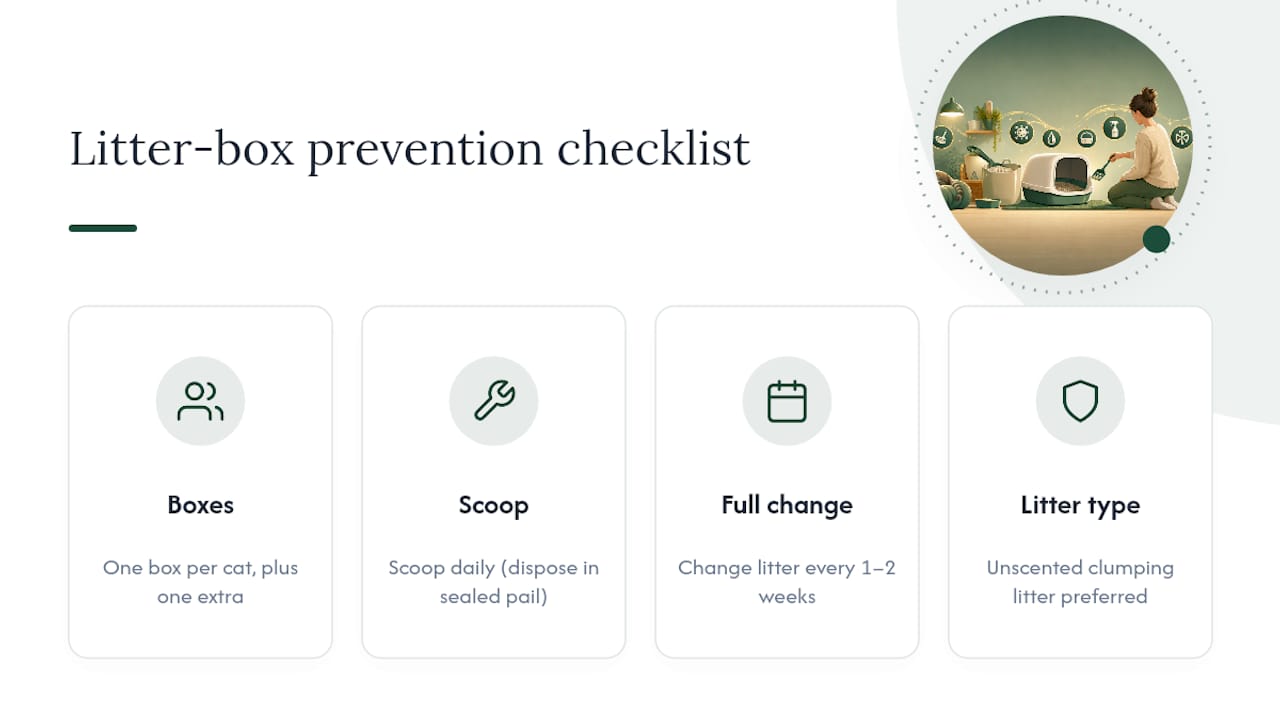
A cleaner house stays clean when the litter box setup actually works for your cat. The standard rule is one box per cat, plus one extra, so a two-cat home should have three boxes available. Scoop daily and do a full litter change every one to two weeks. Most cats prefer unscented clumping litter over scented varieties.
Placement matters as much as count. Keep boxes in quiet, easy-to-reach spots, away from food and water bowls, and put at least one box on every floor in a multi-level home. Cats can be surprisingly reluctant to travel a flight of stairs under pressure.
If a cat that's always used the box well suddenly starts having accidents, or the frequency changes noticeably, treat that as a signal rather than a nuisance. Sudden litter-box avoidance often points to a urinary tract infection or another medical issue that needs a vet visit, not just a deeper clean. Dispose of scooped waste in a sealed pail rather than an open trash can, since that alone cuts down on ambient bathroom odor between full litter changes.
When DIY Isn't Enough and You Need a Professional
Some cases genuinely outgrow what a bottle of enzyme cleaner and a wet vac can fix. Watch for these signals:
- The odor is still noticeable after two or three full enzyme treatments in the same spot.
- Padding or subfloor is visibly stained or feels damp when you press on it.
- The smell fades for a while, then returns whenever humidity rises.
When urine has soaked through carpet into padding or subfloor, Ohio State's Indoor Pet Initiative notes that removing and replacing those structural materials is often the only permanent fix. A typical professional job involves pulling the padding, treating or replacing the subfloor underneath, applying commercial-strength enzyme products, and running industrial drying equipment before resealing or refinishing the floor.
Before hiring anyone, ask what specific steps they'll take on your subfloor, how they confirm the odor is fully gone before closing the job, and whether their quote includes drying time. A rushed job that skips proper drying can leave the same crystals behind under a fresh floor.
What Years of Estate Cleanouts Taught Us About Odor
Homes left unattended for months often carry urine odor woven into carpet, drywall, and subfloor all at once, and treating it room by room the way most cleaning guides suggest simply doesn't scale. Experience leading estate cleanouts shows that the properties that come back cleanest are the ones where padding gets pulled and subfloor gets treated early, rather than after months of masking sprays. A donation-first, broom-clean approach to a severe case usually means a family walks into a space that finally feels like theirs again, not a stopgap.
— Derek
If the Smell Won't Quit, Get an Assessment
If you've worked through blacklight inspections, enzyme treatments, and extraction and the odor is still winning, that's usually the point where a professional set of hands makes more sense than another bottle of cleaner. Bereavement Cleanout Services handles the cases where cat urine has moved past carpet and into padding, subfloor, or an entire property that's been affected for a long time, often alongside a broader estate or hoarding cleanout.

A typical engagement starts with a walkthrough of the affected areas, followed by a firm quote before any work begins. From there, the crew handles removal of saturated materials, targeted cleaning, and a broom-clean handoff once the work is done. That structure matters most in estate or hoarding situations, where the source of the odor is often spread across multiple rooms and has been building for months or years, not days. If you're managing a property where cat urine odor is one part of a larger cleanout, request an assessment and get a straight answer on what it will take to fix it.
Sources
- How to Remove Dog and Cat Urine Smell from Carpet | BISSELL
- How to Clean-Up Cat Urine | Indoor Pet Initiative (OSU)
- How To Remove Cat Urine Smell From Your Whole House: 5 Vet-Verified Tips - Catster
- How To Get Rid of Cat Pee Smell From Carpet, Clothes and More | Chewy
FAQ
How can I get my house to stop smelling like cat pee?
Find every stain with a UV blacklight, then saturate each one with an enzyme cleaner for the full dwell time on the label, followed by extraction with a wet vac. Repeat on stubborn spots and replace padding if the odor persists after treatment.
Why does my house suddenly smell like cat urine?
A new or returning smell often means a fresh accident somewhere unmapped, or humidity reactivating old uric acid crystals that weren't fully broken down before. Sudden changes in a cat's litter-box habits can also signal a medical issue worth a vet visit.
Will cat urine smell ever go away?
Yes, but only with enzymatic treatment reaching every stain, including ones hidden under carpet, in padding, or in subfloor. Masking products like baking soda or air fresheners won't remove the smell permanently because they don't touch the uric acid crystals causing it.
How do I get cat pee smell out of my house fast?
For immediate relief, sprinkle baking soda on treated areas, extract liquid promptly, and run fans or a HEPA air purifier while the enzyme cleaner works. There's no true shortcut past enzyme contact time, but good ventilation and extraction speed up how quickly the room feels normal again.
Is cat urine odor actually harmful to breathe?
Ammonia from concentrated or long-term cat urine buildup can irritate the eyes, throat, and lungs, especially in poorly ventilated rooms. If a home smells strongly of urine throughout, treat it as both an odor problem and an air-quality issue, and ventilate the space while you work.