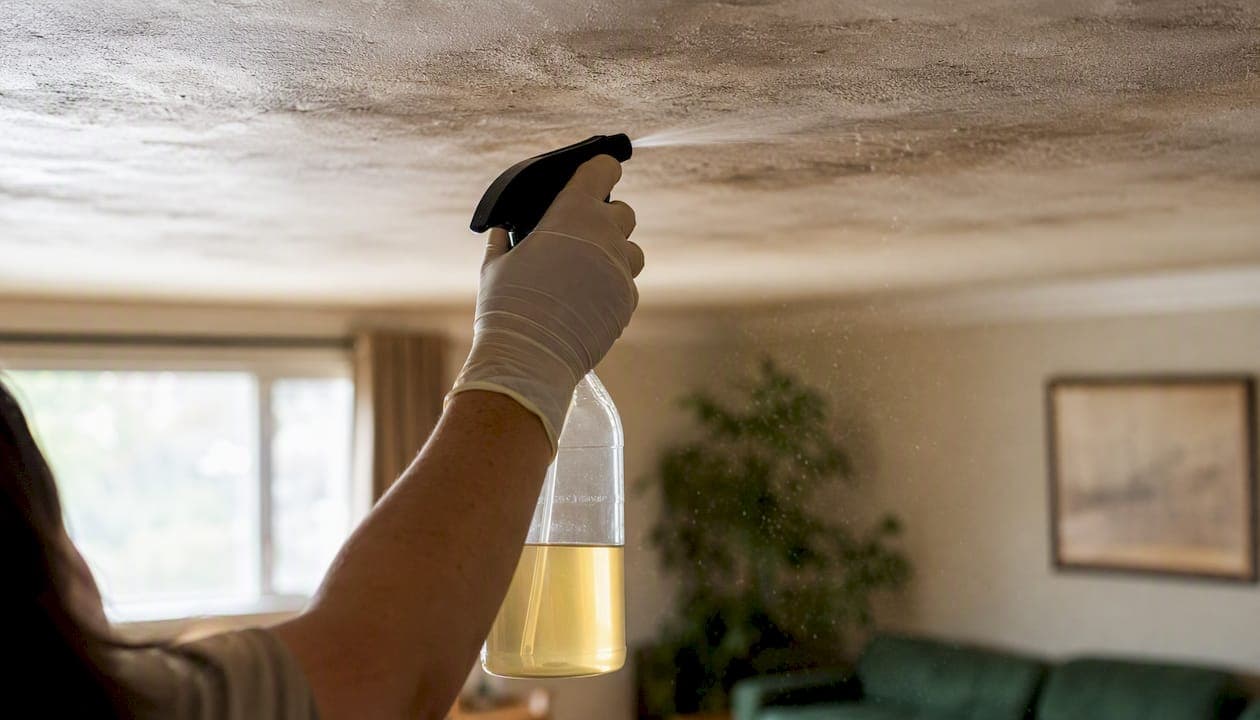
Smoke smell can be fully removed from most homes, and your first three moves are ventilate, stop the source, and replace your HVAC filters. For light to moderate odor from cigarettes or a contained fire, thorough cleaning and filtration usually resolve the problem within a few days. Heavy structural smoke, where soot has penetrated drywall, insulation, and padding, often requires professional remediation and material replacement. Start now: open every window, pull ashtrays or burned items outside, and do not run your HVAC system until you have fresh filters in place. Air fresheners only mask the problem and can make surfaces stickier for soot particles, so skip them entirely.
Quick-start checklist: Open windows and doors for cross-ventilation. Remove all odor sources (ashtrays, burned fabrics, debris) in sealed bags. Replace HVAC and purifier filters before running any air system. Place bowls of distilled white vinegar in affected rooms. Run a True HEPA air purifier on its highest setting.
According to FEMA's homeowner remediation guide, light smoke situations follow four core steps: aerate, filter, absorb, and clean. That sequence is the backbone of everything below.
Table of Contents
- What should you do in the first hour to stop smoke odor from spreading?
- Health and safety precautions you need before you start cleaning
- How to deep-clean ceilings, walls, and hard surfaces after smoke exposure
- How to get smoke smell out of curtains, bedding, and upholstery
- How do HVAC filters and air purifiers help eliminate smoke odor?
- What actually neutralizes smoke odor versus what just masks it?
- When should you call a professional for smoke odor removal?
- Key Takeaways
- What most homeowners get wrong about smoke odor removal
- Bereavementcleanoutservices can help when the cleanout goes beyond DIY
- Useful sources and further reading
What should you do in the first hour to stop smoke odor from spreading?
Speed matters here. The longer smoke particles stay airborne, the deeper they embed into porous surfaces.
- Run your air purifier on high. Martha Stewart's restoration guidance recommends running purification units on high for at least an hour initially, and longer for heavier smoke.
By the end of the first day, you should also start laundry for any washable fabrics and open cabinet doors so trapped air can escape.
Pro Tip: If you do not yet have a proper air purifier, tape a MERV 13 furnace filter to the intake side of a box fan. It is not a permanent solution, but it reduces airborne particulates while you source the right equipment.
Health and safety precautions you need before you start cleaning
Smoke residue is not just unpleasant. It contains fine particulate matter (PM2.5 and PM10), volatile organic compounds (VOCs), and, after a fire, potentially toxic combustion byproducts. Protect yourself before you touch anything.
Wear the right PPE every time you clean:
- N95 or P100 respirator (not a cloth mask)
- Nitrile or rubber gloves
- Safety goggles
- Long sleeves and clothes you can wash immediately after
Before sweeping or wiping any ash, wet it down lightly with a spray bottle. Dry ash becomes airborne instantly and deposits directly into your lungs.
Two products deserve specific caution. Trisodium phosphate (TSP) is a powerful cleaner for smoke-stained walls, but it is caustic: wear gloves and eye protection, and never mix it with bleach. Ozone generators can oxidize odor molecules, but ozone is a lung irritant. No people, pets, or plants should be present during ozone treatment, and the space must be thoroughly ventilated before re-entry. Professional use is strongly recommended.
How to deep-clean ceilings, walls, and hard surfaces after smoke exposure
The professional standard, confirmed by Oklahoma State Extension's fire recovery guide, is to clean from the ceiling downward. Cleaning walls before ceilings causes soot to fall onto surfaces you already cleaned, forcing you to repeat the work.
Step-by-step top-down cleaning sequence
- Dry-dust the ceiling with a microfiber cloth or dry sponge to lift loose soot. Work in one direction; do not scrub.
- Mix your cleaning solution. For most painted surfaces, combine one teaspoon of dish soap with 1/4 cup of distilled white vinegar per quart of warm water. The Spruce's smoke-odor guide recommends this ratio for wiping hard surfaces without damaging paint.
- Test a hidden area first. Apply the solution to an inconspicuous spot and let it dry before proceeding.
- Wipe in overlapping strokes from ceiling to baseboard. Rinse your cloth frequently; a dirty cloth redeposits soot.
- Rinse with clean water and allow surfaces to dry fully before assessing whether a second pass is needed.
- For heavy staining, move to TSP mixed per package directions. Use full PPE, work in a ventilated space, and rinse thoroughly.
- Prime before repainting. An oil-based primer such as KILZ Original seals in residual odor compounds that water-based paint alone cannot block.
Dos and don'ts for delicate surfaces:
- Do use a barely damp cloth on wood furniture; standing moisture raises grain and can warp panels.
- Do test any cleaner on laminate or veneer before full application.
- Do not use bleach on painted walls; it can strip color and does not neutralize smoke odor compounds.
- Do not dry-brush heavy soot deposits; wet them first to prevent airborne dust.
- Do not skip the rinse step; soap residue left on walls attracts new dust and odors.
How to get smoke smell out of curtains, bedding, and upholstery
Fabrics hold smoke odor longer than hard surfaces because fibers trap VOC molecules deep in their structure. The approach depends on whether the item is washable.
Washable textiles (curtains, bedding, clothing): Wash on the hottest cycle the fabric label allows. Add one cup of distilled white vinegar to the rinse cycle, or substitute a full cup of baking soda added directly to the drum before the wash cycle begins. If possible, hang items outside to dry; sunlight and fresh air accelerate off-gassing. Repeat the wash if any odor remains after the first cycle.
Upholstery and non-washable fabrics: Sprinkle baking soda generously over the surface, press it lightly into the fabric, and leave it overnight. Vacuum thoroughly with a HEPA-filter vacuum the next morning. For persistent odor, steam cleaning or professional hot-water extraction pulls embedded particles out of the fiber structure.
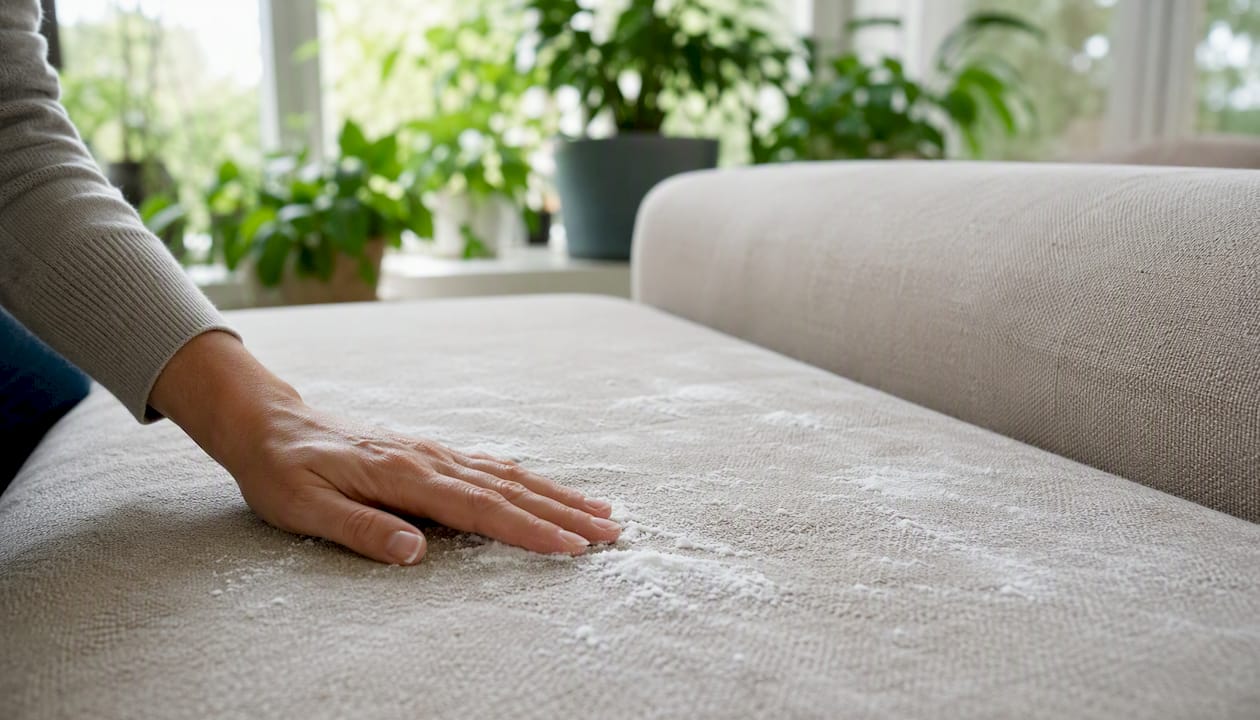
Pro Tip: Allow 24–48 hours between cleaning passes on upholstery. Trapped VOCs need time to migrate to the surface before the next treatment can capture them. Rushing the process often means repeating it more times than necessary.
Replacement thresholds are real. If a sofa cushion or mattress has been exposed to heavy structural smoke, the foam padding likely absorbed odor at a molecular level. Professional extraction may reduce the smell but rarely eliminates it entirely. The same applies to heavily smoke-saturated drapes with thick interlining. When in doubt, replace the padding and reupholster rather than spend money on repeated treatments that do not hold.
How do HVAC filters and air purifiers help eliminate smoke odor?
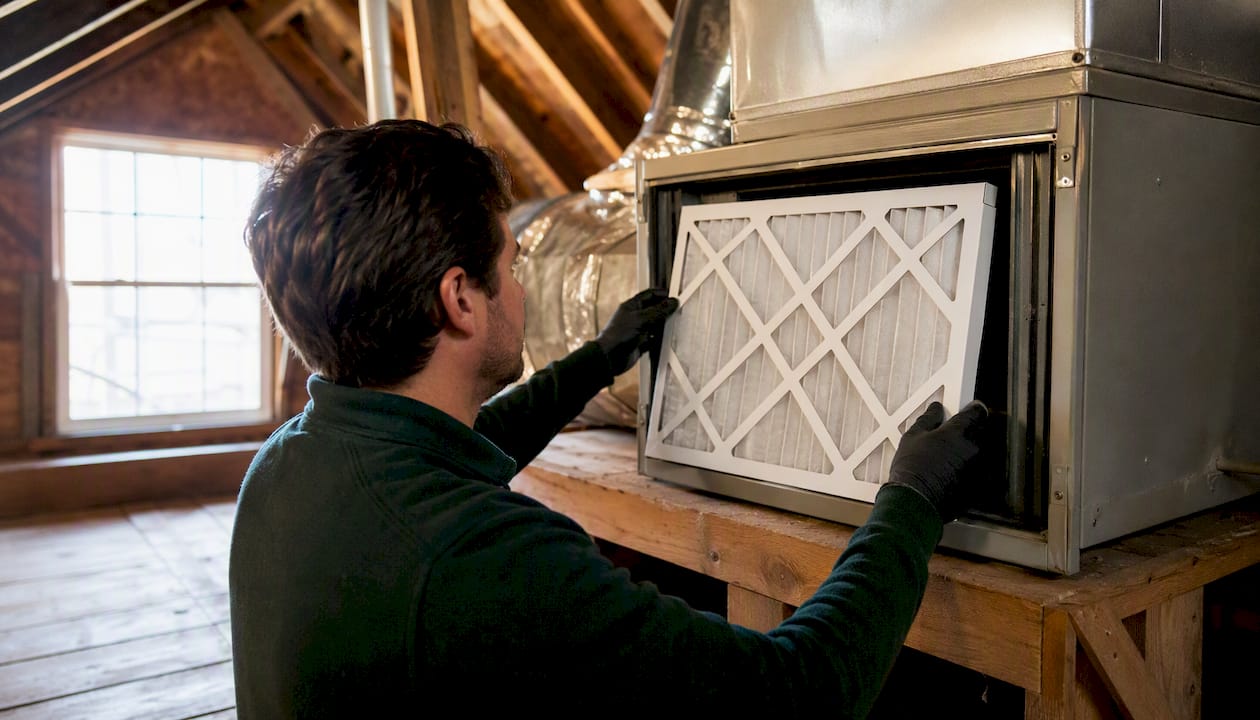
Your HVAC system can either help or hurt the process. Run it with old filters and it spreads smoke particles to every room. Run it with fresh, high-rated filters and it becomes one of your most effective tools.
| Equipment | Recommended Spec | Primary Function |
|---|---|---|
| HVAC filter | MERV 13 or higher | Captures airborne smoke particles recirculating through ducts |
| Portable air purifier | True HEPA (H13) + activated carbon | Captures PM2.5 particles and absorbs gaseous VOCs |
| Box fan + furnace filter | MERV 13 filter taped to intake | Temporary particulate reduction while sourcing a purifier |
According to the EPA's HEPA filter guidance, True HEPA filters capture 99.97% of particles at 0.3 microns, which covers the fine particulate matter in smoke. Activated carbon beds in the same unit handle the gaseous VOCs that HEPA alone cannot trap. For room-sized units handling smoke, target a Clean Air Delivery Rate (CADR) of 120 or higher.
Operation tips:
- Run portable purifiers on their highest setting for the first 24–72 hours.
- After replacing HVAC filters and completing bulk cleaning, set the HVAC fan to "on" (not "auto") so air continuously cycles through the new filters.
- Do not run the HVAC fan before removing bulk soot from the home or before inspecting ducts for visible contamination.
- Schedule professional duct cleaning when you see visible soot inside vents, when odor persists after thorough surface cleaning, or after any structural fire. Professional duct cleaning typically runs $300–$500 for a standard home, while whole-home filtration system installation varies widely by system type.
What actually neutralizes smoke odor versus what just masks it?
Air fresheners mask odor by adding a competing scent. They do not remove smoke molecules. The products below work by absorbing or chemically breaking down odor compounds.
- Ozone generators: Oxidize odor molecules and can penetrate porous materials. Highly effective but hazardous. Per Fremont County's wildfire smoke guidance, ozone generators must be used only in unoccupied spaces with no people, pets, or plants present, and the area must be fully ventilated before re-entry. Professional use is strongly recommended.
When should you call a professional for smoke odor removal?
DIY methods work well for light to moderate smoke. There are clear signs, though, that the situation has moved beyond what cleaning products and a good purifier can resolve.
Call a professional when you notice any of these:
- Odor persists after two or more thorough rounds of DIY cleaning and filtration
- Visible soot inside HVAC vents or ductwork
- Blackened or heavily stained walls and ceilings that do not respond to TSP cleaning
- Structural fire exposure (not just cigarette smoke)
- Occupants experiencing headaches, eye irritation, or respiratory symptoms that improve when they leave the home
What professionals do that DIY cannot replicate:
- Full contamination assessment, including air quality testing
- Commercial-grade HEPA vacuuming of all surfaces, including inside wall cavities when needed
- Professional hot-water extraction for carpets and upholstery
- Duct cleaning with negative-pressure equipment
- Thermal fogging or hydroxyl generator treatment for structural odor penetration
- Sealing and priming with commercial-grade encapsulants, followed by repainting
- Removal and disposal of unsalvageable porous materials (drywall, insulation, padding)
Questions to ask any remediation contractor:
- Are you IICRC-certified for smoke and fire damage?
- Are you fully insured, and will you provide a written scope of work?
- Which deodorization method do you use: hydroxyl, ozone, or thermal fogging, and why?
- How do you handle disposal of contaminated materials?
| Service | Typical Cost Range |
|---|---|
| Single-room smoke remediation | $300–$500 |
| Professional duct cleaning | $300–$500 |
Cost ranges above reflect general market estimates and vary by region, home size, and severity of damage.
Key Takeaways
Thorough smoke odor removal requires ventilation, filter replacement, top-down surface cleaning, fabric treatment, and HEPA filtration working together, with professional remediation when structural smoke or persistent odor remains after 48–96 hours of DIY effort.
| Point | Details |
|---|---|
| Start with ventilation and filters | Open windows, remove odor sources, and replace HVAC filters before running any air system. |
| Clean top-down, every time | Start at the ceiling and work downward so soot does not redeposit onto cleaned surfaces. |
| HEPA plus activated carbon | True HEPA captures 99.97% of smoke particles; activated carbon handles gaseous VOCs that HEPA alone misses. |
| Know when to replace, not just clean | Saturated carpet padding, foam cushions, and porous building materials often cannot be fully recovered with cleaning alone. |
| Bereavementcleanoutservices handles what DIY cannot | For whole-house cleanouts with smoke-saturated materials, Bereavementcleanoutservices coordinates removal of unsalvageable items, donation-first sorting, and specialty odor cleaning across New Jersey. |
What most homeowners get wrong about smoke odor removal
The single most common mistake is treating smoke odor as an air problem when it is actually a surface problem. Homeowners run purifiers for days, the air smells clean, and then the odor returns within a week. What happened? The smoke molecules embedded in the walls, carpet padding, and upholstery off-gassed back into the air once the purifier stopped running.
Ventilation and filtration are not the solution. They are the support system for thorough surface cleaning. The sequence matters: clean surfaces first, then run filtration to capture what off-gasses during and after cleaning. Reversing that order means you are filtering air that will be re-contaminated the moment you stop.
The second mistake is skipping the HVAC. Homeowners clean every visible surface and still wonder why the smell returns. The ducts are recirculating smoke particles through the entire house every time the system runs. Replacing the filter is the minimum; inspecting the ducts for visible soot is the responsible next step.
Heavy structural smoke is a different category entirely. Porous building materials like drywall, insulation, and subfloor padding absorb smoke at a molecular level. No amount of surface cleaning reaches those molecules. When the contamination is structural, the only permanent fix involves removing and replacing those materials. That is not a failure of effort; it is simply the physical reality of how smoke behaves in a building.
Bereavementcleanoutservices can help when the cleanout goes beyond DIY
When smoke damage is part of a larger estate situation, a property transition, or a hoarding cleanup, the scope quickly exceeds what any homeowner should handle alone. Bereavementcleanoutservices offers whole-house cleanouts across New Jersey that include removal of smoke-saturated materials, donation-first sorting of salvageable items, and specialty odor and waste cleaning. The team is fully insured, works with a documented process, and coordinates with remediation professionals when structural smoke damage requires licensed contractors.

For families managing a loved one's estate where cigarette smoke or fire damage has affected the property, the combination of a professional cleanout and targeted remediation makes the difference between a property that sells and one that sits. Bereavementcleanoutservices handles the heavy lifting: hauling unsalvageable porous materials, sorting keepsakes, donating usable items to local charities, and leaving the home broom-clean and ready for the next step.
Request an on-site assessment or a quote at Bereavementcleanoutservices to get a clear picture of what the property needs and what the process looks like from start to finish.
Useful sources and further reading
The recommendations throughout this guide draw on authoritative public sources. Each one is worth bookmarking if you are managing a serious smoke situation.
- How to Get Rid of Smoke Smells in Your Home (The Spruce)
- Removing Smoke Odor Following A Fire (Oklahoma State Extension)
- Homeowner's Guide to Risk Reduction and Remediation of Residential Smoke Damage (FEMA)
- Removing smoke odor from a home (Fremont County)
- What is a HEPA filter? (EPA)
- How to Get Rid of Smoke Smell in Your House (Martha Stewart)
- Eliminating smoke smell after a fire (Family Handyman)
This article provides general informational guidance on smoke odor removal. For health concerns, structural fire damage, or questions about specific materials and local regulations, consult a qualified remediation professional or your local fire authority.