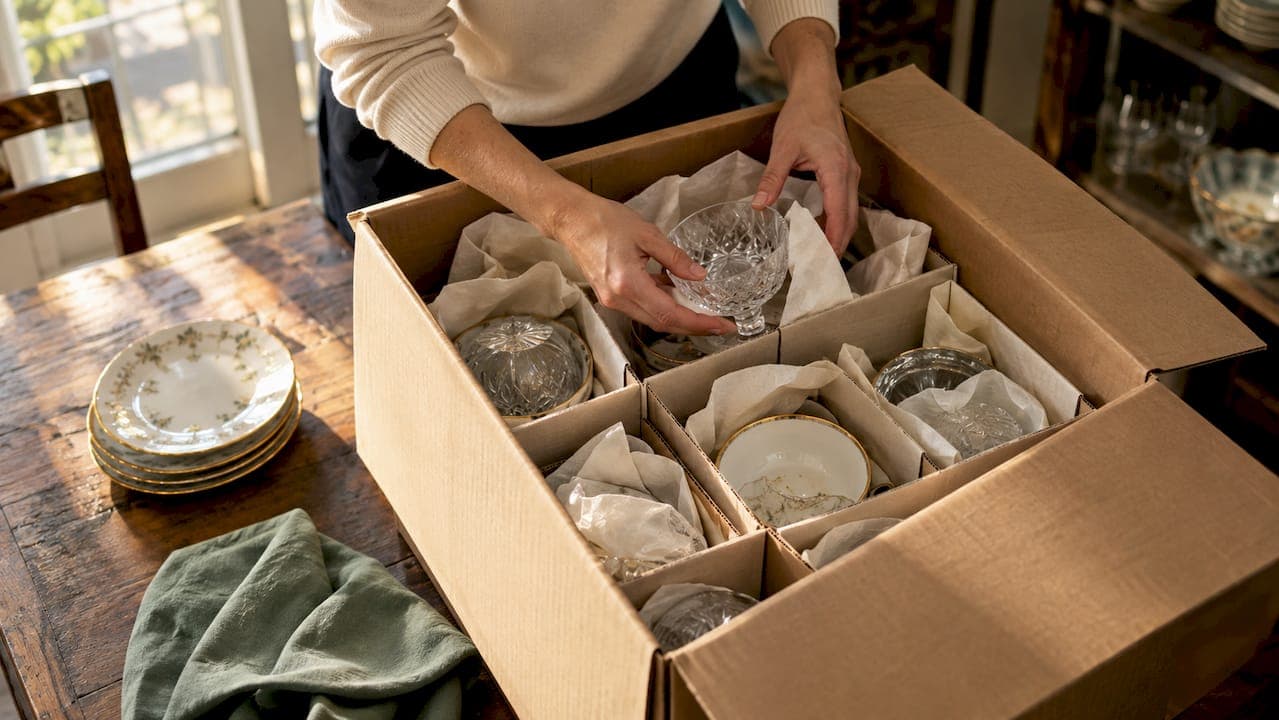
To keep china and crystal safe during a move, wrap every piece individually, pack plates on edge and stemware upright, and fill every box until nothing shifts. Use double-walled dish pack boxes, clean packing paper, and small-bubble bubble wrap. Skip newspaper, keep boxes light enough to carry, and reserve custom crating for irreplaceable antiques.
TL;DR:
- Use double-walled dish pack boxes and separate fragile pieces to prevent crushing and shifting during transit.
- Wrap each plate individually with packing paper and bubble wrap, standing them on edge in padded compartments.
- Pack stemware by wrapping the stem first, then the bowl, and always stand glasses upright in cell kits or padded containers.
- Reinforce box bottoms with tape, fill voids with packing material, and load fragile boxes last, stacking them on sturdier packages.
- Consider professional packing or custom crating for irreplaceable or oversized items to ensure maximum protection during moving.
Table of Contents
- What Supplies Do You Need for Packing China and Crystal?
- How Do You Pack Plates and Flat China?
- How Do You Pack Stemware and Crystal Glasses?
- What About Bowls, Cups, and Serving Pieces?
- How Should You Prepare and Load Boxes?
- When Should You Use Custom Crating or Professional Help?
- Author Perspective: Packing Lessons From Estate Cleanouts
- How Bereavementcleanoutservices Can Help With Packing and Moving Prep
- Sources
- FAQ
What Supplies Do You Need for Packing China and Crystal?
Packing china and crystal starts with the right materials, not luck or extra tape. The core supply is the dish pack, a sturdy, double-walled corrugated box built specifically for fragile items under 18 inches. Cell kits, which divide a box into individual compartments, work well for stemware and mismatched glass sizes.
Gather these before you start:
- Dish pack (double-walled) boxes in small and medium sizes
- Clean, unprinted packing paper (never newspaper)
- Small-bubble bubble wrap for stemware and glass
- Crumpled paper, packing peanuts, or foam inserts for void-filling
- Heavy-duty packing tape and a permanent marker
- Cell kits, cardboard dividers, or moving blankets for extra separation
Foam inserts and dividers earn their cost on heirloom sets and mismatched crystal. Moving blankets are worth adding around an entire box of antique china inside your moving vehicle, not just inside the box itself.
How Do You Pack Plates and Flat China?
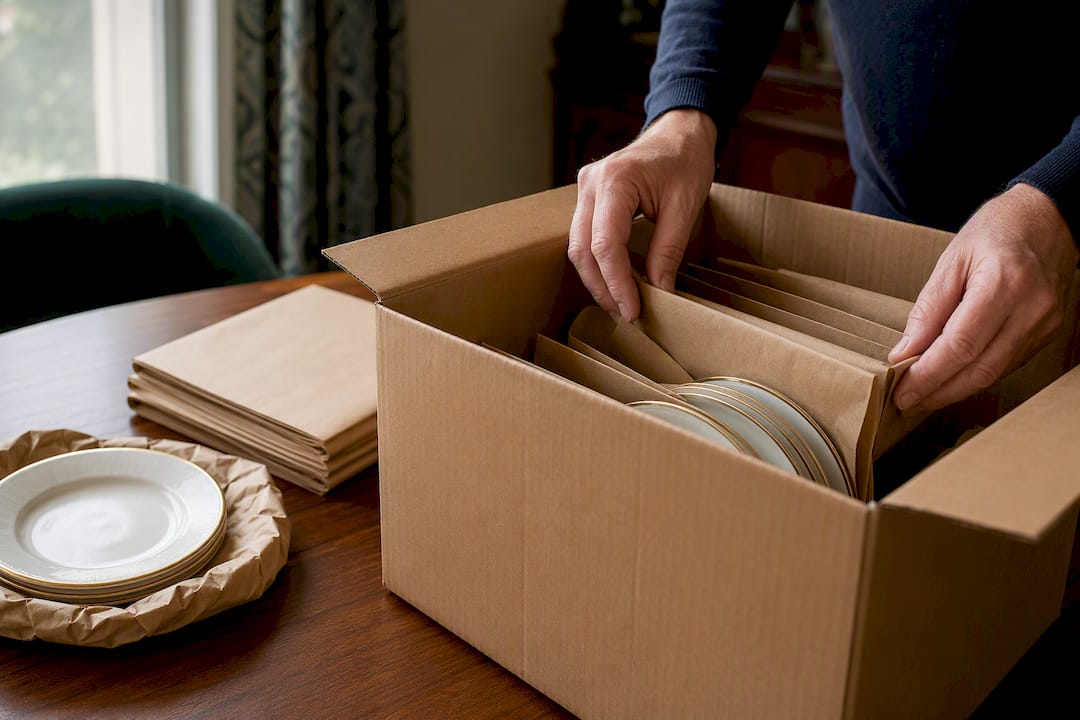
Plates break from pressure in the center, not the edges, which is why professional packers never stack them flat. Standing plates on their rim distributes impact around the sturdier edge instead of the flat center where cracks start.
- Lay a plate on 2 to 3 sheets of clean packing paper and wrap it fully, tucking the ends.
- Add a layer of bubble wrap around especially thin or valuable pieces.
- Stand wrapped plates on their edge in the dish pack box, like records in a crate.
- Slide a cardboard divider or extra paper between each plate for separation.
- Place heavier serving platters at the bottom of a separate box, never on top of plates.
- Once the box is full, lift and gently shake it. Any rattle means you need more padding.
Keep box weight in check. A dish pack loaded with an entire 12-piece set often gets too heavy to carry safely, so split large sets across two boxes.
Pro Tip: If you run out of dividers, fold a double layer of packing paper into a makeshift partition. It won't hold up long term, but it gets you through moving day.
How Do You Pack Stemware and Crystal Glasses?
Crystal stemware breaks at the stem far more often than at the bowl, so wrapping order matters. Start at the stem, work down to the base, then wrap the bowl separately before combining the pieces into one bundle.
- Wrap the stem first with a strip of small-bubble bubble wrap, securing it lightly with tape.
- Wrap the bowl and base next, using enough layers that you can't feel the glass through the padding.
- Stand each piece upright in a cell kit or padded compartment. Never lay stemware on its side.
- Keep crystal separate from heavier china in a dedicated box, since even light pressure from above can snap a stem.
- Fill every remaining gap with crumpled paper until the box shows zero movement when shaken.
For particularly delicate or long-stemmed pieces, some packers slide a small foam ring around the stem's base before wrapping, which keeps the glass from flexing under handling stress. For long-distance moves, double-boxing crystal, placing the packed box inside a larger one with cushioning between the two, adds a real margin of safety that a single box can't match.
What About Bowls, Cups, and Serving Pieces?
Odd shapes and protruding handles cause more damage than flat plates ever do, mostly because they get treated like plates instead of their own category. Bowls need limits on stacking, and anything with a handle needs individual attention.
- Nest bowls no more than two or three deep, with a sheet of paper between each to prevent scratching and pressure cracks.
- Stuff cups loosely with crumpled paper, then wrap the handle separately with extra padding before wrapping the whole cup.
- Wrap teapot spouts, lids, and gravy boat handles individually, since these thin points snap under weight that the main body could easily survive.
- Pack large serving pieces, like platters or tureens, in their own smaller box rather than crowding them in with everything else, so nothing above them compresses the load.
How Should You Prepare and Load Boxes?
A perfectly wrapped plate still breaks if the box underneath it fails. Box preparation matters as much as the wrapping itself, starting with the bottom of the box and ending with how it rides in the truck.
- Reinforce the bottom seam with H-tape, running a strip along the center and both side seams.
- Line the bottom with 2 to 3 inches of crumpled paper or foam before adding any dishes.
- Line the sides of the box loosely with paper so wrapped items don't press against bare cardboard.
- Fill every void completely once items are in, then seal the top with H-tape.
- Mark the box "FRAGILE" and "THIS SIDE UP" on at least two sides, along with the room and general contents.
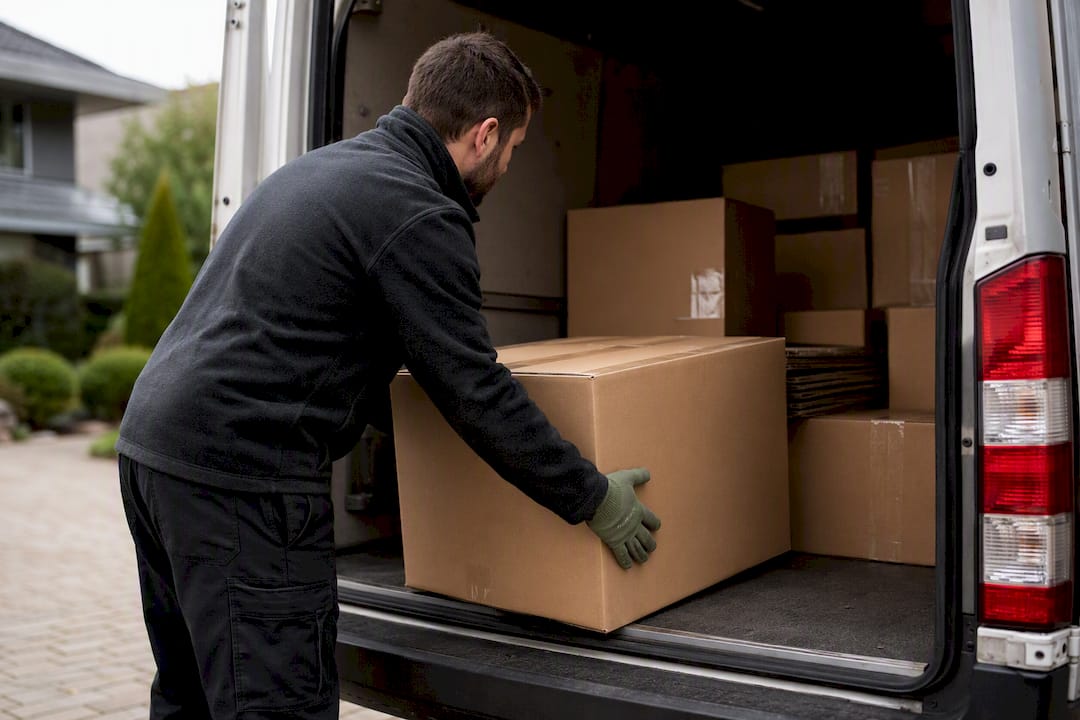
- Load fragile boxes last, stack them on top of sturdier boxes, and surround them with soft items like linens or pillows.
Never place a fragile box on the truck floor first and stack furniture on top later. It's one of the most common ways an otherwise well-packed box of china gets crushed.
Pro Tip: Write "China: Kitchen" instead of just "Fragile." Movers handle boxes with more care when they know exactly what's inside and where it's headed.
When Should You Use Custom Crating or Professional Help?
Not every piece belongs in a standard dish pack. Irreplaceable antiques, oversized crystal bowls, or oddly shaped heirloom sets often need a rigid, custom-built solution rather than cardboard and paper.
- Custom crates, built to the exact dimensions of the item with custom-cut foam, eliminate internal movement entirely and add a hard exterior shell standard boxes can't offer.
- Double-boxing with dense cushioning between the inner and outer box works well for long-distance shipping or extended storage of valuable sets.
- Weigh the cost of professional packing or crating against the item's replacement value and its sentimental weight to the family. A $200 crating fee is easy math against a set that can never be replaced.
Author Perspective: Packing Lessons From Estate Cleanouts
Packing china during an estate cleanout looks nothing like packing for a routine move. Families are often sorting through decades of dishware in a single afternoon, deciding in real time what gets kept, packed, donated, or sold. A donation-first approach changes the packing math entirely: pieces with genuine sentimental or resale value get wrapped and boxed with care, while duplicate sets or chipped everyday china go straight into a donation pile instead of consuming box after box of packing paper.
Professional packing earns its cost fastest on large inherited sets, tight closing timelines, or moments when grief makes careful decision-making hard. Some professional estate cleanout services approach every cleanout with insured, broom-clean handoffs and documented sorting, aiming to respect both the china and the memories behind it.
— Derek
How Bereavementcleanoutservices Can Help With Packing and Moving Prep
Packing an entire household of china and crystal alone, especially during a stressful move or a loved one's estate settlement, takes time most families don't have. Some estate cleanout services offer hands-on packing and moving prep as part of a broader estate cleanout service, built around a donation-first philosophy that keeps usable items with local charities instead of the landfill.

That approach matters most when a set is large, the timeline is tight, or the emotional weight of sorting through a family member's belongings makes careful decisions harder than they should be. Many estate cleanout jobs run through fully insured operations with a broom-clean finish at the end, so nothing gets left behind for the family to handle later. If you're facing an heirloom china cabinet, a full cupboard of crystal, or an entire estate that needs sorting before a sale or donation, request a walkthrough and quote and let a documented, careful process take the packing off your plate.
Sources
- How to Pack Dishes and Glasses for Moving | United Van Lines
- How to Package and Ship Glassware & Crystal | Pak Mail
FAQ
What Is the Safest Way to Pack China to Ship?
Wrap each piece individually in clean packing paper and bubble wrap, stand plates on edge, and pack everything in a double-walled dish pack box with zero void space, then double-box valuable sets for shipping.
Where Should You Store China and Crystal?
Store wrapped china and crystal in a cool, dry area away from direct sunlight and temperature swings, ideally in the same padded boxes used for the move rather than transferring pieces repeatedly.
What Is the Best Way to Pack Crystal Glasses for Moving?
Wrap the stem first, then the bowl and base, using several layers of small-bubble wrap, and stand each glass upright in a cell kit or padded compartment so it never rests on its side.
What Are Good Boxes to Pack China In?
Double-walled dish pack boxes designed for fragile items are the standard choice, since their reinforced walls hold up better than standard moving boxes under the weight of a full china set.
Should You Hire Professionals to Pack Fine China?
Hiring professionals makes sense for large inherited sets, tight moving timelines, or antique pieces with high sentimental or resale value, and Bereavementcleanoutservices offers packing and moving prep as part of its estate cleanout services in New Jersey.