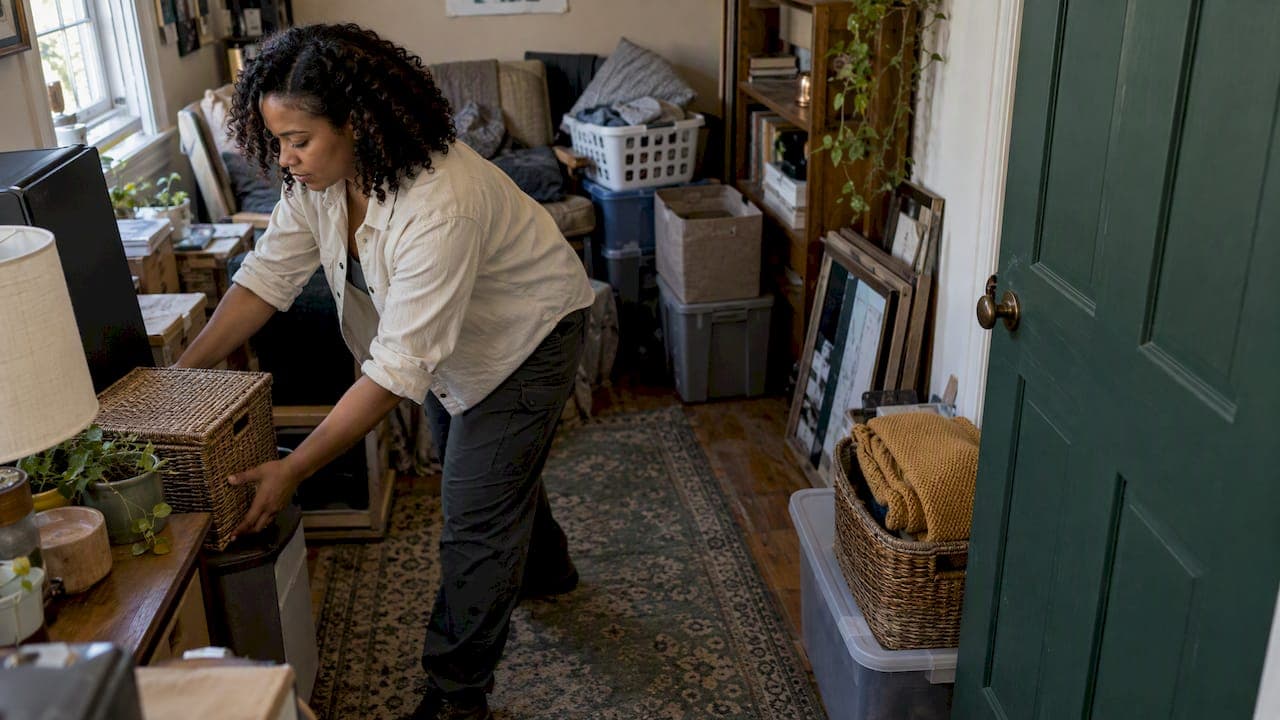
Discreet hoarding cleanup means the work is planned around the person who lives in the home: a small, respectful crew, a clear plan for what stays and what goes, and no judgment or gossip along the way. It is not a rush job with a dumpster. Done well, it protects the person's dignity and the family's privacy while it makes the home safe again. In New Jersey, our hoarding cleanup starts at $1,500, and the final quote follows a walkthrough.
This guide explains what discretion looks like in practice, how a careful cleanup is planned, which safety problems change the scope, what it costs, and who else should be involved.
TL;DR
- Discreet cleanup is a process, not a promise on a flyer: consent where possible, a written keep/donate/discard plan, a small crew and careful handling of papers, photos and valuables.
- Forced, all-at-once removals can be traumatic and often fail long term. Harm reduction, with the person taking part in decisions, works better.
- Fire hazards, blocked exits, mold, pests and contamination decide how much specialty work a home needs.
- Our hoarding cleanup in New Jersey starts at $1,500. Smaller jobs start lower, and large estates start higher. A walkthrough sets the firm quote.
- Medicare does not pay for housekeeping or cleaning that is unrelated to a care plan, so most families pay privately.
Table of Contents
- What "discreet" should mean in a hoarding cleanup
- Why a discreet approach usually works better than a fast one
- How a careful hoarding cleanup is planned
- Sorting: what stays, what is donated, what goes
- Safety problems that change the scope
- Who else should be involved
- What discreet hoarding cleanup costs in New Jersey
- Our perspective: slow down the first hour
- When to call us
- How to prepare before the crew arrives
- FAQ
- Sources
What "discreet" should mean in a hoarding cleanup
Most cleanup companies use the word. Few say what it covers. For a family, discretion has four parts.
Privacy around the home. Neighbors, the landlord or the condo board do not need to know why a crew is there. Scheduling, parking and how items are carried out all affect how visible the job is. Ask any company how it handles this before you hire it.
Privacy inside the home. A crew will see personal papers, medications, photographs and sometimes cash. A discreet company treats all of it as confidential, sets aside anything that looks important, and does not comment on what it finds.
Respect for the person. Hoarding disorder is a recognized condition. A peer-reviewed review describes it as difficulty parting with possessions because of strong urges to save them, which leads to clutter in the home. People with it are often ashamed. A crew that sighs, jokes or rushes can undo months of trust.
Honest paperwork. When the home belongs to an estate, discretion also means documentation. Executors need to show what was found, what was donated and what was removed. Careful records protect the family later.
If you are not sure whether the home you are worried about is hoarding or just heavy clutter, our guide on hoarding versus clutter lists the warning signs families and executors should look for.
Why a discreet approach usually works better than a fast one
The instinct of many relatives is to clear everything in a weekend. It rarely lasts. The same review reports that involuntary cleanouts can be traumatic, ineffective over time and linked to recidivism. It describes harm reduction as the alternative: lower the safety and housing risks while the person takes part in decisions.
A 2023 primary-care review from the United Kingdom advises avoiding clearances where possible. If one cannot be avoided, it should be discussed in advance and done with the person's consent and participation. The same review stresses trust and compassion, and treating hoarding as a chronic condition, as central to engaging people.
That does not mean nothing should happen quickly. Some homes have an eviction notice, a failed inspection, a hospital discharge or a sale deadline attached. The point is that speed should be a decision about the schedule, not a reason to leave the person out of the room.
When the person has died and the family is clearing the home, the situation is different. There is no one to consent, but the same care applies to the belongings, because relatives are grieving and often cannot judge a home's contents from the doorway.
How a careful hoarding cleanup is planned
Multnomah County, Oregon, published a client-centered toolkit that divides a cleanout into four phases: rapport-building and planning, pre-sorting, the cleanout itself, and follow-up afterward. We use the same logic because it matches what protects both the home and the people connected to it.
1. Walkthrough and plan
Before anything moves, someone looks at the home with the person or the family. The toolkit's planning steps include building rapport, explaining the safety reason for the work, setting harm-reduction targets, identifying keepsakes and needed items, agreeing on keep, donate and discard rules, and deciding who will be present.
You should leave the walkthrough with a written scope, a schedule and a firm quote. A number given over the phone for a home nobody has seen is a guess.
2. Pre-sorting
In many homes the first pass is not removal. It is clearing pathways, finding the documents, medications, jewelry and photographs, and setting them aside. This is where trust is built or lost.

3. The cleanout
During the work, the crew follows the agreed plan, involves the person in decisions, removes only planned or dangerous items, protects valuables and takes breaks. The toolkit also recommends regular emotional check-ins and encouragement. A small crew is easier on everyone than a large one.
4. Follow-up
The toolkit recommends a post-cleanout debrief, mental-health follow-up, pest inspection, maintenance and repairs. A clean home without those steps tends to fill up again. If you want to see how a typical project is paced, our 3 to 10 day hoarding cleanup timeline walks through it day by day.
Sorting: what stays, what is donated, what goes
The toolkit's advice is to agree on keep, donate and discard rules and their destinations before anything is removed, and to follow donation, garbage and recycling plans. It is also direct about one limit: soiled, rotten or infested items cannot be saved because of health concerns.
In practice, we sort into these groups:
- Keep: papers, identification, medications, photographs, heirlooms and anything the person names.
- Donate: clothing, furniture, housewares, books and tools in usable condition. Our approach is donation first, so usable items go to local charities instead of the landfill.
- Sell or consign: items with real resale value. We offer estate sales and online consignment for homes where that makes sense.
- Recycle: metal, electronics and paper where local rules allow.
- Dispose: spoiled food, damaged goods, trash and anything contaminated.
Many families worry about donating in a hoarded home. Items that have been stored in damp, pest-affected or smoky conditions often cannot be accepted by charities. We would rather tell you that up front than promise a donation total we cannot deliver. For families clearing a home after a death, our guide to donation-first documentation for sentimental clutter explains how to keep a record of what was kept and where the rest went.
Safety problems that change the scope
Hoarding cleanup is not just a large junk removal. Some hazards need protective equipment, extra labor or a different kind of contractor.
- Fire. The review reports that combustibles near heat sources or electrical wiring raise fire risk, and that blocked exits endanger both residents and emergency responders.
- Mold, pests and structural damage. The same source says severe hoarding can contribute to mold, pests, structural problems, water damage and neglected maintenance.
- Health risks for older adults. A review of hoarding in older adulthood names falls, fire, poor hygiene, poor nutrition, contamination, medication mismanagement, and dust or insect and rodent exposure.
If a home has animal waste, sewage, significant mold or biological hazards, that part of the job is specialty cleaning. We list odor and waste cleaning among our services, and we scope it separately at the walkthrough so it is not a surprise on the invoice. Pest control and repairs, where they are needed, come from licensed trades and should be arranged before the home is listed or re-occupied.
Who else should be involved
The toolkit says that, with the person's consent, a mental-health clinician or primary-care provider, a supportive family member or friend, and relevant social-service, housing, adult-protection or safety agencies can be part of the plan. Share the agreed harm-reduction goals and risk information, define each person's role, and arrange hoarding-specific treatment or follow-up instead of treating cleanup as a standalone fix.
For social workers and case managers, this means the cleanup crew should be told what the client is comfortable with before arrival: who will be present, which rooms come first, which items are off limits. For family members, it means resisting the urge to arrive on cleanup day with opinions about what should go.
If the home is going to be sold afterward, a clean-out is only one step. Buyers and investors price hoarded properties differently, and it helps to understand how hoarded homes sell differently before you decide how much to repair or clear first.
What discreet hoarding cleanup costs in New Jersey
Price depends on volume, access, the condition of the home, and whether hazards are present. For context, Insurify reports that biohazard-cleanup services average $1,000 to $4,000, with location, space size and home condition affecting the price, and mold remediation or pest removal adding to the total.
Here are our published starting prices in New Jersey:
| Service | Starting price |
|---|---|
| Single item or small pickup | from $150 |
| Single room, garage or basement | from $295 |
| Apartment or condo cleanout | from $650 |
| Full house cleanout | from $1,200 |
| Foreclosure or eviction cleanout | from $950 |
| Hoarding cleanup | from $1,500 |
| Large estate cleanout | from $2,200 |
| Packing service | $55 per hour, per packer |
| Estate photography and online inventory | $75 per hour |
Estate sales are commission-based at 15% to 35%, and online listings and consignment at 20% to 40%. Where sales proceeds apply, they can offset part of the work.
These are starting prices, not quotes. A hoarded home with narrow paths, stairs and a long carry costs more than the same square footage with open access. We give a firm quote after a walkthrough so you know the number before work starts.

Does Medicare cover hoarding cleanup?
No. Medicare.gov states that homemaker services such as cleaning unrelated to the care plan are not paid for. Covered home health requires part-time or intermittent skilled care, homebound status, a provider's order and a Medicare-certified agency. CMS's exclusions notice lists housekeeping, including cleaning and laundry, among services not covered. Hospice can include homemaker services, but only as part of hospice care for a terminal illness from a Medicare-approved provider, according to CMS's hospice benefits booklet.
If you are a social worker helping a client, it is worth asking about local county or municipal programs, but do not assume Medicare will help with the cleaning itself.
Our perspective: slow down the first hour
We work with families who are often on the worst weeks of their lives. A parent has died, or a relative has been moved to assisted living, and the house is far fuller than anyone knew. Here is what we have learned to do.
We talk before we touch anything. The first hour is for listening: what matters, what frightens you, who will be present. We then write down the rules for keep, donate and discard so that nobody has to decide in the moment.
We sort for keepsakes first. The documents and photographs matter more than the furniture, and they are the things families regret losing. Our donation-first approach means usable items go to local charities, and our documentation gives executors a record that supports probate.
We keep it quiet. Discretion is not a slogan for us. It means a limited crew, respect for what we see, and no talk about a home or a family outside the job. We are fully insured, and we respond quickly when a deadline is real.
And we tell the truth about what cleanup can and cannot do. It does not treat hoarding disorder. It makes a home safe and gives people a chance to start again, and the people around that home need to be ready to help keep it that way.
— Derek
When to call us
We serve families, executors, social workers, realtors and landlords across New Jersey. If you are weighing a hoarding cleanup, the most useful first step is a walkthrough where we look at the home, listen to your goals and give you a firm quote.
- Request a hoarding cleanup walkthrough at bereavementcleanoutservices.com. Hoarding cleanup starts at $1,500.
- See the towns we cover on our New Jersey service areas page.
- If the home is part of an estate, read what to expect from a discreet estate cleanout and our family safety guide to hoarder house cleanouts.
How to prepare before the crew arrives
A little preparation makes the day calmer.
- Decide who will be present. The person who lives in the home, one trusted relative or support person, and the crew lead is usually enough.
- Name the must-keep items. Documents, medications, photos, jewelry, keys, pet supplies, and anything with sentimental weight.
- Check ownership and access. For an estate, confirm the executor's authority and look for the will first. Our guide on finding the will and donating first covers the order of operations.
- Tell the building. If the home is a rental, condo or co-op, find out about elevator reservations, parking and dumpster rules.
- Plan the aftercare. Book a pest inspection and any repairs, and schedule a follow-up conversation with a clinician or support person if the person living there agrees.
FAQ
How do I know a hoarding cleanup company is truly discreet?
Ask how the crew is sized, who sees the home, how documents and valuables are handled, and whether the company will sign off on a written plan. A company that talks only about speed and dumpsters is not planning for privacy. Ask for the quote in writing after a walkthrough.
Can a cleanup happen if the person refuses help?
It is better not to force it. The research on involuntary cleanouts points to trauma and recurrence, and the clinical guidance advises discussing any clearance in advance and seeking consent. If there is an immediate fire or health danger, contact the appropriate local agency, such as your fire department or adult protective services, for guidance.
How long does a hoarding cleanup take?
It depends on the volume, access and hazards. Some homes take a few days and others take longer, especially if specialty cleaning or repairs follow. We outline typical pacing in our hoarding cleanup timeline.
How much does it cost to clean out a hoarder's house?
Our hoarding cleanup in New Jersey starts at $1,500, and large estate cleanouts start at $2,200. The final price depends on volume, access, disposal and any hazards found, so we quote after a walkthrough.
Sources
- Hoarding Disorder: Development in Conceptualization (PMC)
- Hoarding disorder: evidence and best practice in primary care (PMC)
- Hoarding Disorder in Older Adulthood (PMC)
- Client-centered best practice toolkit, Multnomah County
- Does Homeowners Insurance Cover Hoarding Cleanup? (Insurify)
- Home health services coverage (Medicare.gov)
- Notice of Exclusions from Medicare Benefits, Home Health (CMS)
- Medicare Hospice Benefits (Medicare.gov)
- How Hoarder Homes Sell Differently