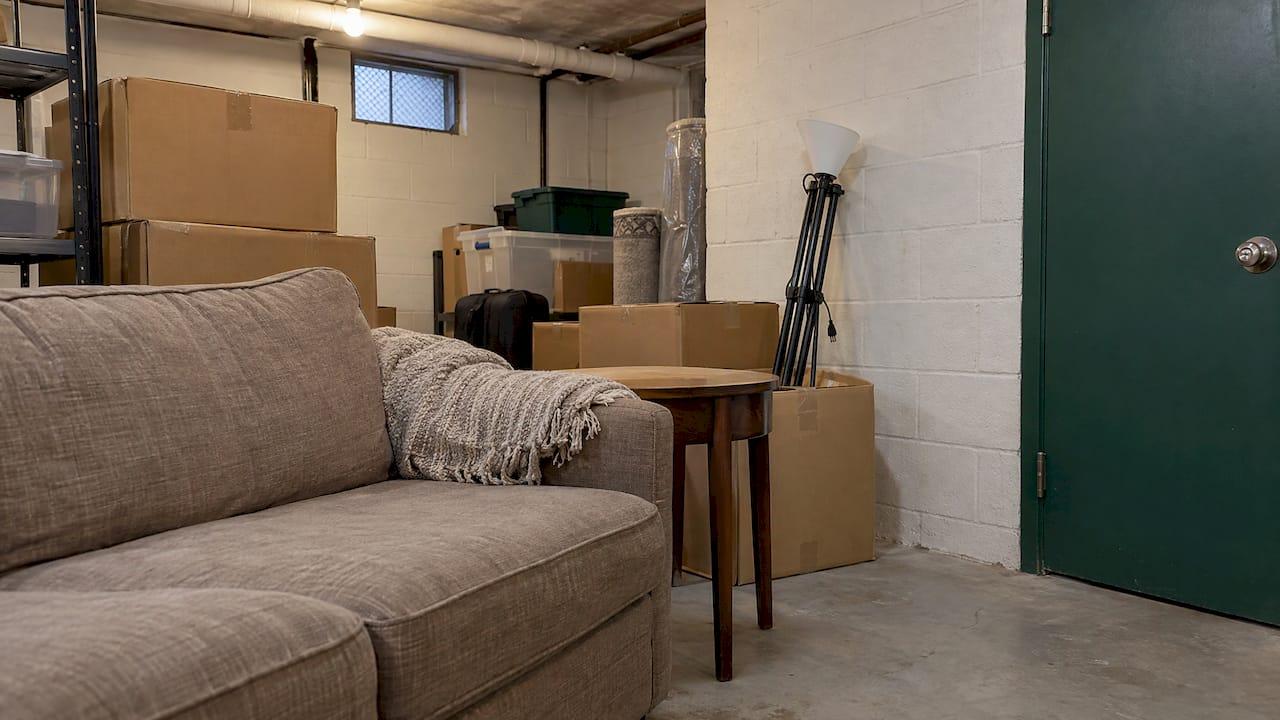
In New Jersey, you may not throw out, sell or lock away what a tenant left behind until you have lawfully regained possession. After that, you must send a written notice, hold the property safely for the notice period, and only then dispose of it. A cleanout team can handle the physical work in one documented visit once the legal clock has run. The steps below show what the state's own guidance requires and where landlords usually go wrong.
This guide is for landlords, property managers and realtors with a unit full of someone else's things. If you are the former tenant trying to get your belongings back, the sections on reclaiming property and sale proceeds apply to you too. This is general information, not legal advice. If a dispute is already underway, talk to a New Jersey attorney before you act.
TL;DR
- You can only treat belongings as abandoned after a warrant for removal has been executed and possession is back with you, or after the tenant gives written notice that they are giving up the unit.
- You must send written notice by certified mail (return receipt requested) or receipted first-class mail, marked "Please Forward," and give at least 30 days after delivery or 33 days after mailing to remove the property.
- Store the items with reasonable care. A residential tenant can reclaim them without paying back rent first.
- If you sell, you may deduct reasonable notice, storage and sale costs and unpaid charges, and you must send the tenant any remainder with an itemized accounting.
- Photograph, list and document everything before and after the cleanout. We can do the sorting, hauling and broom-clean finish once the notice period is over.
Table of Contents
- When belongings count as abandoned in New Jersey
- What you cannot do before you have possession
- The written notice: what to send and how
- Storing the belongings during the notice period
- How a former tenant can reclaim belongings
- Selling unclaimed items and handling the proceeds
- Records every landlord should keep
- Doing the cleanout once the notice period ends
- Why a cleanout team beats handling it yourself
- Our perspective
- Get the unit cleared and documented
- FAQ
- Sources
When belongings count as abandoned in New Jersey
The rule sits in N.J.S.A. 2A:18-72 through 2A:18-84, which the state's Division of Codes and Standards summarizes in its guidance on disposal of personal property abandoned by a tenant. A landlord may dispose of goods or other personal property left on the premises only after giving the required notice, and only if two conditions are met.
First, you must reasonably believe, given all the circumstances, that the tenant left the property with no intention of asserting any further claim to the unit or the items. Second, one of these must be true:
- A warrant for removal has been executed and possession has been restored to you.
- The tenant has given written notice that they are voluntarily relinquishing possession.
The same law applies to commercial and residential landlords, with a carve-out for some nonresidential leases that already address the situation. Most readers searching this topic have a residential unit, so the rest of this guide focuses there.
What this means in practice
A tenant who simply stops answering the phone has not given you the right to empty the apartment. A half-empty unit, unpaid rent, or a neighbor saying they moved out is not enough on its own. Until a warrant for removal is executed or the tenant relinquishes the unit in writing, you cannot dispose of their property. If you need the sequence for what happens after the sheriff acts, our guide to a sheriff lockout cleanout in NJ walks through what landlords do next.

What you cannot do before you have possession
The state's guidance is clear that before you obtain lawful possession through a warrant for removal or voluntary relinquishment, you cannot dispose of the property. Landlords get into trouble here because they are in a hurry. A vacant unit costs money every day, and a new tenant or buyer may be waiting.
The usual mistakes:
- Setting belongings on the curb or in a dumpster the day the tenant stops paying.
- Changing the locks and keeping the contents as leverage for unpaid rent.
- Donating or selling furniture before the notice period ends.
- Throwing out items that look worthless, such as papers, photos or medications, without logging them first.
A tenant whose property was discarded early can raise the issue in a later dispute. The documentation you keep is your protection, which is why it matters as much as the cleanout itself.
The written notice: what to send and how
Once you have lawful possession, the next step is a written notice. According to the state's guidance, it must go to the tenant's last known address and to any alternate addresses you know of. Use one of two delivery methods:
- Certified mail, return receipt requested, or
- First-class mail with a receipt.
The envelope must be marked "Please Forward." The notice itself must tell the tenant that the property is considered abandoned and must be removed by a specific deadline.
How long the deadline must be
For standard personal property, the deadline can be no less than 30 days after the notice is delivered, or 33 days after it is mailed, whichever comes first. For property consisting solely of manufactured or mobile homes, the periods are longer: at least 75 days after delivery or 78 days after mailing. All of these figures come from the state's published statute text.
| Type of property | Minimum time to remove, if delivered | Minimum time to remove, if mailed |
|---|---|---|
| Standard belongings | 30 days | 33 days |
| Manufactured or mobile homes only | 75 days | 78 days |
Keep the proof
Keep a copy of the notice, the certified mail receipt, the return receipt and the envelope if it comes back. If the mail is returned, that is still evidence you followed the process. Write the mailing date on your calendar and count forward from the later of the dates that apply to your delivery method, then add a margin before you schedule any hauling.
Storing the belongings during the notice period
You must keep the items in a place of safekeeping and use reasonable care while you hold them. That does not mean you need a climate-controlled warehouse. It does mean you should not leave a former tenant's property in a damp basement, an open garage or a shared hallway.
Practical steps:
- Move valuables, electronics, documents and anything personal to a locked room or storage unit.
- Keep a dated inventory. Photograph each room before you touch anything, then photograph items as they are boxed.
- Separate perishable and hazardous items. Food and obvious trash can be removed under common sense, but log what was there.
- Keep a record of storage costs, because the law lets you recover reasonable ones from sale proceeds (more on that below).
If the unit is heavily cluttered, storing everything in place may not be realistic. In that case, a documented removal to storage is safer than leaving the contents in a unit you need to turn over. Our hoarding cleanup levels guide explains how condition affects the scope of a cleanout.
How a former tenant can reclaim belongings
If the tenant answers the notice and says they intend to pick up their things, they must remove them within the notice period or within 15 days after the date of their written response, whichever is later. That 15-day window can extend your holding time, so build it into your schedule.
One point surprises many landlords: a residential tenant may remove claimed property without paying unpaid rent first. The state's Truth in Renting publication reflects the same balance, protecting your interest in regaining the premises and the tenant's interest in their belongings. You cannot make payment of back rent a condition for returning items to a residential tenant. You can pursue the debt through other lawful channels.
For tenants reading this: respond in writing, keep a copy, and arrange a pickup time you can prove. If you have a dispute about what was kept, an attorney or a legal aid office is the right professional to see.
Selling unclaimed items and handling the proceeds
If the tenant does not come for the property by the deadline, the law allows you to dispose of it, and that can include selling items of value. When you sell, the rules on money are specific.
You may deduct:
- Reasonable costs of the notice,
- Reasonable storage costs,
- Reasonable costs of the sale, and
- Unpaid rent and charges not already covered by a security deposit.
Any remainder must go to the tenant with an itemized accounting, per the state's statute text. That means you need records of every deduction. A sale with no paperwork is hard to defend.
Where a sale makes sense
Most left-behind property is worth very little. Furniture, clothing and housewares rarely justify a formal sale. A full set of bedroom furniture, tools, electronics, collectibles or jewelry is different. For those, an on-site estate sale or an online consignment listing can bring in more than a haul-away, and the proceeds go through the accounting above. Our commission ranges are 15% to 35% for an on-site estate sale and 20% to 40% for online listings and consignment. Estate photography and an online inventory are available at $75 per hour, which also gives you a clear record of what existed.
Records every landlord should keep
The most common gap in landlord files is paperwork, not law. Build a folder, physical or digital, for each unit with:
- The lease, any move-out notice, and the court judgment and warrant for removal, or the tenant's written relinquishment.
- Dated photos or video of every room, closet and storage area before anything moves.
- A written inventory of items of value, with a note on condition.
- The notice letter, mailing receipts and return receipts.
- Storage and sale cost receipts.
- A final accounting if anything was sold.
- Disposal and donation receipts, with dates.
The habit that protects you most is inspecting promptly once you have lawful possession and documenting before you do anything else. Our team provides documentation of the cleanout itself, so your file shows what was removed, what was donated and when the unit was handed back.
Doing the cleanout once the notice period ends
When the deadline passes and no one has claimed the property, the physical job begins. A typical turnover has four parts:
- Sorting. Separate anything of value, personal papers and keepsakes from trash.
- Donation. Usable furniture, clothing and household goods can go to local charities rather than a landfill. We sort donation-first.
- Removal and disposal. Everything else is hauled and disposed of responsibly.
- Finish. The unit is left broom-clean for the next tenant, buyer or contractor.
Because our services are fully insured, you are covered while crews work in your property. Published starting prices for the jobs landlords most often need:
| Job | Starting price |
|---|---|
| Single item or small pickup | from $150 |
| Single room, garage or basement | from $295 |
| Apartment or condo cleanout | from $650 |
| Foreclosure or eviction cleanout | from $950 |
| Full house cleanout | from $1,200 |
| Hoarding cleanup | from $1,500 |
Final pricing follows a walkthrough and a firm quote, since volume, access and condition vary. For more on what drives the number, see our apartment cleanout cost guide. The broader legal picture for landlords is covered in our guide to eviction cleanout laws in NJ.
When the tenant has died
A tenant's death changes the situation: the belongings may belong to an estate, and family members or an executor may have claims. Treat it with care and see our landlord's guide to tenant death cleanup in New Jersey before you move anything. Contact an attorney about who has the authority to release the contents.
Why a cleanout team beats handling it yourself
A landlord can hire a general hauler or rent a container and do it alone. The risk is in what happens between the legal steps: a bag of papers tossed without a log, a donation with no receipt, an item of value hauled away with the trash. When the contents are disputed later, the person who can show what was in the unit and where it went is in the stronger position.

A team that sorts and documents as part of the job gives you that record along with an empty unit. It also saves your own time. Turnovers are tight, and a unit that needs three weekends of your labor costs more in lost rent than the job itself. If you are weighing a rented container against professional removal, our comparison of professional estate cleanout versus DIY container removal lays out the differences.
Our perspective
Most landlords who call us are not trying to cut corners. They are worried about doing the right thing and about the clock on an empty unit.
We start from the idea that someone's belongings are still someone's belongings, even after an eviction. That is why we sort first, set aside papers, photos and keepsakes, and send usable items to local charities instead of the landfill. Our donation-first approach means the contents of a unit do some good, and the donation record goes in your file.
We also know that landlords, realtors and social workers need paperwork they can hand to an attorney or a court. We provide professional documentation of the cleanout, discreet service, fast response and a broom-clean handoff, and we are fully insured.
Once the legal steps are done, let us take the physical work off your hands.
Derek
Get the unit cleared and documented
If you have lawful possession and the notice period has run, we can walk through the unit, give you a firm quote and schedule the cleanout. We serve landlords, realtors and property managers across New Jersey, including Jersey City, Elizabeth and Trenton. See the full list of service areas. Foreclosure and eviction cleanouts start from $950, and apartment or condo cleanouts from $650.

Start on our cleanout services page to request a walkthrough.
FAQ
Can a New Jersey landlord throw out a tenant's belongings right after eviction?
No, not immediately. After the warrant for removal is executed and possession is restored, the landlord must still send the written notice and wait out the notice period before disposing of the property. Disposing of it earlier, or before lawful possession, is what the statute prohibits.
How long must a landlord keep belongings in New Jersey?
The notice must give the tenant at least 30 days after delivery or 33 days after mailing to remove standard property. If the tenant replies in writing that they will collect it, they have the notice period or 15 days after their response, whichever is later. During that time the landlord must store the items with reasonable care.
Can a landlord keep a tenant's property until back rent is paid?
Not for a residential tenant. The state's guidance says a residential tenant may remove claimed property without paying unpaid rent. A landlord who wants the money owed has to pursue it separately and may deduct unpaid charges only from the proceeds of a lawful sale.
What happens to money from selling a tenant's belongings?
The landlord may subtract reasonable notice, storage and sale costs, plus unpaid rent and charges the security deposit does not cover. Whatever is left goes to the tenant with an itemized accounting. Keep every receipt so the accounting can be checked.
Sources
- Disposal of Remaining Personal Property Abandoned by Tenant, New Jersey Department of Community Affairs
- Truth in Renting, New Jersey Department of Community Affairs