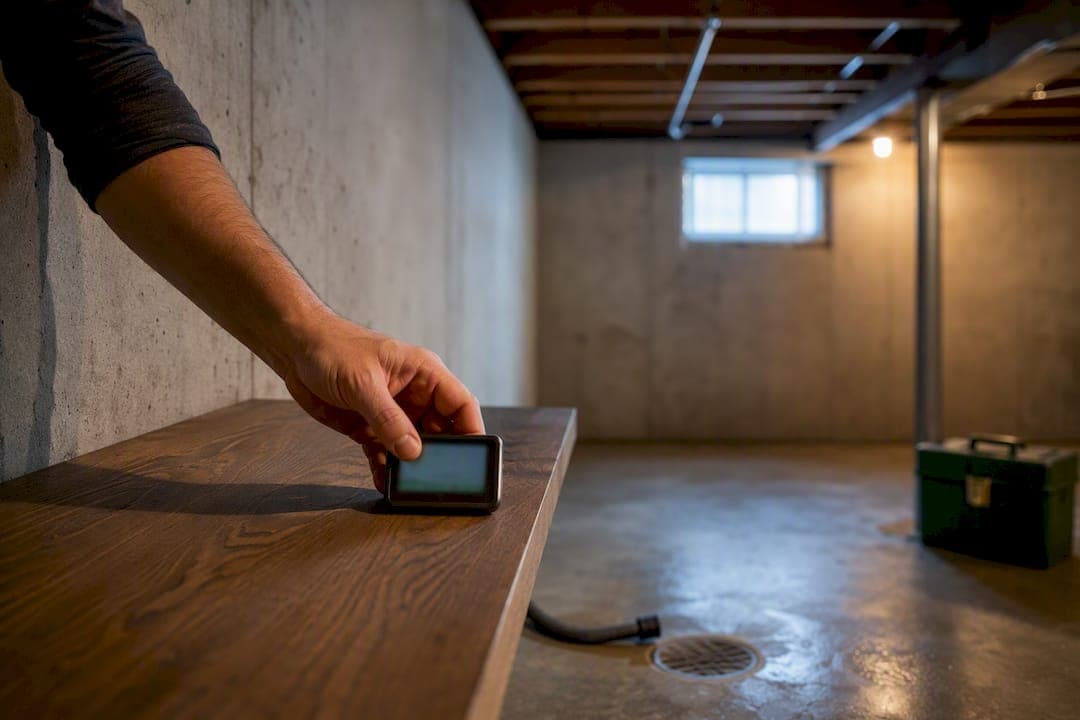
To stop mold in a vacant house, cut off the moisture that feeds it: keep relative humidity below 60% (ideally 30 to 50%), shut or drain the water supply where possible, and secure any active leaks before you lock the door. Mold can take hold on damp material in as little as 24 to 48 hours, so humidity is the number to watch. Walk the property every two to three weeks with a hygrometer, and check bathrooms, basements, and the attic first.
TL;DR:
- Monitoring humidity levels regularly and keeping relative humidity below 60 percent prevent mold growth in vacant houses, especially in basements and attics.
- Critical spots for early mold development include bathrooms, crawlspaces, HVAC systems, and areas under carpets or behind furniture.
- Using a portable dehumidifier, managing water supply, and ensuring proper air flow are key prevention strategies that cost less than frequent mold remediation.
- Routine inspections every two to three weeks, with extra checks during humid seasons and after storms, help catch problems before mold becomes visible or widespread.
- Porous materials like drywall and insulation should be discarded if contaminated, while nonporous items can usually be cleaned with detergent and water.
Table of Contents
- What Makes Vacant Houses a Breeding Ground for Mold?
- Where Does Mold Actually Start in an Empty House?
- What Prevention Steps Actually Stop Mold Before It Starts?
- How Often Should You Inspect a Vacant House for Mold?
- Can You Clean Up Mold Yourself, or Do You Need a Professional?
- What Belongings and Materials Can Be Saved, and What Has to Go?
- Which Long-Term Upgrades Actually Reduce Future Mold Risk?
- When Do You Need an Estate Cleanout Service Instead of a Solo Effort?
- How Do the Seasons Change Your Mold Prevention Strategy?
- What Tools Do You Actually Need to Monitor and Clean Up Mold?
- Why Prevention Beats Reactive Remediation Every Time
- How Bereavement Cleanout Services Handles Mold-Prone Vacancy Situations
- Sources
- FAQ
What Makes Vacant Houses a Breeding Ground for Mold?
An occupied home fights mold without anyone noticing. Heat runs, air moves through vents, and someone's around to catch the drip under the sink before it becomes a problem. A vacant house loses all three defenses at once, and that's why mold shows up faster and spreads farther in empty properties than in lived-in ones.
Mold needs four things: moisture, an organic food source (drywall paper, wood, dust, carpet fiber), stagnant air, and time. Vacancy hands it three of the four automatically. Nobody's running exhaust fans after a shower that never happened, but a slow roof leak or a humid crawlspace still pumps moisture into a house with no air exchange to dry it out. Sealed vacant homes commonly sit at 60 to 80% relative humidity, well above the threshold where mold spores start colonizing damp surfaces within a day or two.
The financial exposure compounds quietly. A property sitting at high humidity for a season doesn't just risk a bad smell. It risks:
- Structural damage to framing, subfloor, and drywall that turns a cleaning job into a rebuild
- Failed inspections during a sale, refinance, or probate transfer
- Lower appraisal values once an inspector documents visible mold or moisture staining
- Health complaints from buyers, tenants, or contractors who walk through before you've addressed it
One industry white paper on vacant property risk makes the point bluntly: a sealed, secured vacant house functions as an incubator unless someone engineers a way for air to move through it.
Where Does Mold Actually Start in an Empty House?
Mold rarely announces itself in the middle of a room. It starts in the places nobody looks, and by the time you smell it, it's usually established somewhere out of sight.
- Bathrooms. Check drains for standing water, grout lines for early staining, and under-sink cabinets where a slow supply-line drip goes unnoticed for months.
- Basements and crawlspaces. Look at exterior grading (does water pool against the foundation?), confirm the sump pump still has power, and press a hand against insulation to check for damp, sagging batts.
- Attics and rooflines. Small roof leaks show up as dark rings on sheathing or saturated insulation, and poor ventilation traps humidity that condenses on the underside of the roof deck.
- HVAC systems. Coils and drip pans collect condensation even when a system is barely running, and dirty filters or dead ductwork sections become mold reservoirs that recirculate spores the moment the system cycles back on.
- Windows, behind furniture, and under carpets. Condensation on glass, blocked airflow behind large furniture, and moisture trapped beneath carpet padding are the hotspots most inspection checklists skip entirely.
Pro Tip: Pull back one corner of carpet in a ground-floor room during your first inspection. Padding holds moisture long after the surface looks dry, and it's often the earliest visible warning sign in the whole house.
What Prevention Steps Actually Stop Mold Before It Starts?
Prevention in a vacant house comes down to five priorities, roughly in the order they matter.
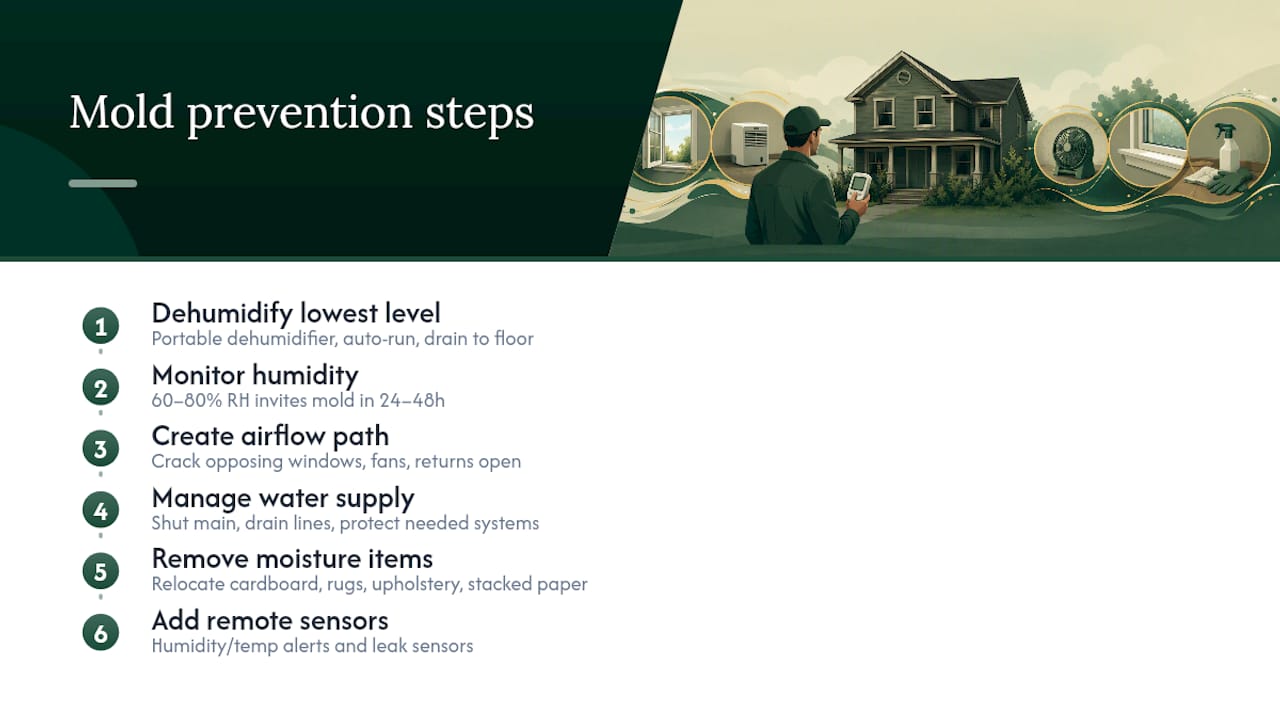
A portable dehumidifier placed in the basement or lowest level, set to auto-run with a drain hose to a floor drain, handles most single-family properties without anyone needing to visit and empty a tank.
Sealed vacant homes routinely reach 60 to 80% relative humidity within weeks of closing up, which sits well inside the range where mold colonizes damp surfaces in 24 to 48 hours. That single data point is why humidity monitoring matters more than almost anything else on this list.
Build an air path, not a sealed box. Cracking a few windows on opposing sides for an hour during dry weather, keeping a bathroom fan on a timer, or leaving a return-air path open between floors all help. The goal is continuous airflow from the lowest level to the roofline, not full climate control.
Manage the water supply deliberately. Shut the main water valve and drain the lines if the property will sit empty for an extended stretch. If a connected system (sprinkler, boiler, sump pump) needs water to function, protect that specific line and inspect it on the same schedule as everything else.
Remove or relocate moisture-prone items. Cardboard boxes, rugs, upholstered furniture, and stacked paper all absorb humidity and feed mold. Move them out or elevate them off concrete floors.
Add remote monitoring where the budget allows. A basic humidity and temperature sensor with a phone alert catches a spike before it becomes a 30-day problem you find on your next visit. A leak sensor near the water heater or under a sink does the same for plumbing failures.
How Often Should You Inspect a Vacant House for Mold?
A written protocol beats memory, especially across multiple properties or a long probate timeline. Follow this sequence on every visit.
- Set your cadence. Inspect every two to three weeks under normal conditions, and increase to weekly during humid summer months or after any storm event in the area.
- Record the humidity reading first. Photograph the hygrometer display alongside a timestamp so the log is verifiable later.
- Check every hotspot from the room-by-room list, not just the areas that looked fine last time, since mold moves.
- Test plumbing connections you shut off or left active, confirming no drips have started at valves or supply lines.
- Photograph anything unusual, even a faint stain, before it's large enough to smell.
- File the log where you can retrieve it for insurance claims, appraisal disputes, or probate documentation.
This kind of paper trail matters more than most owners expect. Routine air sampling for mold isn't something the CDC or EPA recommends because there's no established health-based standard to compare results against. A dated humidity log and photo record carries more practical weight than a lab report most inspectors won't ask for anyway.
Can You Clean Up Mold Yourself, or Do You Need a Professional?
The EPA draws the line at about 10 square feet. Below that, a homeowner or property manager can usually handle cleanup with the right precautions. Above it, or if any of the following apply, call a professional:
- The mold has spread through HVAC ductwork or coils
- It followed a structural leak (roof, foundation, plumbing behind a wall)
- The same spot has come back after a previous cleanup
- Anyone with asthma, allergies, or a compromised immune system will occupy the property soon
For DIY cleanup within that 10 square foot threshold, wear an N95 respirator or better, gloves, and eye protection. Never mix bleach and ammonia-based cleaners. Ventilate the room while you work, and dry the surface completely within 24 to 48 hours after cleaning, since a damp surface just restarts the cycle.
If you do bring in a remediator, ask for the scope of work in writing, how they'll contain the work area, what clearance criteria they'll use to confirm the job is done, and references from similar jobs. There's no EPA certification program for mold professionals, so ask specifically which standard of practice they follow, such as IICRC S520 or ASTM guidelines.
Pro Tip: Get the remediator's clearance criteria in writing before work starts, not after. "Clean" needs a defined meaning up front, or you have no way to dispute a rushed job.
What Belongings and Materials Can Be Saved, and What Has to Go?
Porous materials that absorb moisture generally can't be cleaned reliably once mold takes hold, because spores work into the material's structure. The EPA guidance on this is direct: carpet padding, drywall, ceiling tiles, insulation, mattresses, and cardboard boxes should be discarded, not scrubbed and saved.
Nonporous items, by contrast, usually clean up fine:
- Glass, metal, and hard plastics wipe down with detergent and water, then dry completely
- Sealed wood furniture can often be cleaned and salvaged if caught early
- Tile and grout respond to standard cleaning if the mold hasn't undermined the substrate beneath
Bag discarded porous material before moving it through the house to limit cross-contamination, and seal bags before they leave the room. For heavily hoarded properties or anything approaching biohazard conditions, a dumpster on-site and specialty disposal handling makes more sense than bagging by hand. Our guide to safe rodent odor removal covers similar containment principles for contaminated materials in cluttered properties.
Which Long-Term Upgrades Actually Reduce Future Mold Risk?
Recurring mold problems in the same property almost always trace back to a structural issue nobody fixed the first time. A few upgrades pay for themselves within one or two remediation cycles avoided:
- Grading and gutter repair so water moves away from the foundation instead of pooling against it
- Closed-cell spray foam or upgraded insulation in attics and crawlspaces to control condensation points
- Mold-resistant drywall in basements and other high-moisture zones during any renovation
- A minimal HVAC run schedule rather than a full shutdown, since a system cycling occasionally moves air far better than one sitting dead for months
If a property has cost you two remediation jobs in three years, the math usually favors the upgrade over the third cleanup.
When Do You Need an Estate Cleanout Service Instead of a Solo Effort?
A rapid property turnover, a probate deadline, or a hoarded and moisture-saturated house often calls for more than a weekend of DIY work. That's where a documented, insured cleanout service fits. A reputable provider delivers a broom-clean handoff, sorts salvageable items under a donation-first approach, and photographs the process for probate or insurance records. Bereavementcleanoutservices supplements small cleanup steps with resources like odor removal guidance after a cleanout. Large-scale mold remediation still belongs with certified remediators or an industrial hygienist, not a cleanout crew.
How Do the Seasons Change Your Mold Prevention Strategy?
Mold risk isn't constant across the year, and treating every month the same wastes effort where it isn't needed and misses windows where it is. Summer humidity is the biggest driver in most climates. Warm, moist outdoor air infiltrates a sealed house and condenses on cooler interior surfaces, which is exactly why humid-season inspections should tighten to weekly instead of the standard two to three week cadence.
Winter brings a different risk profile. Heating systems that aren't running because the house is empty allow pipes to sit near freezing, and a burst pipe in February can flood a basement faster than any summer humidity spike. If you've shut off the main water supply for the winter, confirm it's actually off at every fixture, not just the valve, since trapped water in a line can still freeze and split a pipe.
Spring storms introduce sudden roof and window leaks that a routine two-week inspection might miss for days. After any significant storm in your area, add an off-cycle check focused specifically on the attic and any window or door seal that took direct wind and rain.
Fall is the transition window to prepare for winter shutdown: draining exterior spigots, confirming gutters are clear before leaf litter clogs them, and doing one thorough humidity check before the heating season begins in earnest. Matching your inspection intensity to the season, rather than running the same light-touch check year round, is what actually keeps a vacant property ahead of the problem.
What Tools Do You Actually Need to Monitor and Clean Up Mold?
You don't need an inspector's full kit to run a competent prevention program, but a few pieces of equipment make the difference between guessing and knowing.
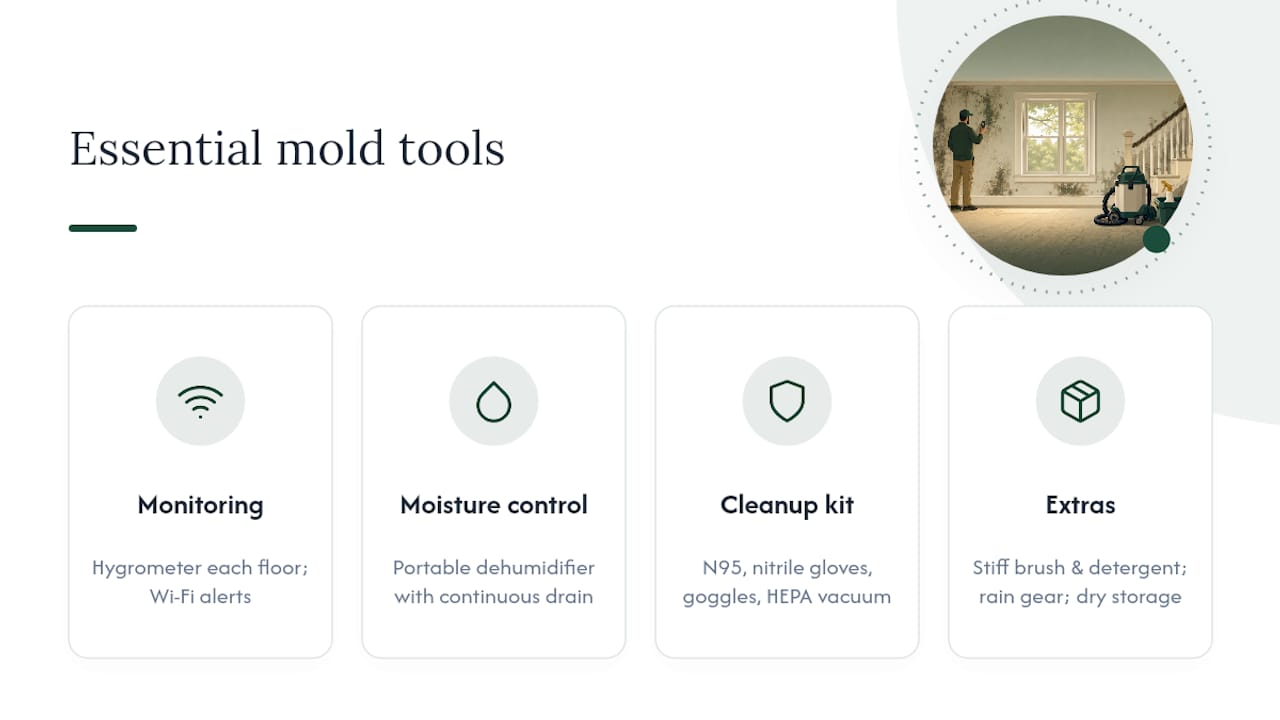
A basic digital hygrometer, the kind that costs less than a dinner out, tells you the one number that matters most: relative humidity. Place one on each floor of a vacant property, since basements and attics often read differently from the main living level. For a step up, a Wi-Fi connected sensor sends alerts to your phone the moment humidity spikes, which catches a problem days before your next scheduled visit would.
A portable dehumidifier with a continuous drain hose handles ongoing moisture control without requiring anyone to empty a reservoir tank. Pair it with a moisture meter, a handheld probe that reads dampness inside drywall or wood framing, for spot-checking areas that look suspicious but aren't visibly wet yet.
For cleanup within the EPA's 10 square foot DIY threshold, keep an N95 respirator, nitrile gloves, and goggles on hand, along with a HEPA vacuum for removing settled spores from hard surfaces without redistributing them into the air. A stiff brush and plain detergent handle most nonporous surface cleaning; skip the specialty mold sprays unless a label specifically supports your surface type. Rain gear and moisture-resistant storage for any relocated items round out a basic kit, and our partners at Value Added Moving cover related rain and moisture safety tips worth reviewing if you're managing a property through a wet season.
Why Prevention Beats Reactive Remediation Every Time
Most owners treat mold as a cleanup problem. It's actually a monitoring problem that becomes a cleanup problem only after someone stopped checking. A ten-dollar hygrometer and a recurring calendar reminder cost less than one remediation invoice, and they catch the spike before it becomes a demolition. Combine that DIY vigilance with a periodic professional walkthrough, especially before a sale or probate transfer, and you'll rarely face the large-scale job at all.
— Derek
How Bereavement Cleanout Services Handles Mold-Prone Vacancy Situations
A practical route when a vacant property needs more than a hygrometer and a calendar reminder is to use an insured cleanout service that handles cleanouts with a donation-first approach, sorting usable items to local charities while documenting the process for probate or estate records.

We deliver a broom-clean handoff so the property is ready for the next step, whether that's a remediator, a listing agent, or a buyer's inspection. Our team also handles specialty odor and disposal needs that come up alongside moisture damage, and our guide on staging a property after a cleanout covers what typically comes next. Large-scale mold remediation itself still needs a certified remediator, but the cleanout, sorting, and documentation around it is exactly where we help. Request a walkthrough and quote to get a firm timeline before your next deadline arrives.
Sources
For guidance beyond this article, consult the EPA's mold prevention and cleanup pages, the CDC's mold testing and remediation guidance, and industry standards like IICRC S520 for professional inspection scope. University extension programs, including UConn Extension's cleaning guidance, offer practical, non-commercial cleanup steps.
This article is general information, not a substitute for advice from a qualified doctor. Consult a qualified healthcare professional about your own circumstances before acting on anything here.
FAQ
Is It Okay to Stay in a House With Mold?
Staying in a house with a small, contained mold problem under the EPA's 10 square foot threshold is generally lower risk once it's cleaned promptly. Larger, hidden, or HVAC-connected mold problems should be addressed before anyone occupies the property, particularly if a resident has asthma or allergies.
What Are the Warning Signs of Mold Exposure?
Common symptoms include nasal congestion, coughing, throat irritation, eye irritation, and skin irritation, with wheezing or worsened asthma symptoms in sensitive individuals. Persistent symptoms that improve when away from the property are a strong signal the source needs to be found and fixed.
Can Mold in a House Go Away on Its Own?
No. Mold does not resolve without removing its moisture source and cleaning or replacing the affected material; it will keep spreading as long as humidity stays high. Fixing the underlying leak or humidity problem is the step that actually stops it, not time alone.
How Long Can You Safely Live in a House With Mold?
There's no fixed safe timeframe, since risk depends on the mold's extent, location, and the health of the people in the house. A contained, cleaned-up spot under 10 square feet poses far less concern than an undiagnosed leak feeding mold behind a wall for months.