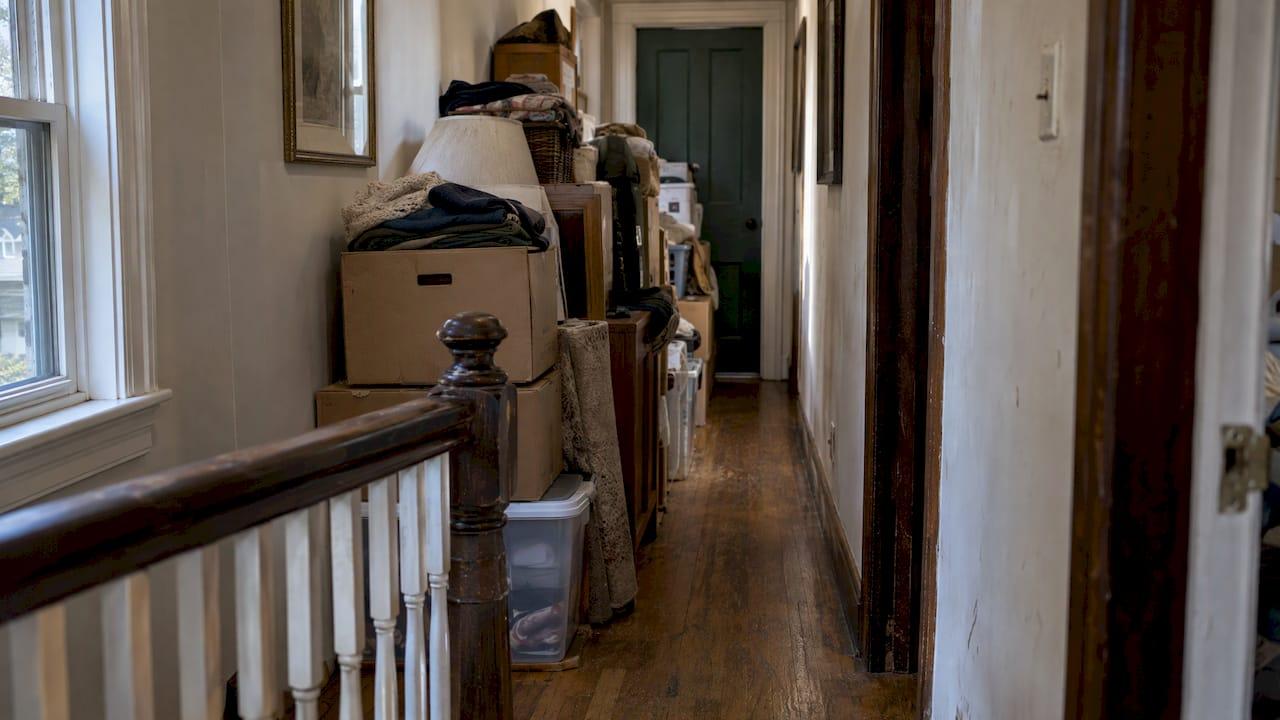
A hoarded home can hold hazards you cannot see from the doorway: blocked exits, overloaded floors, mold, animal waste and fire risks. The safest way to clean one is a professional walkthrough first, trained crews wearing the right protective gear, and a slow, documented sort. At Bereavement Cleanout Services, we handle hoarding cleanups across New Jersey with discretion, donation-first sorting and full insurance, so your family does not have to step into the unknown.
TL;DR
- Hoarded homes carry fire, collapse, sanitation and air-quality risks, and many of them are hidden under piles.
- Never start hauling before someone has inspected the structure, exits, utilities and pile stability.
- Protective gear means at least a NIOSH-approved N95 respirator, non-latex gloves and goggles. A surgical mask is not enough.
- Stop and call 911 for fire, a medical emergency or any sign of structural failure.
- Hoarding cleanup at our company starts from $1,500, after a walkthrough and a firm quote.
Table of Contents
- Why hoarded homes are dangerous to clean
- Step 1: Assess the home before anyone starts
- Protective gear that actually protects
- Sorting and removal without harm
- When to stop and call for help
- What affects the cost of a safe cleanup
- Why a hoarding cleanup is best handled by us
- Next step: a walkthrough in New Jersey
- FAQ
- Sources
Why hoarded homes are dangerous to clean
Most people picture a mess. The real problem is that clutter changes how a house behaves under stress, and nobody can tell how until they are inside.
Fire
Paper, clothing and other combustibles create fires that are extremely hot and fast-spreading, and hard to suppress. Blocked hallways, doors and windows can make escape impossible and slow down firefighters. The NFPA notes that obstructed exits, falling objects and heavy fire loads put responders at risk too.
Common ignition points include clutter next to stoves, radiators, heating vents and outlets. A 2023 expert panel study in the Journal of Community Health also flagged compressed electrical cords, which can start fires because heat has nowhere to go.

Structure
The same county guidance warns that heavy loads can cause sagging floors and ceilings, cracked joists or trusses, compromised bearing walls and partial collapse. That matters most in upper floors, basements and older homes.
Health and sanitation
Unsanitary conditions, blocked toilets and sinks, garbage, rodents and insects all cause illness and injury. Massachusetts officials report that ammonia from accumulated urine and feces can exceed occupational exposure limits and can harm people with heart or breathing conditions. Animal waste and remains can also carry diseases such as hantavirus, tapeworm, psittacosis and cat scratch disease.
Hidden hazards
A pile of clothes can hide broken glass, needles or animal waste, and a stack of boxes can collapse if pulled from the bottom, according to a professional hoarding cleanup guide. This is why the first step is always inspection, not hauling.

Step 1: Assess the home before anyone starts
A safe assessment follows a set order.
- Structure first. Look for sagging floors, water damage and blocked exits.
- Contents and piles. Judge how stable the piles are and whether anything could fall.
- Biological signs. Note waste, mold, pests and strong ammonia odor.
- Fire hazards. Check for paper, batteries or chemicals, clutter at stoves, heaters and outlets, and smoke detectors that are blocked or not working. LA County's guidance lists clearing smoke detector and vent obstructions as early actions.
- Utilities and exits. Confirm there is a way out and that electrical outlets are reachable.
Families often want to start right away, especially after a death or before a closing. Resist it. If you want to understand how to tell clutter from a genuinely unsafe home, our guide to hoarding versus clutter walks through the signs, and the five levels of hoarding explains what cleanup involves at each one.
Protective gear that actually protects
The CDC recommends at least an N95 respirator approved by NIOSH, non-latex gloves and dust-tight goggles for mold cleanup. For long work in heavy mold, a half- or full-face respirator is advised.
Key points:
- Surgical masks are not a substitute. CDC/NIOSH states they do not provide adequate protection and should not replace an N95. NIOSH approval also does not mean protection against every hazard.
- Who should stay out. The CDC says people with allergies, immune suppression, lung disease, asthma or COPD should not take part in mold cleanup.
- Tetanus. OSHA advises that people doing recovery work have a current tetanus vaccination, and notes homes built before 1982 are presumed to contain asbestos.
- Respirator programs. Where respirators are unavoidable, OSHA calls for a respiratory protection program, not just a mask from the hardware store.
For employers, OSHA's bloodborne pathogen rules require hepatitis B vaccination offered free to exposed employees within 10 days of assignment, plus evaluation after any exposure. Our crews are fully insured, and we work to protect the people in your home as well as the property.
If you are weighing basic precautions for cleaning mold-prone items such as bins, health precautions and protective gear are worth reviewing.
Sorting and removal without harm
Safe removal is slow on purpose.
- Work in zones. Clear a path to exits and to the toilet first, then move room by room.
- Treat every pile as suspect. Pull from the top, never the bottom.
- Separate by category. Keepsakes, documents and valuables, donations, trash and hazardous items such as chemicals, batteries and sharps each go in their own place.
- Be specific with goals. LA County recommends concrete goals like creating a walkway to the toilet rather than vague ones like cleaning the bathroom.
If the owner is alive, the emotional side is a safety issue too. The county guidance stresses trauma-informed practice, a least-intrusive start, breaks, respect for the person's decisions and slow progress, because removing items can cause extreme stress. The NFPA describes hoarding as a mental disorder that can be tied to trauma, depression, OCD or dementia, which is why compassion belongs in the plan.
When to stop and call for help
Stop work and call 911 for fire, a medical emergency or a structural hazard. Leave the house if you notice:
- Floors that bounce, sag or crack underfoot
- Strong ammonia fumes, heavy mold or a sewage smell
- Visible animal remains or large amounts of waste
- Exposed or damaged wiring, or a gas smell
- Piles that shift as you walk past
These conditions call for trained crews. A family member should not push through them out of urgency.
What affects the cost of a safe cleanup
Price follows labor, hazards and disposal. The main drivers are:
- Square footage and how full the home is
- Sanitation problems such as waste, odor or mold
- Volume of trash to haul and dispose of
- Stairs, access and parking
- How much sorting of keepsakes and donations is needed
Our published starting prices in New Jersey are:
| Service | Starting price |
|---|---|
| Single item or small pickup | from $150 |
| Single room, garage or basement | from $295 |
| Apartment or condo cleanout | from $650 |
| Foreclosure or eviction cleanout | from $950 |
| Full house cleanout | from $1,200 |
| Hoarding cleanup | from $1,500 |
| Large estate cleanout | from $2,200 |
Final quotes follow a walkthrough. For process and pricing detail, see how discreet hoarding cleanup works and what it costs and the cleanup timeline.
Why a hoarding cleanup is best handled by us
Every hoarded home we walk into is a person's life, and often a family's grief. The safe approach and the respectful approach are the same one: go slowly, inspect first, sort carefully and document what you find.
That is how we work. We sort for keepsakes, send usable items to local charities through our donation-first approach, and give families professional documentation that supports probate. Our service is discreet, fully insured and ends with a broom-clean handoff.
For realtors, landlords and social workers on a deadline, the same care applies. Speed never replaces the walkthrough.
Derek
Next step: a walkthrough in New Jersey
If you are facing a home you do not feel safe entering, we can walk through it with you and give a firm quote. Our hoarding cleanup service starts from $1,500 and covers sorting, hauling, responsible disposal and a broom-clean finish. See the towns we serve across New Jersey.

For a wider look at the family side of this work, read our hoarder house cleanout safety guide.
FAQ
Can I clean a hoarded house myself?
Small, light clutter can be manageable, but heavy hoarding brings fire, structural, mold and waste risks that call for an inspection and proper respirators. We recommend a professional walkthrough before anyone lifts a box. Our crews are trained for these conditions and fully insured.
What are the biggest risks in a hoarded home?
Fire, blocked exits, overloaded floors, unsanitary conditions, pests and poor air quality top the list. Fast-spreading fires and collapse are the most serious. Hidden items under piles, such as sharps and glass, cause many injuries.
What protective gear is needed?
At minimum, an NIOSH-approved N95 respirator, non-latex gloves and dust-tight goggles, per the CDC. A surgical mask is not enough. People with asthma, COPD, allergies or weakened immunity should stay out of the work area.
How much does hoarding cleanup cost?
Our hoarding cleanup starts from $1,500, and large estates start from $2,200. The final quote depends on size, condition, sanitation issues and disposal volume after a walkthrough.
Sources
- Public Safety and Health Risks, Fairfax County Code Compliance
- Risks Caused by Hoarding, Mass.gov
- Safety and Health Issues Resulting From Hoarding, Cape Cod
- NFPA: Hoarding
- Assessment of Critical Health and Safety Risks in Homes, Journal of Community Health
- Decluttering Information Center, LA County
- Hoarding Cleanup: A Safety and Process Guide
- Mold Clean Up Guidelines, CDC
- Safety and Health Checklist, OSHA
- Hurricane Key Messages, CDC/NIOSH
- Biohazard Cleanup: OSHA Requirements, RBM Building Services
- Mold in a garbage can, health precautions