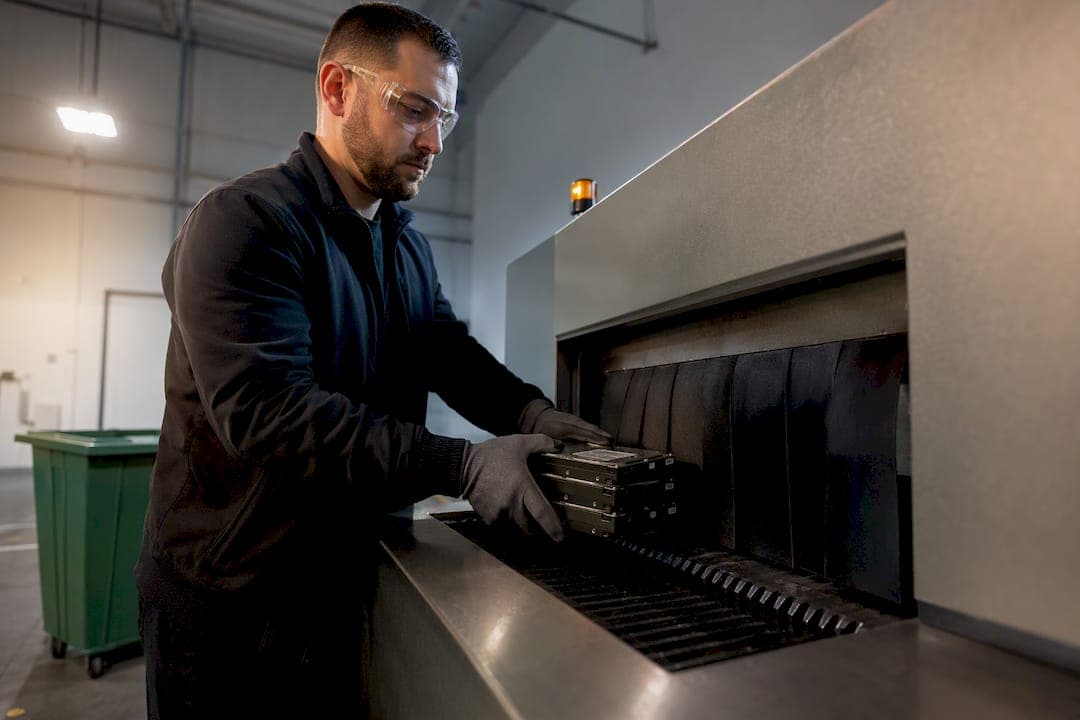
The fastest way to make a hard drive unrecoverable in New Jersey is certified physical destruction, witnessed on-site, with a Certificate of Destruction documenting serial numbers and chain of custody. Hire a NAID-certified provider, or a trusted estate-cleanout company that coordinates certified destruction on your behalf. Either way, insist on the same paper trail: a signed certificate, chain-of-custody records, and photo or video proof if you ask for it.
TL;DR:
- Certified physical shredding provides the most secure and irreversible method of destruction, especially for SSDs, which cannot be degaussed effectively.
- On-site mobile destruction allows clients to witness the process, ensuring chain-of-custody, while facility-based options are more cost-effective for large volumes.
- Always verify providers hold NAID AAA certification, produce detailed Certificates of Destruction with serial numbers, and provide chain-of-custody documentation.
- New Jersey law mandates destruction or erasure of personal data, requiring use of authorized recyclers and proper documentation to maintain legal compliance.
- Estate cleanouts benefit from integrated services that handle secure destruction along with household clearance, offering packed documentation and probate-ready disposal notes.
Table of Contents
- Comparing Hard Drive Destruction Providers in New Jersey
- How to Choose a Hard Drive Destruction Provider
- What Media Gets Destroyed and How
- New Jersey Rules Businesses and Executors Should Know
- How Estate Cleanouts Handle Secure Hard Drive Disposal
- Bereavement Cleanout Services Handles This for You
- Sources
- FAQ
Comparing Hard Drive Destruction Providers in New Jersey
Not every "shredding service" in New Jersey works the same way, and the differences matter more than most people realize until they need the paperwork.
Mobile on-site shredding sends a truck with an industrial shredder to your location. You watch your drives get destroyed in the parking lot or loading dock, which is the gold standard when chain of custody matters most, like a law firm clearing out old case files or a medical practice retiring patient record servers.
Facility-based shredding means your drives travel to a warehouse for destruction. It's typically cheaper per unit and better suited to large volumes, but you lose the ability to watch it happen unless the facility offers a viewing option.
ITAD (IT asset disposition) firms track individual assets by serial number through their entire lifecycle, from pickup to destruction or resale. This model fits businesses managing fleets of laptops and servers where every device needs its own audit trail.
Estate-cleanout integrated services handle hard drive destruction as one piece of a broader residential cleanout. This is the practical choice for families and executors who need old computers, external drives, and backup tapes destroyed alongside everything else in a house.
| Factor | On-site mobile | Facility-based | ITAD firm | Estate-cleanout integrated |
|---|---|---|---|---|
| Witness availability | Yes, on location | Limited or by appointment | Sometimes | Coordinated through partner |
| Certifications | NAID AAA, NIST 800-88 | NAID AAA, NIST 800-88 | NAID AAA, DoD/NISPOM references | Relies on certified partner |
| Certificate detail | Serial numbers when legible | Serial numbers, batch totals | Full asset-level tracking | Certificate passed through from partner |
| Media accepted | HDD, SSD, tapes, phones | High-volume HDD/SSD | All IT assets | Household electronics, HDD/SSD |
| Pricing model | Per-visit or per-volume | Per-pound or per-unit | Per-project quote | Bundled into cleanout quote |
| Turnaround | Same-day common | Days to weeks | Project-based | Scheduled with cleanout |
Free, no-obligation quotes are standard across the industry, and pricing generally scales with volume rather than a flat per-drive rate, according to Titanshredding's Howell, NJ service page.
Here's how to match the model to your situation:
- Choose on-site mobile if you handle regulated client data and need to watch destruction happen.
- Choose facility-based if you're clearing dozens or hundreds of drives and cost per unit matters more than witnessing.
- Choose an ITAD firm if some equipment will be resold or donated and some will be destroyed, and you need one tracking system for both.
- Choose an estate-cleanout integrated provider if the hard drives are one part of clearing out a home, office, or estate.
How to Choose a Hard Drive Destruction Provider
Ask these questions before anyone touches a drive:
- Are you NAID AAA certified, and can you show current documentation?
- Will destruction happen on-site, in front of me, or at an off-site facility?
- What exactly does the Certificate of Destruction include, serial numbers, date, quantity, method?
- Do you provide chain-of-custody paperwork from pickup to destruction?
- What's your insurance coverage if something goes wrong during transport?
- What method do you use, shredding, crushing, or degaussing, and why?
Red flags that should send you elsewhere: a provider who won't produce a sample certificate, vague answers about where destruction actually happens, no chain-of-custody documentation, or an inability to record serial numbers when you specifically request it. NAID certification exists precisely so you don't have to take a vendor's word for it. Ask for their certification number and verify it.
Pro Tip: SSDs don't respond to degaussing the way traditional hard drives do, since they store data on flash memory chips rather than magnetic platters. If an SSD holds anything sensitive and won't be resold, insist on physical shredding rather than software erasure. NIST 800-88 erasure is a legitimate option only when the drive will be reused, donated, or resold, according to Keystone Technology Management.
What Media Gets Destroyed and How
A serious provider accepts more than spinning hard drives. Expect coverage for HDDs, SSDs, NVMe and M.2 drives, USB flash drives, external hard drives, backup tapes, old phones, and even CDs or DVDs holding sensitive files. Some providers ask you to bag and label drives by department or origin before pickup, which speeds up serial number logging later.
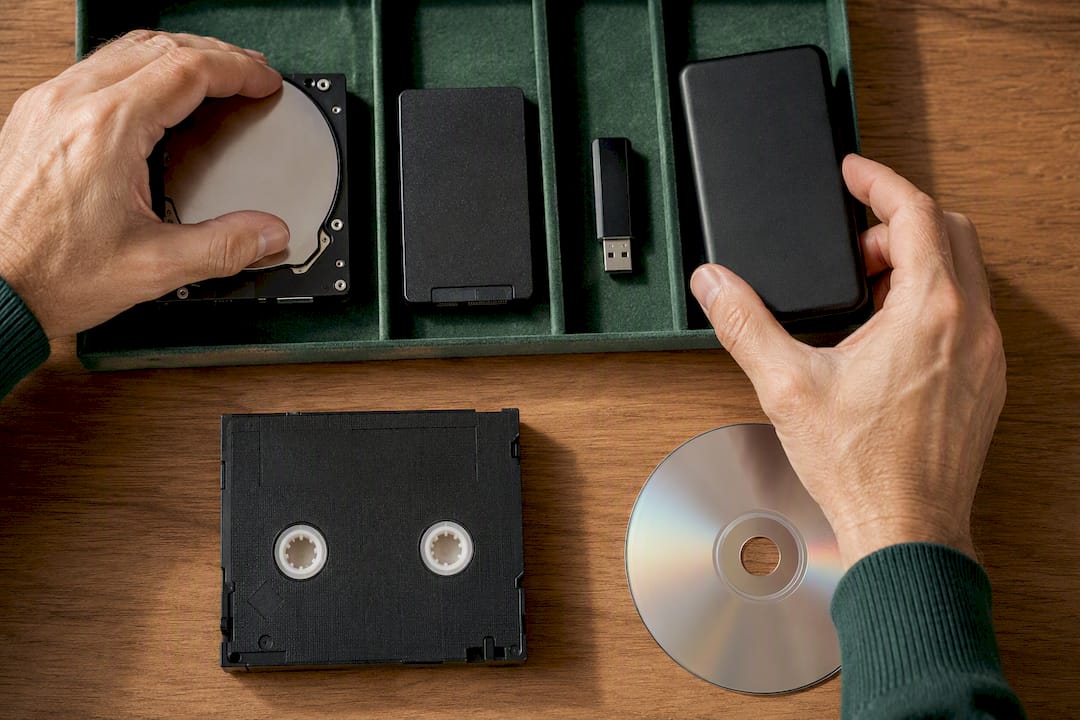
Shredding is the irreversible method: drives get physically torn into pieces too small to reassemble, and there's no data recovery process that gets around that. Degaussing uses a powerful magnetic field to scramble data on traditional platters, but it's useless against SSDs and flash-based media. Whenever destruction happens, ask the provider to record serial numbers and asset tags before the drive goes into the shredder, and request photos as part of your chain-of-custody file. Those details are what turn a service receipt into real audit protection.
New Jersey Rules Businesses and Executors Should Know
New Jersey's secure-disposal law requires businesses to destroy or erase customer records containing personal information rather than simply discarding them. That obligation extends to anyone holding Social Security numbers, financial account details, or health records on old drives, whether you're a business owner or an executor closing out an estate.
Where the shredded material ends up matters too. The New Jersey Department of Environmental Protection maintains lists of authorized electronics recyclers and universal waste handlers, and legal processing has to happen through one of these licensed facilities. Some counties add their own layer of guidance; Somerset County, for instance, publishes local drop-off rules for residents handling electronics on their own.
Practical steps to stay covered:
- Keep the Certificate of Destruction on file indefinitely, not just until the project closes.
- Confirm your provider works with a DEP-authorized recycler for post-shredding material.
- Save the vendor's contact information in case an audit or insurance question comes up years later.
How Estate Cleanouts Handle Secure Hard Drive Disposal
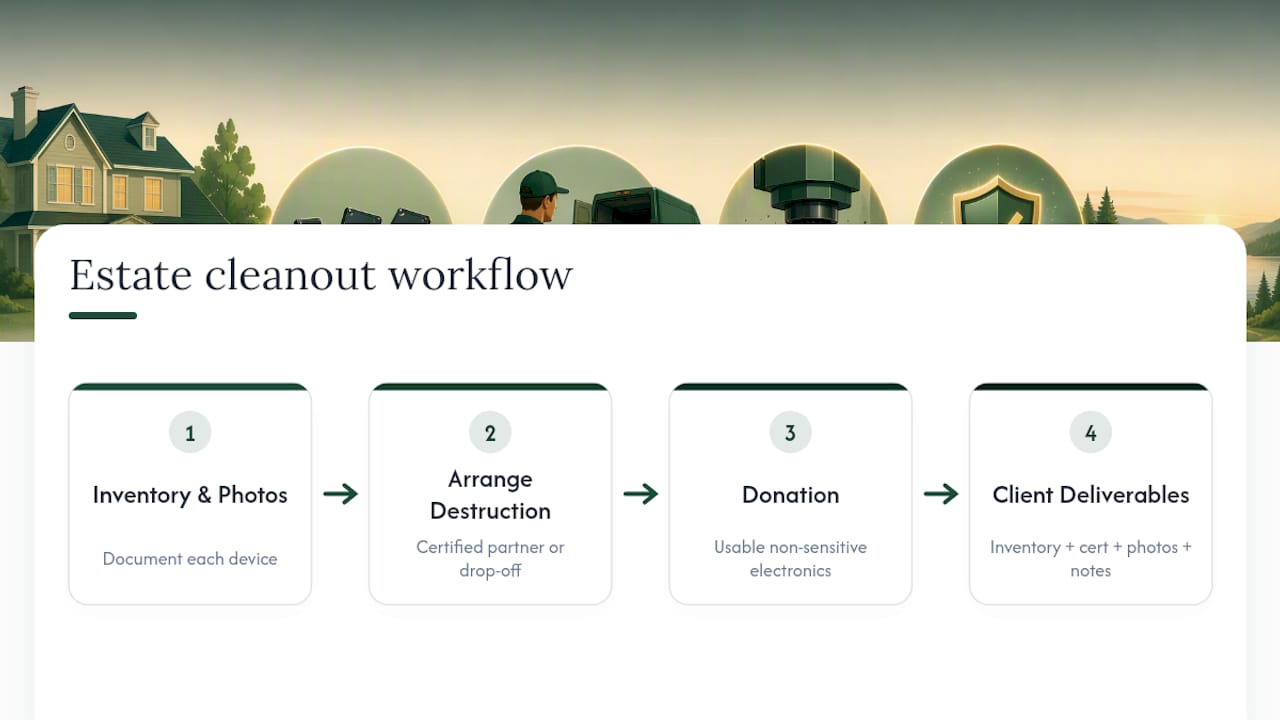
When old computers and drives turn up during a residential cleanout, the process should never feel like an afterthought. A documented workflow starts with inventory and photos of each device before anything gets moved, then scheduling with a certified destruction partner or coordinating a facility drop-off. Scheduling is built around the family, quietly, without turning a difficult week into a logistics project. Non-sensitive electronics still go to donation first when usable, in keeping with a donation-first approach. Clients walk away with an inventory list, a certificate of destruction from the partner, photos, and written disposition notes for probate.
Bereavement Cleanout Services Handles This for You
Bereavement Cleanout Services is the alternative to hiring a separate shredding company on top of your estate cleanout. Instead of coordinating two vendors, two schedules, and two sets of paperwork, one team handles the entire house, including the old laptop in the closet and the external drives in the desk drawer, and arranges certified destruction through a trusted partner as part of that same visit.
You'll receive a documented inventory, photos of items processed, disposition notes useful for probate, and donation receipts for anything given to local charities. A full house cleanout starts from $1,200, and pricing for smaller jobs, like a single room or garage, starts from $295. Every quote follows a walkthrough, so you know the cost before anything gets hauled or destroyed. If you're weighing a professional cleanout against handling it yourself with a rented container, this comparison breaks down what each route actually involves.
Request a walkthrough quote today, and get secure hard drive disposal handled alongside everything else in the home, without adding a second vendor to your plate.
Sources
Check the NJ DEP's list of authorized electronics handlers to confirm a recycler's legal standing, and verify any provider's NAID AAA certification directly rather than trusting a logo on their website.
- Hard Drive Destruction — Titanshredding Howell NJ service page
- Keystone Technology Management — Data destruction and ITAD services
- NAID — National Association for Information Destruction
FAQ
How Can I Dispose of Old Hard Drives in NJ?
Hire a certified destruction provider for physical shredding, or use an estate-cleanout company that coordinates disposal for you. Avoid simply throwing drives in household trash or general electronics recycling, since neither guarantees data destruction or compliance with New Jersey's secure-disposal law.
How Much Does It Cost to Have a Hard Drive Destroyed?
Costs are typically quoted by volume rather than a flat per-drive fee, and most providers offer free, no-obligation quotes before service. If drive destruction is part of a larger home cleanout, Bereavement Cleanout Services bundles it into a walkthrough-based quote rather than a separate line item.
How Do You Make a Hard Drive Unrecoverable?
Physical shredding is the irreversible standard, tearing the drive into pieces too small for any recovery process to reconstruct, according to Keystone Technology Management. NIST 800-88 software erasure works only when the drive will be reused or resold, not destroyed.
Will Submerging a Hard Drive in Water Destroy It?
Water can damage a drive's electronics, but it doesn't reliably destroy the magnetic platters where data lives, and a determined recovery lab can often still pull data off a soaked drive. Physical shredding or certified destruction remains the only method that guarantees data is unrecoverable.
What Should a Certificate of Destruction Include?
A proper certificate lists the date, location, quantity of drives destroyed, and serial numbers when legible, details that ITAD providers in New Jersey confirm are standard for audit purposes, per CyberCrunch. Keep this document on file indefinitely, since it's your proof of compliance if questions ever arise.