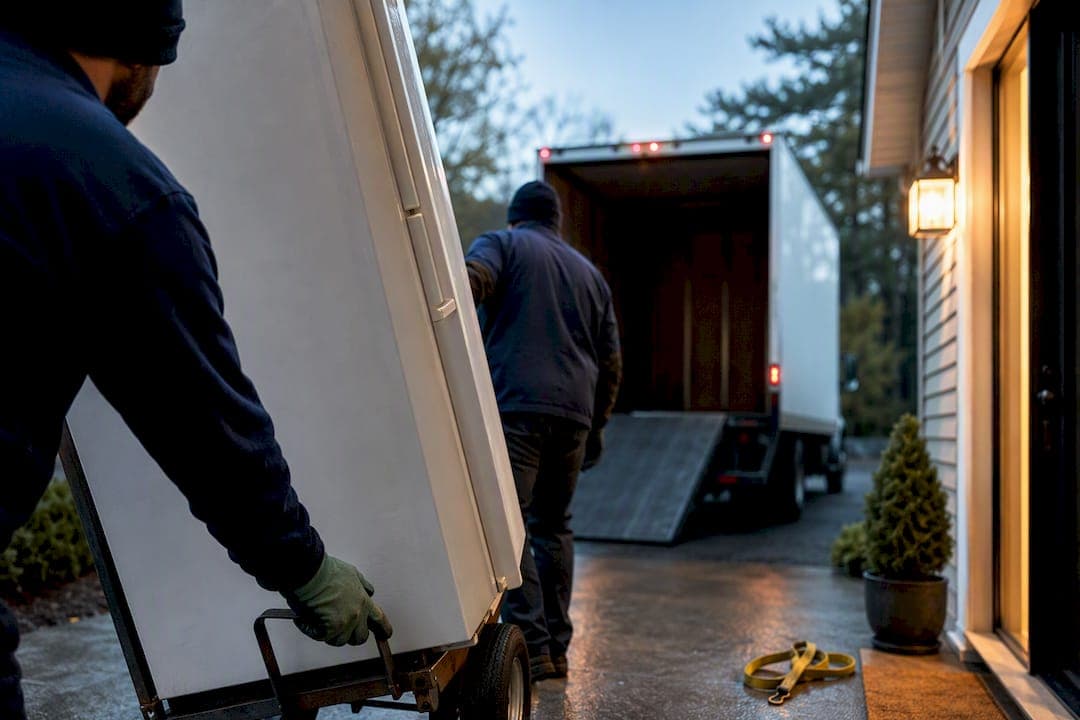
Your fastest, lowest-cost route in New Jersey is a utility appliance recycling program, which typically offers free pickup plus a rebate for a working refrigerator. If your unit doesn't qualify, your township's bulky-item program or a licensed removal service will handle safe refrigerant recovery. For estate situations, hoarding cleanups, or when you simply want it gone without the hassle, a donation-first local cleanout service covers the job with documentation included.
TL;DR:
- Utility recycling programs typically offer free pickup and rebates for refrigerators between 10 and 30 cubic feet that are still cooling at pickup time.
- Refrigerants must be recovered by licensed services, and leaving a refrigerator curbside is illegal due to federal and state disposal laws.
- Partial rebates from utility programs generally range from $50 to $100, but costs may arise if the unit is broken, a premium brand, or not qualifying.
- Moving refrigerators oneself risks injury and damage, so a minimum of two people with proper equipment is recommended unless licensed professionals handle the removal.
- A donation-first cleanout service is ideal for estates or large cleanups, offering coordinated pickup, donation, and proper recycling with documentation for probate if needed.
Table of Contents
- Which Refrigerator Disposal Option Fits Your Situation?
- How Do PSE&G and JCP&L Refrigerator Recycling Programs Work?
- Can You Just Leave a Refrigerator at the Curb?
- What Does Refrigerator Disposal Cost in New Jersey?
- Should You Move a Refrigerator Yourself?
- Why a Donation-First Cleanout Beats Going It Alone
- Getting Your Refrigerator Removed Without the Hassle
- Sources
Which Refrigerator Disposal Option Fits Your Situation?
Three routes cover almost every New Jersey household. Picking the right one comes down to the appliance's condition, your timeline, and how much lifting you're willing to do yourself.
- Utility recycling programs work best when your refrigerator still runs and falls within the standard size range. You get free pickup and a rebate check, which makes this the default choice for most homeowners swapping out an old kitchen fridge.
- Municipal bulky-item collection or transfer stations make sense when the unit doesn't qualify for a utility rebate, or your town runs its own appliance recycling day. Warren Township's appliance recycling page is a good example of how these local programs post appointment numbers and drop-off rules.
- A professional cleanout service is the practical answer for estate situations, hoarding cleanups, landlord turnovers, or any job where the fridge is one item among many that need to disappear fast.
Before you call anyone, have your zip code, the account holder's name on the utility bill, the fridge's approximate cubic footage, and whether it's still plugged in and cooling. Every program and service asks for these same four details first.
How Do PSE&G and JCP&L Refrigerator Recycling Programs Work?
New Jersey's two largest utility recycling programs run on similar rules, even though the paperwork differs slightly. PSE&G's recycling program and the FirstEnergy/JCP&L appliance recycling program both send a crew to your home, haul the unit away, and mail a rebate check afterward.
Pro Tip: Schedule your pickup for a day you'll actually be home, or set up outdoor no-contact pickup if your utility offers it. Missed appointments often push you to the back of the scheduling queue.
Eligibility generally follows this pattern:
- The refrigerator or freezer must be between 10 and 30 cubic feet.
- It has to be plugged in and actively cooling at the time of pickup, since crews need to confirm it works.
- The account holder at the service address must own the unit. A refrigerator belonging to a tenant or a relative at a different address usually won't qualify.
- Most programs cap participation at a limited number of refrigerators or freezers per household per calendar year, and air conditioners or dehumidifiers often need to be picked up alongside a qualifying refrigerator rather than on their own.
Compact refrigerators and some premium brands, including Sub-Zero, are commonly excluded from both pickup and rebates.
Rebate amounts vary by utility and by year, so confirm the current PSE&G rebate or JCP&L rate before you schedule anything. Checks typically arrive several weeks after pickup, not on the spot.
Can You Just Leave a Refrigerator at the Curb?
No. Refrigerators contain refrigerant, which federal and New Jersey law prohibit venting into the air under any circumstances. The NJDEP and EPA guidance on appliance disposal requires that refrigerant be recovered with certified equipment before a unit can be scrapped or recycled, and disposal facilities must verify that removal happened before accepting the appliance.
Facilities that receive refrigerators without proof of refrigerant recovery are required to perform that recovery themselves using certified equipment. A unit dropped off without documentation doesn't just get refused. It creates a paperwork problem for whoever hauled it there.
That's the legal reason abandoning an old fridge at the curb is a bad idea, beyond the obvious eyesore. Sanitation crews generally won't collect it, and leaving it out risks a code violation in most townships.
Before any pickup or service call, confirm these four things:
- The unit is either confirmed working (for utility rebates) or clearly marked nonworking (for paid removal).
- You can document ownership if the utility program asks.
- The refrigerator sits somewhere a two-person crew can actually reach it, not blocked behind furniture or down a narrow basement stairway.
- You have any paperwork the facility or service might need, especially for estate situations where probate documentation matters.
RecycleNJ's guidance on appliance disposal points residents toward licensed removal services precisely because of this refrigerant handling requirement. It's not a suggestion you can skip by hauling the unit yourself to a scrap yard that doesn't ask questions.
What Does Refrigerator Disposal Cost in New Jersey?
For most working refrigerators, the honest answer is nothing. It might even pay you.
Utility rebates for qualifying units commonly land in the $50 to $100 range through JCP&L, with PSE&G's program offering similar incentives for eligible refrigerators and freezers. That's on top of free pickup, which alone would otherwise cost you a rental van or a service fee.
You'll likely pay something when:
- The unit is broken or no longer cooling, which disqualifies it from utility rebate programs.
- It's a compact refrigerator, mini-fridge, or excluded premium brand.
- Your township charges a bulky-item fee for curbside collection or transfer station drop-off.
There's also a case for recycling a working fridge even without the rebate. ENERGY STAR's Flip Your Fridge research found that replacing an older refrigerator can save a household roughly $100 to $150 a year in energy costs, since older compressors run far less efficiently than current models. That garage backup fridge running 24/7 is quietly costing you more than the rebate check will ever cover.
Pro Tip: List the utility account holder's exact name and mailing address when you schedule pickup. Rebate checks get mailed to whatever name is on file, and mismatches slow everything down.
Should You Move a Refrigerator Yourself?
Refrigerators run 200 to 300 pounds and shift their weight unpredictably when tilted, which is why moving one solo is a common source of back injuries and dented doorframes. Two people and an appliance dolly with straps are the minimum for a safe move, especially anywhere stairs or narrow hallways are involved.
If you're set on handling it yourself:
- Empty the unit completely and let it defrost for at least 24 hours before moving day.
- Tape or strap the doors shut so they can't swing open mid move.
- Walk your exit route first and clear anything that could snag the dolly.
- Wear closed-toe shoes and gloves, and lift with your legs, not your back.
Stop and call a professional the moment stairs, tight turns, or an estate full of other furniture enter the picture. That's exactly the scenario where a professional cleanout beats a DIY container rental, since a crew shows up with the equipment and the manpower already sorted.
Why a Donation-First Cleanout Beats Going It Alone
Most guides treat refrigerator disposal as a solo errand. That's fine when you're swapping one kitchen appliance and the unit still runs. It falls apart the moment the fridge is one item in a house full of a parent's belongings, or the family member who'd normally handle it physically can't lift 250 pounds anymore.
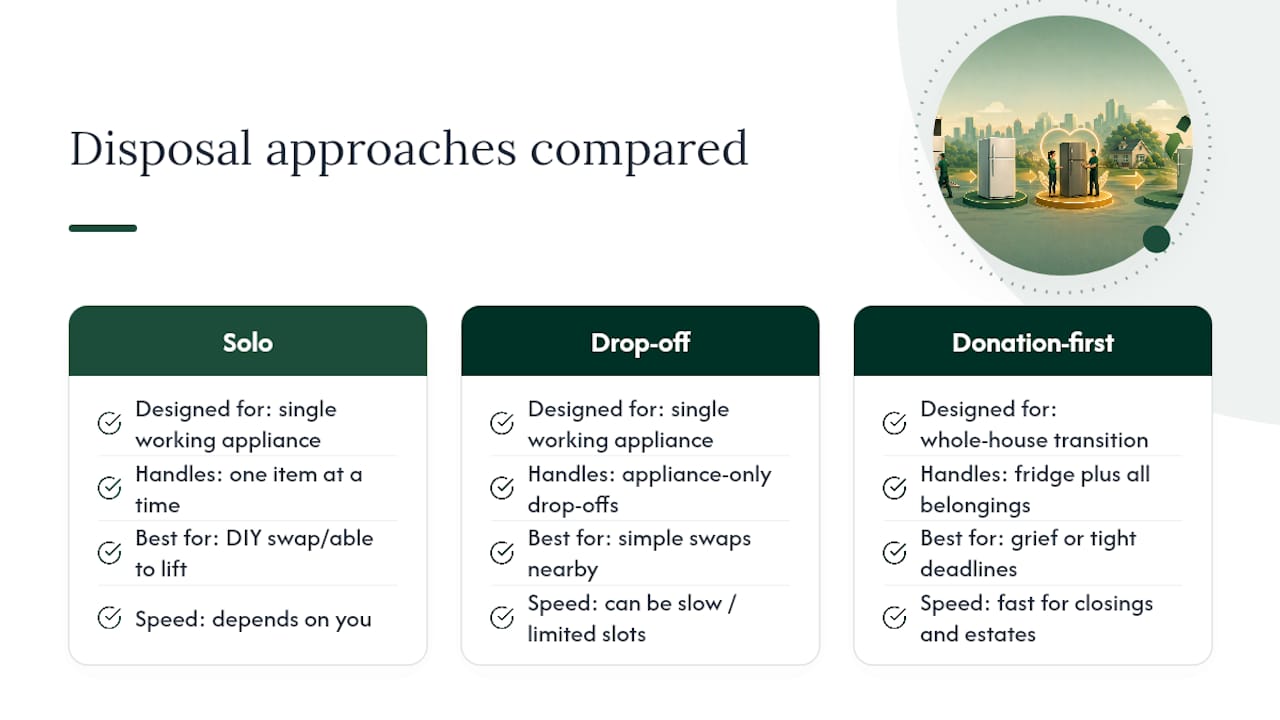
That's the gap utility programs and municipal drop-offs don't fill. They're built for a single working appliance, not a household in transition. A donation-first cleanout approach, like the one Bereavement Cleanout Services uses, handles the refrigerator alongside everything else, and routes anything usable to a local charity instead of a landfill by default.
For executors and realtors working against a closing date, that speed matters as much as the donation angle. Documentation for probate isn't an afterthought either; it's built into how the job gets done. The families who benefit most aren't the ones comfortable with a dolly and a free Saturday. They're the ones managing grief, a tight deadline, or both at once.
— Derek
Getting Your Refrigerator Removed Without the Hassle
Bereavement Cleanout Services is the alternative to spending a weekend coordinating utility appointments, township drop-off hours, and a rental truck. If you're already dealing with an estate, a hoarding situation, or a property that needs to turn over fast, one call handles the refrigerator and everything else in the house.

The service includes pickup and haul away, donation runs for anything still usable, and coordination of proper recycling for units that can't be donated. For estates, that comes with documented inventory that supports probate, plus a broom-clean handoff when the job is done. Every team is fully insured, and jobs move quickly once you're ready, which matters when a landlord or realtor is waiting on the keys.
To get started, have the property address, the refrigerator's condition, and any donation preferences ready. From there, Bereavement Cleanout Services can walk the space, provide a firm quote, and schedule removal, often within days. If you're weighing costs against a DIY approach, the apartment cleanout cost guide breaks down what a full-service cleanout typically runs across New Jersey. Reach out today to get a quote for your removal.
Sources
- Recycling - PSE&G
- Safe disposal procedures for household appliances — NJDEP / EPA guidance
- How do I dispose of an air conditioner in NJ? — RecycleNJ