
Start most household items at 20 to 50% of current retail value, then follow a standard markdown rhythm: full price on day one, about 25% off on day two, and roughly 50% off on day three to clear the house. That single rule handles the majority of what you will tag. High-value jewelry, fine art, and rare collectibles are the exceptions. Anything you suspect could be worth more than $500 to $1,000 belongs with a professional appraiser before it ever touches a price tag, and tools or mid-century furniture pieces in strong demand should sit at the higher end of that starting range rather than the low end.
- Furniture and mid-century pieces: price toward 40 to 50% of retail
- Jewelry, art, and rare collectibles: pull aside for appraisal
- Everyday household goods: 20 to 35% of retail is standard
Pro Tip: Never price an item based on what it cost new or what it meant to your family. Price it for the buyer standing in front of it today.
Sold prices, not asking prices, are what set fair market value. A dresser listed for $400 on Facebook Marketplace tells you nothing if it sat there for three months unsold.
Key Takeaways
Estate sale pricing works best when you start most items at 20 to 50% of retail, verify value through sold comparables rather than asking prices, and follow a firm three-day markdown schedule.
| Point | Details |
|---|---|
| Start with sold comps | Use eBay sold listings and local marketplace data instead of asking prices to set fair market value. |
| Follow the markdown rhythm | Hold day one, drop about 25% on day two, and about 50% on day three to guarantee clearance. |
| Appraise high-value items | Get anything likely worth $500 to $1,000 or more professionally appraised before tagging it. |
| Adjust for condition and rarity | Use a four-point condition scale, then push desirable or rare pieces toward the top of the range. |
| Lot small items | Bundle books, gadgets, and smalls into simple price lots to move volume fast. |
| Consider professional help | Bereavementcleanoutservices runs full estate sales in New Jersey with comp-based pricing, staging, and a broom-clean finish. |
Table of Contents
- How Do You Determine Fair Market Value for Estate Sale Pricing?
- Category Pricing Ranges With Sample Dollar Amounts
- How Should You Schedule Markdowns Across the Sale?
- How Does Condition Change an Item's Price?
- How Do You Bundle and Tag Items Efficiently?
- When Should You Get a Professional Appraisal?
- What Pricing Mistakes Cost You the Most Money?
- Which Tools Help You Verify Pricing Fast?
- When Does Hiring a Professional Team Make Sense?
- Editorial Take: Estate Sale Pricing Practical Rules
- Get Professional Help With Estate Sale Pricing
- Where to Learn More About Estate Sale Pricing
- Frequently Asked Questions
- Sources
How Do You Determine Fair Market Value for Estate Sale Pricing?
Fair market value comes from completed transactions, not wishful listings. Anyone can post an item at whatever price they want; what matters is what a real buyer actually paid for something comparable, in similar condition, recently. That distinction is the entire foundation of accurate estate sale pricing, and skipping it is how sellers end up with a house full of unsold inventory on day three.
Here's the research workflow that works for most items:
- Search eBay and filter results to "Sold listings" only, then sort by condition to match your item as closely as possible.
- Cross-check Facebook Marketplace and Craigslist for regional pricing, since shipping costs and local demand can shift numbers by 10 to 20%.
- For antiques, fine art, or collectibles, run the item through WorthPoint or check recent LiveAuctioneers results, both of which archive real auction outcomes rather than optimistic asking prices.
- Adjust your number up or down based on condition, missing parts, and whether your local market skews toward collectors or casual bargain hunters.
- Note the sold price range (low, median, high) and use the median as your starting tag unless condition pulls it toward an edge.
A tool like a written comps sheet helps a small estate-sale team stay consistent across dozens of items priced in a single afternoon. Using sold listings and local comparables as your primary evidence, rather than what a similar item is currently asking for, is the single habit that separates a sale that clears fast from one that drags into a fourth day of markdowns nobody wanted.
Category Pricing Ranges With Sample Dollar Amounts
Pricing moves faster once you know the typical starting percentage for each category. The table below reflects standard estate sale pricing formulas adjusted for condition and current demand.
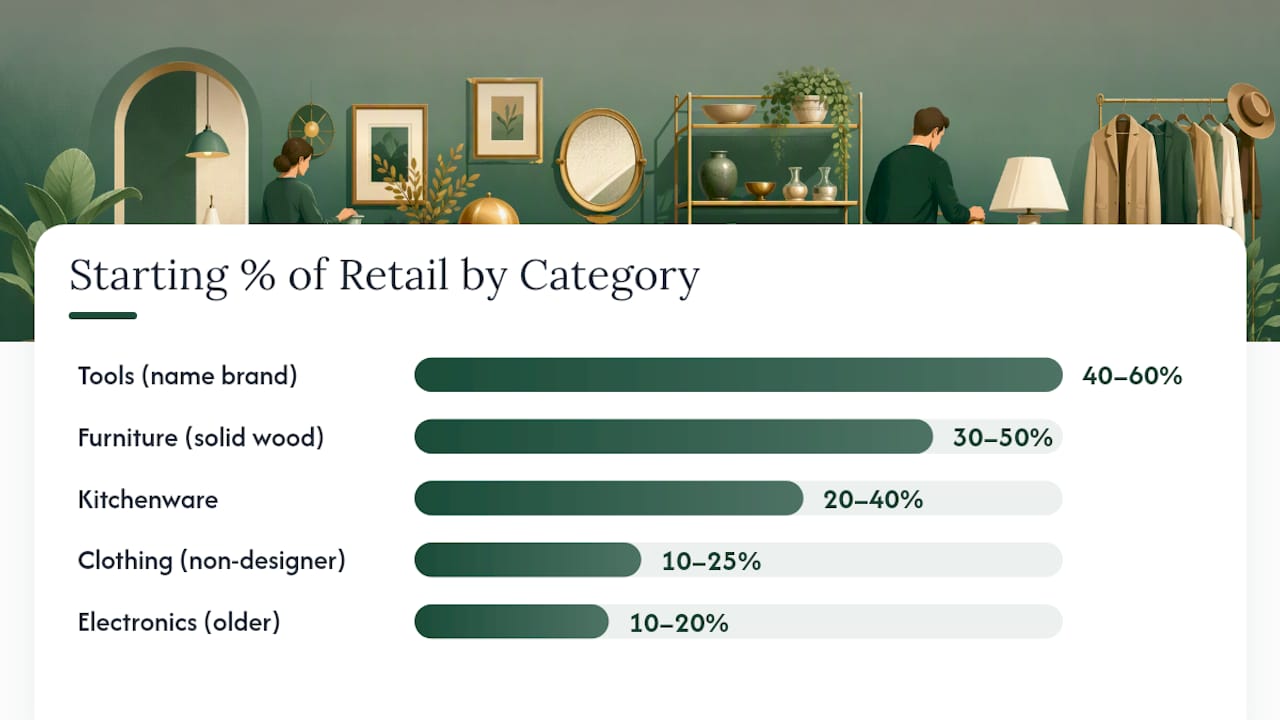
| Category | Starting % of Retail | Sample Range (Good Condition) |
|---|---|---|
| Furniture (solid wood) | 30 to 50% | $40 to $400 |
| Furniture (particleboard/mass-market) | 10 to 20% | $10 to $50 |
| Jewelry and fine art | Appraise first | Varies widely |
| Kitchenware | 20 to 40% | $2 to $25 |
| Clothing (non-designer) | 10 to 25% | $3 to $15 |
| Books | Lot pricing | $1 to $3 each |
| Home decor | 20 to 40% | $5 to $30 |
| Tools (name brand) | 40 to 60% | $15 to $60 |
| Electronics (older) | 10 to 20% | $5 to $40 |
A solid oak dresser with minor wear might land at $150 against a $400 retail equivalent, while that same dresser in particleboard construction rarely clears $40 no matter how clean it looks. Solid wood furniture in good shape commands real money; flat-pack furniture does not, and pricing it as though it does is how furniture sections stall.
Kitchenware moves fastest when priced like a garage sale, not a boutique. A single cast-iron skillet might fetch $15, but a box of mismatched glassware belongs in a $5 lot. Tools carry surprising value: a name-brand cordless drill in working condition can hold 40 to 60% of retail because contractors and weekend fixers actively hunt estate sales for exactly that.
- Furniture: condition and material drive price more than age
- Jewelry/art: never guess, always verify before tagging
- Tools: name brands hold value; generic brands do not
- Electronics: depreciate fast unless vintage or collectible
Pro Tip: If you're staring at something and thinking "this could be worth real money," that instinct is usually correct enough to justify a five-minute WorthPoint search before you write a tag.
How Should You Schedule Markdowns Across the Sale?
The standard discount rhythm exists for a reason: it captures serious buyers and dealers at full price on day one, then rewards patience without giving away the house too early. Most estate sale professionals hold firm on day one, drop roughly 25% on day two(https://curio.app/blog/estate-sale-pricing-guide), and cut another 50% on day three to guarantee the space clears by closing time.
- Day 1: full tagged price, no public markdowns, dealers and early birds shop here
- Day 2: approximately 25% off across most categories
- Day 3: approximately 50% off, plus fill-a-bag deals and bundle pricing on smalls
- Final hour: negotiable pricing on remaining inventory, sometimes free to charities
Bundle deals accelerate day three dramatically. "Fill a grocery bag for $10" clears more clutter in twenty minutes than individual pricing does in two hours.
Pro Tip: Cap discounts on high-value categories like jewelry and signed art at 10 to 15%, even on day three. Everything else can flex; appraised pieces should not.
Many teams also build a quiet negotiation margin into day-one tags. Staff commonly accept offers 10 to 20% below the marked price on higher-value items when a serious buyer is standing right there, without ever posting a public markdown. That protects price integrity for browsers while still closing the sale.

How Does Condition Change an Item's Price?
Condition moves price more predictably than almost any other factor, and a simple four-point scale keeps pricing consistent across a large sale.
- Excellent (like new, no flaws): top of the range, sometimes 50 to 60% of retail
- Good (light wear, fully functional): middle of the range, 30 to 40%
- Fair (visible wear, still usable): lower end, 15 to 25%
- Poor (damaged, missing parts): bottom of the range or bundle-only, 5 to 10%
Desirability shifts these numbers independently of condition. A mid-century modern credenza in fair condition can still outsell a pristine 1990s entertainment center because collectors actively chase that style right now. Rarity works the same way: a discontinued Pyrex pattern or a limited production tool model can justify pricing at the top of its category range even with cosmetic wear, simply because replacement units don't exist. A cracked vase drops to bundle pricing regardless of brand, but a rare maker's mark on that same cracked vase might still justify holding it back for a specialist buyer instead of tagging it at all.
How Do You Bundle and Tag Items Efficiently?
Lotting similar small items moves volume faster than pricing everything individually, and it saves your team hours of tagging time. Grouping books, kitchen gadgets, and office supplies into lots is standard practice at nearly every professional estate sale.
- Five paperbacks for $5, or a full box for $10
- Three small kitchen gadgets bundled at $10 instead of $4 each
- A basket of costume jewelry priced as one $15 lot
- Write the price clearly on every tag, never leave an item unpriced.
- Mark lot numbers on a master sheet so staff know which items belong together.
- Place tags where buyers will actually see them, not tucked underneath or inside drawers.
Pro Tip: Use a different colored tag for negotiable items versus firm prices. It prevents constant "is this flexible?" questions all weekend.
When Should You Get a Professional Appraisal?
Anything likely worth more than $500 to $1,000 needs a professional set of eyes before it goes on a table. That threshold covers most fine jewelry, signed artwork, rare coins, and antique furniture with a maker's mark.
- Identify candidates: anything with a signature, hallmark, or unusual materials
- Check the ISA directory or a local auction house for a credentialed appraiser
- Get a written estimate, not a verbal guess
- Document provenance, receipts, and photos for probate records
- Decide whether the item sells at the estate sale, through consignment, or at auction
Appraisal costs typically run $50 to $300 per item depending on category and specialist. During the sale itself, keep appraised pieces in a secured area with limited or no markdown, separate from the general markdown schedule everything else follows.
What Pricing Mistakes Cost You the Most Money?
Six mistakes account for most disappointing estate sale results, and every one of them is avoidable.
- Sentimental pricing: tagging based on what an item meant to you, not what a buyer will pay
- Pricing to retail: forgetting that used goods rarely command new-item prices
- Leaving items unpriced: unpriced tables slow down every browser who has to ask
- Ignoring sold comps: trusting asking prices instead of completed sales data
- Skipping condition adjustments: treating a scratched item the same as a mint one
- Displaying unsellable inventory: dated electronics, broken fitness equipment, and heavily damaged goods clutter tables and slow shoppers down
If something falls into that last category, donate it, recycle it, or list it elsewhere before the sale opens rather than letting it sit on a table nobody stops at. Reprice slow-moving sections in batches rather than item by item; it's faster and keeps pricing consistent across similar goods.
Which Tools Help You Verify Pricing Fast?
A handful of resources cover almost every pricing question that comes up mid-prep.
- eBay sold listings: the fastest, free way to confirm a price range for nearly anything
- Facebook Marketplace and Craigslist: best for regional demand checks
- LiveAuctioneers: useful for antiques and estate-quality furniture with auction history
- WorthPoint: a subscription archive covering decades of sold auction and antique data
- Google Lens: point your camera at an unmarked item to identify maker or pattern in seconds
A ten-minute check before tagging anything questionable: search the item name plus "sold" on eBay, cross-reference one auction site, then commit to a price. WorthPoint and most specialty auction platforms require a paid account, but the free tools alone cover the vast majority of everyday estate sale items.
When Does Hiring a Professional Team Make Sense?
Some estates outgrow a DIY pricing weekend fast. Large households, limited family time, hazardous cleanup, high-value collections, or probate documentation requirements all point toward bringing in a professional team rather than pricing everything solo under deadline pressure.
A reputable estate-sale or cleanout team should provide:
- Full inventory and photography before the sale
- Category-based pricing grounded in sold comparables
- Staging, signage, and security for high-value items
- Donation-first sorting for unsold goods
- A broom-clean finish once the sale ends
- Fully insured operations and documentation suitable for probate
Bereavementcleanoutservices builds this exact workflow into estate sales across New Jersey, pairing donation-first sorting with the documentation families need for probate. A family managing a parent's four-bedroom home with a workshop, a jewelry box, and a garage full of tools rarely has time to research sold comps for two hundred items in a weekend. That's precisely the gap a professional team closes.
Editorial Take: Estate Sale Pricing Practical Rules
Most estate sale guides treat pricing like a spreadsheet exercise: apply the percentage, print the tag, move on. That misses the real skill, which is knowing where to spend your limited research time. The top ten to twenty highest-value items in any estate deserve real comp research; everything else should follow the percentage formula and lotting rules without a second thought.
The conventional advice oversells precision. Nobody needs an exact sold-price median for a used toaster. What they need is a fast, defensible range and the discipline to stick with the markdown schedule instead of second-guessing it on day two. Where most first-time sellers go wrong isn't math, it's emotion: holding a price too high because a parent loved that item, then watching it sit unsold through three days of foot traffic. Price for the buyer in front of you, verify the handful of items that actually matter, and let the schedule do the rest.
Get Professional Help With Estate Sale Pricing
Pricing a full house against sold comps, running a three-day markdown schedule, and staying on top of appraisal thresholds is a real job, not a weekend project squeezed between funeral arrangements and probate paperwork. Bereavementcleanoutservices handles estate sales across New Jersey with donation-first sorting, documented pricing grounded in real comps, and a broom-clean finish when the last item sells.

That combination matters most for families short on time or facing a home with genuine high-value pieces mixed into everyday clutter. Rather than researching hundreds of sold listings yourself while also sorting keepsakes and coordinating with a probate attorney, a fully insured team can inventory, photograph, price, and stage the entire estate on your behalf. If your family is weighing whether to price a sale yourselves or hand it to professionals, request a walkthrough from Bereavementcleanoutservices and get a straightforward quote before you commit either way.
Where to Learn More About Estate Sale Pricing
- Senior Move Guide: the cardinal pricing rule and appraisal thresholds
- ISA Appraisers: directory of credentialed appraisers for jewelry, art, and antiques
- PBS Appraisals: archive for verifying provenance and unusual collector value
- WorthPoint: subscription database of historical sold auction prices
- LiveAuctioneers: auction results useful for antiques and estate furniture
Frequently Asked Questions
What percentage of retail should I price estate sale items at? Most household items in good condition sell for 20 to 50% of current retail value. Furniture, tools, and desirable vintage pieces can sit at the higher end; mass-market or worn goods belong at the lower end.
How much do estate sale items typically drop each day?
When should I get an item appraised instead of pricing it myself? Anything likely worth $500 to $1,000 or more, especially jewelry, signed art, or antiques with a maker's mark, should go to a credentialed appraiser before you assign a tag price.
Should I use asking prices or sold prices to research value? Always use sold or completed listings. Asking prices reflect what a seller hopes to get; sold prices reflect what a real buyer actually paid, which is the only reliable measure of fair market value.
Is it worth hiring a professional estate sale company instead of pricing everything myself? It often makes sense for large estates, high-value collections, or families short on time, since a professional team like Bereavementcleanoutservices handles comp-based pricing, staging, and documentation as part of the service.
Sources
- How to Price Items for an Estate Sale
- Your Essential Estate Sale Pricing Guide | Curio
- How Do You Price Items For An Estate Sale in 2026 - Commonplace
- Pbs
- Isa-appraisers